Mastoiditis is a bacterial infection of the mastoid air cells, which typically occurs as a complication of acute otitis media. Symptoms include erythema, tenderness, edema, and fluctuation over the mastoid process, with displacement of the pinna. Diagnosis is clinical. Treatment is with antibiotics (eg, ceftriaxone), and, if antibiotics alone are not effective, mastoidectomy. Acute mastoiditis with CT evidence of coalescent mastoiditis warrants urgent tympanostomy tube placement and mastoidectomy.
Mastoiditis is an acute infection of the mastoid air cells that occurs most commonly after acute otitis media. Consequences of mastoiditis can include deafness, vertigo, sepsis, and/or meningitis.
Epidemiology of Mastoiditis
Acute mastoiditis has an incidence of approximately 2 to 4 per 10,000 children annually in resource rich settings (1). The introduction of pneumococcal vaccination in childhood immunization schedules has reduced the incidence of acute mastoiditis (2, 3).
Epidemiology references
1. Thompson PL, Gilbert RE, Long PF, et al. Effect of antibiotics for otitis media on mastoiditis in children: a retrospective cohort study using the United kingdom general practice research database. Pediatrics. 2009;123(2):424-430. doi:10.1542/peds.2007-3349
2. Sapir A, Ziv O, Leibovitz E, et al. Impact of the 13-valent pneumococcal conjugate vaccine (PCV13) on acute mastoiditis in children in southern Israel: A 12-year retrospective comparative study (2005-2016). Int J Pediatr Otorhinolaryngol. 2021;140:110485. doi:10.1016/j.ijporl.2020.110485
3. Alfvén T, Bennet R, Granath A, et al. The pneumococcal conjugate vaccine had a sustained effect on Swedish children 8 years after its introduction. Acta Paediatr. 2024;113(4):764-770. doi:10.1111/apa.17108
Etiology of Mastoiditis
Mastoiditis is a complication of acute otitis media and is usually caused by the same pathogen. The most common organisms causing mastoiditis are Streptococcus pneumoniae, Streptococcus pyogenes, and Pseudomonas aeruginosa (1). In settings where pneumococcal vaccination is routine, Streptococcus pyogenes is the most common organism (2).
Etiology references
1. Laulajainen-Hongisto A, Saat R, Lempinen L, et al. Bacteriology in relation to clinical findings and treatment of acute mastoiditis in children. Int J Pediatr Otorhinolaryngol. 2014;78(12):2072-2078. doi:10.1016/j.ijporl.2014.09.007
2. Chebib E, Ok V, Cohen JF, et al. Changes in Clinical and Microbiological Characteristics of Acute Mastoiditis in Children: A Comparative Study Between 2001-2008 and 2021-2024. J Pediatr. 2025;285:114672. doi:10.1016/j.jpeds.2025.114672
Pathophysiology
In acute purulent otitis media, inflammation often extends into the mastoid antrum and air cells in the temporal bone, resulting in fluid accumulation. In a some patients, bacterial infection develops in the collected fluid, typically with the same organism causing the otitis media; pneumococcus is most common. Mastoid infection can cause osteitis of the septae, leading to coalescence of the air cells (coalescent mastoiditis).
The infection may drain through a perforation in the tympanic membrane or extend through the lateral mastoid cortex, forming a postauricular subperiosteal abscess. Rarely, infection extends centrally, causing a temporal lobe abscess or a septic thrombosis of the lateral sinus. Occasionally, the infection may erode through the tip of the mastoid and drain into the neck (called a Bezold abscess).
Symptoms and Signs of Mastoiditis
Symptoms begin days to weeks after onset of acute otitis media and include fever and persistent, throbbing otalgia. Most patients have signs of otitis media and purulent otorrhea. Erythema, swelling, otalgia, tenderness on palpation, and fluctuation may develop over the mastoid process; the pinna is sometimes displaced laterally and inferiorly. Displacement of the pinna can cause auricular protrusion.


These photos show a superior and lateral view of auricular protrusion due to acute mastoiditis in an infant.
DR P. MARAZZI/SCIENCE PHOTO LIBRARY
Diagnosis of Mastoiditis
Primarily history and physical examination
Imaging (CT, MRI)
Sometimes culture
The diagnosis of mastoiditis is primarily clinical. Imaging is usually performed for acute mastoiditis (1). CT is usually the imaging test of choice, especially if an intratemporal or intracranial complication is suspected, to confirm the diagnosis, show the extent of the infection, and inform the need for surgical intervention. Erosion of the sigmoid plate and rarefying osteitis and coalescence of mastoid air cells on CT are highly suggestive of mastoiditis. MRI can also help delineate soft tissue involvement behind the ear.


This coronal T2-weighted MR image shows extensive opacification with increased T2 signal in mastoid air cells (left).
Living Art Enterprises, LLC/Science Source/SCIENCE PHOTO LIBRARY
Any middle ear drainage is sent for culture and sensitivity. Myringotomy can be performed for culture purposes if no spontaneous drainage occurs. Complete blood count (CBC) and erythrocyte sedimentation rate (ESR) may be abnormal but are neither sensitive nor specific and add little to the diagnosis.
Diagnosis reference
1. Expert Panel on Neurological Imaging, Agarwal M, Juliano AF, et al. ACR Appropriateness Criteria® Inflammatory Ear Disease. J Am Coll Radiol. 2025;22(5S):S300-S318. doi:10.1016/j.jacr.2025.02.026
Treatment of Mastoiditis
IV antibiotics
Sometimes surgery
The treatment of mastoiditis commonly requires hospitalization and empiric parenteral antibiotic therapy (1). Medical therapy alone may be appropriate for uncomplicated cases. Consultation with a otolaryngologist should be obtained if feasible. Intravenous antibiotics with central nervous system penetration (eg, ceftriaxone (eg, 50 to 75 mg/kg in children given once daily or in equally divided doses every 12 hours, maximum 2 g/day, for ≥ 2 weeks). Ampicillin/sulbactam, vancomycin, and linezolid are alternatives (2). Shorter durations of antibiotic therapy may be considered for uncomplicated cases. Subsequent antibiotic choice is guided by culture and sensitivity test results.
Inadequate response to antibiotic therapy or the presence of complications (eg, subperiosteal abscess, intracranial extension) typically requires surgical intervention (3). One surgical approach involves drainage with cortical mastoidectomy, in which the abscess is drained, the infected mastoid cells are removed, and drainage is established from the antrum of the mastoid to the middle ear cavity. Another approach involves myringotomy with tympanostomy tube placement, which is performed if the tympanic membrane does not spontaneously perforate (4). Patients are subsequently treated with fluoroquinolone ear drops for 2 to 3 weeks and dry ear precautions.

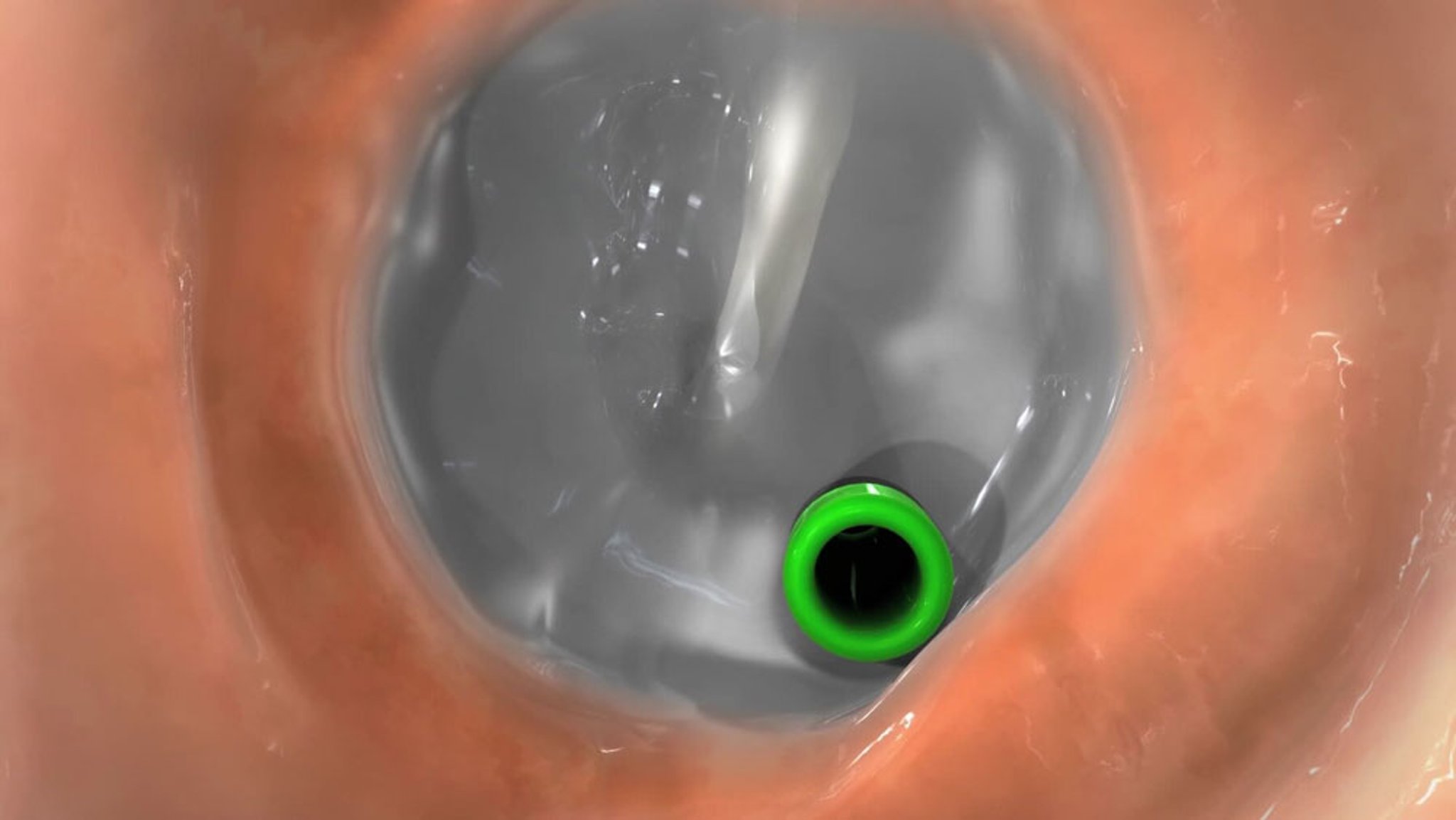
Image Copyright © Nucleus Medical Media. All rights reserved.
Routine water precautions are not recommended for most children with tympanostomy tubes (5). Water precautions may be implemented during an episode of acute otorrhea, for children prone to recurrent otorrhea, or for those who experience discomfort upon water exposure. Such precautions include occluding the external canal (eg, using a cotton ball lathered with petroleum jelly) during bathing and showers and avoiding swimming. Ear drops that contain aminoglycosides (eg, neomycin, tobramycin) or polymyxin should not be prescribed for patients with a perforated tympanic membrane or a tympanostomy tube because of potential ototoxicity.
Treatment references
1. Parri N, Bettelli S, Storelli F, et al. Acute otomastoiditis in children: a scoping review on diagnosis and antibiotic regimens. Eur J Pediatr. 2025;184(9):548. Published 2025 Aug 12. doi:10.1007/s00431-025-06385-1
2. Bridwell RE, Koyfman A, Long B. High risk and low prevalence diseases: Acute mastoiditis. Am J Emerg Med. 2024;79:63-69. doi:10.1016/j.ajem.2024.02.009
3. Psarommatis IM, Voudouris C, Douros K, et al. Algorithmic management of pediatric acute mastoiditis. Int J Pediatr Otorhinolaryngol. 2012;76(6):791-796. doi:10.1016/j.ijporl.2012.02.042
4. Guillén-Lozada E, Bartolomé-Benito M, Moreno-Juara Á. Surgical management of mastoiditis with intratemporal and intracranial complications in children. Outcome, complications, and predictive factors. Int J Pediatr Otorhinolaryngol. 2023;171:111611. doi:10.1016/j.ijporl.2023.111611
5. Rosenfeld RM, Tunkel DE, Schwartz SR, et al. Clinical Practice Guideline: Tympanostomy Tubes in Children (Update). Otolaryngol Head Neck Surg. 2022;166(1_suppl):S1-S55. doi:10.1177/01945998211065662
Drug Information for the Topic