Subconjunctival hemorrhages are extravasations of blood beneath the conjunctiva.
Subconjunctival hemorrhages usually result from minor local trauma, straining, sneezing, or coughing; rarely, they occur spontaneously. The extent and location of hyperemia can help determine etiology. Diffuse hyperemia of the bulbar and tarsal conjunctivae is typical of conjunctivitis.
Subconjunctival hemorrhages alarm the patient but are of no pathologic significance except when associated with blood dyscrasia, which is rare, or facial or ocular injuries.

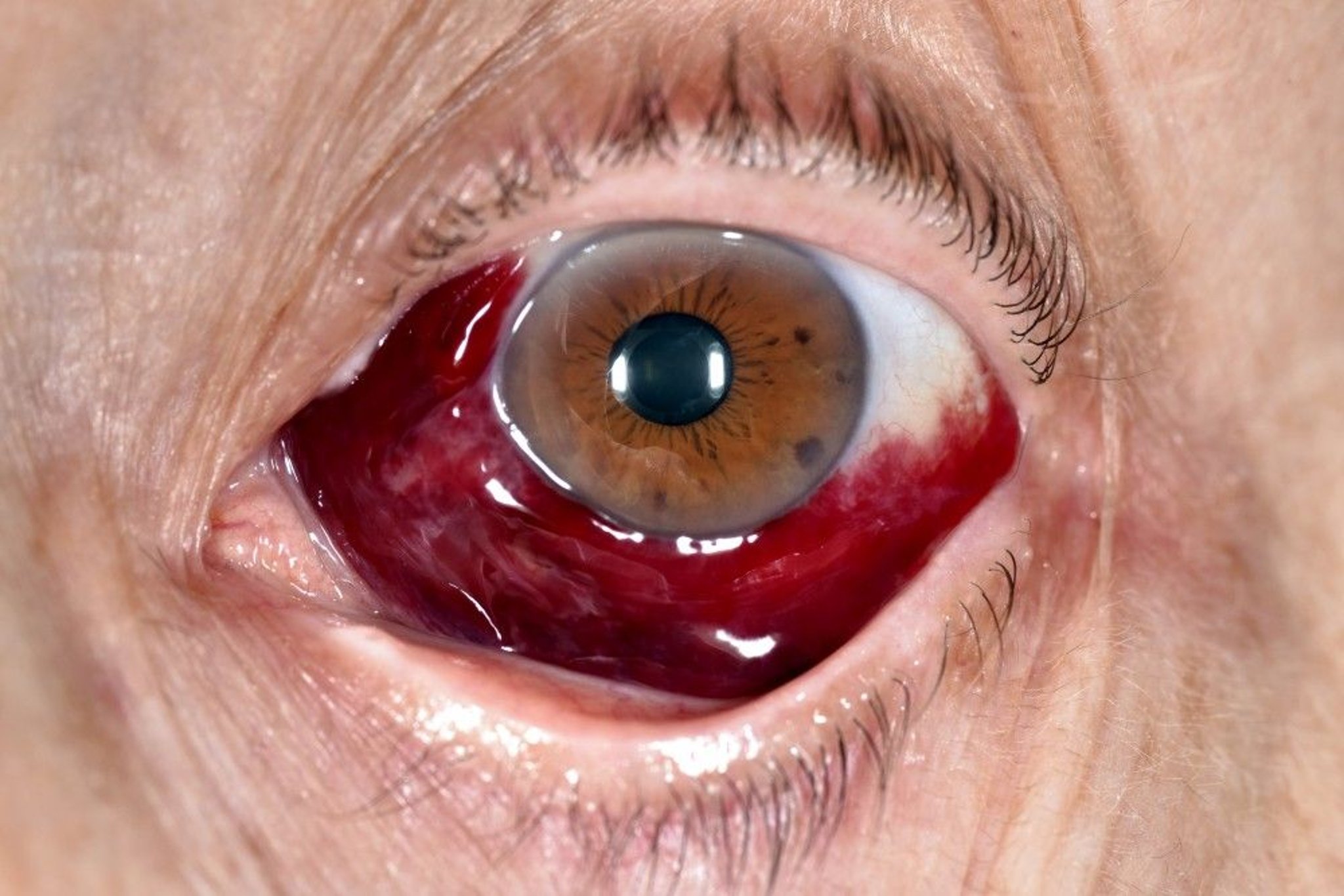
This photo shows an accumulation of blood beneath the conjunctiva.
DR P. MARAZZI/SCIENCE PHOTO LIBRARY
Subconjunctival hemorrhages are absorbed spontaneously, usually within 1 to 3 weeks (1, 2). Topical corticosteroids, antibiotics, vasoconstrictors, and compresses do not speed reabsorption; reassurance is adequate therapy. No treatment is indicated unless the hemorrhage is associated with certain systemic conditions (eg, thrombocytopenia and platelet dysfunction).
References
1. Joshi RS, Bandgar RR. Incidence of Non-Traumatic Subconjunctival Hemorrhage in an Indian Rural Population. Clin Ophthalmol. 2021;15:183-188. Published 2021 Jan 15. doi:10.2147/OPTH.S277428
2. Tarlan B, Kiratli H. Subconjunctival hemorrhage: risk factors and potential indicators. Clin Ophthalmol. 2013;7:1163-1170. doi:10.2147/OPTH.S35062