Skene gland cysts develop adjacent to the distal urethra, sometimes causing pain or pressure, dyspareunia, recurrent urinary tract infections, or abscess formation.
Skene glands (periurethral or paraurethral glands) are located adjacent to the distal urethra.
Vulvar Anatomy
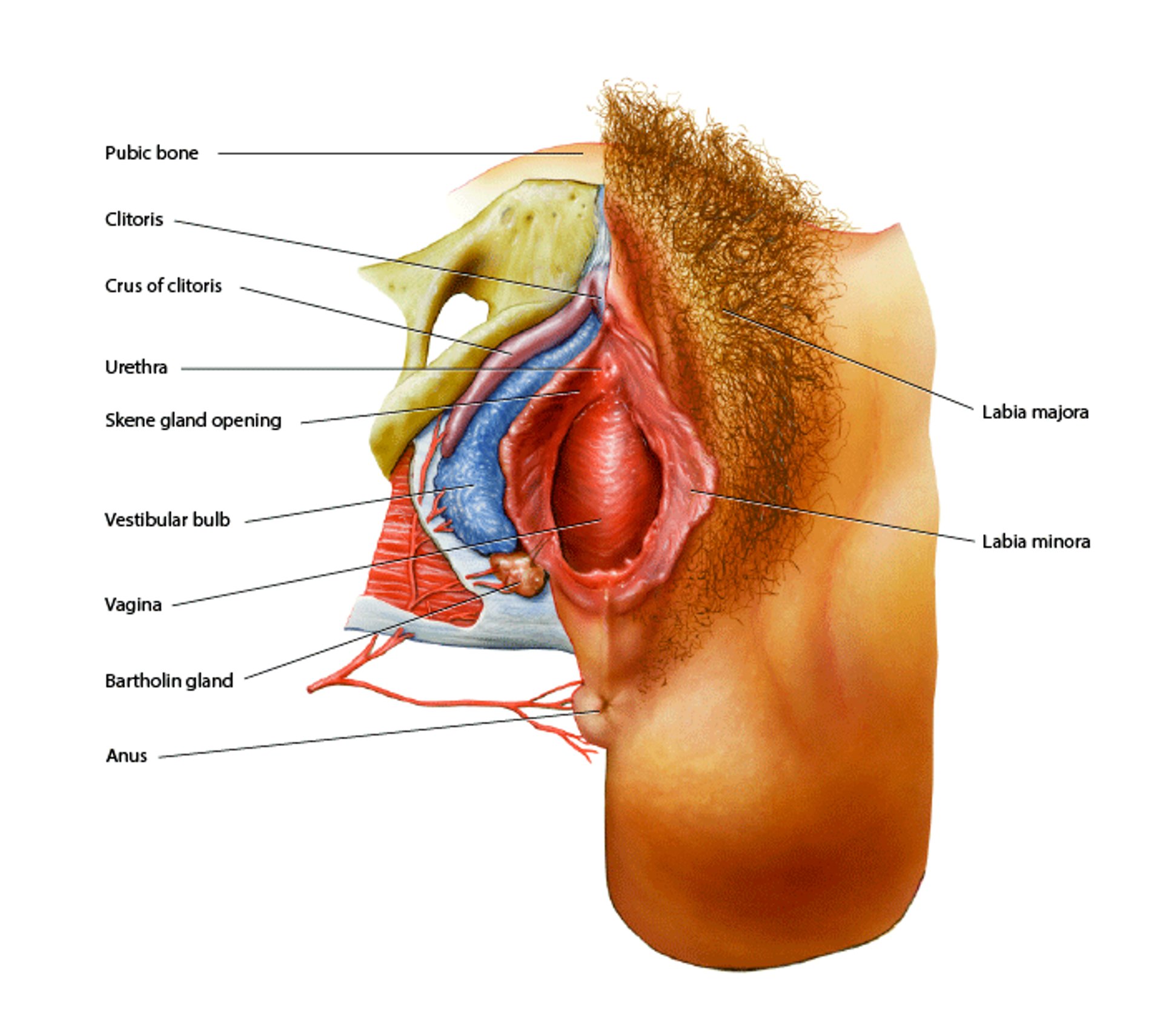
The vagina is a fibromuscular canal lined by nonkeratinized stratified squamous epithelium and contains no glands. Vaginal lubrication is mainly from transudation through the vaginal epithelium and secretions from the cervix and Bartholin glands. The urethra is located in the anterior portion of the vaginal introitus. The paraurethral (Skene) glands open adjacent to the urethral meatus and are homologous to the male prostate. The tissue surrounding the vagina is the vulva, which includes the labia minora, labia majora, and the glans and hood of the clitoris (most anteriorly and in the midline, anterior to the urethra). The vestibule is the region bounded by the labia minora and contains the urethral meatus, vaginal introitus, and the openings of the Bartholin and paraurethral glands. Anterior to the clitoris is the mons pubis (tissue that covers the pubic bone). Posterior to the vagina is the perineum, an area of skin between the vagina and anus. The crura of the clitoris (purple) extend subcutaneously and are composed of erectile tissue. The bulb of the vestibule (blue) also consists of erectile tissue. On each side, posterolateral to the vaginal introitus (at approximately the 4- and 8-o'clock positions), the Bartholin (greater vestibular) glands are located. They secrete mucus that contributes to the lubrication of the vulvar vestibule, especially during sexual arousal. BO VEISLAND/SCIENCE PHOTO LIBRARY |

Skene gland cysts form if the duct is obstructed.. They occur mainly in adults.
Cysts may become infected, leading to recurrent urinary tract infections (UTIs) and abscesses. Rarely, Skene gland cysts (if large enough) obstruct the urethra.
Most Skene gland cysts are < 1 cm and asymptomatic. Some are larger and cause dyspareunia. The first symptoms may be similar to those of UTIs (eg, dysuria). Abscesses are painful, swollen, tender, and erythematous but usually do not cause fever.

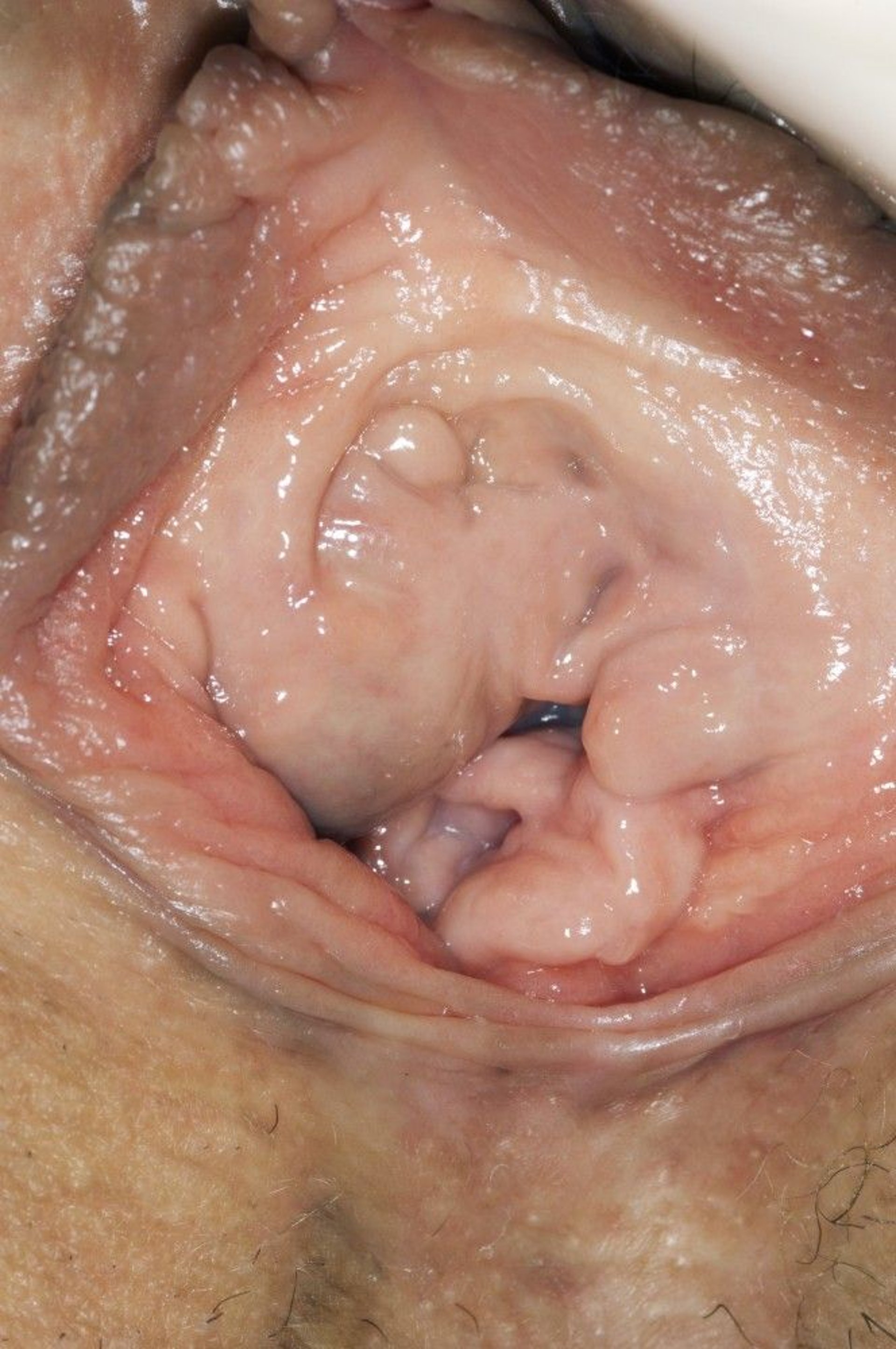
This photo shows a Skene gland cyst (swelling at center left) in the vagina.
DR P. MARAZZI/SCIENCE PHOTO LIBRARY
Diagnosis of Skene Gland Cyst
Pelvic examination
Diagnosis of Skene gland cysts is usually clinical. Most symptomatic cysts and abscesses are palpable adjacent to the distal urethra; however, a diverticulum of the distal urethra may be clinically indistinguishable, requiring ultrasound or cystoscopy for differentiation.
Treatment of Skene Gland Cyst
Surgical excision or marsupialization if the cyst causes symptoms
Symptomatic cysts are excised or marsupialized (the everted edges of the cyst are sutured to the exterior) (1).
Abscesses are treated initially with oral broad-spectrum antibiotics (eg, cephalexin 500 mg every 6 hours for 7 to 10 days) and are excised or marsupialized.
Treatment reference
1. Laura M, Neeraja C, Denise B, Lisa C, Willy DG. Skene's gland cyst: a simple marsupialization technique. Int Urogynecol J. 2017;28(7):1101-1102. doi:10.1007/s00192-016-3246-7
Key Points
Skene gland cysts form if the duct is obstructed..
Cysts may form abscesses and/or cause recurrent UTIs.
Most are small and asymptomatic; large cysts may cause dyspareunia.
Diagnose Skene gland cysts by pelvic examination and, if needed, by ultrasound or cystoscopy.
Excise or marsupialize symptomatic cysts, and treat abscesses with broad-spectrum antibiotics and excision or marsupialization.
Drug Information for the Topic