Candidal vaginitis is vaginal infection with Candida species, usually C. albicans. Symptoms are usually a thick, white vaginal discharge and moderate to severe vulvovaginal pruritus. Diagnosis is made based on microscopy (potassium hydroxide wet mount with hyphae or other characteristic findings), fungal culture, or molecular diagnostic tests. Treatment is with oral or vaginal antifungal medications.
Most fungal vaginitis is caused by C. albicans (candidiasis), which colonizes 15 to 20% of nonpregnant and 20 to 40% of pregnant women (1).
Risk factors for candidal vaginitis include the following:
Use of systemic broad-spectrum antibiotics or prolonged glucocorticoid use
Pregnancy
Wearing nylon or other synthetic underwear or tights
Immunocompromise
Candidal vaginitis is uncommon among postmenopausal women, except among those taking systemic menopausal hormone therapy.
Infection in sex partners is rare.
General reference
1. Martin Lopez JE. Candidiasis (vulvovaginal). BMJ Clin Evid. 2015;2015:0815. Published 2015 Mar 16.
Symptoms and Signs of Candidal Vaginitis
The typical discharge associated with vaginal candidiasis is a thick, white, curd–like vaginal discharge that adheres to the vaginal walls. However, patients may have a very small amount of discharge or no discharge. Some patients with candidal vaginitis do not present with vaginal discharge.
Vulvovaginal pruritus, burning, or irritation (which may be worse during intercourse) and dyspareunia are common. Symptoms and signs often increase the week before menses.
Erythema and edema are common. Excoriations and vulvar fissures may be present if a patient scratches due to pruritus.
Diagnosis of Candidal Vaginitis
Pelvic examination
Vaginal pH and microscopy with 10% KOH
Molecular diagnostic tests
Fungal culture, if vaginitis is persistent or recurrent

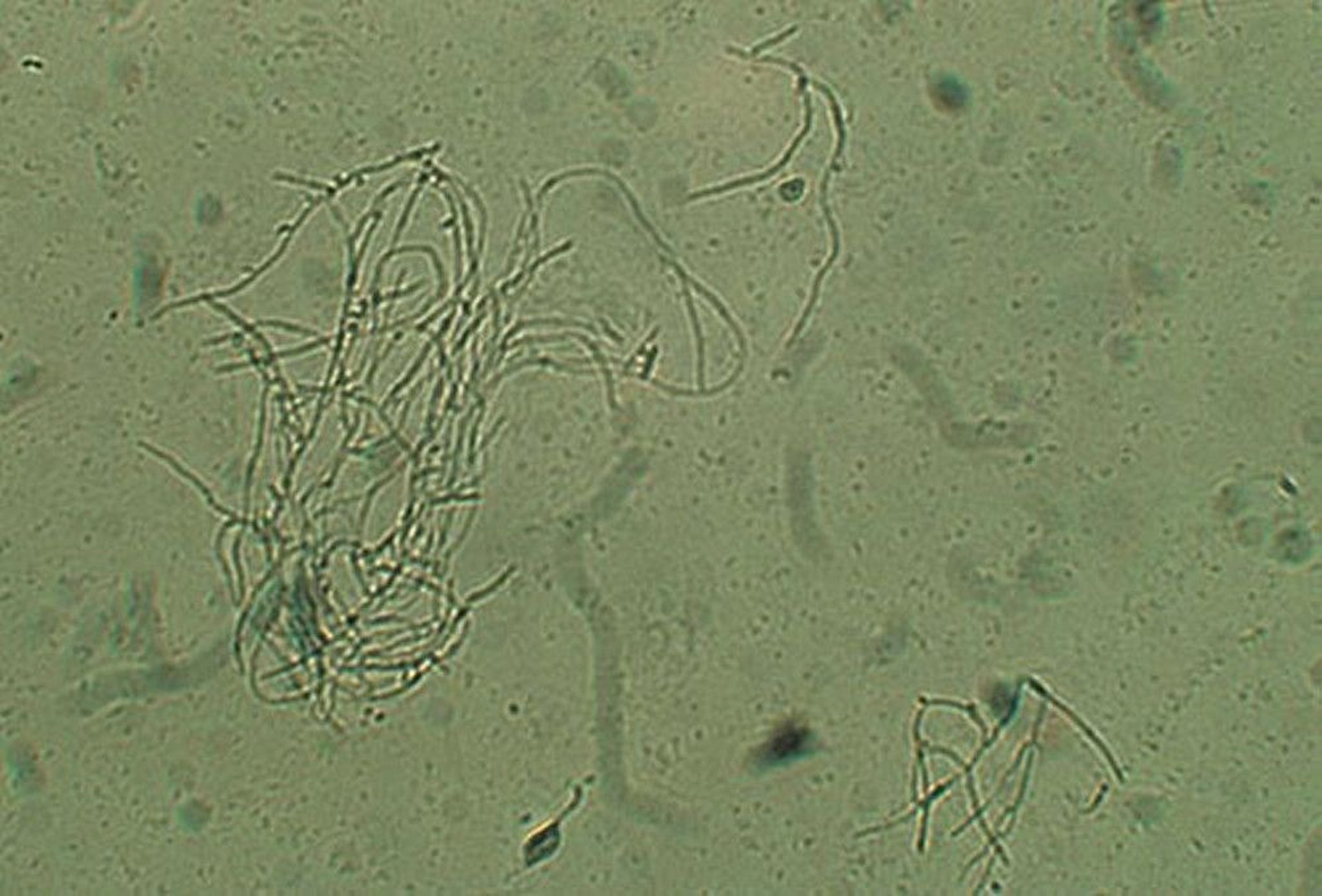
Potassium hydroxide (KOH) wet mount shows hyphae and spores; 10% KOH destroys epithelial cells, improving recognition of yeast and hyphae in candidal vulvovaginitis. Use of KOH increases sensitivity of the wet mount to 60 to 80% from 30 to 40% when saline is used.
By permission of the publisher. From Sobel JD. In Atlas of Infectious Diseases: Fungal Infections. Edited by GL Mandell and RD Diamond. Philadelphia, Current Medicine, 2000. Also from Sobel JD. In Atlas of Infectious Diseases. Edited by GL Mandell and MF Rein. Philadelphia, Current Medicine, 1996.
Characteristic findings in candidal vaginitis include:
Typical vaginal discharge (thick, white, curd-like)
Vaginal pH < 4.5
Budding yeast, pseudohyphae, or mycelia visible on a wet mount, especially with 10% potassium hydroxide (KOH)
If microscopy is not available or the diagnosis is inconclusive, molecular diagnostic tests can be performed (1).
Fungal culture may also be performed, particularly for patients with recurrent episodes of suspected or confirmed candidal vaginitis, to confirm the diagnosis, exclude non-albicans Candida, and to guide therapy by detecting resistance to azole medications.
Diagnosis reference
1. Powell A, Goje O, Nyirjesy P. A Comparison of Newer and Traditional Approaches to Diagnosing Vaginal Infections. Obstet Gynecol. 2024;143(4):491-498. doi:10.1097/AOG.0000000000005529
Treatment of Candidal Vaginitis
Antifungal medications (oral fluconazole in a single oral dose is preferred)
Boric acid
Topical or oral medications are highly effective for candidal vaginitis.
A single dose of oral fluconazole (150 mg) is the preferred therapy due high patient adherence. A longer duration of therapy may be required for either severe acute candidal vulvovaginitis (eg, fluconazole 150 mg orally every 72 hours for 2 to 3 doses) (1).
Topical (applied to the vulva and intravaginally) butoconazole, clotrimazole, miconazole, and tioconazole are available over the counter in the United States. However, vaginal antifungals cause vulvovaginal irritation in some patients. Also, patients should be counseled that vaginal creams and ointments containing mineral oil or vegetable oil weaken latex-based condoms and diaphragms.
If symptoms persist or worsen during vaginal therapy, hypersensitivity to vaginal antifungals should be considered.
Fungal culture, which is the gold standard for diagnosis, should be considered in patients who have failed therapy, with subsequent management based on fungal sensitivities. Referral to a specialist should be considered.
For recurrent candidal vulvovaginitis, an additional oral treatment for candidal vaginitis is oteseconazole, which is indicated only for females with a history of recurrent vulvovaginal candidiasis who are not of reproductive potential (ie, postmenopausal or permanently sterilized) due to the medication's embryo-fetal toxicity risk and a long half-life. Another option is extended duration of therapy (7 yo 14 days) with topical azoles (2).
Intravaginal boric acid (600 mg daily for 14 to 21 days) is recommended as an alternative treatment specifically for Candida glabrata vulvovaginitis unresponsive to oral azoles (1, 2), but it is not considered a first-line treatment for uncomplicated vulvovaginal candidiasis caused by Candida albicans or other azole-susceptible species.
Patients who have frequent recurrences (at least 3 to 4 documented episodes of candida vaginitis in the previous 12 months) require long-term suppression with oral medications (fluconazole 150 mg weekly to monthly or ketoconazole 100 mg once a day for 6 months) (3). Suppression is effective only while the medications are being taken. These medications may be contraindicated in patients with liver disorders. Patients taking ketoconazole should be monitored periodically with liver tests.
Recurrences after treatment may occur if there is resistance to antifungals or if a patient has non- Candida albicans species like Candida glabrata.
Treatment references
1. Pappas PG, Kauffman CA, Andes DR, et al. Clinical Practice Guideline for the Management of Candidiasis: 2016 Update by the Infectious Diseases Society of America. Clin Infect Dis. 2016;62(4):e1-e50. doi:10.1093/cid/civ933
2. Workowski KA, Bachmann LH, Chan PA, et al. Sexually Transmitted Infections Treatment Guidelines, 2021. MMWR Recomm Rep. 2021;70(4):1-187. Published 2021 Jul 23. doi:10.15585/mmwr.rr7004a1
3. Sobel JD, Wiesenfeld HC, Martens M, et al. Maintenance fluconazole therapy for recurrent vulvovaginal candidiasis. N Engl J Med. 2004;351(9):876-883. doi:10.1056/NEJMoa033114
Drug Information for the Topic