Thrombotic thrombocytopenic purpura (TTP) is an acute, fulminant disorder characterized by thrombocytopenia, microangiopathic hemolytic anemia, and sometimes organ damage. Clinical manifestations may include alterations in level of consciousness and kidney failure. Diagnosis requires demonstrating characteristic laboratory test abnormalities, including direct antiglobulin test–negative hemolytic anemia and reduced levels of ADAMTS13. Treatment is plasma exchange, glucocorticoids, rituximab, and rarely caplacizumab.
TTP is a form of thrombotic microangiopathy (TMA) caused by severe ADAMTS13 deficiency, which can be immune-mediated or hereditary.
Pathophysiology of TTP
TTP (similar to hemolytic-uremic syndrome [HUS]) involves nonimmunologic platelet destruction. Endothelial damage is common. Loose strands of platelets and fibrin are deposited in multiple small vessels and damage passing platelets and red blood cells (RBCs), causing significant thrombocytopenia and anemia (microangiopathic hemolytic anemia). Platelets are also consumed within multiple small thrombi, contributing to the thrombocytopenia. (See also Overview of Platelet Disorders.)
Multiple organs develop platelet–von Willebrand factor (VWF) thrombi localized primarily to arteriocapillary junctions, described as thrombotic microangiopathy. The brain, gastrointestinal tract, and kidneys are particularly likely to be affected. Although kidney involvement is often present on biopsy (if done), severe acute kidney injury is rare, unlike in HUS. The microthrombi do not include RBCs or fibrin (unlike thrombi in disseminated intravascular coagulation) and do not manifest the vessel wall granulocytic infiltration characteristic of vasculitis). Large-vessel thrombi are uncommon.
Etiology of TTP
Thrombotic thrombocytopenic purpura (TTP) is caused by
Congenital or acquired deficient activity of the plasma enzyme ADAMTS13
The ADAMTS13 enzyme is a plasma protease that cleaves von Willebrand factor (VWF) into smaller sizes and thereby eliminates unusually large VWF multimers that would otherwise accumulate on endothelial cells where they can cause platelet thrombi. ADAMTS13 activity usually has to be < 10% of normal for TTP to manifest. Other prothrombotic factors may also need to be present.
Most cases are acquired and involve development of an autoantibody against ADAMTS13. Rare cases are hereditary (Upshaw-Schulman syndrome), involving an autosomal recessive mutation of the ADAMTS13 gene.
Known risk factors include (1):
Female sex
Pregnancy (TTP is often indistinguishable from severe preeclampsia or eclampsia)
Black people may also be at increased risk for TTP based on cohort data from the United States, which reported a 7-fold higher risk (1).
Etiology reference
1. Reese JA, Muthurajah DS, Kremer Hovinga JA, Vesely SK, Terrell DR, George JN. Children and adults with thrombotic thrombocytopenic purpura associated with severe, acquired Adamts13 deficiency: comparison of incidence, demographic and clinical features. Pediatr Blood Cancer. 2013;60(10):1676-1682. doi:10.1002/pbc.24612
Symptoms and Signs of TTP
Hereditary cases often manifest in infancy or early childhood, many with a strong family history of the disease. Acquired cases typically occur among adults.
Initial symptoms may be mild and develop gradually or may be acute and severe. Without treatment, the disease progresses and is often fatal.
Anemia typically causes weakness and fatigue.
Thrombocytopenia often does not cause bleeding but paradoxically causes thrombus formation.
Manifestations of ischemia develop in multiple organs with varying severity. Manifestations include weakness, confusion, seizures and/or coma, abdominal pain, nausea, vomiting, diarrhea, and arrhythmias caused by myocardial damage. Fever does not usually occur.
The symptoms and signs of TTP and hemolytic-uremic syndrome (HUS) are indistinguishable, except that neurologic symptoms are less common and renal failure more common with HUS.
Diagnosis of TTP
Complete blood count (CBC) with platelets, examination of peripheral blood smear, reticulocyte count, direct antiglobulin (Coombs) test, lactate dehydrogenase (LDH), prothrombin time (PT), partial thromboplastin time (PTT), fibrinogen, haptoglobin, and serum bilirubin (direct and indirect), ADAMTS13 activity, and autoantibody (inhibitor) assays
Urinalysis and renal function tests
Exclusion of other thrombocytopenic disorders
Early recognition is important in order to initiate treatment as quickly as possible. Therapy may need to be initiated in suspected cases before the confirmatory ADAMTS13 testing is completed if other manifestations of TTP (clinical symptoms, thrombocytopenia, elevated LDH, peripheral blood smear examination) are consistent with this diagnosis.

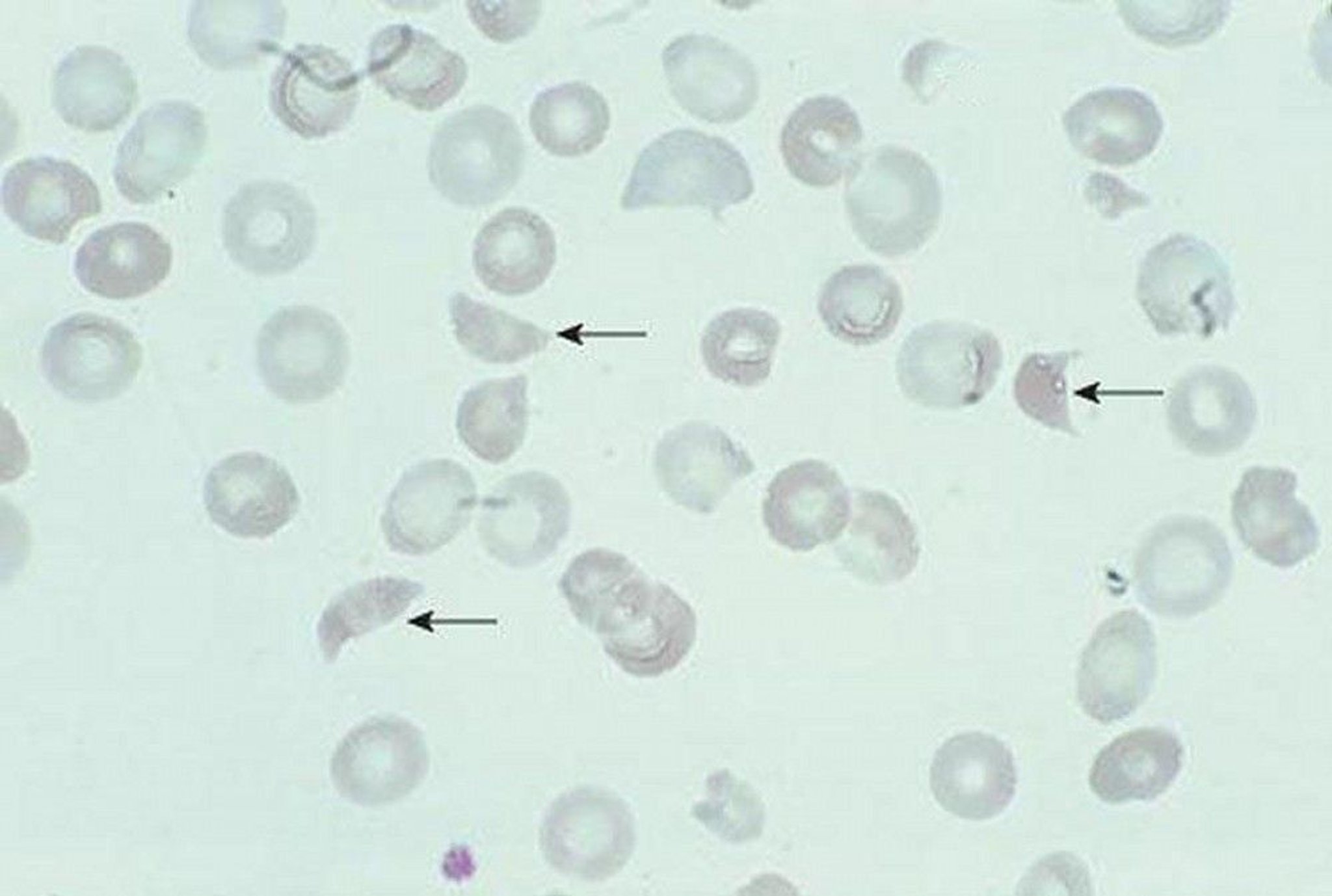
Schistocytes (see arrows) are damaged red blood cells, which may occur in microangiopathic hemolytic anemia (including disseminated intravascular coagulation, thrombotic thrombocytopenic purpura/hemolytic-uremic syndrome, and valvular hemolysis).
By permission of the publisher. From Tefferi A, Li C. In Atlas of Clinical Hematology. Edited by JO Armitage. Philadelphia, Current Medicine, 2004.
The diagnosis of TTP is suggested by:
Thrombocytopenia and anemia
Fragmented red blood cells on the blood smear indicative of microangiopathic hemolysis (schistocytes: helmet cells, triangular RBCs, distorted-appearing RBCs)
Evidence of hemolysis (falling hemoglobin level, polychromasia, elevated reticulocyte count, elevated serum LDH and bilirubin, reduced haptoglobin)
Negative direct antiglobulin test
Normal coagulation profile
The PLASMIC score cane help provide a pre-test probability of TTP and help guide treatment decisions (1).


Testing for ADAMTS13 activity and autoantibody is appropriate in all patients with suspected TTP. Although initial treatment should not be delayed to await the results of ADAMTS13 testing, results are important to guide subsequent treatment. ADAMTS13 levels < 10% with the presence of antibody against ADAMTS13 is characteristic of most adults with TTP, and these patients respond to plasma exchange and immunosuppression (glucocorticoids and rituximab).
Patients with levels of ADAMTS13 ≥ 10% and no antibody against ADAMTS13 are unlikely to respond to plasma exchange and immunosuppression and should be assessed for other causes of anemia and thrombocytopenia, including disseminated intravascular coagulation, sepsis, occult cancer with hypercoagulability and migratory thrombophlebitis (Trousseau syndrome), preeclampsia, systemic sclerosis, systemic lupus erythematosus, accelerated hypertension, and acute renal allograft rejection. Another possibility is drug-induced thrombotic microangiopathy (triggered by medications such as quinine, cyclosporine, tacrolimus, and cancer chemotherapy agents [eg, mitomycin, gemcitabine]. (These patients have normal levels of ADAMTS 13 and do not respond to plasma exchange, glucocorticoids, rituximab, or complement inhibition.)
Rare patients may have low ADAMTS13 levels but no autoantibody; such patients should undergo ADAMTS13 genetic testing to confirm congenital Upshaw-Schulman syndrome since they will require only plasma infusion without need for immunosuppression. Genetic testing is also indicated in patients with onset during childhood or pregnancy, recurrent episodes, a positive family history, or other clinical suspicion.
Otherwise unexplained thrombocytopenia and microangiopathic hemolytic anemia are sufficient evidence for a presumptive diagnosis.
Diagnosis reference
1. Bendapudi PK, Hurwitz S, Fry A, et al. Derivation and external validation of the PLASMIC score for rapid assessment of adults with thrombotic microangiopathies: a cohort study. Lancet Haematol. 2017;4(4):e157-e164. doi:10.1016/S2352-3026(17)30026-1
Treatment of TTP
Plasma exchange
Glucocorticoids and rituximab
Caplacizumab
Recombinant ADAMTS13
Untreated TTP is > 90% fatal. With current therapy (plasma exchange, glucocorticoids, rituximab), however, > 95% of patients recover completely (1). Plasma exchange is started urgently and continued daily for several days or many weeks until there is evidence that disease activity has subsided, as indicated by a normal platelet count and LDH level (2). Adults with TTP are also often given glucocorticoids and rituximab.
Pearls & Pitfalls
|
Caplacizumab, an anti–von Willebrand factor humanized single-variable-domain immunoglobulin (nanobody), inhibits the interaction between unusually large von Willebrand factor multimers and platelets. Caplacizumab appears to hasten resolution of thrombocytopenia, but it may increase bleeding tendency. While it may reduce the need for plasma exchange, as monotherapy it rarely induces durable remission. Its precise role in the management of TTP remains debated and not fully defined. Guidance from the International Society on Thrombosis and Haemostasis (ISTH) supports the use of caplacizumab as part of the treatment strategy (3). However, analyses have raised concerns regarding the routine use of caplacizumab, citing its substantial cost and the potential for increased bleeding risk (4).
Most patients experience only a single episode of TTP. However, relapses occur in approximately 40% of patients who have a severe deficiency of ADAMTS13 activity caused by an autoantibody inhibitor of ADAMTS13. In patients with recurrence when plasma exchange is stopped or in patients with relapses, more intensive immunosuppression with rituximab may be effective. Patients must be evaluated quickly if symptoms suggestive of a relapse develop.
Patients with inherited ADAMTS13 deficiency (Uphaw-Schulman syndrome) are not treated with plasma exchange, glucocorticoids or rituximab. Instead infusions of fresh-frozen plasma (FFP) can be used if recombinant ADAMTS13 is not available. Recombinant ADAMTS13 is currently being studied in the acute treatment of acquired TTP and shows promising initial results (5).
Treatment references
1. Selvakumar S, Liu A, Chaturvedi S. Immune thrombotic thrombocytopenic purpura: Spotlight on long-term outcomes and survivorship. Front Med (Lausanne). 2023;10:1137019. doi:10.3389/fmed.2023.1137019
2. Zheng XL, Vesely SK, Cataland SR, et al. Good practice statements (GPS) for the clinical care of patients with thrombotic thrombocytopenic purpura. J Thromb Haemost. 2020;18(10):2503-2512. doi:10.1111/jth.15009
3. Zheng XL, Vesely SK, Cataland SR, et al. ISTH guidelines for treatment of thrombotic thrombocytopenic purpura. J Thromb Haemost. 2020;18(10):2496-2502. doi:10.1111/jth.15010
4. Goshua G, Sinha P, Hendrickson JE, Tormey C, Bendapudi PK, Lee AI. Cost effectiveness of caplacizumab in acquired thrombotic thrombocytopenic purpura. Blood. 2021;137(7):969-976. doi:10.1182/blood.2020006052
5. Bendapudi PK, Foy BH, Mueller SB, et al. Recombinant ADAMTS13 for Immune Thrombotic Thrombocytopenic Purpura. N Engl J Med. 2024;390(18):1690-1698. doi:10.1056/NEJMoa2402567
Key Points
Platelets and red blood cells are destroyed nonimmunologically by microvascular thrombi, leading to thrombocytopenia, anemia, and organ ischemia.
The cause is deficient activity of the ADAMTS13 protease, which is usually due to an acquired autoantibody but rarely by an inherited gene mutation.
Untreated thrombotic thrombocytopenic purpura is usually fatal.
Timely treatment with plasma exchange along with glucocorticoids and rituximab results in survival rates > 95%.
Caplacizumab may produce a more rapid rise in platelet count than plasma exchange alone.
Drug Information for the Topic