Lymphangitis is acute infection (usually bacterial or parasitic) of peripheral lymphatic channels. Symptoms include erythematous, irregular, warm, tender streaks that develop on an extremity. Diagnosis is clinical. Treatment of bacterial lymphangitis is usually with antistreptococcal antibiotics.
(See also Overview of Bacterial Skin Infections and Lymphadenitis.)
Lymphangitis is typically due to bacteria in resource-rich countries and to parasites (ie, filarial lymphangitis due to Wuchereria or Brugia species) in resource-poor countries. Lymphatic filariasis affects over 650 million people globally, predominantly in endemic tropical regions (1).
Typical bacterial causes of lymphangitis include streptococci. However, nonbacterial causes can also occur (2). Rare causes of lymphangitis include staphylococcal infections, Pasteurella infections, Erysipelothrix, anthrax, herpes simplex infections, lymphogranuloma venereum, rickettsial infections, sporotrichosis, Nocardia infections, leishmaniasis, tularemia, Burkholderia infections, and atypical mycobacterial infections.
Pathogens enter the lymphatic channels from an abrasion, wound, or coexisting infection (usually cellulitis). Parasitic lymphangitis usually occurs via a vector (eg, mosquito bite). Patients with underlying lymphedema are at particular risk.
General references
1. World Health Organization (WHO): Lymphatic filariasis. November 21, 2024. Accessed January 23, 2026.
2. Cohen BE, Nagler AR, Pomeranz MK. Nonbacterial Causes of Lymphangitis with Streaking. J Am Board Fam Med. 2016;29(6):808-812. doi:10.3122/jabfm.2016.06.160015
Symptoms and Signs of Lymphangitis
Erythematous, irregular, warm, tender streaks develop on an extremity and extend proximally from a peripheral lesion toward regional lymph nodes, which are typically enlarged and tender. Systemic manifestations (eg, fever, shaking chills, tachycardia, headache) may occur and may be more severe and rapid than cutaneous findings suggest.
Leukocytosis is common. Bacteremia may occur.
Rarely, cellulitis with suppuration, necrosis, and ulceration can occur along the involved lymph channels as a consequence of primary lymphangitis.

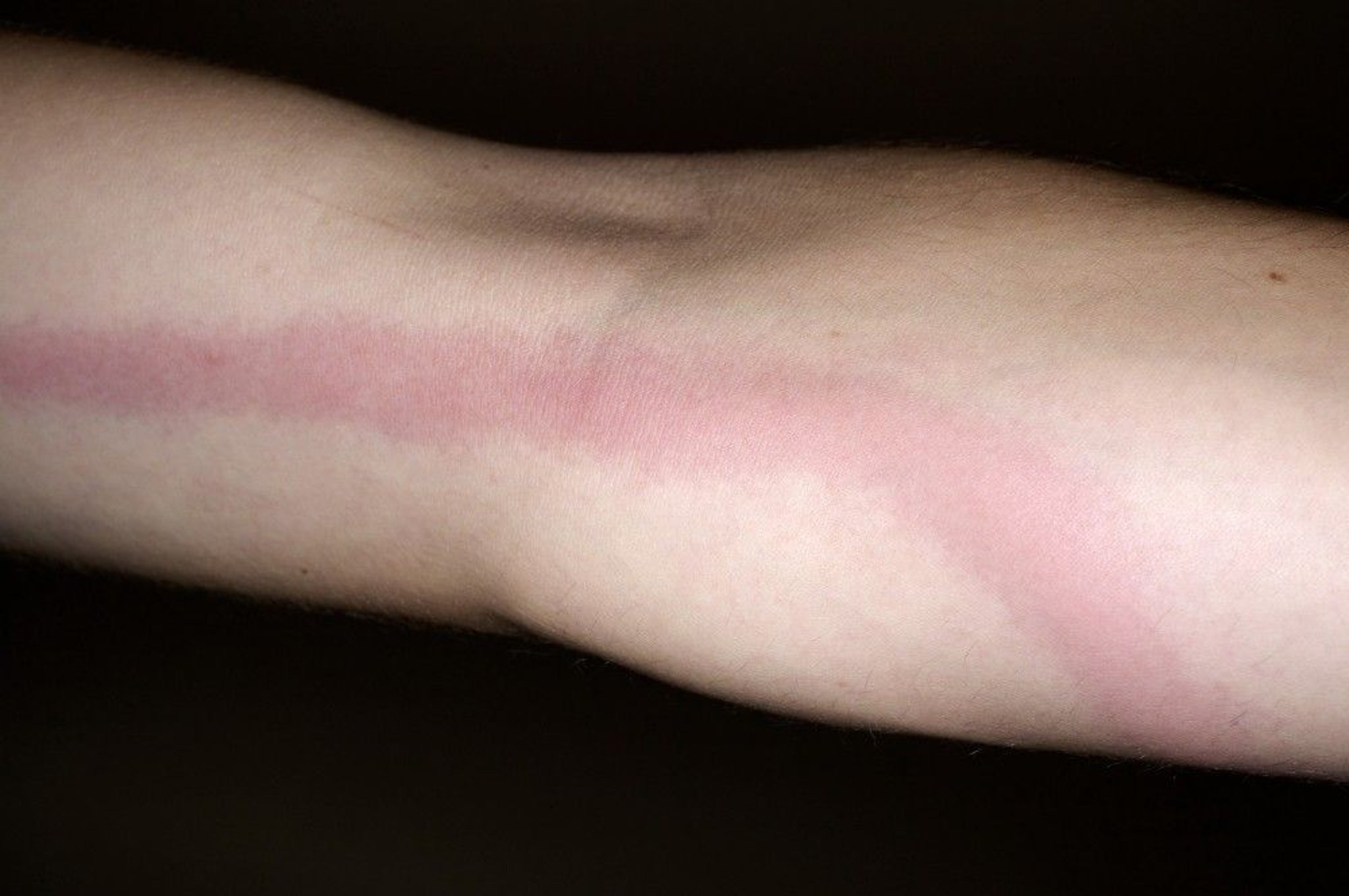
After an insect bite, this patient developed an erythematous streak on the arm consistent with lymphangitis.
SCIENCE PHOTO LIBRARY
Diagnosis of Lymphangitis
Primarily history and physical examination
The diagnosis of lymphangitis is primarily clinical.
Isolation of the responsible organism is usually unnecessary.
Treatment of Lymphangitis
Antibiotics
Most patients respond rapidly to antistreptococcal antibiotics (1) (see treatment of cellulitis).
If response to treatment is poor or presentation is unusual, rare pathogens should be considered.
Treatment reference
1. Kano Y, Momose T. Acute lymphangitis. Cleve Clin J Med. 2020;87(3):129-130. doi:10.3949/ccjm.87a.19095