Rocky Mountain spotted fever (RMSF) is zoonotic disease caused by Rickettsia rickettsii; ixodid ticks are the reservoir and vector and transmit infection to various vertebrate animal hosts, including humans. Symptoms are high fever, severe headache, and rash. Diagnosis in the acute setting is usually with polymerase chain reaction testing and immunohistochemistry; seroconversion with positive serology occurs during convalescence. Treatment is with doxycycline, which is usually empirically initiated when there is clinical suspicion.
Rocky Mountain spotted fever (RMSF) is a rickettsial disease.


Hard-shelled ticks (family Ixodidae) harbor R. rickettsii, and infected females transmit the organism to their progeny. Dermacentor andersoni (wood tick) is the principal vector in the western United States. D. variabilis (dog tick) is the primary vector in the eastern, central, and southern United States. In Central and South America, Amblyomma cajennense (Cayenne tick) and Amblyomma aureolatum are considered common vectors, with natural infections documented in Panama and Brazil (1).
Ticks serve as the vector for R. rickettsii transmission and also as the natural reservoir. Humans and other vertebrate animals are considered hosts, not reservoirs, because infection resolves after days to weeks, and the infecting organism is not persistently maintained (2). Domestic (eg, dogs) and wild animals (eg, coyotes, capybaras, opossums, rabbits, rodents) serve as amplifying hosts (develop transient high-titer infection that can be transmitted to vectors), whereas humans are dead-end hosts (pathogen cannot complete life cycle, so there is no further transmission) (3).
Spotted fever rickettsioses, including RMSF, are nationally notifiable conditions in the United States (4).
General references
1. Dantas-Torres F. Rocky Mountain spotted fever. Lancet Infect Dis. 2007;7(11):724-732. doi:10.1016/S1473-3099(07)70261-X
2. Labruna MB. Ecology of rickettsia in South America. Ann N Y Acad Sci. 2009;1166:156-166. doi:10.1111/j.1749-6632.2009.04516.x
3. Moraes-Filho J, Costa FB, Gerardi M, Soares HS, Labruna MB. Rickettsia rickettsii Co-feeding Transmission among Amblyomma aureolatum Ticks. Emerg Infect Dis. 2018;24(11):2041-2048. doi:10.3201/eid2411.180451
4. CDC. Contact Information and Case Reporting for Public Health Officials. May 15, 2024. Accessed January 9, 2026.
Epidemiology of RMSF
RMSF is limited to the Western Hemisphere. Initially recognized in the Rocky Mountain states, it occurs in practically all of the United States and throughout Central and South America. RMSF cases outside the Americas are not well documented.
In humans, infection occurs mainly from March to September, when adult ticks are active and people are most likely to be in tick-infested areas.


This image shows a female cayenne tick, Amblyomma cajennense, which transmits Rickettsia rickettsii, the causative agent of Rocky Mountain spotted fever (RMSF).
CDC/James Gathany
In the southern United States, especially Arkansas, Missouri, North Carolina, Oklahoma, and Tennessee, sporadic cases occur throughout the year. In 2023, 1205 spotted fever rickettsioses, including RMSF, were reported to the United States Centers for Disease Control and Prevention (CDC); however, the exact proportion of cases caused by R. rickettsii is unclear (1). The reported incidence was highest in adults > 40 years old and in people who frequented tick-infested areas for work or recreation. Since 2020, the number of reported cases of all spotted fever rickettsioses has decreased. This decrease is primarily driven by changes in epidemiologic categorization (ie, higher serologic cutoffs of indirect immunofluorescence IgG from ≥ 1:64 to ≥ 1:128, elimination of latex agglutination and enzyme-linked immunosorbent assay, and removal of IgM). The case fatality rate is estimated to be < 0.5% of cases based on surveillance data. Mortality is highest in young children.

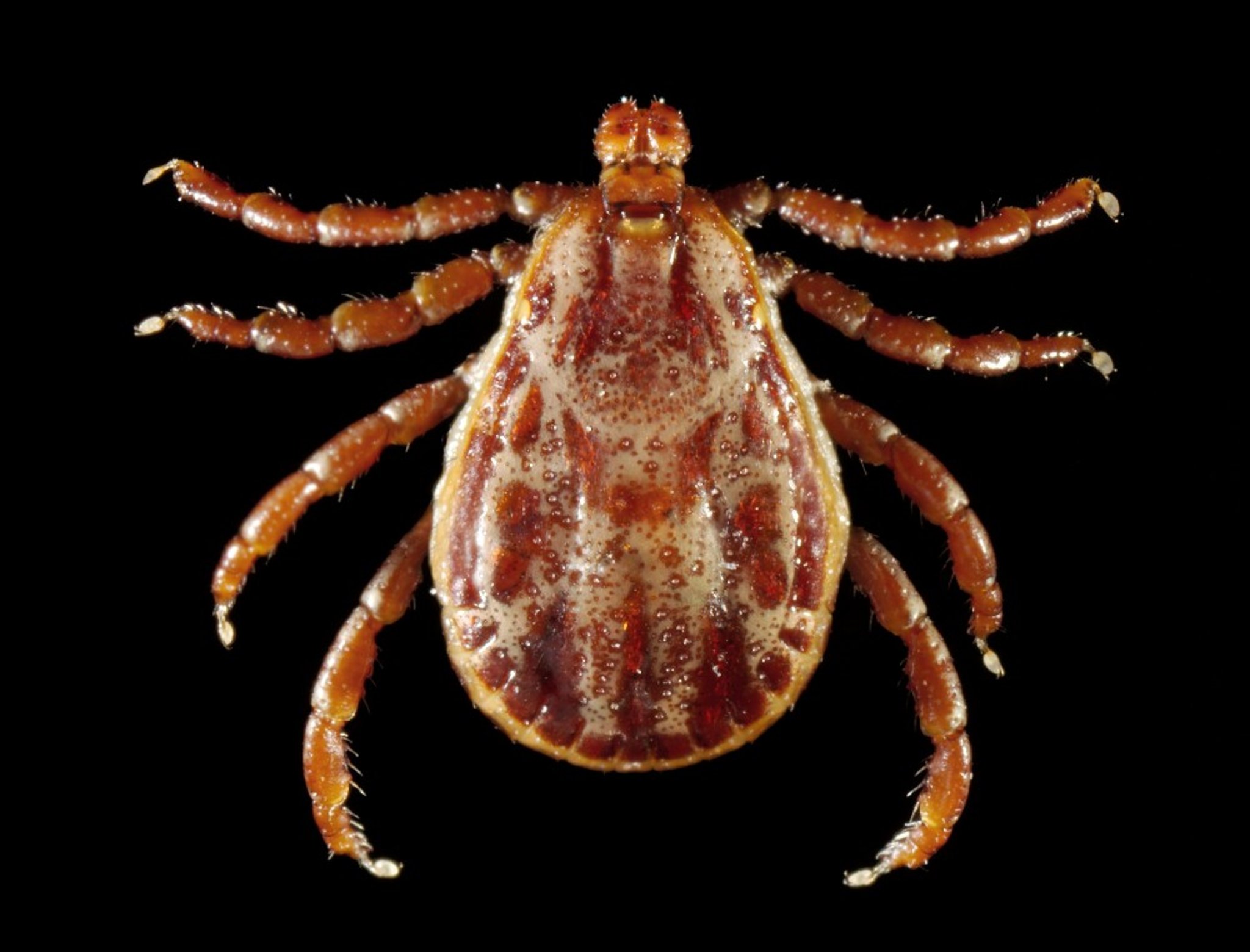
This image shows a male Rocky Mountain wood tick, Dermacentor andersoni, which transmits Rickettsia rickettsii, the causative agent of Rocky Mountain spotted fever.
CDC/James Gathany

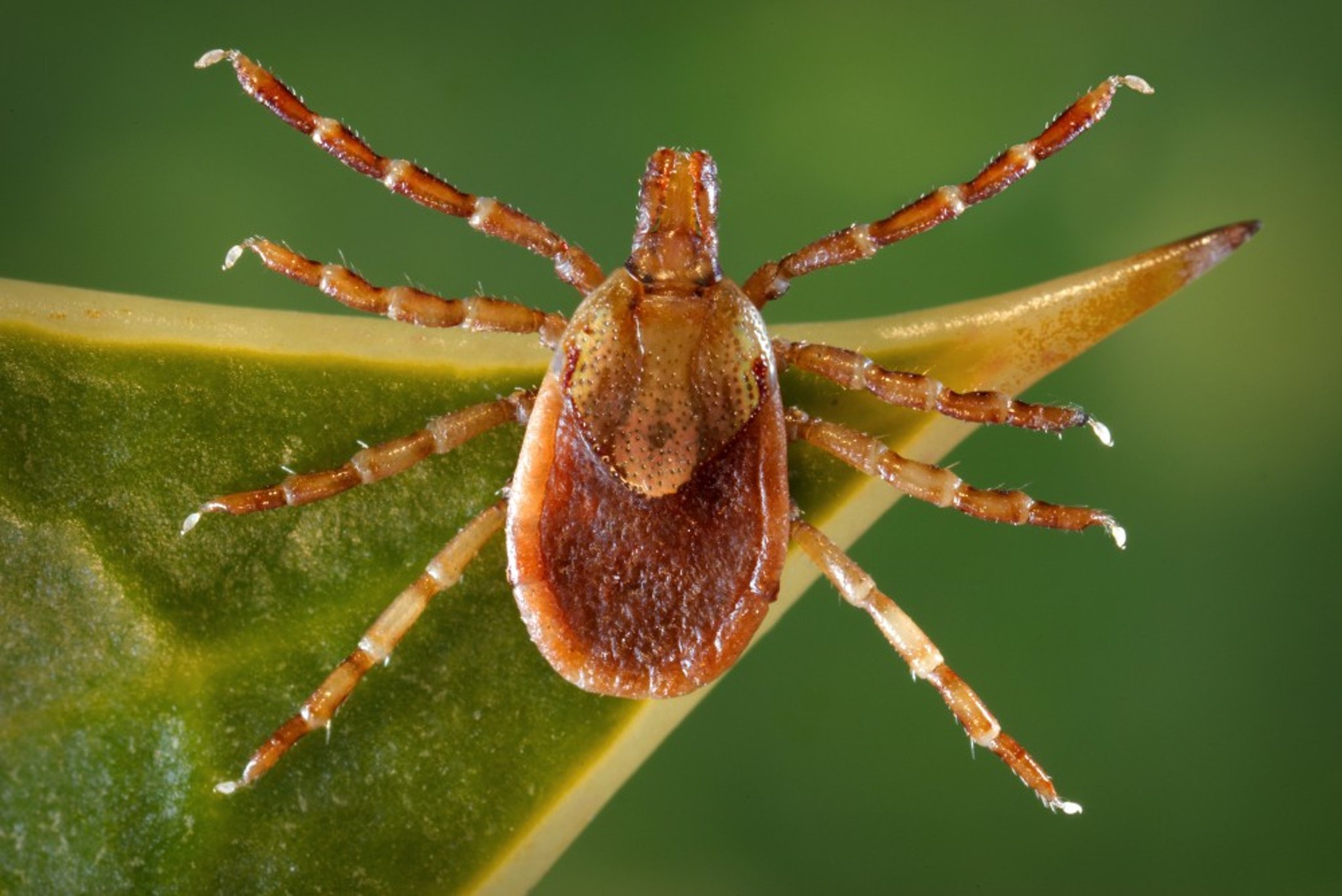
This image shows a female yellow dog tick, Amblyomma aureolatum, which transmits Rickettsia rickettsii, the causative agent of Rocky Mountain spotted fever.
CDC/James Gathany
Epidemiology reference
1. CDC. Data and Statistics on Spotted Fever Rickettsiosis. May 15, 2024. Accessed January 9, 2026.
Pathophysiology of RMSF
The pathophysiology of RMSF is centered on systemic vasculitis caused by R. rickettsii. Small blood vessels are the sites of the characteristic pathologic lesions of Rocky Mountain spotted fever. Rickettsiae propagate within damaged endothelial cells, and vessels may become blocked by thrombi, producing vasculitis in the skin, subcutaneous tissues, central nervous system, lungs, heart, kidneys, liver, and spleen. Pathogen-mediated injury to vascular endothelium also results in increased capillary permeability, microhemorrhages, and platelet consumption. Disseminated intravascular coagulation can occur in severe cases, but it is rare (1).
In cases of severe infection, microvascular occlusion can lead to ischemia, which in turn can lead to necrosis and gangrene.
Pathophysiology reference
1. Walker DH. Rickettsiae and rickettsial infections: the current state of knowledge. Clin Infect Dis. 2007;45 Suppl 1:S39-44. doi:10.1086/518145
Symptoms and Signs of RMSF
The incubation period for Rocky Mountain spotted fever varies from 3 to 12 days (1); the shorter the incubation period, the more severe the infection.


This image shows a dorsal view of an engorged female tick, Dermacentor andersoni, in the process of obtaining a blood meal from a human.
Note the intense local reaction immediately surrounding the bite site.
CDC/National Institute of Allergy and Infectious Diseases (NIAID)
Onset is abrupt, with severe headache, chills, prostration, and myalgias. Fever reaches 39.5 to 40° C within several days and remains high (for 15 to 20 days in severe cases), although morning remissions may occur.
By the sixth day of fever, 90% of patients with RMSF develop a rash (1). Rash typically occurs on the wrists, ankles, palms, soles, and forearms and rapidly extends to the neck, face, axillae, buttocks, and trunk. Initially macular and pink, it becomes maculopapular and darker. The rash is typically nonpruritic. In approximately 5 or 6 days, the lesions become petechial and may coalesce to form large hemorrhagic areas that later ulcerate (1). Eschar is usually absent.


This photo shows the maculopapular and petechial rash that is typical of Rocky Mountain spotted fever.
This photo shows the maculopapular and petechial rash that is typical of Rocky Mountain spotted fever.
CDC


This image shows the characteristic rash of Rocky Mountain spotted fever (RMSF).
This image shows the characteristic rash of Rocky Mountain spotted fever (RMSF).
CDC


This image shows the characteristic rash of Rocky Mountain spotted fever (RMSF).
This image shows the characteristic rash of Rocky Mountain spotted fever (RMSF).
CDC
This photo shows the maculopapular and petechial rash that is typical of Rocky Mountain spotted fever.
This photo shows the maculopapular and petechial rash that is typical of Rocky Mountain spotted fever.
CDC
This image shows the characteristic rash of Rocky Mountain spotted fever (RMSF).
This image shows the characteristic rash of Rocky Mountain spotted fever (RMSF).
CDC
This image shows the characteristic rash of Rocky Mountain spotted fever (RMSF).
This image shows the characteristic rash of Rocky Mountain spotted fever (RMSF).
CDC
Neurologic symptoms include headache, restlessness, insomnia, delirium, and coma, all indicative of encephalitis.
Hypotension develops in severe cases. Hepatomegaly may be present, but jaundice is infrequent. Nausea and vomiting are common. Localized pneumonitis may occur. Untreated patients may develop pneumonia, tissue necrosis, and circulatory failure, sometimes with brain and heart damage. Cardiac arrest with sudden death occasionally occurs in fulminant cases.
Symptoms and signs reference
1. CDC. Rocky Mountain Spotted Fever (RMSF): Clinical Signs and Symptoms. May 15, 2024. Accessed January 9, 2026.
Diagnosis of RMSF
History and physical examination
Molecular diagnostic testing (polymerase chain reaction [PCR]) of infected tissue or blood specimens
Biopsy of rash with immunohistochemistry to detect organisms
Acute and convalescent serologic testing (serologic testing not useful acutely)
Clinicians should suspect Rocky Mountain spotted fever in any seriously ill patient who has travelled to or lives or works in or near a wooded area anywhere in the Western Hemisphere and has unexplained fever, headache, and prostration, with or without a history of tick contact (1). A history of tick bite within 14 days of illness onset occurs only in 55 to 60% of patients (2).
Clinicians must typically make treatment decisions before receiving the results of confirmatory testing because delaying treatment for RMSF may increase the risk of severe morbidity or mortality (3).


This photomicrograph of a Gimenez-stained yolk sac smear reveals the presence of Rickettsia rickettsii bacteria, visible as pink, rod-shaped organisms.
CDC
PCR testing on whole blood, rash biopsies, or tissue is a preferred method for diagnosing Rocky Mountain spotted fever; however, if testing results are negative, treatment must not be withheld (1). If patients have a rash, a skin biopsy should be taken from the rash site (1). PCR testing or immunohistochemical (IHC) staining, which can provide fairly rapid results, is used. However, a negative test result does not justify withholding treatment when clinical manifestations suggest RMSF.
The standard serologic diagnostic test for RMSF is an indirect immunofluorescence assay (IFA) for IgG using paired acute and convalescent serum samples collected 2 to 10 weeks apart to demonstrate seroconversion (usually ≥ 4-fold) (1). IgM testing is also available at select reference laboratories but is limited by lower specificity. Antibody titers are frequently negative in the first week of illness, limiting the usefulness of serology in the acute setting.
Culture of R. rickettsii is available only at specialized laboratories. For details, see Diagnosis of Rickettsial and Related Infections.
Pearls & Pitfalls
|
Diagnosis references
1. CDC. Clinical and Laboratory Diagnosis for Rocky Mountain Spotted Fever. May 15, 2024. Accessed January 9, 2026.
2. Biggs HM, Behravesh CB, Bradley KK, et al. Diagnosis and Management of Tickborne Rickettsial Diseases: Rocky Mountain Spotted Fever and Other Spotted Fever Group Rickettsioses, Ehrlichioses, and Anaplasmosis - United States. MMWR Recomm Rep. 2016;65(2):1-44. Published 2016 May 13. doi:10.15585/mmwr.rr6502a1
3. Miller JM, Binnicker MJ, Campbell S, et al. A Guide to Utilization of the Microbiology Laboratory for Diagnosis of Infectious Diseases: 2018 Update by the Infectious Diseases Society of America and the American Society for Microbiology. Clin Infect Dis. 2018;67(6):e1-e94. doi:10.1093/cid/ciy381
Treatment of RMSF
Doxycycline
Rarely chloramphenicol
Doxycycline is the recommended first-line treatment for RMSF in all patients, including children and pregnant patients (1). If clinicians have a high index of clinical suspicion of RMSF, starting antibiotics early significantly reduces mortality and prevents most complications of Rocky Mountain spotted fever. I However, prophylactic antibiotics are not indicated for clinically asymptomatic patients who have a tick bite and have travelled to or live or work in an endemic area.
If fever, headache, and malaise occur with or without a rash, antibiotics should be started promptly.
Doxycycline is administered for at least 3 days after the fever has subsided, and there is evidence of clinical improvement (1). The minimum course of treatment is 5 to 7 days. The United States Centers for Disease Control and Prevention (CDC) has found that short courses of doxycycline (5 to 10 days) can be used in children without causing tooth staining or weakening of tooth enamel (2).
Use of antibiotics other than doxycycline increases the risk of severe illness and death (3). For patients who do not tolerate doxycycline, desensitization is recommended.
The CDC recommends the use of doxycycline for suspected RMSF in pregnant patients because of the high case fatality rate and lack of effective alternative (1). The limited available data regarding doxycycline use in pregnant patients suggest that although the potential for risk exists, this medication is unlikely to have substantial teratogenic effects given the dosages used to target rickettsial disease (3). Thus, pregnant patients should be counseled on the potential risks versus benefits when making a decision about antibiotic treatment of RMSF.
Chloramphenicol is second-line treatment and given for 7 days. Chloramphenicol can cause adverse hematologic effects, which require monitoring of blood indices, and, in neonates, gray baby syndrome.
Severely ill patients with RMSF may have a marked increase in capillary permeability in later stages; thus, IV fluids should be given cautiously to maintain blood pressure while avoiding worsening pulmonary and cerebral edema.
Treatment references
1. CDC. Clinical Care of Rocky Mountain Spotted Fever. March 6, 2025. Accessed January 9, 2026.
2. CDC. Research: Doxycycline and Tooth Staining. May 15, 2024. Accessed January 2, 2026.
3. Biggs HM, Behravesh CB, Bradley KK, et al. Diagnosis and Management of Tickborne Rickettsial Diseases: Rocky Mountain Spotted Fever and Other Spotted Fever Group Rickettsioses, Ehrlichioses, and Anaplasmosis - United States. MMWR Recomm Rep. 2016;65(2):1-44. Published 2016 May 13. doi:10.15585/mmwr.rr6502a1
Prevention of RMSF

No effective vaccine is available to prevent Rocky Mountain spotted fever.
Measures can be taken to prevent tick bites (1).
Preventing Tick Bites
Preventing tick access to skin includes:
To avoid potential toxicity, DEET should not be used in infants under 2 months of age, and DEET concentrations ≤ 10% should be used in children under 12 years of age (2). OLE and PMD should not be used in children under 3 years of age (3). Permethrin on clothing effectively kills ticks. Frequent searches for ticks, particularly in hairy areas and on children, are essential in endemic areas. Engorged ticks should be removed with care and not crushed between the fingers because crushing the tick may result in disease transmission. The tick’s body should not be grasped or squeezed. Gradual traction on the head with a small forceps dislodges the tick. The point of attachment and the person's hands should be disinfected with soap and water, rubbing alcohol, or hand sanitizer. Petroleum jelly, lit matches, and other irritants are not effective ways to remove ticks and should not be used. Complete elimination of tick populations is often not practically possible over large areas, but they may be reduced in certain zones (eg, residential) within endemic areas. To create a tick-safe residential environment, it is necessary to eliminate tick habitats and restrict host entry by clearing brush, tall grasses, and accumulated debris from around homes and lawn edges (1). Regular lawn maintenance, including frequent mowing and the installation of a 3-foot wide barrier of wood chips or gravel between lawns and wooded areas, is recommended to restrict tick migration into recreational zones. To reduce the presence of disease-carrying rodents (eg, rats, mice) and wildlife (eg, deer, raccoons), firewood may be stacked in dry, elevated areas. Physical fencing can also be installed. Recreational equipment and outdoor seating should be removed from shaded yard edges as should accumulated yard clutter to eliminate the potential for tick harborage. |


Prevention references
1. Centers for Disease Control and Prevention (CDC). Preventing Tick Bites. August 28, 2024. Accessed January 5, 2026.
2. Ho BM, Davis HE, Forrester JD, et al. Wilderness Medical Society Clinical Practice Guidelines for the Prevention and Management of Tick-Borne Illness in the United States. Wilderness Environ Med. 2021;32(4):474-494. doi:10.1016/j.wem.2021.09.001
3. CDC. Mosquitoes, Ticks, and Other Arthropods. April 23, 2025. Accessed March 5, 2026.
Key Points
Despite its name, Rocky Mountain spotted fever (RMSF) occurs in practically all of the United States and throughout Central and South America.
Small-vessel vasculitis can cause serious illness affecting the central nervous system, lungs, heart, kidneys, liver, and spleen.
Symptoms (severe headache, chills, prostration, myalgias) begin abruptly, followed by fever and usually a rash.
Neurologic symptoms (headache, restlessness, insomnia, delirium, coma) may develop, indicating encephalitis.
Suspect RMSF in any seriously ill patient who has travelled to or lives or works in or near a wooded area anywhere in the Western Hemisphere and has unexplained fever, headache, and prostration, with or without a history of tick contact.
Test during acute illness with polymerase chain reaction of blood and PCR or immunohistology of a skin biopsy specimen, but because of lower sensitivity, a negative result should not affect the decision to begin antibiotics.
Serology with immunofluorescence assay for IgG usually confirms the diagnosis by demonstrating seroconversion during convalescence.
Treatment is with doxycycline, including in pregnant patients and children; supportive care should be provided as needed for hypovolemia and/or organ involvement.
Drug Information for the Topic