Osgood-Schlatter disease is osteochondrosis of the tibial tubercle, causing painful inflammation. Diagnosis is primarily based on physical findings; radiographs of the knee may be helpful, but are not necessary. Treatment includes analgesics and rest; intralesional glucocorticoids or surgery may rarely be needed.
Osgood-Schlatter disease refers to osteochondrosis and inflammation of the tibial tubercle. It occurs in children between 10 years and 15 years of age and is usually unilateral. In a retrospective cohort study between 2007 and 2012 from the United Kingdom in children and adolescents aged 8 to 18 years, the mean incidence of disease was 3.8/1000 person-years (1). Although the disease is more common among boys, this status is changing as girls become more active in sports programs (1).
The etiology of Osgood-Schlatter disease is thought to be trauma due to excessive traction by the patellar tendon on its immature epiphyseal insertion, leading to microavulsion fractures.

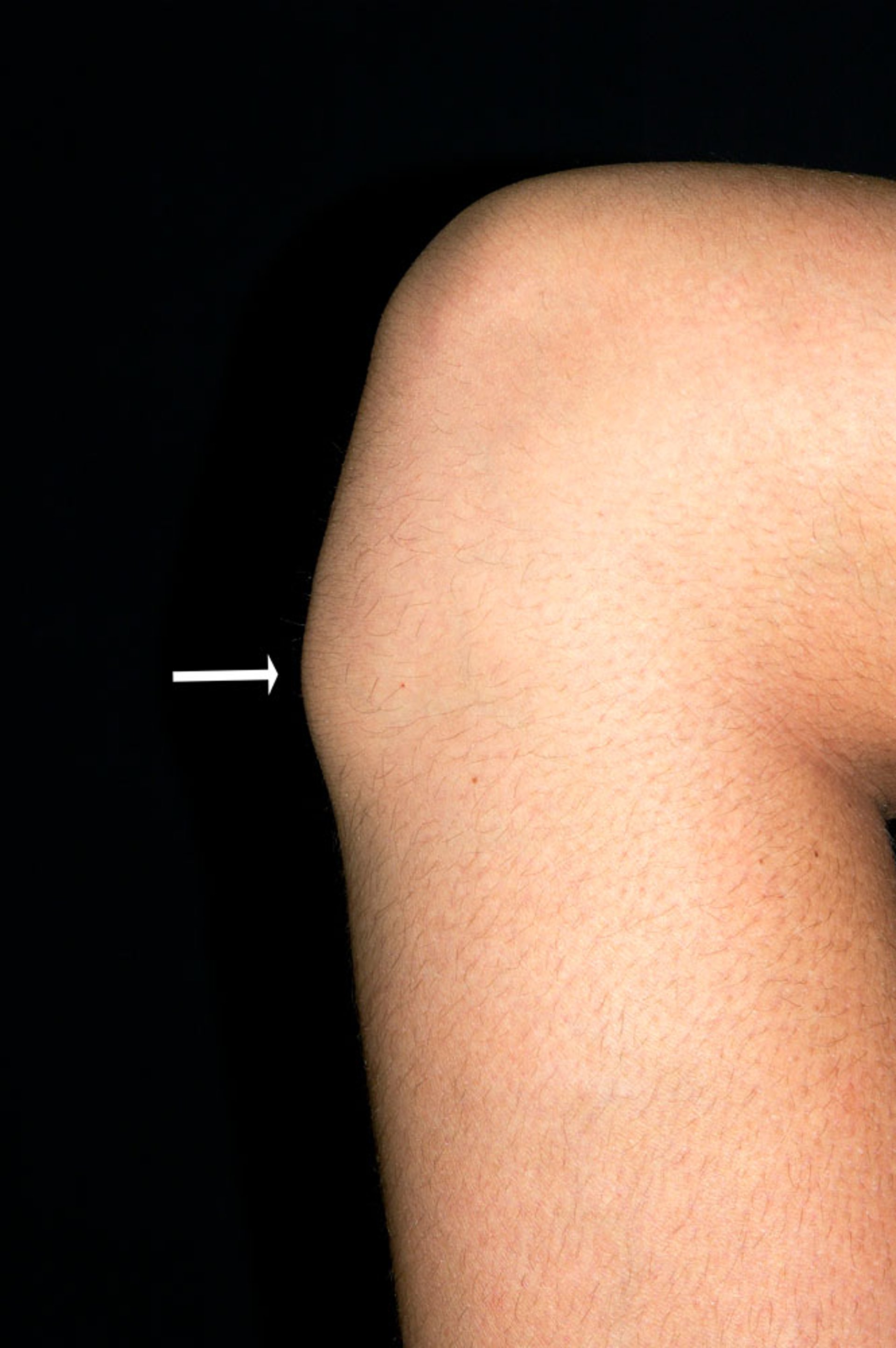
This photo shows the knee of an adolescent male with a bony prominence (tibial tuberosity, arrow) due to Osgood-Schlatter disease.
DR P. MARAZZI/SCIENCE PHOTO LIBRARY
Characteristic symptoms of Osgood-Schlatter disease are pain, swelling, and tenderness over the tibial tubercle at the patellar tendon insertion. There are no systemic manifestations.
General reference
1. van Leeuwen GJ, de Schepper EI, Rathleff MS, Bindels PJ, Bierma-Zeinstra SM, van Middelkoop M. Incidence and management of Osgood-Schlatter disease in general practice: retrospective cohort study. Br J Gen Pract. 2022;72(717):e301-e306. Published 2022 Mar 31. doi:10.3399/BJGP.2021.0386
Diagnosis of Osgood-Schlatter Disease
Primarily history and physical examination
Sometimes radiographs
The diagnosis of Osgood-Schlatter disease is by characteristic, isolated findings over the tibial tubercle on examination.
Lateral knee radiographs may show fragmentation of the tibial tubercle. However, radiographs are not needed unless other disorders (eg, injury, joint inflammation) are suggested by pain and swelling extending beyond the area over the tibial tubercle or pain is accompanied by erythema and warmth.
Treatment of Osgood-Schlatter Disease
Rest and analgesics
Rarely immobilization, intralesional glucocorticoids, and surgery
Resolution is usually spontaneous within weeks or months. Usually, taking analgesics and avoiding excessive exercise, especially deep knee bending, are the only necessary measures. Complete avoidance of sports is unnecessary.
Rarely, immobilization in plaster, intralesional injection of hydrocortisone, surgical removal of loose bodies (eg, ossicles, avulsed fragments of bone), drilling, and grafting are required.
Drug Information for the Topic