Acrocyanosis is persistent, painless, symmetric cyanosis of the hands, feet, or face caused by vasospasm of the small vessels of the skin, and it is typically exacerbated by cold temperatures.

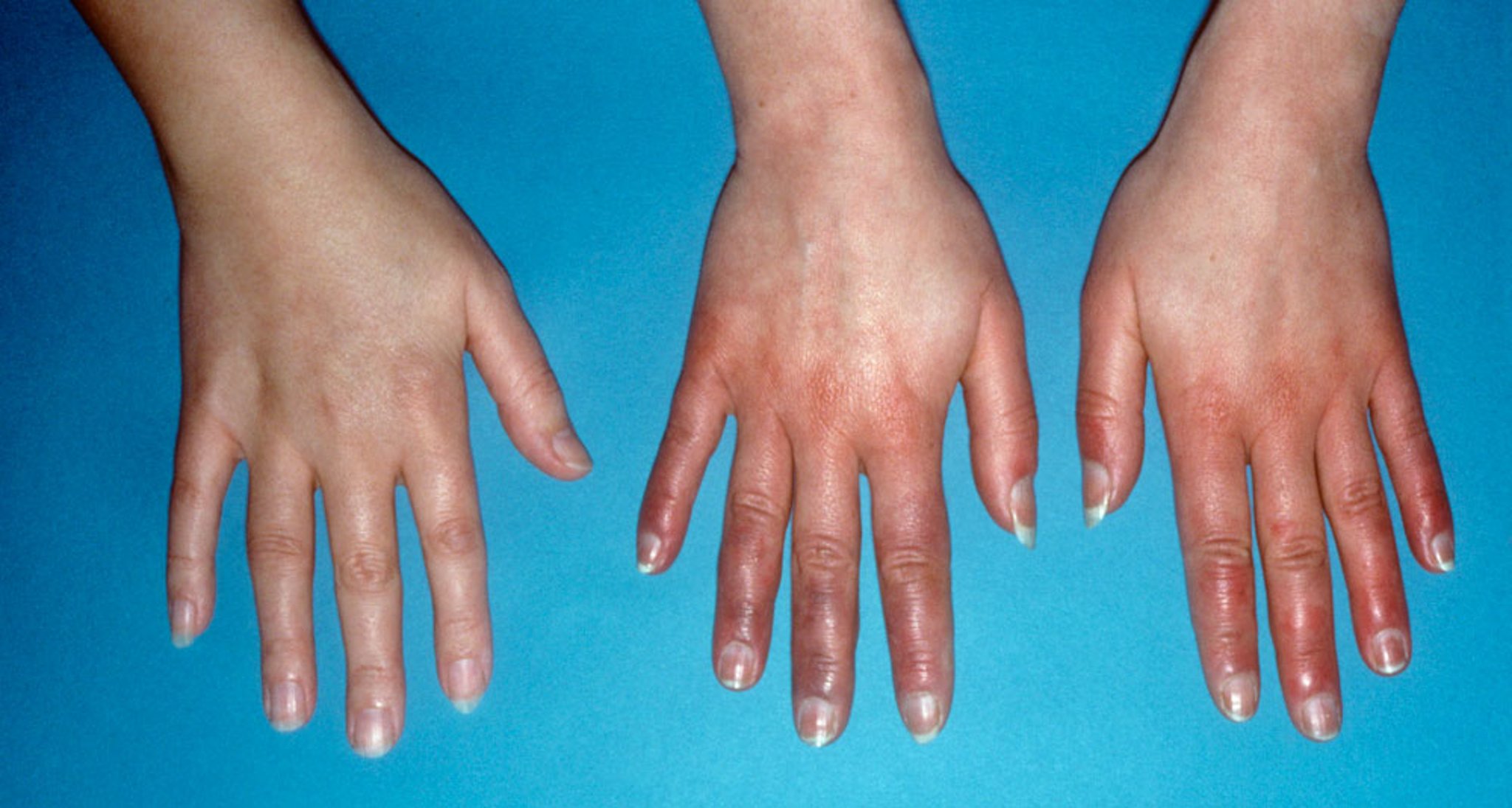
This photo shows the contrast between the digital cyanosis in the hands of a patient with acrocyanosis and a normal hand.
ST BARTHOLOMEW HOSPITAL/SCIENCE PHOTO LIBRARY
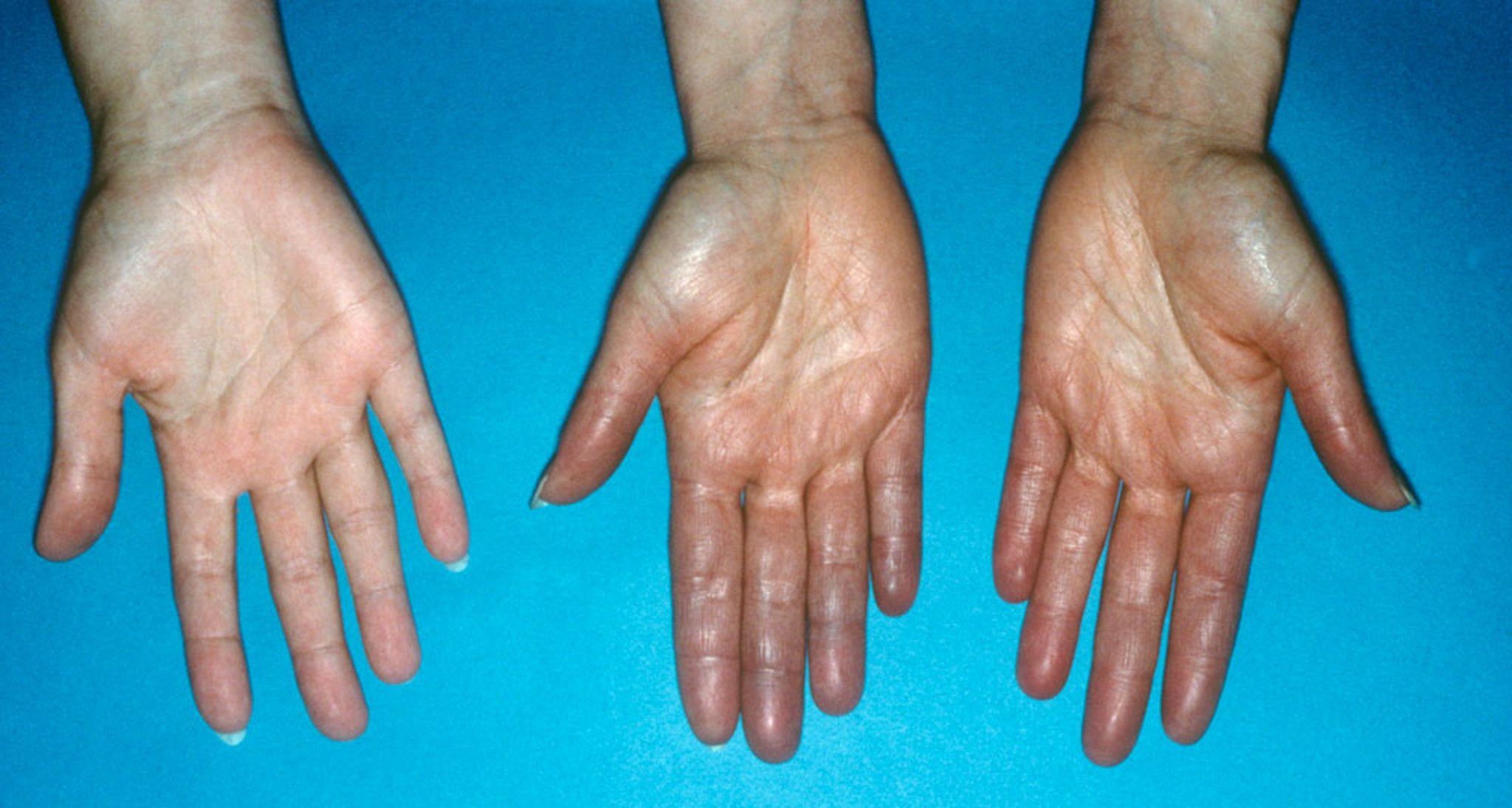
This photo shows the contrast between the digital cyanosis in the hands of a patient with acrocyanosis and a normal hand.
ST BARTHOLOMEW HOSPITAL/SCIENCE PHOTO LIBRARY
Acrocyanosis usually occurs in women and is not associated with occlusive artery disease. The digits and hands or feet, and sometimes nose or ears, are persistently cold and bluish, sweat profusely, and may swell. In patients with dark skin, the skin may not appear blue, but there is still a distinct contrast in color (1). Clinical findings are due to vasospasm of small vessels and can be triggered or exacerbated by exposure to cold or stress. Etiology is unknown, and the condition may be associated with an underlying comorbid condition such as a rheumatologic disease or malignancy.
In acrocyanosis, unlike Raynaud phenomenon, cyanosis persists and is not easily reversed, trophic changes (thin, shiny, or discolored skin; hair loss; brittle nails) and ulcers do not occur, and pain is absent. Pulses are normal. Cyanosis that occurs in systemic conditions and reflects hypoxemia may be central or peripheral, depending upon the amount of deoxygenated hemoglobin, but acrocyanosis involves only the hands and feet and does not involve decreased arterial oxygen saturation.
Health care professionals diagnose the disorder based on symptoms that are limited to symmetrical involvement of the patient’s hands or feet and that persist even though pulses in the larger arteries (such as in the wrist and ankle) are normal.
Treatment, other than reassurance and avoidance of cold, is usually unnecessary. Vasodilators may be tried but are usually ineffective.
Note that unlike acrocyanosis in adults, acrocyanosis in neonates is both common and normal. Neonatal acrocyanosis typically resolves within days to weeks, although it can persist through infancy.
Reference
1. Kurklinsky AK, Miller VM, Rooke TW. Acrocyanosis: the Flying Dutchman [published correction appears in Vasc Med. 2011 Oct;16(5):409]. Vasc Med 2011;16(4):288-301. doi:10.1177/1358863X11398519