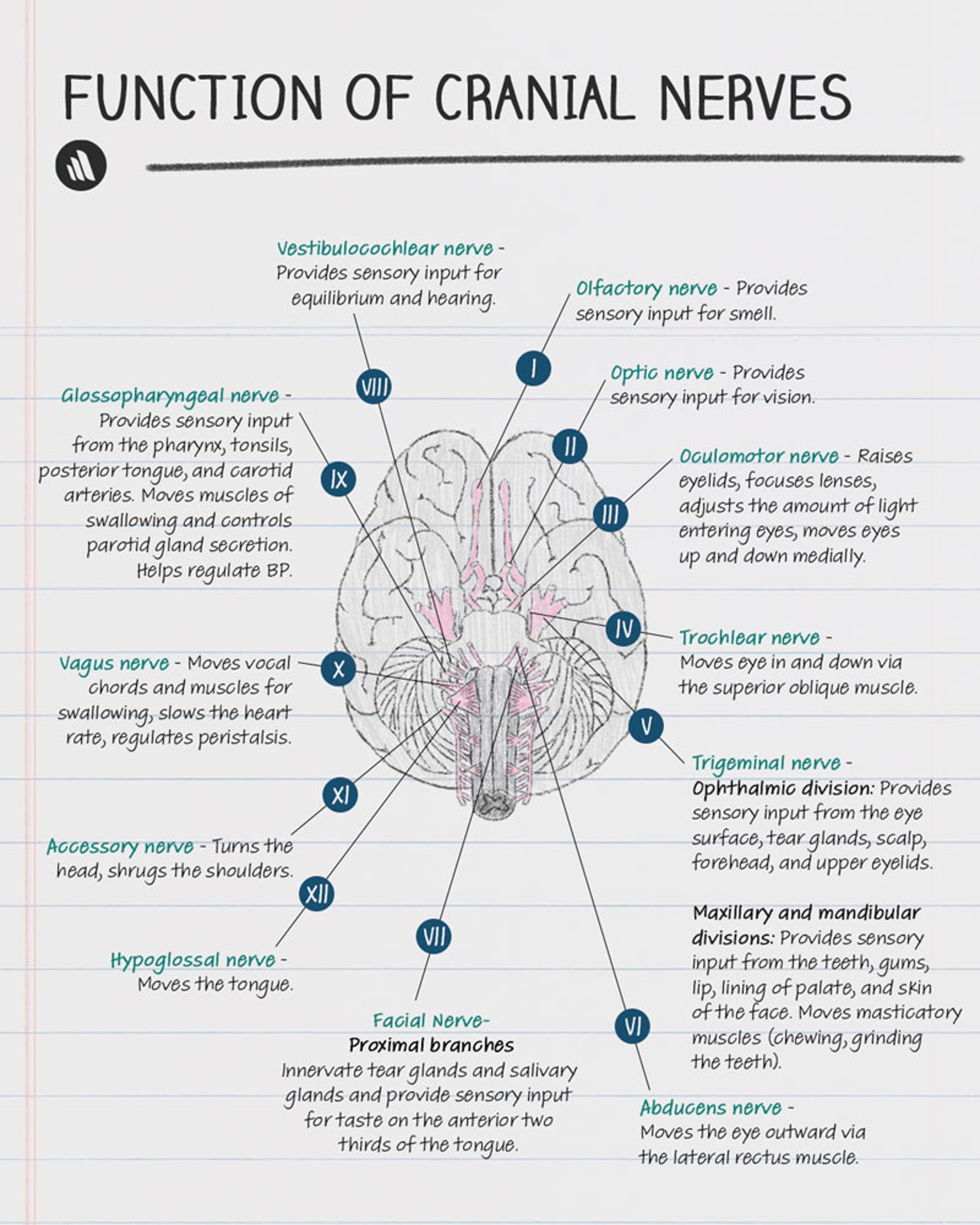
Herpes zoster oticus is an uncommon manifestation of herpes zoster that affects the eighth cranial nerve ganglia and the geniculate ganglion of the seventh (facial) cranial nerve. It causes otalgia, a vesicular rash, ipsilateral facial paralysis, vertigo, and sometimes hearing loss. Diagnosis is primarily clinical. Treatment is with glucocorticoids, antivirals, and supportive medications for symptomatic relief.

Copyright © 2023 Merck & Co., Inc., Rahway, NJ, USA and its affiliates. All rights reserved.
Herpes zoster (shingles) occurs due to reactivation of varicella-zoster virus infection within the geniculate ganglion (1). Risk factors for reactivation include immunodeficiency secondary to cancer, chemotherapy, radiation therapy, and HIV infection. Typically, the virus remains latent in a dorsal root ganglion, and reactivation manifests as painful skin lesions in a dermatomal distribution. However, the virus rarely remains latent in the geniculate ganglion; when reactivated, the virus causes symptoms involving the seventh and eighth cranial nerves.
Reference
1. Furuta Y, Takasu T, Fukuda S, et al. Detection of varicella-zoster virus DNA in human geniculate ganglia by polymerase chain reaction. J Infect Dis. 1992;166(5):1157-1159. doi:10.1093/infdis/166.5.1157
Symptoms and Signs of Herpes Zoster Oticus
Symptoms of herpes zoster oticus include
Severe ear pain with vesicles in the ear
Transient or permanent ipsilateral facial paralysis (resembling Bell palsy)
Vertigo lasting days to weeks
Hearing loss (which may be permanent or which may resolve partially or completely)
Tinnitus and hyperacusis
Vesicles occur on the pinna and in the external auditory canal along the distribution of the sensory branch of the facial nerve. Symptoms of meningoencephalitis (eg, headache, confusion, stiff neck) are uncommon. Sometimes other cranial nerves are involved.
Diagnosis of Herpes Zoster Oticus
Primarily history and physical examination
Sometimes viral cultures
Sometimes imaging (MRI)
Diagnosis of herpes zoster oticus is usually clinical. If there is any question about viral etiology, vesicular scrapings may be collected for direct immunofluorescence or for viral cultures, and MRI is done to exclude other diagnoses.
Treatment of Herpes Zoster Oticus
Antivirals and glucocorticoids
Sometimes opioids or other medications for severe pain
Rarely surgical decompression of the fallopian canal (eg, for complete facial paralysis)
Although there is a paucity of high-quality evidence that glucocorticoids, antivirals, or surgical decompression make a difference in herpes zoster oticus, they are the only possibly useful treatments (1, 2). When used, glucocorticoids are started with oral high-dose prednisone for 4 to 7 days, followed by gradual tapering of the dose over the next 2 weeks. Either oral acyclovir 5 times a day or valacyclovir 2 times a day for 10 days may shorten the clinical course; it is routinely prescribed for immunocompromised patients.
Vertigo is effectively suppressed with oral diazepam every 4 to 6 hours. Pain may require oral opioids. Postherpetic neuralgia may be treated with medications (eg, amitriptyline, nortriptyline, gabapentin, pregabalin) if needed.
The role of surgical treatment of facial paralysis remains controversial; however, surgical decompression of the fallopian canal (a bony canal within the temporal bone in the skull that houses the facial nerve) may be considered if the facial palsy is complete (no visible facial movement). Decompression must be done within 2 weeks of onset of the facial paralysis to be effective. Before surgery, electroneurography is done. Patients with a > 90% decrement in facial movement on electroneurography are usually candidates for decompression.
Treatment references
1. Uscategui T, Dorée C, Chamberlain IJ, Burton MJ. Antiviral therapy for Ramsay Hunt syndrome (herpes zoster oticus with facial palsy) in adults. Cochrane Database Syst Rev. 2008;2008(4):CD006851. Published 2008 Oct 8. doi:10.1002/14651858.CD006851.pub22.
2. Coulson S, Croxson GR, Adams R, Oey V. Prognostic factors in herpes zoster oticus (ramsay hunt syndrome). Otol Neurotol. 2011;32(6):1025-1030. doi:10.1097/MAO.0b013e3182255727
Prevention of Herpes Zoster Oticus
Vaccination is the primary method recommended for preventing herpes zoster oticus. The recombinant zoster vaccine (RZV) is highly effective in preventing herpes zoster, including herpes zoster oticus. In a multicenter randomized trial with 15,411 patients 70 years or older, the overall vaccine efficacy was found to be 97.2% against herpes zoster (1). The Centers for Disease Control and Prevention's Advisory Committee on Immunization Practices (ACIP) recommends vaccination for adults aged 50 years and older, regardless of previous herpes zoster infection or varicella vaccination status; it is also recommended in younger adults who are immunocompromised. (See Herpes Zoster Vaccine for more information.)
Prevention reference
1. Lal H, Cunningham AL, Godeaux O, et al. Efficacy of an adjuvanted herpes zoster subunit vaccine in older adults. N Engl J Med. 2015;372(22):2087-2096. doi:10.1056/NEJMoa1501184
Drug Information for the Topic