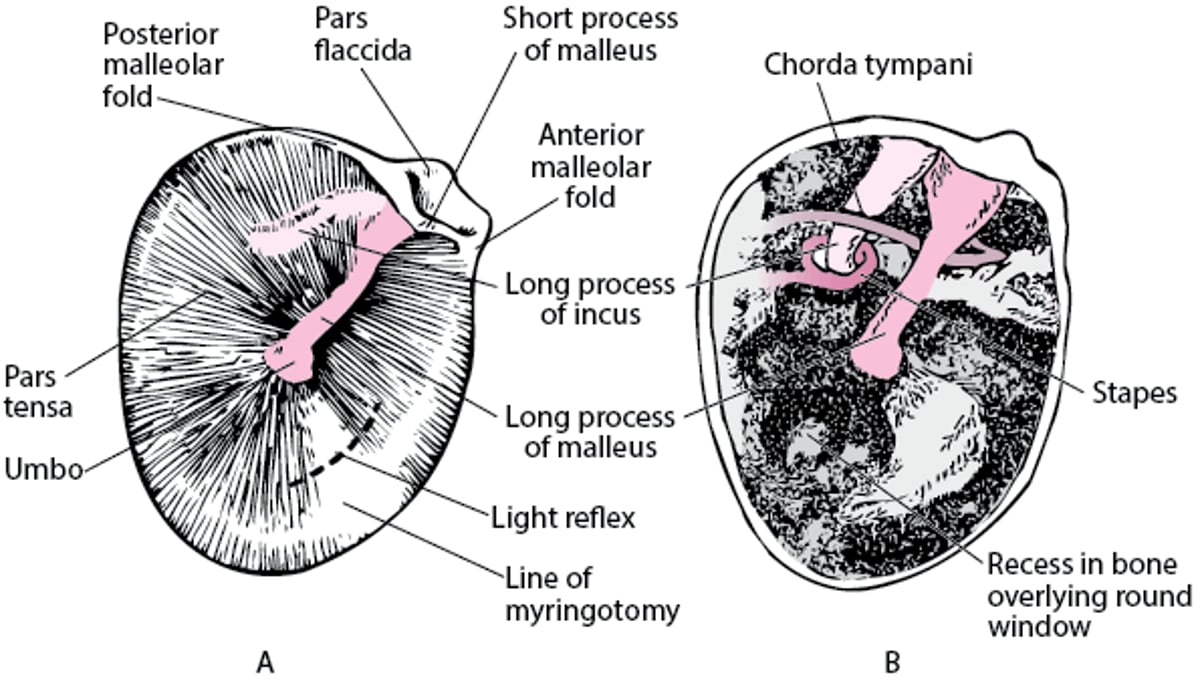
The middle ear is an air-filled chamber located behind the eardrum that connects to the nasopharynx via the eustachian tube. Middle ear disorders may be secondary to infection, eustachian tube obstruction, or trauma. Information about objects placed in the ear and symptoms such as rhinorrhea, nasal obstruction, sore throat, upper respiratory infection, allergies, headache, systemic symptoms, and fever aid in making a diagnosis. The appearance of the external auditory canal and tympanic membrane often yields a diagnosis. The nose, nasopharynx, and oropharynx are examined for signs of infection and allergy and for evidence of tumors.
Middle ear function is evaluated using pneumatic otoscopy (which measures the mobility of the tympanic membrane), the Weber and Rinne tuning fork tests, tympanometry, and other audiologic tests.
(See also Otic Tumors.)


This illustration highlights the anatomy of the middle ear including the tympanic membrane (eardrum) and the ossicles.
Image Copyright © Nucleus Medical Media. All rights reserved.
Tympanic Membrane of Right Ear (A); Tympanic Cavity with Tympanic Membrane Removed (B)