Cystoscopy is insertion of a rigid or flexible fiberoptic instrument into the bladder.
Indications include the following:
Helping diagnose urologic disorders (eg, bladder tumors, calculi in the bladder, benign prostatic hyperplasia)
Treating urethral strictures
Accessing the bladder for ureteral radiographs or placement of JJ ("double J") stents (stents with coiled ends placed in the renal pelvis and bladder)
The main contraindication is active urinary tract infection (UTI).
Cystoscopy is usually done in an outpatient setting with use of local anesthesia (urethral application of 2% lidocaine gel) or, when necessary, conscious sedation or general anesthesia. Complications include UTI, bleeding, and bladder and/or urethral trauma.
Procedures with rigid cystoscopes that have better optics and larger channels allow for biopsy of larger tissue samples but need to be performed under regional or general anesthesia. Those with flexible cystoscopes are less invasive, can be done in the outpatient setting under local anesthesia, and are frequently used for initial diagnosis and ongoing monitoring.


This image shows a cystoscopic view of several bladder stones (yellow spheres).

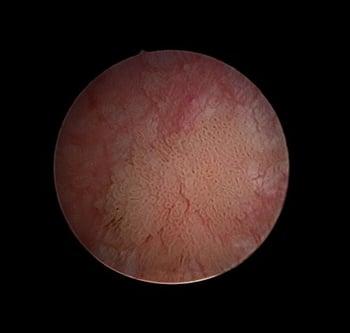
This cystoscopic view inside the bladder of a male with a transitional cell carcinoma shows a tumor (center) in the bladder wall.
Drug Information for the Topic