
Listeriosis is bacteremia, meningitis, cerebritis, dermatitis, an oculoglandular syndrome, intrauterine and neonatal infections, or rarely endocarditis caused by Listeria species. Symptoms vary with the organ system affected. Intrauterine infection may cause fetal death. Diagnosis is by laboratory isolation. Treatment includes penicillin or ampicillin (often with aminoglycosides) or trimethoprim/sulfamethoxazole.
(See also Neonatal Listeriosis.)


Listeria are small, non–acid-fast, nonencapsulated, nonsporulating, beta-hemolytic, aerobic, and facultative anaerobic gram-positive bacilli that have characteristic tumbling motility. They are present worldwide in the environment and in the gut of humans, nonhuman mammals, birds, and crustaceans. There are several species of Listeria, but L. monocytogenes is the primary pathogen in humans.
L. monocytogenes is an uncommon cause of foodborne disease but is associated with a high case-fatality rate. In the United States, there are approximately 1600 cases of listeriosis annually, and about 1 in 6 older adults die (1). Between 2020 and 2022, fewer cases were reported (approximately 800 to 1000), presumably related to decreased diagnosis and subsequently underreporting associated with the SARS-CoV-2 pandemic (2). Infections typically peak in the summer. Attack rates are highest in neonates, in adults ≥ age 65, and in immunocompromised patients, including patients with advanced HIV infection. Listeriosis is much more likely in pregnant patients, especially those who are Hispani , compared to the general population (1).

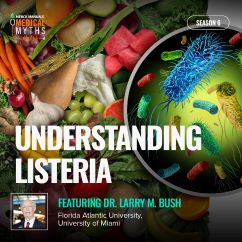
Infection with Listeria monocytogenes is a nationally notifiable disease in the United States (3). Because of its potential for outbreaks, the Centers for Disease Control and Prevention (CDC) periodically updates data on Listeria infections using The National Outbreak Reporting System (NORS), which supports outbreak reporting in conjunction with state, local, and territorial public health agencies.
Transmission
Because L. monocytogenes is ubiquitous in the environment, opportunities for contamination are numerous during the food production process. Nearly all types of food can harbor and transmit L. monocytogenes, but infection usually occurs via ingestion of contaminated dairy products (eg, cheese), raw vegetables, meats (eg, delicatessen sliced meats), or, particularly, refrigerated foods that require no cooking before they are eaten. Contamination is favored by the ability of L. monocytogenes to survive and grow at refrigerator temperatures. See prevention for further details.
Infection may also occur by direct contact with and during slaughter of infected animals.
Pearls & Pitfalls
|
Risk factors
Because L. monocytogenes multiplies intracellularly, control of listeriosis requires cell-mediated immunity; thus, the following people are at high risk:
Immunocompromised patients
Neonates
Adults age ≥ 65 years
Pregnant patients
In pregnant patients, listerial infection is usually mild. However, the infection can spread antepartum and intrapartum from mother to child and can cause spontaneous abortion, stillbirth, premature birth, or early infant death.
Listeria can cause life-threatening infection in the neonate (see Neonatal Listeriosis), including bacteremia and pneumonia, and are a common cause of neonatal bacterial meningitis.
General references
1. Centers for Disease Control and Prevention: People at Increased Risk of Listeria Infection. August 12, 2024. Accessed July 17, 2025.
2. Centers for Disease Control and Prevention. National Notifiable Diseases Surveillance System, Annual Notifiable Infectious Disease Data Tables. May 27, 2025. Accessed July 17, 2025.
3. Centers for Disease Control and Prevention: Listeria Infection (Listeriosis): About The Listeria Initiative. February 3, 2025. Accessed July 17, 2025.
Symptoms and Signs of Listeriosis
Primary listerial bacteremia is rare and causes high fever without localizing symptoms and signs. Symptoms of invasive illness usually start an average of 5 days (range, 0 to 29 days) after eating food contaminated with Listeria (1, 2). Seeding of tissue foci may cause endocarditis, peritonitis, osteomyelitis, septic arthritis, cholecystitis, hepatitis, and pleuropneumonia. Febrile gastroenteritis may occur after ingestion of contaminated food; incubation periods for gastroenteritis are notably much shorter, with symptoms of intestinal illness usually starting within 24 hours after eating food contaminated with Listeria and usually lasting 1 to 3 days (3). Listerial bacteremia during pregnancy can cause intrauterine infection, chorioamnionitis, premature labor, fetal death, or neonatal infections.
Meningitis due to Listeria has declined over the past few decades, mostly because of improved food safety practices. It currently accounts for 20 to 30% of cases worldwide, depending on the geographic area (2 to 8% in the United States) with a mortality rate of 15 to 29% (4). The incidence is highest in neonates. Incidence is also high in patients older than 60 years and in those with alcohol use disorder, taking immunosuppressant medications (eg, glucocorticoids), or with other predisposing conditions (eg, malignancy, diabetes mellitus, pregnancy, liver and renal diseases). A not insignificant percentage of cases progress to cerebritis, either diffuse encephalitis or, rarely, rhombencephalitis and abscesses; rhombencephalitis manifests as altered consciousness, cranial nerve palsies, cerebellar signs such as ataxia and tremor, and motor or sensory loss.
Oculoglandular listeriosis is a rare cause of ophthalmitis and regional lymph node enlargement (Parinaud syndrome). It may follow conjunctival inoculation and, if untreated, may progress to bacteremia and meningitis.
Symptoms and signs references
1. Centers for Disease Control and Prevention: Listeria Infection (Listeriosis): Symptoms of Listeria Infection. February 3, 2025. Accessed July 17, 2025
2. Angelo KM, Jackson KA, Wong KK, et al. Assessment of the incubation period for invasive listeriosis. Clin Infect Dis. 2016;63:1487–1489. doi:10.1093/cid/ciw569
3. Goulet V, King LA, Vaillant V, et al. What is the incubation period for listeriosis? BMC Infect Dis. 2013;13:11. doi:10.1186/1471-2334-13-11
4. Thigpen MC, Whitney CG, Messonnier NE, et al. Bacterial meningitis in the United States, 1998-2007. N Engl J Med. 2011;364:2016–2025. doi:10.1056/NEJMoa1005384
Diagnosis of Listeriosis
Culture
Polymerase chain reaction-based testing
Listerial bacteremia or meningitis are diagnosed by culture of blood or cerebrospinal fluid. The laboratory must be informed when L. monocytogenes is suspected because the organism is easily confused with diphtheroids (Corynebacteria). Stool cultures are not usually indicated for the diagnosis of gastrointestinal infections.
Multiplex PCR-based tests of blood and cerebrospinal fluid can offer more rapid results and show high agreement with bacterial identification from cultures (1).
In all listerial infections, IgG agglutinin titers peak 2 to 4 weeks after onset but have limited utility in clinical decision-making.
Diagnosis reference
1. Wagner K, Springer B, Pires VP, Keller PM. Pathogen Identification by Multiplex LightMix Real-Time PCR Assay in Patients with Meningitis and Culture-Negative Cerebrospinal Fluid Specimens. J Clin Microbiol. 2018;56(2):e01492-17. Published 2018 Jan 24. doi:10.1128/JCM.01492-17
Treatment of Listeriosis
Ampicillin, amoxicillin, or penicillin G, possibly with an aminoglycoside
Sometimes trimethoprim/sulfamethoxazole, fluoroquinolones, linezolid, meropenem, or rifampin
Noninvasive listeriosis that presents as a mild febrile illness or gastroenteritis is self-limiting and typically does not require antibiotic treatment in immunocompetent individuals. However, in susceptible patients, treatment should be promptly initiated. In pregnant patients, antibiotic therapy with intravenous (IV) ampicillin or amoxicillin should be started immediately, and at least 2 weeks of antimicrobial treatment should be provided to prevent risk of fetal harm (1). For immunocompromised patients or adults ≥ 60 years who have isolated febrile gastroenteritis, oral amoxicillin or sulfamethoxazole/trimethoprim is recommended. Delays in treatment have been associated with poor clinical outcomes and even death (2).
Listerial meningitis is typically treated with IV ampicillin for at least 21 days. Combination therapy with aminoglycosides is often given for severe cases based on in vitro synergy data, although clinical trial data are lacking. Gentamicin is commonly used as the second agent and is recommended for initial management of neonatal meningitis and nonpregnant patients with invasive disease. Sulfamethoxazole/trimethoprim, fluoroquinolones, linezolid, meropenem, and rifampin have also been used as second agents. Cephalosporins are not effective because they lack in vitro activity and should not be used; failures with vancomycin have been reported.
For treatment of neonatal meningitis, see Organism-specific antibiotic therapy.
Endocarditis and other deep-seated severe infections are usually treated with IV ampicillin every 4 hours plus gentamicin (for synergy) given for 6 weeks. Primary listerial bacteremia is typically treated for 1 or 2 weeks (for bacteremia) beyond defervescence, and combination therapy is often not needed.
Oculoglandular listeriosis and other less invasive focal infections are generally treated with oral ampicillin or amoxicillin and should respond to shorter courses of therapy.
Treatment references
1. Khsim IEF, Mohanaraj-Anton A, Horte IB, et al. Listeriosis in pregnancy: An umbrella review of maternal exposure, treatment and neonatal complications. BJOG. 2022;129(9):1427-1433. doi:10.1111/1471-0528.17073
2. Arslan F, Meynet E, Sunbul M, et al. The clinical features, diagnosis, treatment, and prognosis of neuroinvasive listeriosis: a multinational study. Eur J Clin Microbiol Infect Dis. 2015;34(6):1213-1221. doi:10.1007/s10096-015-2346-5
Prevention of Listeriosis
Because food contamination is common and because L. monocytogenes can reproduce at refrigerator temperatures, lightly contaminated food can become heavily contaminated even during refrigeration. This problem is of particular concern when foods (eg, refrigerated ready-to-eat foods) are eaten without further cooking. Thus, appropriate food hygiene is important, particularly for people at risk (eg, immunocompromised patients, pregnant patients, adults ≥ 65 years). Those at risk should avoid eating the following:
Soft cheeses made with unpasteurized milk (eg, feta, Brie, Camembert, queso fresco, queso blanco); raw (unpasteurized) milk and milk products, although Listeria contamination can occur even after pasteurization
Refrigerated ready-to-eat foods (eg, hot dogs, deli meats, pȃtés, meat spreads), unless they are heated to an internal temperature of 73.9° C (165° F) or until steaming hot just before serving
Refrigerated smoked seafood (eg, nova-style, lox, kippered, smoked, jerky), unless it has been cooked
Key Points
L. monocytogenes is very common in the environment but causes infection in only approximately 1600 people annually in the United States, typically via contaminated food products.
Attack rates are highest in neonates, adults ≥ age 65, pregnant patients, and immunocompromised patients.
Various organ systems can be affected; maternal infection during pregnancy may cause fetal death.
Give ampicillin or amoxicillin, sometimes along with gentamicin.
Advise high-risk patients to prevent disease by avoiding foods most likely to be contaminated.
Drug Information for the Topic