Knee pain is a common problem among athletes and the general population.
Etiology of Knee Pain
There are many causes of subacute or chronic pain in or around the knee in athletes, particularly runners, including
Subluxation of the patella when bending the knee
Chondromalacia of the undersurface of the patella (runner’s knee, which is softening of the knee cap cartilage)
Intra-articular pathology, such as meniscal tears and plicae (infolding of the normal synovial lining of the knee)
Infrapatellar fat pad inflammation (Hoffa disease), which can occur after acute or repetitive trauma leading to inflammation of adipose tissue in the anterior knee compartment
Stress fractures of the tibia
Malalignment of the lower extremities (eg, knees with varus or valgus angulation, excessive pronation of the foot)
Patellar (or infrapatellar) tendinitis (jumper’s knee, which is an overuse injury to the patellar tendon at the attachment to the lower pole of the patella)
More acute injuries to the knee from direct trauma can cause ligamentous injuries (eg, anterior cruciate or posterior cruciate ligament tears), dislocations, or fractures. Knee pain may also be referred from the lumbar spine or hip or result from foot problems (eg, excessive pronation or rolling inward of the foot during walking or running).
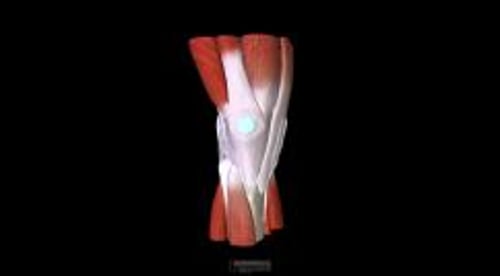
Diagnosis of Knee Pain
History and physical examination
Sometimes imaging tests
Diagnosis requires a thorough review of the injured athlete’s training program, including a history of symptom onset and aggravating factors, and a complete lower-extremity examination (for knee examination, see Approach to the Patient With Joint Symptoms: Physical Examination and see Knee Sprains and Meniscal Injuries).
Mechanical symptoms, such as locking or catching, suggest an internal derangement of the knee such as a meniscal tear. Instability symptoms, such as giving way and loss of confidence in the extremity when twisting or turning on the knee, suggest ligamentous injury or subluxation of the patella. Patellar subluxation occurs when there is lateral translation of the patella out of the trochlear groove (without complete dislocation) when the knee is flexed.
Chondromalacia is suggested by anterior knee pain after running, especially on hills, as well as pain and stiffness after sitting for any length of time (positive movie sign), although this is not specific for chondromalacia (1). On examination, pain is typically reproduced by compression of the patella against the femur.
Infrapatellar fat pad inflammation causes anterior knee pain when pressure is applied to the inferior pole of the patella (2).
Malalignment of the lower extremities is diagnosed with radiographs specific to assessing malalignment (eg, lower extremity radiographs to evaluate tibial torsion).
Focal bony pain (eg, around the tibia or metatarsals) that becomes worse after increasing physical activity with weight-bearing suggests a stress fracture (3).
Diagnosis references
1. Crossley KM, Callaghan MJ, van Linschoten R. Patellofemoral pain. Br J Sports Med. 2016;50(4):247-250. doi:10.1136/bjsports-2015-h3939rep
2. Dragoo JL, Johnson C, McConnell J. Evaluation and treatment of disorders of the infrapatellar fat pad. Sports Med. 2012;42(1):51-67. doi:10.2165/11595680-000000000-00000
3. Drabicki RR, Greer WJ, DeMeo PJ. Stress fractures around the knee. Clin Sports Med. 2006;25(1):105-ix. doi:10.1016/j.csm.2005.08.002
Treatment of Knee Pain
Quadriceps-strengthening exercises
Sometimes stabilizing pads, supports, or braces
Nonsteroidal anti-inflammatory drugs (NSAIDs)
Treatment is tailored to the specific cause of the pain.
Treatment of chondromalacia includes quadriceps-strengthening exercises with balanced strengthening exercises for the hamstrings, use of arch supports if excessive pronation is a possible contributor, and use of NSAIDs.
For patellar subluxation, use of patella-stabilizing pads or braces may be necessary, especially in sports that require rapid, agile movements in various planes (eg, basketball, tennis) (1).
If there is excessive pronation of the foot (subtalar eversion, ankle dorsiflexion, and forefoot abduction), and all other possible causes of knee pain have been excluded, use of an orthotic insert is sometimes useful.
Stress fractures require rest and cessation of weight-bearing activity (2).
Intra-articular pathology (eg, severe meniscal tears or ligament tears) often requires surgery.

1. Lie on back with uninvolved knee bent so foot is on the floor/table.
2. Contract quadriceps muscle on the involved s
Courtesy of Tomah Memorial Hospital, Department of Physical Therapy, Tomah, WI; Elizabeth C.K. Bender, MSPT, ATC, CSCS; and Whitney Gnewikow, DPT, ATC.

1. Sit with involved leg extended.
2. Contract quadriceps muscle on the front of the leg to push back of knee down to t
Courtesy of Tomah Memorial Hospital, Department of Physical Therapy, Tomah, WI; Elizabeth C.K. Bender, MSPT, ATC, CSCS; and Whitney Gnewikow, DPT, ATC.

1. Once the inflammatory phase has subsided and the patient is able to perform knee flexion without pain:
2. Lie on sto
Courtesy of Tomah Memorial Hospital, Department of Physical Therapy, Tomah, WI; Elizabeth C.K. Bender, MSPT, ATC, CSCS; and Whitney Gnewikow, DPT, ATC.

1. Lie on stomach, keep knee straight on involved side.
2. Perform abdominal contraction.
3. Lift involved leg up off t
Courtesy of Tomah Memorial Hospital, Department of Physical Therapy, Tomah, WI; Elizabeth C.K. Bender, MSPT, ATC, CSCS; and Whitney Gnewikow, DPT, ATC.

1. Lie on stomach.
2. Bend involved knee and loop towel or band around the ankle.
3. Gently pull towel or band to stret
Courtesy of Tomah Memorial Hospital, Department of Physical Therapy, Tomah, WI; Elizabeth C.K. Bender, MSPT, ATC, CSCS; and Whitney Gnewikow, DPT, ATC.

1. Stand about a foot away from the wall with the involved leg closest to the wall.
2. Place the uninvolved leg in fron
Courtesy of Tomah Memorial Hospital, Department of Physical Therapy, Tomah, WI; Elizabeth C.K. Bender, MSPT, ATC, CSCS; and Whitney Gnewikow, DPT, ATC.

1. Lie on back, hold behind the involved knee to pull it gently toward the chest.
2. Gently extend the knee to straight
Courtesy of Tomah Memorial Hospital, Department of Physical Therapy, Tomah, WI; Elizabeth C.K. Bender, MSPT, ATC, CSCS; and Whitney Gnewikow, DPT, ATC.

1. Lie on involved side.
2. Keep shoulders and hips in line with ankles slightly behind the body with the knees bent ap
Courtesy of Tomah Memorial Hospital, Department of Physical Therapy, Tomah, WI; Elizabeth C.K. Bender, MSPT, ATC, CSCS; and Whitney Gnewikow, DPT, ATC.

1. Stand with feet about hip width apart.
2. Toes should point forward to stay aligned with the knees.
3. Keeping core
Courtesy of Tomah Memorial Hospital, Department of Physical Therapy, Tomah, WI; Elizabeth C.K. Bender, MSPT, ATC, CSCS; and Whitney Gnewikow, DPT, ATC.


1. Lie on back with uninvolved knee bent so foot is on the floor/table.
2. Contract quadriceps muscle on the involved side then raise straight leg to thigh level of uninvolved leg.
3. Return to starting position slowly to control the lowering phase.
4. Perform 3 sets of 10 repetitions, 1 time a day.
Courtesy of Tomah Memorial Hospital, Department of Physical Therapy, Tomah, WI; Elizabeth C.K. Bender, MSPT, ATC, CSCS; and Whitney Gnewikow, DPT, ATC.

1. Sit with involved leg extended.
2. Contract quadriceps muscle on the front of the leg to push back of knee down to the floor/table.
3. Hold exercise for 10 seconds.
4. Perform 1 set of 10 repetitions, every hour.
5. Special Instructions
a. Do not hold your breath during the exercise.
Courtesy of Tomah Memorial Hospital, Department of Physical Therapy, Tomah, WI; Elizabeth C.K. Bender, MSPT, ATC, CSCS; and Whitney Gnewikow, DPT, ATC.

1. Once the inflammatory phase has subsided and the patient is able to perform knee flexion without pain:
2. Lie on stomach.
3. Begin with knee straight.
4. Bend knee through available range that is pain free.
5. Slowly return to starting position.
6. Perform 3 sets of 10 repetitions, 1 time a day.
7. Special Instructions
a. Start with least resistance, adding weight as tolerated. Band resistance can also be used.
b. Focus on eccentric lowering phase with a count of 4 to lower and extend knee to starting position and a count of 2 for knee flexion.
Courtesy of Tomah Memorial Hospital, Department of Physical Therapy, Tomah, WI; Elizabeth C.K. Bender, MSPT, ATC, CSCS; and Whitney Gnewikow, DPT, ATC.

1. Lie on stomach, keep knee straight on involved side.
2. Perform abdominal contraction.
3. Lift involved leg up off the floor/table.
4. Return to starting position.
5. Perform 3 sets of 10 repetitions, 1 time a day.
6. Special Instructions
a. Keep the knee straight and abdominals contracted through the repetition.
Courtesy of Tomah Memorial Hospital, Department of Physical Therapy, Tomah, WI; Elizabeth C.K. Bender, MSPT, ATC, CSCS; and Whitney Gnewikow, DPT, ATC.

1. Lie on stomach.
2. Bend involved knee and loop towel or band around the ankle.
3. Gently pull towel or band to stretch muscle on front of thigh pulling ankle toward buttocks.
4. Hold exercise for 30 seconds.
5. Perform 1 set of 4 repetitions, 3 times a day.
6. Repeat on the other leg.
7. Special Instructions
a. For added stretch, place a towel roll just above the knee to place the hip in slight extension.
Courtesy of Tomah Memorial Hospital, Department of Physical Therapy, Tomah, WI; Elizabeth C.K. Bender, MSPT, ATC, CSCS; and Whitney Gnewikow, DPT, ATC.

1. Stand about a foot away from the wall with the involved leg closest to the wall.
2. Place the uninvolved leg in front of the involved leg.
3. Keep the involved knee straight.
4. Lean trunk away from the wall so the hip on the involved side goes toward the wall.
5. Be sure not to lean forward at the waist.
6. Hold exercise for 30 seconds.
7. Perform 1 set of 4 repetitions, 3 times a day.
Courtesy of Tomah Memorial Hospital, Department of Physical Therapy, Tomah, WI; Elizabeth C.K. Bender, MSPT, ATC, CSCS; and Whitney Gnewikow, DPT, ATC.

1. Lie on back, hold behind the involved knee to pull it gently toward the chest.
2. Gently extend the knee to straighten the leg.
3. Hold exercise for 30 seconds.
4. Perform 1 set of 4 repetitions, 3 times a day.
5. Repeat on the other leg.
Courtesy of Tomah Memorial Hospital, Department of Physical Therapy, Tomah, WI; Elizabeth C.K. Bender, MSPT, ATC, CSCS; and Whitney Gnewikow, DPT, ATC.

1. Lie on involved side.
2. Keep shoulders and hips in line with ankles slightly behind the body with the knees bent approximately 90°.
3. Keep feet together while lifting left knee up toward the ceiling.
4. Lower and repeat.
5. Repeat exercise lying on the uninvolved side.
6. Perform 3 sets of 10 repetitions, 3 times a day.
7. Special Instructions
a. For added resistance, place a band around the knees, start with the least resistance.
Courtesy of Tomah Memorial Hospital, Department of Physical Therapy, Tomah, WI; Elizabeth C.K. Bender, MSPT, ATC, CSCS; and Whitney Gnewikow, DPT, ATC.

1. Stand with feet about hip width apart.
2. Toes should point forward to stay aligned with the knees.
3. Keeping core tight, move buttocks backward, similar to beginning to sit in a chair, and squat down until the thighs are almost parallel with the floor.
4. Return to start position and repeat.
5. Perform 3 sets of 10 repetitions, 1 time every other day.
6. Special Instructions
a. Keep weight on outside of foot and heels.
b. Start with a partial squat and increase as you become familiar with the movement.
c. Add weight only as tolerated. Start with 1 to 2 pounds (0.5 to 1 kg [ie, a soup can]).
Courtesy of Tomah Memorial Hospital, Department of Physical Therapy, Tomah, WI; Elizabeth C.K. Bender, MSPT, ATC, CSCS; and Whitney Gnewikow, DPT, ATC.
Treatment references
1. Ries Z, Bollier M. Patellofemoral Instability in Active Adolescents. J Knee Surg. 2015;28(4):265-277. doi:10.1055/s-0035-1549017
2. Kraus E, Rizzone K, Walker M, et al. Stress Injuries of the Knee. Clin Sports Med. 2022;41(4):707-727. doi:10.1016/j.csm.2022.05.008