


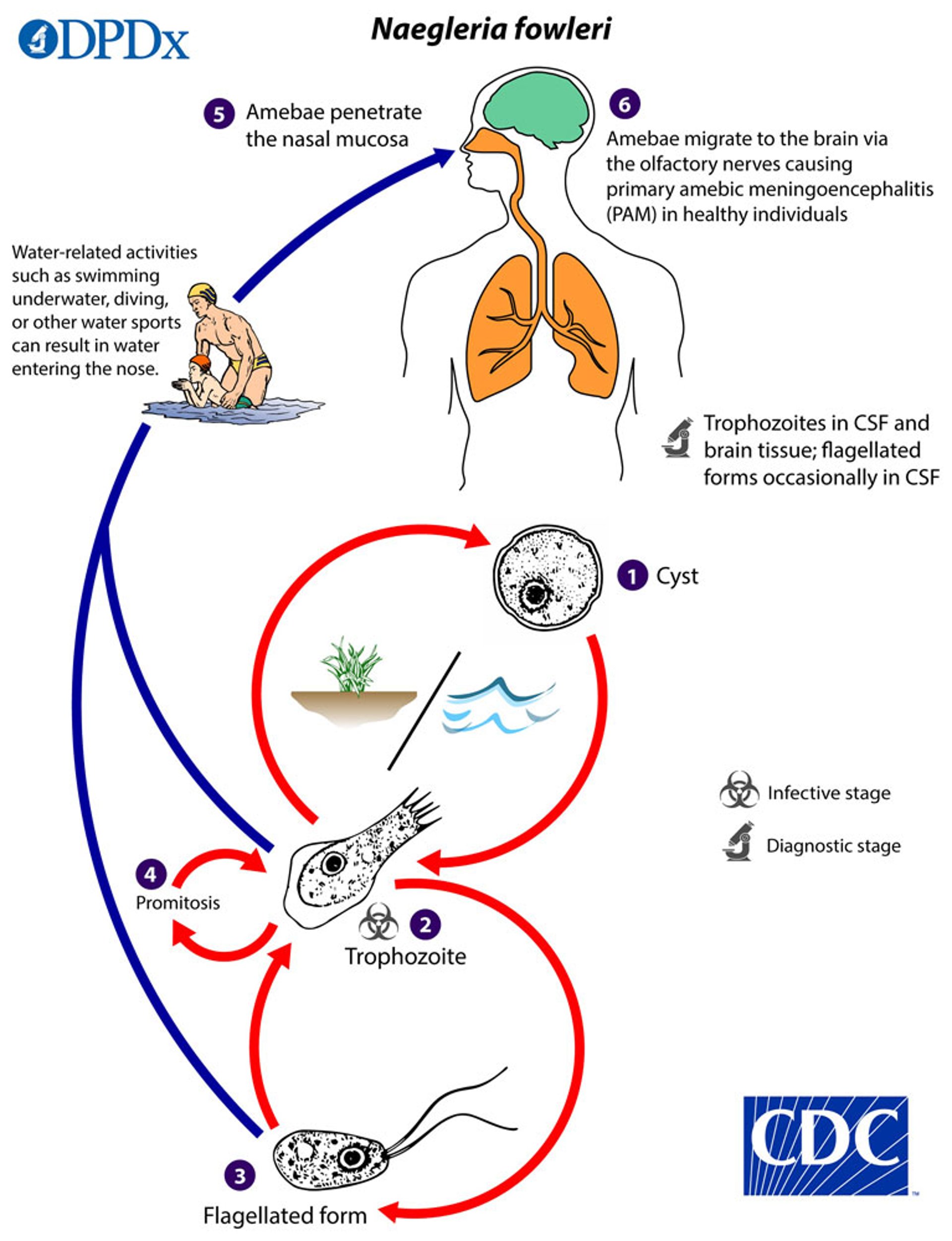
Naegleria fowleri Life Cycle
1–3. The N. fowleri life cycle has 3 stages: cysts, trophozoites, flagellates.
4. The trophozoites replicate by promitosis (the nuclear membrane remains intact).
5–6. The trophozoites are the infective form. They can turn into temporary nonfeeding flagellates that usually revert back to trophozoites. Trophozoites infect humans or animals by penetrating the nasal mucosa, usually during swimming or sinus irrigation (5), and migrating to the brain (6) via the olfactory nerves, causing primary amebic meningoencephalitis (PAM). Trophozoites are found in cerebrospinal fluid (CSF) and tissue, whereas flagellates are occasionally found in CSF. Cysts are not seen in brain tissue.
Image from the Centers for Disease Control and Prevention, Global Health, Division of Parasitic Diseases and Malaria.