An oral-facial cleft is a congenital anomaly in which the lip, the roof of the mouth, or both do not close in the midline and remain open, creating a cleft lip and/or cleft palate. These anomalies are present at birth and interfere with feeding and, later, speech development.
Cleft lip, cleft lip and palate, and isolated cleft palate are collectively termed oral clefts and are the most common congenital anomalies of the head and the neck, with a total prevalence of 1 in 600 to 1000 live births (1, 2). (See also Overview of Congenital Craniofacial Anomalies.)
Both environmental and genetic factors have been implicated as causes (3). Prenatal maternal use of tobacco (4) and alcohol (5) or the mother having an oral-facial cleft or having a first-degree relative with an oral-facial cleft (6) is associated with increased risk. Folate deficiency may also be a risk factor, particularly from time of conception through the first trimester. Folate supplements are recommended for all patients while trying to become pregnant and during pregnancy. In addition, higher doses of folate are required for patients taking folate antagonists, including certain antiseizure medications (eg, phenytoin, valproate, carbamazepine).

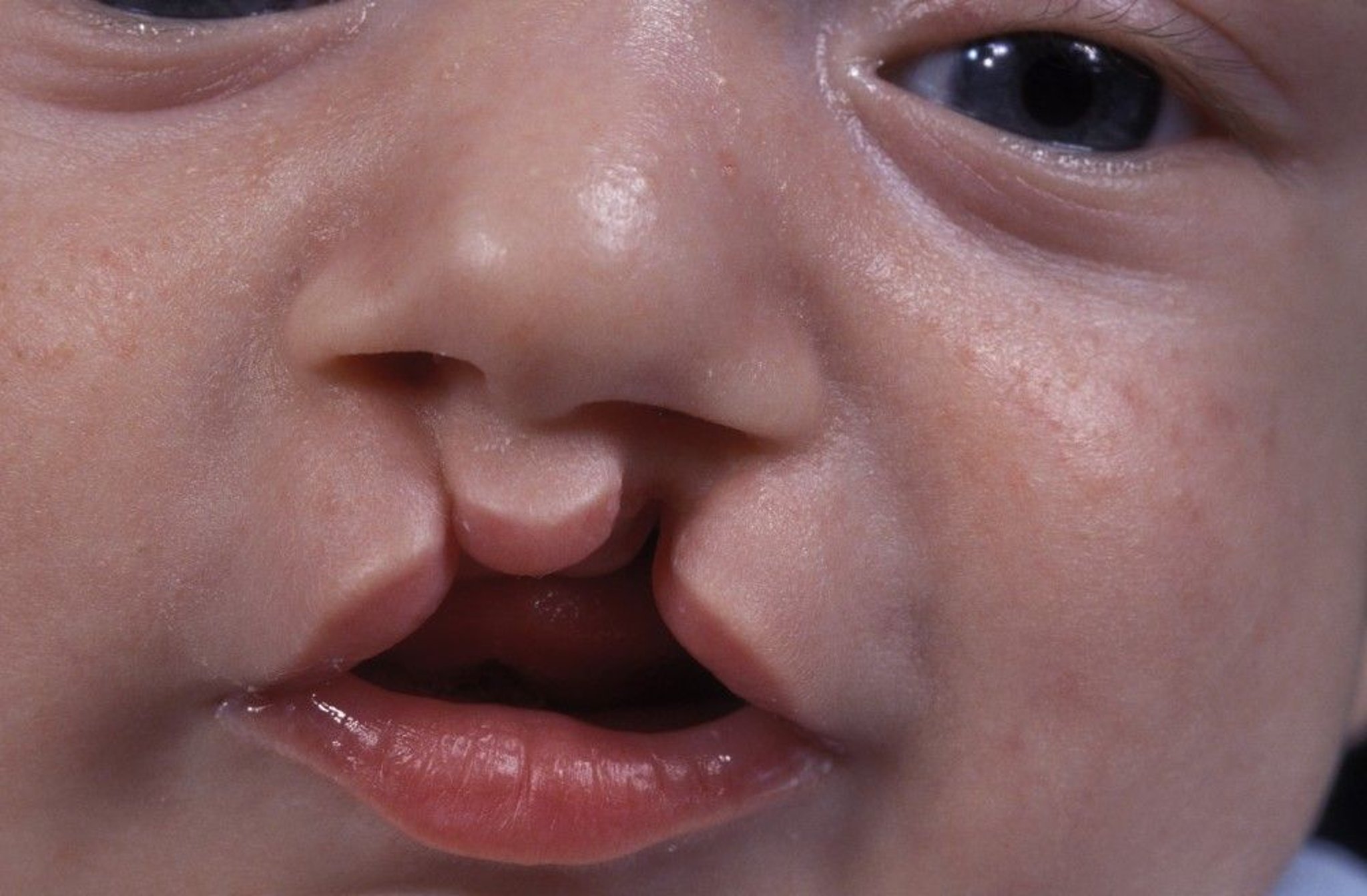
DR M.A. ANSARY/SCIENCE PHOTO LIBRARY

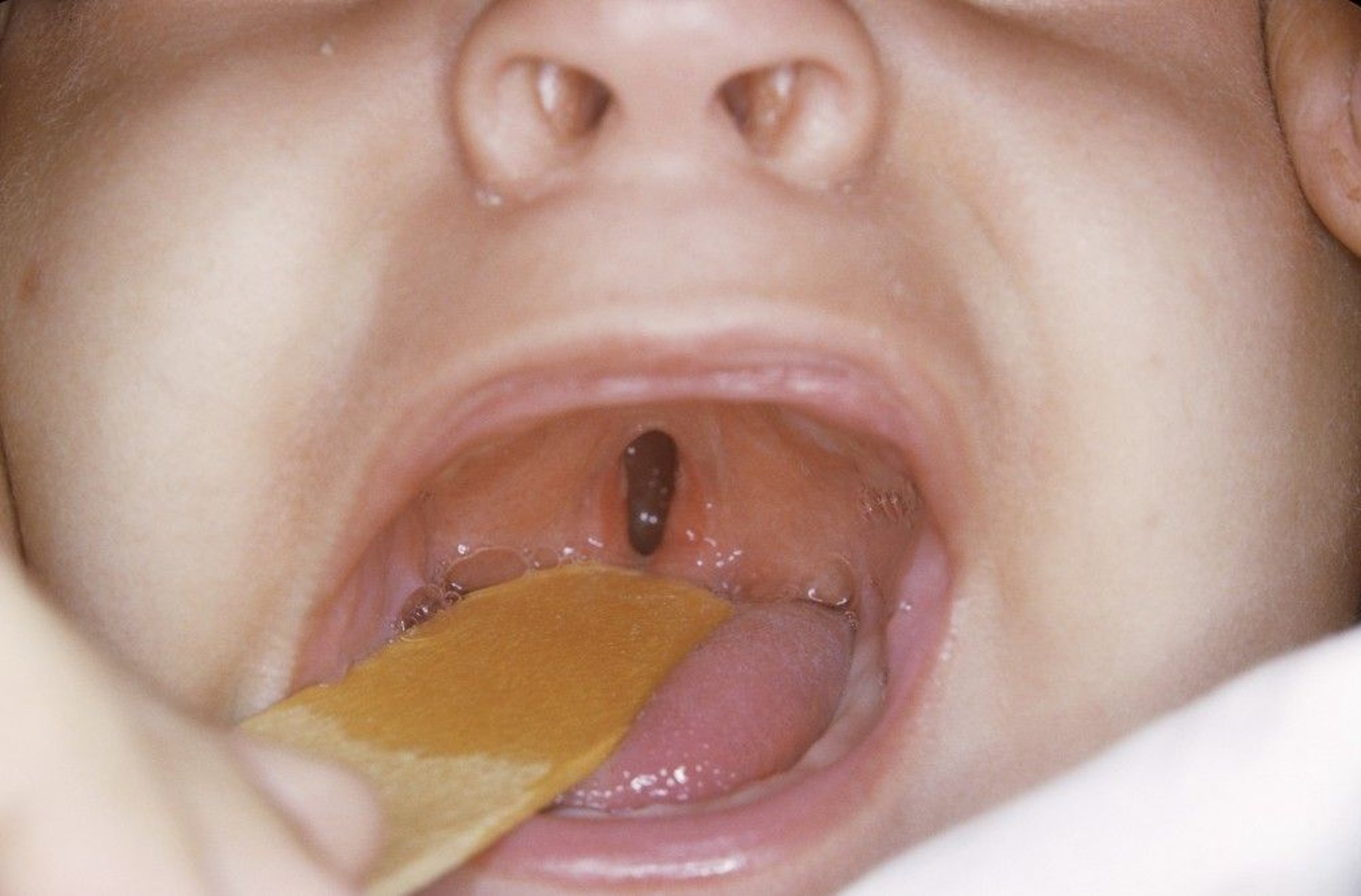
MORRIS HUBERLAND/SCIENCE PHOTO LIBRARY
Oral clefts are divided into 2 groups:
Syndromic (30%)
Nonsyndromic (70%) (3)
Syndromic oral clefts are those present in patients with recognized congenital syndromes or with multiple congenital anomalies. These oral clefts are typically caused by chromosome abnormalities or defined monogenic syndromes.
Nonsyndromic (isolated) oral clefts are those present in patients without associated anomalies or developmental delays. A number of different gene variants can cause the phenotype, including pathogenic variants of some of the genes that are involved with syndromic oral clefts, which suggests there is significant overlap between syndromic and nonsyndromic clefts.
The cleft may vary from involvement of only the soft palate to a complete fissure of the soft and hard palates, the alveolar process of the maxilla, and the lip. The mildest form is a bifid uvula. An isolated cleft lip can occur.
A cleft palate interferes with feeding and speech development and increases the risk of ear infections. Goals of treatment are to ensure normal feeding, speech, and maxillofacial growth and to avoid formation of fistulas.
General references
1. Mai CT, Isenburg JL, Canfield MA, et al. National population-based estimates for major birth defects, 2010-2014. Birth Defects Res. 2019;111(18):1420-1435. doi:10.1002/bdr2.1589
2. Mossey PA, Little J, Munger RG, Dixon MJ, Shaw WC. Cleft lip and palate. Lancet. 2009;374(9703):1773-1785. doi:10.1016/S0140-6736(09)60695-4
3. Dixon MJ, Marazita ML, Beaty TH, Murray JC. Cleft lip and palate: understanding genetic and environmental influences. Nat Rev Genet. 2011;12(3):167-178. doi:10.1038/nrg2933
4. Butali A, Little J, Chevrier C, et al. Folic acid supplementation use and the MTHFR C677T polymorphism in orofacial clefts etiology: An individual participant data pooled-analysis. Birth Defects Res A Clin Mol Teratol. 2013;97(8):509-514. doi:10.1002/bdra.23133
5. DeRoo LA, Wilcox AJ, Drevon CA, Lie RT. First-trimester maternal alcohol consumption and the risk of infant oral clefts in Norway: a population-based case-control study. Am J Epidemiol. 2008;168(6):638-646. doi:10.1093/aje/kwn186
6. Sivertsen A, Wilcox AJ, Skjaerven R, et al. Familial risk of oral clefts by morphological type and severity: population based cohort study of first degree relatives. BMJ. 2008;336(7641):432-434. doi:10.1136/bmj.39458.563611.AE
Diagnosis of Cleft Lip and Cleft Palate
Physical examination
Clinical genetics referral
Genetic testing
A clinical geneticist should evaluate affected patients even in cases of apparent isolated congenital anomaly. Knowing what caused the cleft may help in the overall medical management. Genetic counseling is also indicated to review the recurrence risks.
Chromosomal microarray analysis, specific gene tests, or broader gene panel tests should be considered in the evaluation of patients with congenital craniofacial anomalies. If the results of these tests are nondiagnostic, clinical exome sequencing analysis or clinical genome sequencing may be recommended.
Treatment of Cleft Lip and Cleft Palate
Feeding support
Surgical repair
Early treatment, pending surgical repair, depends on the specific anomaly but may include specially designed bottle nipples (to facilitate flow), dental appliances (to occlude the cleft so suckling can occur), a feeder that can be squeezed to deliver formula, taping, and an artificial palate molded to the child’s own palate. Episodes of acute otitis media are common and must be recognized and treated.
Definitive treatment is surgical closure; however, timing of surgery, which may interfere with growth centers around the premaxilla, is somewhat controversial. Cheiloplasty for isolated cleft lip has traditionally been performed between 3 and 6 months, but early cleft lip repair (< 1 month) has been shown in preliminary studies to be effective and have similar adverse event rates as traditional timing (1, 2). For isolated cleft palate, a large randomized trial showed that primary repair at 6 months is preferable to repair at 12 months, with improved speech and decreased rates of velopharyngeal insufficiency (3). For a cleft lip and palate, a 2-stage procedure is often performed. The cleft lip, nose, and soft palate are repaired during infancy (by 6 months) (4). Then, the residual hard palate cleft is repaired at age 9 to 18 months (5). Combined repair at 7 months has also been described. Surgery can result in significant improvement, but if deformities are severe or treatment is inadequate, patients may be left with a nasal voice, compromised appearance, and a tendency to regurgitate.
Dental and orthodontic treatment, speech therapy, and genetic counseling are recommended (4).
Treatment references
1. Wlodarczyk JR, Wolfswinkel EM, Liu A, et al. Early Cleft Lip Repair: Demonstrating Efficacy in the First 100 Patients. Plast Reconstr Surg. 2022;150(5):1073-1080. doi:10.1097/PRS.0000000000009634
2. Stanton E, Roohani I, Shakoori P, et al. Comparing Outcomes of Traditional Lip Repair Versus Early Cleft Lip Repair on a National Scale. Ann Plast Surg. 2024;92(2):194-197. doi:10.1097/SAP.0000000000003771
3. Gamble C, Persson C, Willadsen E, et al. Timing of Primary Surgery for Cleft Palate. N Engl J Med. 2023;389(9):795-807. doi:10.1056/NEJMoa2215162
4. Lewis CW, Jacob LS, Lehmann CU; SECTION ON ORAL HEALTH. The Primary Care Pediatrician and the Care of Children With Cleft Lip and/or Cleft Palate. Pediatrics. 2017;139(5):e20170628. doi:10.1542/peds.2017-0628
5. Fell M, Davies A, Davies A, et al. Current Surgical Practice for Children Born with a Cleft lip and/or Palate in the United Kingdom. Cleft Palate Craniofac J. 2023;60(6):679-688. doi:10.1177/10556656221078151
Drug Information for the Topic