Septo-optic dysplasia is a congenital neurologic anomaly with a malformation of the front of the brain that occurs toward the end of the first month of gestation and includes optic nerve hypoplasia, absence or abnormality of the septum pellucidum (the membrane that separates the front of the 2 lateral ventricles), and pituitary hypoplasia and hypopituitarism. Manifestations can include decreased visual acuity in one or both eyes, nystagmus, strabismus, and endocrine dysfunction. Diagnosis is by MRI. Treatment is supportive and includes pituitary hormone replacement.
Although the causes of septo-optic dysplasia may be multiple, abnormalities of one particular gene, HESX1, have been found in some children with septo-optic dysplasia.
Symptoms and Signs of Septo-Optic Dysplasia
Symptoms may include decreased visual acuity in one or both eyes, nystagmus, strabismus, and endocrine dysfunction (including growth hormone deficiency, hypothyroidism, adrenal insufficiency, arginine vasopressin deficiency [diabetes insipidus], and hypogonadism). Seizures may occur.
Although some children have normal intelligence, many have learning disabilities, intellectual disability, cerebral palsy, or other developmental delay.
Diagnosis of Septo-Optic Dysplasia
MRI
Genetic testing
Diagnosis of septo-optic dysplasia is by MRI. All children diagnosed with this anomaly should be screened for pituitary endocrine abnormalities and developmental dysfunction.

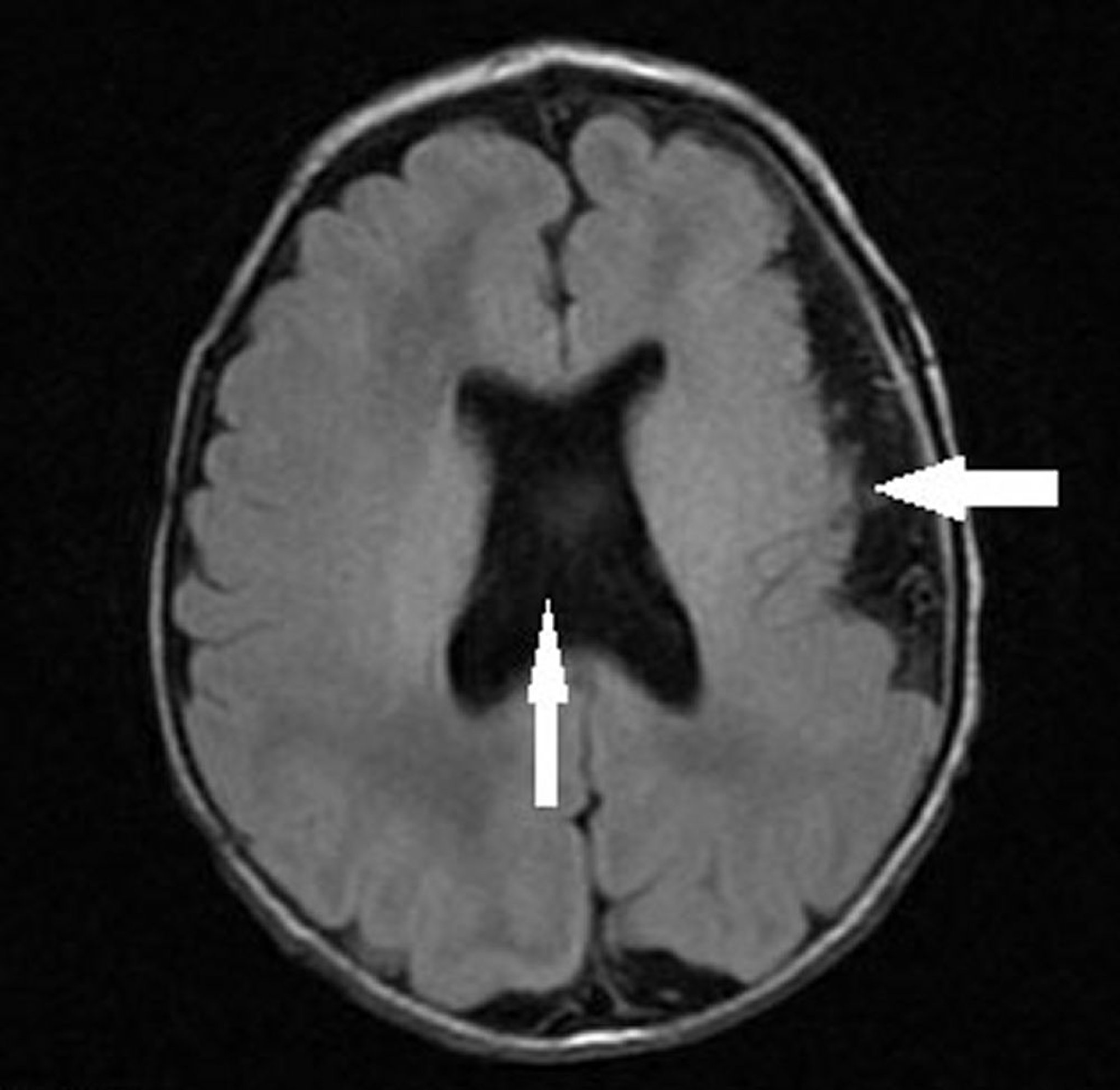
This image shows an infant with left hemispheric polymicrogyria (leftward arrow) and absent septum pellucidum with abnormal ventricular configuration (vertical arrow) consistent with septo-optic dysplasia (optic nerve hypoplasia, absent or abnormal septum pellucidum, and pituitary hypoplasia).
Image courtesy of Stephen J. Falchek, MD.
The increasing use of fetal ultrasound, which can detect absence of the septum pellucidum and increased ventricular size, followed by fetal MRI, add to the early detection of this malformation.
Genetic testing is available, but a definite genetic diagnosis can be made in only a small percentage of patients with septo-optic dysplasia. In such cases, this testing may be useful for confirming the diagnosis, guiding management, and assessing risk in family planning.
Treatment of Septo-Optic Dysplasia
Supportive care
Pituitary hormone replacement
Treatment of septo-optic dysplasia is supportive, including replacement of any deficient pituitary hormones.