Search
SectionsIndexSymptoms
  • Cardiovascular Disorders
  • Clinical Pharmacology
  • Critical Care Medicine
  • Dental Disorders
  • Dermatologic Disorders
  • Ear, Nose, and Throat Disorders
  • Endocrine and Metabolic Disorders
  • Eye Disorders
  • Gastrointestinal Disorders
  • Genitourinary Disorders
  • Geriatrics
  • Gynecology and Obstetrics
  • Hematology and Oncology
  • Hepatic and Biliary Disorders
  • Immunology; Allergic Disorders
  • Infectious Diseases
  • Injuries; Poisoning
  • Musculoskeletal and Connective Tissue Disorders
  • Neurologic Disorders
  • Nutritional Disorders
  • Pediatrics
  • Psychiatric Disorders
  • Pulmonary Disorders
  • Special Subjects
ABCDEFGHI
JKLMNOPQR
STUVWXYZ
  • Abdominal Pain, Acute
  • Abdominal pain, Chronic
  • Alopecia
  • Amenorrhea
  • Amnesia
  • Anosmia
  • Bleeding, Excessive
  • Breast Lumps
  • Chest Pain
  • Constipation in Adults
  • Constipation in Children
  • Cough in Adults
  • Cough in Children
  • Crying
  • Diarrhea in Adults
  • Diarrhea in Children
  • Diplopia
  • Dizziness
  • Dry Mouth
  • Dysmenorrhea
  • Dyspepsia
  • Dysphagia
  • Dyspnea
  • Dysuria
  • Earache
  • Ear Discharge
  • Edema
  • Edema During Late Pregnancy
  • Epistaxis
  • Erectile dysfunction
  • Eyelid Swelling
  • Eye Pain
  • Fever
  • Fever, Acute, in Adults
  • Fever, Chronic (FUO)
  • Fever in Infants and Children
  • Floaters
  • Gas
  • Gastrointestinal Bleeding
  • Halitosis
  • Headache
  • Hearing Loss
  • Hearing Loss: Sudden Deafness
  • Hematospermia
  • Hematuria
  • Hemoptysis
  • Hiccups
  • Hirsutism
  • Insomnia and Excessive Daytime Sleepiness
  • Itching
  • Itching, Anal
  • Jaundice in Adults
  • Jaundice in Neonates
  • Joint Pain, Monarticular
  • Joint Pain, Polyarticular
  • Knee pain
  • Lump in Throat
  • Nasal Congestion and Rhinorrhea
  • Nausea and Vomiting During Early pPregnancy
  • Nausea and Vomiting in Adults
  • Nausea and Vomiting in Infants and Children
  • Neck and Back Pain
  • Neck Mass
  • Nipple Discharge
  • Orthostatis Hypotension
  • Pain
  • Pain, Chronic
  • Palpitations
  • Pelvic Pain
  • Pelvic Pain During Early Pregnancy
  • Polyuria
  • Priapism
  • Red Eye
  • Scrotal Pain
  • Sore Throat
  • Stomatitis
  • Stridor
  • Syncope
  • Tearing
  • Tinnitus
  • Toothache
  • Tremor
  • Urinary Frequency
  • Urinary Incontinence in Adults
  • Urinary Incontinence in Children
  • Urinary Retention
  • Urticaria
  • Vaginal Bleeding
  • Vaginal Bleeding During Early Pregnancy
  • Vaginal Bleeding During Late Pregnancy
  • Vaginal Itching and Discharge
  • Vision, Blurred
  • Vision Loss, Acute
  • Weakness, Generalized
  • Wheezing
In This Topic
Dermatologic Disorders
Acne and Related Disorders
Acne Vulgaris
Pathophysiology
Etiology
Symptoms and Signs
Diagnosis
Prognosis
Treatment
Mild acne
Moderate acne
Severe acne
Other forms of acne
Scarring
Key Points
Back to Top
Resources
  • About The Merck Manual
  • Ready Reference Guides
  • Trade Names of Some Commonly Used Drugs
  • Normal Laboratory Values
  • Clinical Calculators
  • Multimedia
  • Selected Links
Manuals available online
'/home/index.html' + bookPageLink
 
'/professional/index.html'
These and other Manuals available
in print, online, and as mobile applications.

See more at MerckManuals.com
Sections in Health Care Professionals
  • Cardiovascular Disorders
  • Clinical Pharmacology
  • Critical Care Medicine
  • Dental Disorders
  • Dermatologic Disorders
  • Ear, Nose, and Throat Disorders
  • Endocrine and Metabolic Disorders
  • Eye Disorders
  • Gastrointestinal Disorders
  • Genitourinary Disorders
  • Geriatrics
  • Gynecology and Obstetrics
  • Hematology and Oncology
  • Hepatic and Biliary Disorders
  • Immunology; Allergic Disorders
  • Infectious Diseases
  • Injuries; Poisoning
  • Musculoskeletal and Connective Tissue Disorders
  • Neurologic Disorders
  • Nutritional Disorders
  • Pediatrics
  • Psychiatric Disorders
  • Pulmonary Disorders
  • Special Subjects
Chapters in Dermatologic Disorders
  • Approach to the Dermatologic Patient
  • Principles of Topical Dermatologic Therapy
  • Acne and Related Disorders
  • Bullous Diseases
  • Cornification Disorders
  • Dermatitis
  • Reactions to Sunlight
  • Psoriasis and Scaling Diseases
  • Hypersensitivity and Inflammatory Disorders
  • Sweating Disorders
  • Bacterial Skin Infections
  • Fungal Skin Infections
  • Parasitic Skin Infections
  • Viral Skin Diseases
  • Pigmentation Disorders
  • Hair Disorders
  • Nail Disorders
  • Pressure Ulcers
  • Benign Skin Tumors
  • Cancers of the Skin
Topics in Acne and Related Disorders
  • Acne Vulgaris
  • Perioral Dermatitis
  • Rosacea
     
    • Merck Manual
    • >
    • Health Care Professionals
    • >
    • Dermatologic Disorders
    • >
    • Acne and Related Disorders
    • 4
     
    Acne Vulgaris

    Share This

    Acne vulgaris (acne) is the formation of comedones, papules, pustules, nodules, and/or cysts as a result of obstruction and inflammation of pilosebaceous units (hair follicles and their accompanying sebaceous gland). It most often affects adolescents. Diagnosis is by examination. Treatment is a variety of topical and systemic agents intended to reduce sebum production, bacterial counts, and inflammation and to normalize keratinization.

    Pathophysiology

    Acne occurs when pilosebaceous units become obstructed with plugs of sebum and desquamated keratinocytes then colonized with the normal skin anaerobe Propionibacterium acnes. Manifestations differ depending on whether P. acnes stimulates inflammation in the follicle; acne can be noninflammatory or inflammatory.

    Comedones, uninfected sebaceous plugs impacted within follicles, are the signature of noninflammatory acne. Comedones are termed open or closed depending on whether the follicle is dilated or closed at the skin surface. Inflammatory acne comprises papules, pustules, nodules, and cysts.

    Papules appear when lipases from P. acnes metabolize triglycerides into free fatty acids (FFA), which irritate the follicular wall. Pustules occur when active P. acnes infection causes inflammation within the follicle. Nodules and cysts occur when rupture of follicles due to inflammation, physical manipulation, or harsh scrubbing releases FFAs, bacteria, and keratin into tissues, triggering soft-tissue inflammation.

    Etiology

    The most common trigger is puberty, when surges in androgen stimulate sebum production and hyperproliferation of keratinocytes. Other triggers include hormonal changes that occur with pregnancy or the menstrual cycle; occlusive cosmetics, cleansers, lotions, and clothing; and high humidity and sweating. Associations between acne exacerbation and diet, inadequate face washing, masturbation, and sex are unfounded. Some studies suggest a possible association with milk products and high-glycemic diets. Acne may abate in summer months because of sunlight's anti-inflammatory effects. Proposed associations between acne and hyperinsulinism require further investigation. Some drugs and chemicals (eg, corticosteroids, lithiumSome Trade Names
    ESKALITH
    LITHOBID
    LITHONATE
    Click for Drug Monograph
    , phenytoinSome Trade Names
    DILANTIN
    Click for Drug Monograph
    , isoniazidSome Trade Names
    INH
    NYDRAZID
    Click for Drug Monograph
    ) worsen acne or cause acneiform eruptions.

    Symptoms and Signs

    Cystic acne can be painful; other types cause no physical symptoms but can be a source of significant emotional distress. Lesion types frequently coexist at different stages.

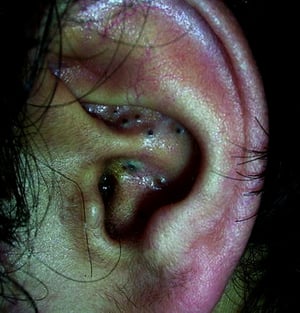
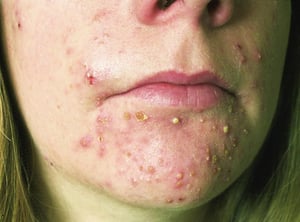
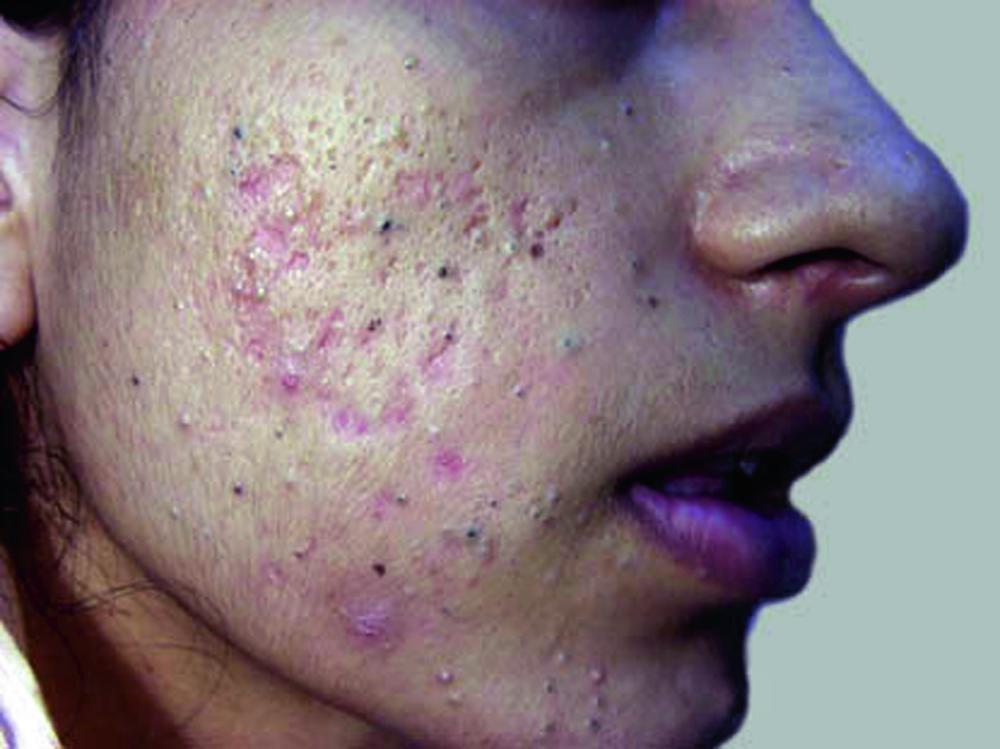
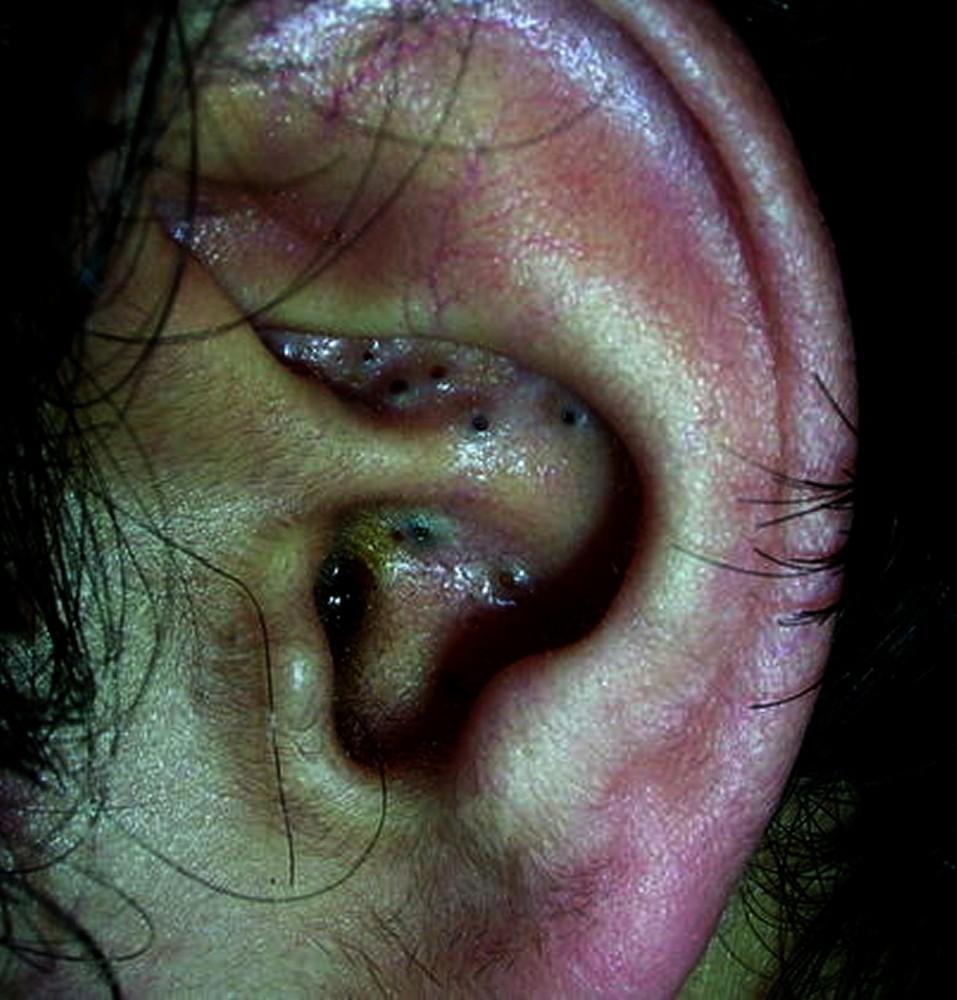
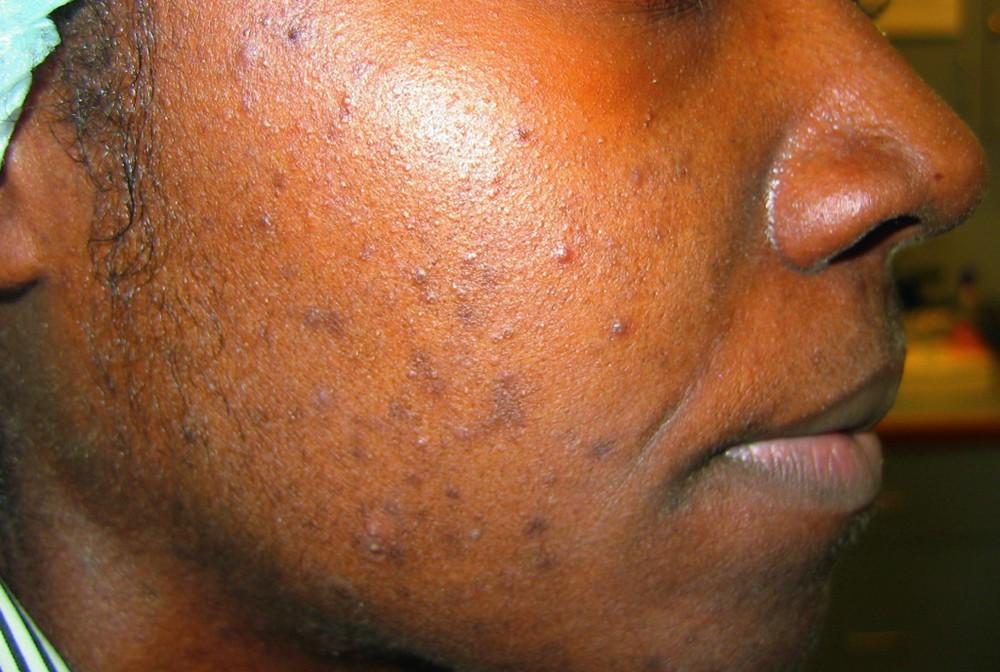
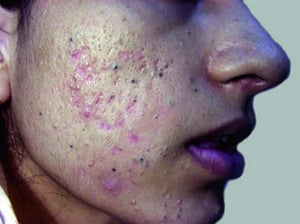
    Comedones appear as whiteheads or blackheads. Whiteheads (closed comedones) are flesh-colored or whitish palpable lesions 1 to 3 mm in diameter; blackheads (open comedones) are similar in appearance but with a dark center.
    Photographs

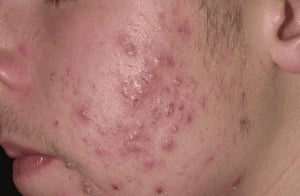
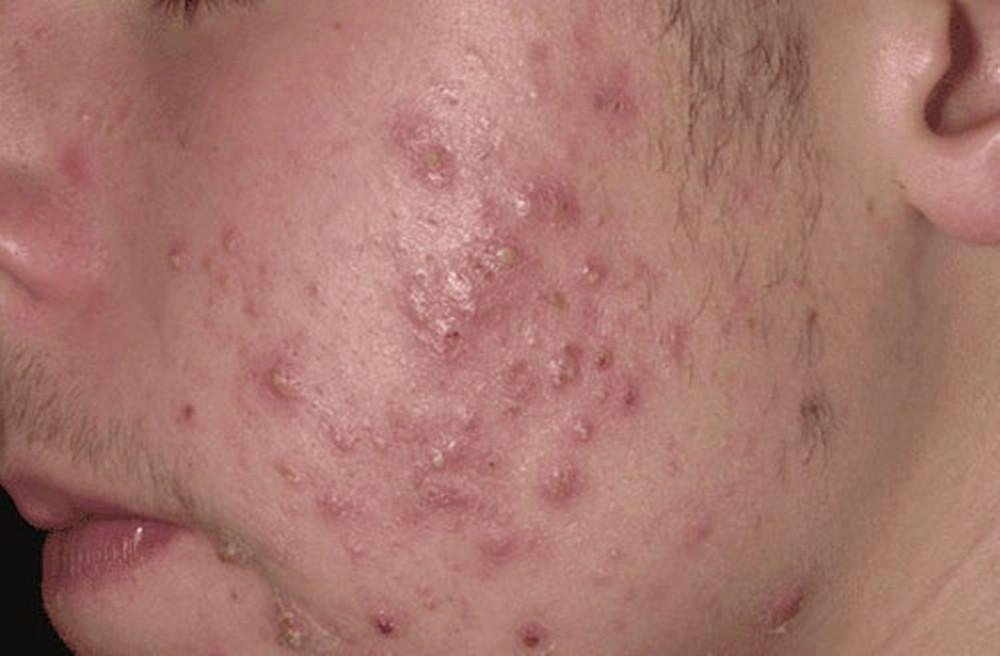
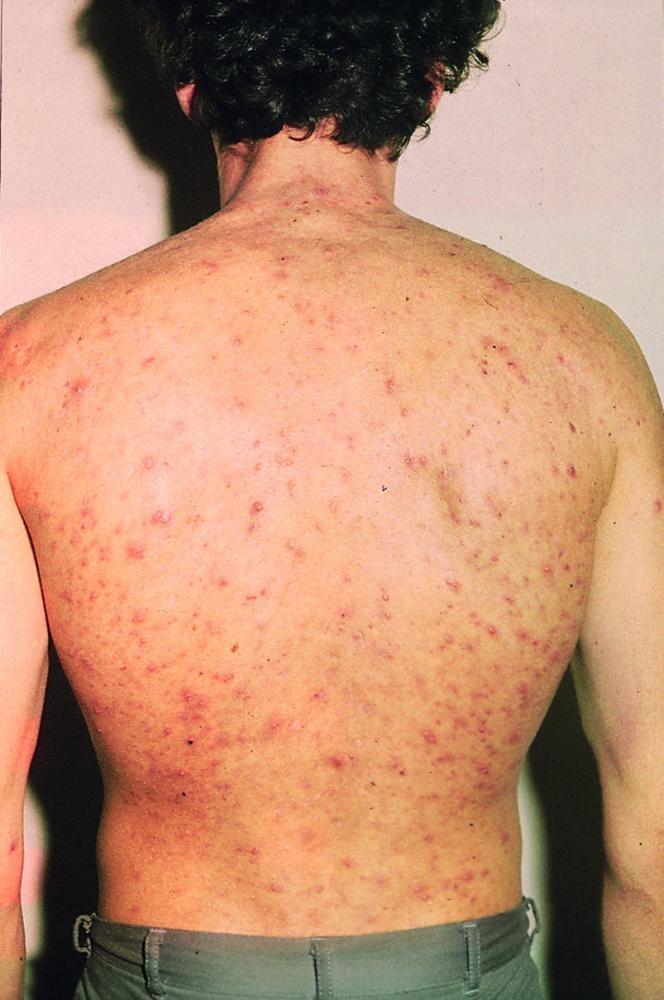
    Acne (Papules and Pustules)

    Acne (Papules and Pustules)

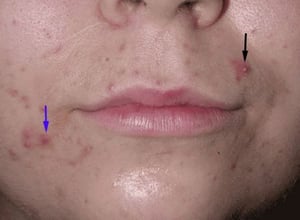
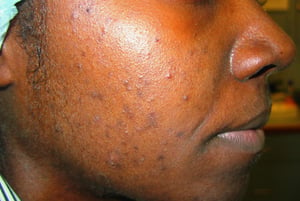
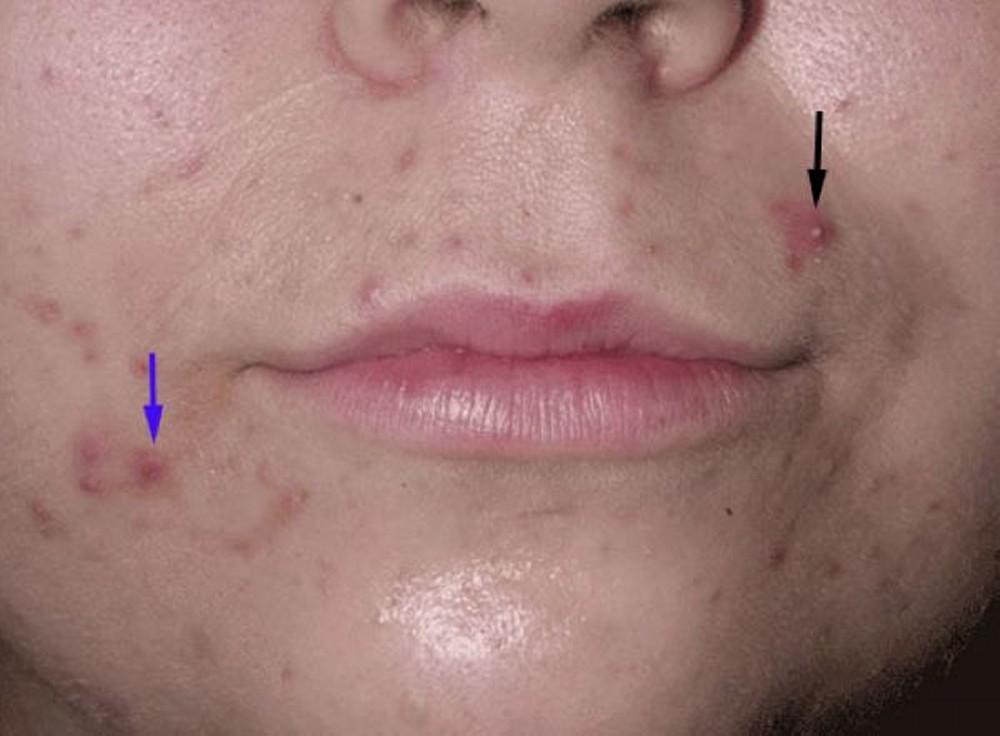
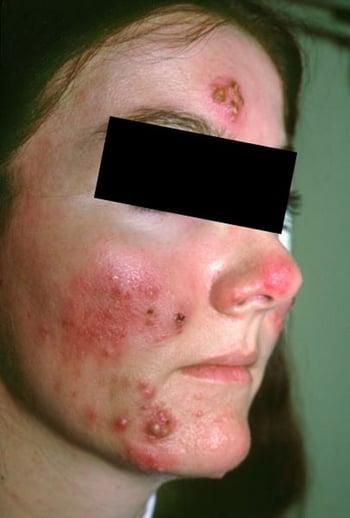
    Papules and pustules are red lesions 2 to 5 mm in diameter. In both, the follicular epithelium becomes damaged with accumulation of neutrophils and then lymphocytes. When the epithelium ruptures, the comedone contents elicit an intense inflammatory reaction in the dermis. Relatively deep inflammation produces papules. Pustules are more superficial.

    Nodules are larger, deeper, and more solid than papules. Such lesions resemble inflamed epidermoid cysts, although they lack true cystic structure.

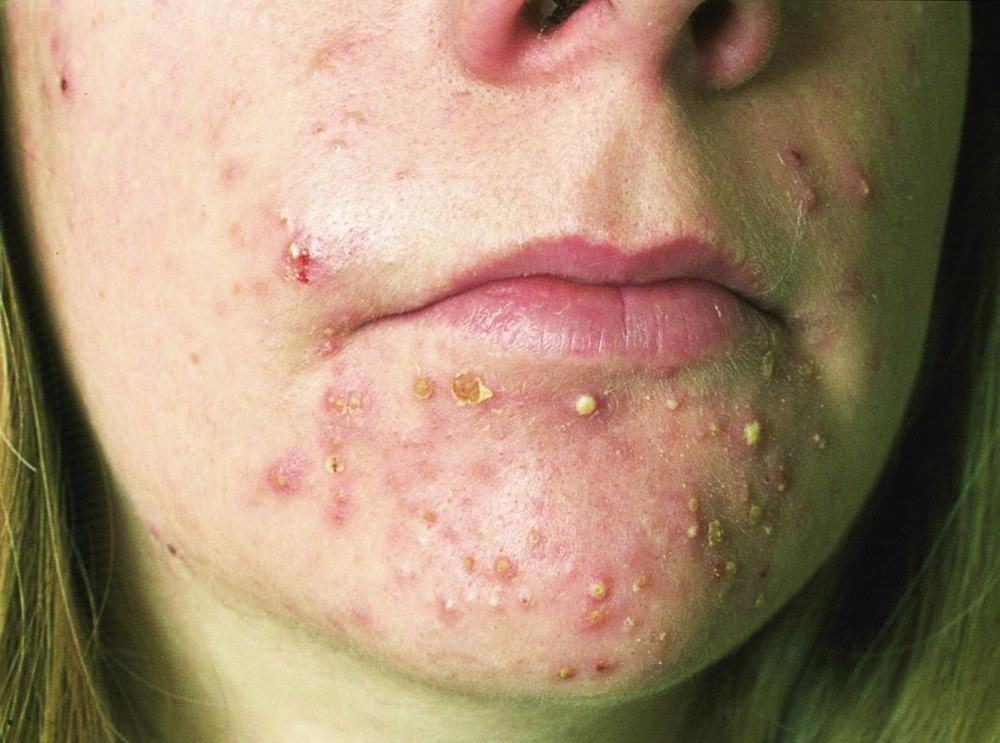
    Cysts are suppurative nodules. Rarely cysts form deep abscesses. Long-term cystic acne can cause scarring that manifests as tiny, deep pits (icepick scars); larger pits; shallow depressions; or areas of hypertrophic scarring.

    Photographs

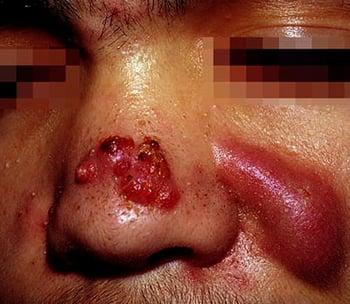
    Skin Lesion (Pustule)

    Skin Lesion (Pustule)

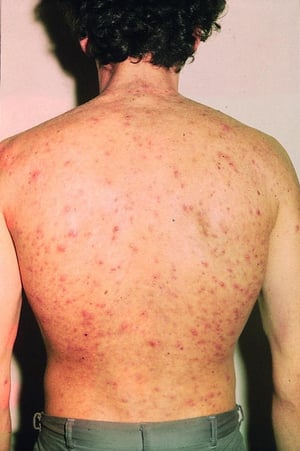
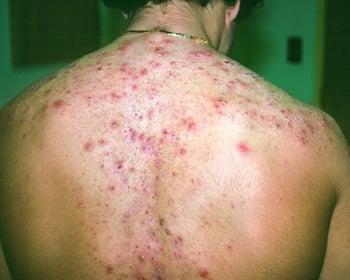
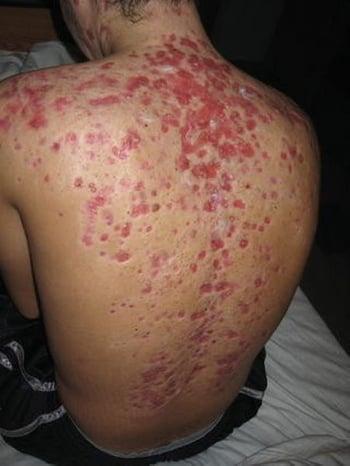
    Acne conglobata is the most severe form of acne vulgaris, affecting men more than women. Patients have abscesses, draining sinuses, fistulated comedones, and keloidal and atrophic scars. The back and chest are severely involved. The arms, abdomen, buttocks, and even the scalp may be affected.

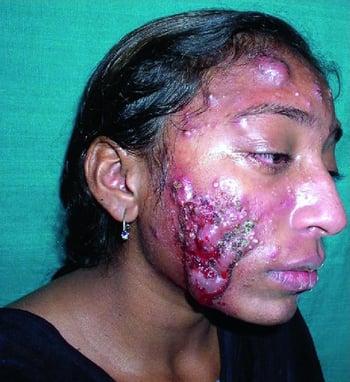
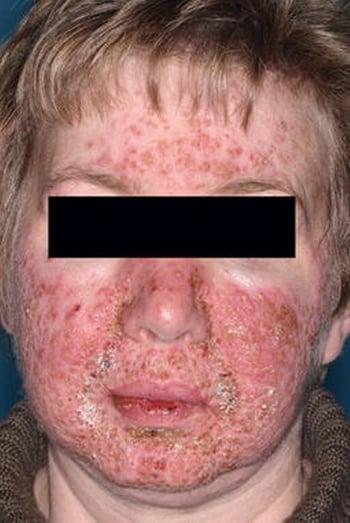
    Acne fulminans is acute, febrile, ulcerative acne, characterized by the sudden appearance of confluent abscesses leading to hemorrhagic necrosis. Leukocytosis and joint pain and swelling may also be present.

    Pyoderma faciale (also called rosacea fulminans) occurs suddenly on the midface of young women. It may be analogous to acne fulminans. The eruption consists of erythematous plaques and pustules, involving the chin, cheeks, and forehead.

    Diagnosis

    • Assessment for contributing factors (eg, hormonal, mechanical, or drug-related)
    • Determination of severity (mild, moderate, severe)
    • Assessment of psychosocial impact

    Diagnosis is by examination. Differential diagnosis includes rosacea (in which no comedones are seen), corticosteroid-induced acne (which lacks comedones and in which pustules are usually in the same stage of development), perioral dermatitis (usually with a more perioral and periorbital distribution), and acneiform drug eruptions. Acne severity is graded mild, moderate, or severe based on the number and type of lesions; a standardized system is outlined in Table 1: Acne and Related Disorders: Classification of Acne SeverityTables.

    Table 1

    PrintOpen table in new window Open table in new window
    Classification of Acne Severity

    Severity

    Definition

    Mild

    < 20 comedones, or < 15 inflammatory lesions, or < 30 total lesions

    Moderate

    20 to 100 comedones, or 15 to 50 inflammatory lesions, or 30 to 125 total lesions

    Severe

    > 5 cysts, or total comedone count > 100, or total inflammatory lesion count > 50, or > 125 total lesions

    Prognosis

    Acne of any severity usually remits spontaneously by the early to mid 20s, but a substantial minority of patients, usually women, may have acne into their 40s; options for treatment may be limited because of childbearing. Many adults occasionally develop mild, isolated acne lesions. Noninflammatory and mild inflammatory acne usually heals without scars. Moderate to severe inflammatory acne heals but often leaves scarring. Scarring is not only physical; acne may be a huge emotional stressor for adolescents who may withdraw, using the acne as an excuse to avoid difficult personal adjustments. Supportive counseling for patients and parents may be indicated in severe cases.

    Treatment

    • Comedones: Topical tretinoinSome Trade Names
      RETIN-A
      Click for Drug Monograph
    • Mild inflammatory acne: Topical antibiotics, benzoyl peroxideSome Trade Names
      BENZAC AC
      BENZAGEL
      NEUTROGENA ACNE MASK
      Click for Drug Monograph
      , or both
    • Moderate acne: Oral antibiotics
    • Severe acne: Oral isotretinoinSome Trade Names
      ACCUTANE
      Click for Drug Monograph
    • Cystic acne: Intralesional triamcinoloneSome Trade Names
      ARISTOCORT
      KENACORT
      KENALOG
      NASACORT
      Click for Drug Monograph

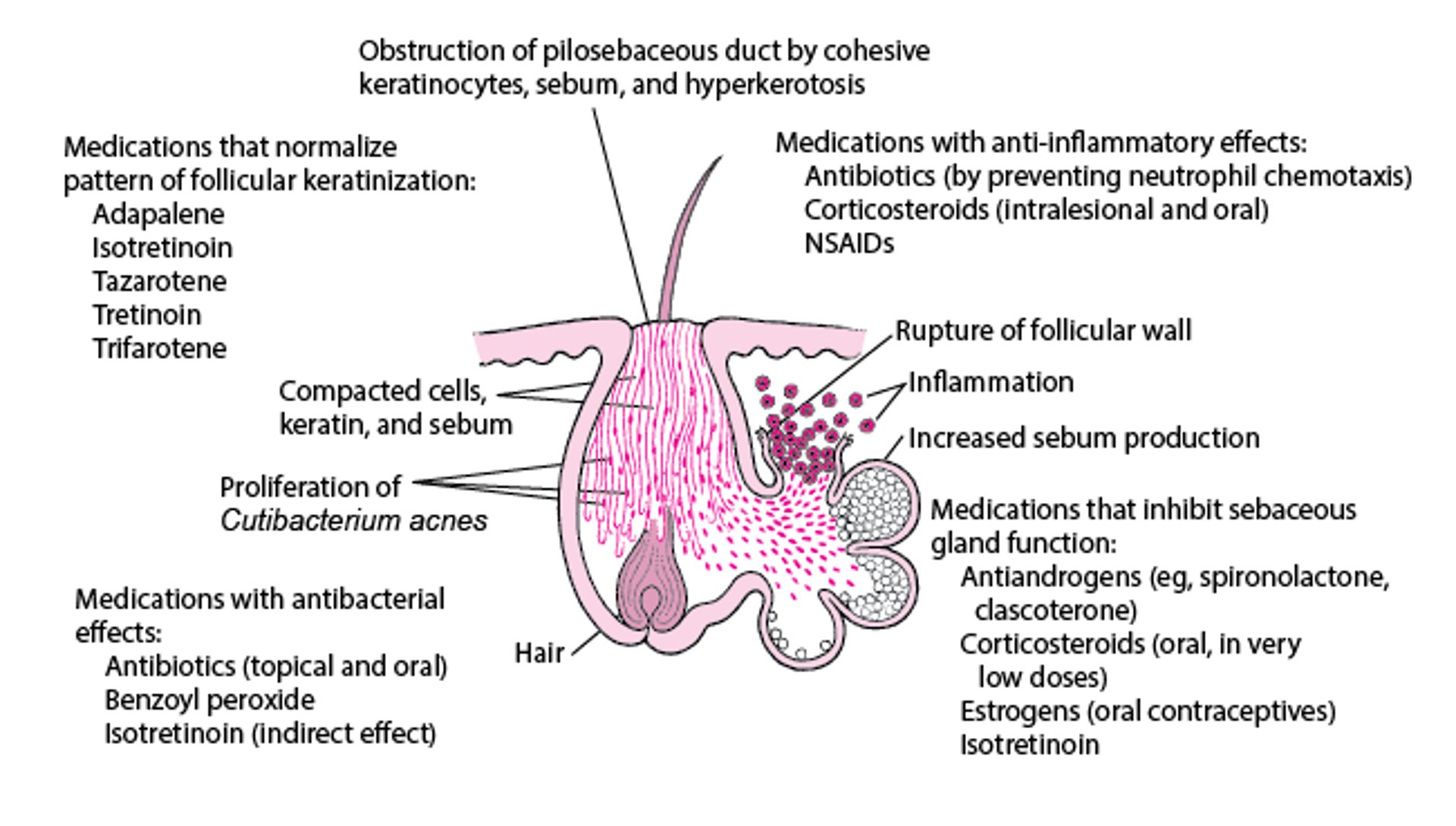
    Treatments are directed at reducing sebum production, comedone formation, inflammation, and bacterial counts (see Fig. 1: Acne and Related Disorders: How various drugs work in treating acne.Figures). Selection of treatment is generally based on severity; options are summarized in Table 2: Acne and Related Disorders: Drugs Used to Treat AcneTables. Affected areas should be cleansed daily, but extra washing, use of antibacterial soaps, and scrubbing confer no added benefit. A lower glycemic diet and moderation of milk intake might be considered for treatment-resistant adolescent acne. Peeling agents such as sulfur, salicylic acidSome Trade Names
    MEDIPLAST
    PROPA PH
    STRI-DEX
    Click for Drug Monograph
    , glycolic acid, and resorcinol are useful therapeutic adjuncts.

    Fig. 1

    How various drugs work in treating acne.

    Treatment should involve educating the patient and tailoring the plan to one that is realistic for the patient. Treatment failure can frequently be attributed to lack of adherence to the plan and also to lack of follow-up. Consultation with a specialist may be necessary.

    Table 2

    PrintOpen table in new window Open table in new window
    Drugs Used to Treat Acne

    Drug

    Adverse Effects

    Comments

    Topical antibacterials

    Benzoyl peroxideSome Trade Names
    BENZAC AC
    BENZAGEL
    NEUTROGENA ACNE MASK
    Click for Drug Monograph
    2.5%, 5%, and 10% gel, lotion, or wash

    Dry skin

    Possible bleaching of clothing and hair

    Allergic reactions (rarely)

    Comedolytic and antibacterial with very low to no development of resistance

    Should be used in all patients if tolerated

    Gel product usually preferred

    Benzoyl peroxideSome Trade Names
    BENZAC AC
    BENZAGEL
    NEUTROGENA ACNE MASK
    Click for Drug Monograph
    /erythromycinSome Trade Names
    ERY-TAB
    ERYTHROCIN
    Click for Drug Monograph
    gel

    —

    Must be kept refrigerated

    Benzoyl peroxideSome Trade Names
    BENZAC AC
    BENZAGEL
    NEUTROGENA ACNE MASK
    Click for Drug Monograph
    /clindamycinSome Trade Names
    CLEOCIN
    Click for Drug Monograph
    gel

    —

    —

    ClindamycinSome Trade Names
    CLEOCIN
    Click for Drug Monograph
    1% gel or lotion

    Diarrhea (rarely)

    Should be avoided in patients with inflammatory bowel disease

    ErythromycinSome Trade Names
    ERY-TAB
    ERYTHROCIN
    Click for Drug Monograph
    1.5 to 2% (multiple vehicles)

    —

    Well-tolerated, but frequent development of bacterial resistance

    Topical comedolytics and exfoliants

    TretinoinSome Trade Names
    RETIN-A
    Click for Drug Monograph
    (0.025%, 0.05%, and 0.1% cream; 0.05% liquid; 0.025% and 0.1% gel)

    Skin irritation

    Increased sun sensitivity

    Initial strength should be 0.025% and, if ineffective, should be increased; if irritation occurs, strength, frequency, or both should be reduced

    When tretinoinSome Trade Names
    RETIN-A
    Click for Drug Monograph
    is started, apparent worsening of acne, with improvement possibly taking 3 to 4 wk to occur

    Requires use of protective clothing and sunscreen

    Should be avoided during pregnancy

    TazaroteneSome Trade Names
    AVAGE
    TAZORAC
    Click for Drug Monograph
    0.05% or 0.1% cream or gel

    Skin irritation

    Increased sun sensitivity

    When tazaroteneSome Trade Names
    AVAGE
    TAZORAC
    Click for Drug Monograph
    is started, apparent worsening of acne, with improvement possibly taking 3 to 4 wk to occur

    Requires use of protective clothing and sunscreen

    Should be avoided during pregnancy

    AdapaleneSome Trade Names
    DIFFERIN
    Click for Drug Monograph
    0.1% gel

    Some redness, burning, and increased sun sensitivity

    As effective as tretinoinSome Trade Names
    RETIN-A
    Click for Drug Monograph
    but less irritating

    Requires use of protective clothing and sunscreen

    Azelaic acidSome Trade Names
    AZELEX
    FINACEA
    Click for Drug Monograph
    20% cream

    Possible lightening of skin

    Minimally irritating

    May be used by itself or with tretinoinSome Trade Names
    RETIN-A
    Click for Drug Monograph

    Should be used cautiously in people with darker skin because of skin-lightening effects

    Glycolic acid 5–10%

    Stinging

    Mild irritation

    OTC product in cream, lotion, or solution; adjunct therapy

    Oral antibiotics

    TetracyclineSome Trade Names
    ACHROMYCIN V
    TETRACYN
    TETREX
    Click for Drug Monograph
    250–500 mg bid

    Increased sun sensitivity

    Inexpensive and safe, but must be taken on an empty stomach

    Requires use of protective clothing and sunscreen

    DoxycyclineSome Trade Names
    PERIOSTAT
    VIBRAMYCIN
    Click for Drug Monograph
    50–100 mg bid

    Increased sun sensitivity

    Good first-line drug in terms of efficacy and cost

    Requires use of protective clothing and sunscreen

    MinocyclineSome Trade Names
    MINOCIN
    Click for Drug Monograph
    50–100 mg bid

    Headache

    Dizziness

    Skin discoloration

    Most effective antibiotic but is expensive

    ErythromycinSome Trade Names
    ERY-TAB
    ERYTHROCIN
    Click for Drug Monograph
    250–500 mg bid

    Stomach upset

    Frequent development of bacterial resistance

    Oral retinoid

    IsotretinoinSome Trade Names
    ACCUTANE
    Click for Drug Monograph
    1–2 mg/kg once/day for 16–20 wk

    Possible harm to a developing fetus

    Possible effect on blood cells, the liver, and fat (triglyceride and cholesterol) levels

    Dry eyes, chapped lips, drying of mucous membranes

    Pain or stiffness of large joints and lower back with high dosages

    Associated with depression, suicidal thoughts, attempted suicide, and (rarely) completed suicide

    Unclear whether associated with new or worsened inflammatory bowel disease (Crohn disease and ulcerative colitis)

    For sexually active women, requires a pregnancy test before the start of therapy with isotretinoinSome Trade Names
    ACCUTANE
    Click for Drug Monograph
    and at monthly intervals during use of the drug plus use of 2 forms of contraception or sexual abstinence, beginning 1 mo before the drug is started, continued during drug use, and for 1 mo after stopping the drug

    Requires periodic CBC, liver function tests, fasting glucose, and lipid profile

    Drugs Used to Treat Acne

    Drug

    Adverse Effects

    Comments

    Topical antibacterials

    Benzoyl peroxideSome Trade Names
    BENZAC AC
    BENZAGEL
    NEUTROGENA ACNE MASK
    Click for Drug Monograph
    2.5%, 5%, and 10% gel, lotion, or wash

    Dry skin

    Possible bleaching of clothing and hair

    Allergic reactions (rarely)

    Comedolytic and antibacterial with very low to no development of resistance

    Should be used in all patients if tolerated

    Gel product usually preferred

    Benzoyl peroxideSome Trade Names
    BENZAC AC
    BENZAGEL
    NEUTROGENA ACNE MASK
    Click for Drug Monograph
    /erythromycinSome Trade Names
    ERY-TAB
    ERYTHROCIN
    Click for Drug Monograph
    gel

    —

    Must be kept refrigerated

    Benzoyl peroxideSome Trade Names
    BENZAC AC
    BENZAGEL
    NEUTROGENA ACNE MASK
    Click for Drug Monograph
    /clindamycinSome Trade Names
    CLEOCIN
    Click for Drug Monograph
    gel

    —

    —

    ClindamycinSome Trade Names
    CLEOCIN
    Click for Drug Monograph
    1% gel or lotion

    Diarrhea (rarely)

    Should be avoided in patients with inflammatory bowel disease

    ErythromycinSome Trade Names
    ERY-TAB
    ERYTHROCIN
    Click for Drug Monograph
    1.5 to 2% (multiple vehicles)

    —

    Well-tolerated, but frequent development of bacterial resistance

    Topical comedolytics and exfoliants

    TretinoinSome Trade Names
    RETIN-A
    Click for Drug Monograph
    (0.025%, 0.05%, and 0.1% cream; 0.05% liquid; 0.025% and 0.1% gel)

    Skin irritation

    Increased sun sensitivity

    Initial strength should be 0.025% and, if ineffective, should be increased; if irritation occurs, strength, frequency, or both should be reduced

    When tretinoinSome Trade Names
    RETIN-A
    Click for Drug Monograph
    is started, apparent worsening of acne, with improvement possibly taking 3 to 4 wk to occur

    Requires use of protective clothing and sunscreen

    Should be avoided during pregnancy

    TazaroteneSome Trade Names
    AVAGE
    TAZORAC
    Click for Drug Monograph
    0.05% or 0.1% cream or gel

    Skin irritation

    Increased sun sensitivity

    When tazaroteneSome Trade Names
    AVAGE
    TAZORAC
    Click for Drug Monograph
    is started, apparent worsening of acne, with improvement possibly taking 3 to 4 wk to occur

    Requires use of protective clothing and sunscreen

    Should be avoided during pregnancy

    AdapaleneSome Trade Names
    DIFFERIN
    Click for Drug Monograph
    0.1% gel

    Some redness, burning, and increased sun sensitivity

    As effective as tretinoinSome Trade Names
    RETIN-A
    Click for Drug Monograph
    but less irritating

    Requires use of protective clothing and sunscreen

    Azelaic acidSome Trade Names
    AZELEX
    FINACEA
    Click for Drug Monograph
    20% cream

    Possible lightening of skin

    Minimally irritating

    May be used by itself or with tretinoinSome Trade Names
    RETIN-A
    Click for Drug Monograph

    Should be used cautiously in people with darker skin because of skin-lightening effects

    Glycolic acid 5–10%

    Stinging

    Mild irritation

    OTC product in cream, lotion, or solution; adjunct therapy

    Oral antibiotics

    TetracyclineSome Trade Names
    ACHROMYCIN V
    TETRACYN
    TETREX
    Click for Drug Monograph
    250–500 mg bid

    Increased sun sensitivity

    Inexpensive and safe, but must be taken on an empty stomach

    Requires use of protective clothing and sunscreen

    DoxycyclineSome Trade Names
    PERIOSTAT
    VIBRAMYCIN
    Click for Drug Monograph
    50–100 mg bid

    Increased sun sensitivity

    Good first-line drug in terms of efficacy and cost

    Requires use of protective clothing and sunscreen

    MinocyclineSome Trade Names
    MINOCIN
    Click for Drug Monograph
    50–100 mg bid

    Headache

    Dizziness

    Skin discoloration

    Most effective antibiotic but is expensive

    ErythromycinSome Trade Names
    ERY-TAB
    ERYTHROCIN
    Click for Drug Monograph
    250–500 mg bid

    Stomach upset

    Frequent development of bacterial resistance

    Oral retinoid

    IsotretinoinSome Trade Names
    ACCUTANE
    Click for Drug Monograph
    1–2 mg/kg once/day for 16–20 wk

    Possible harm to a developing fetus

    Possible effect on blood cells, the liver, and fat (triglyceride and cholesterol) levels

    Dry eyes, chapped lips, drying of mucous membranes

    Pain or stiffness of large joints and lower back with high dosages

    Associated with depression, suicidal thoughts, attempted suicide, and (rarely) completed suicide

    Unclear whether associated with new or worsened inflammatory bowel disease (Crohn disease and ulcerative colitis)

    For sexually active women, requires a pregnancy test before the start of therapy with isotretinoinSome Trade Names
    ACCUTANE
    Click for Drug Monograph
    and at monthly intervals during use of the drug plus use of 2 forms of contraception or sexual abstinence, beginning 1 mo before the drug is started, continued during drug use, and for 1 mo after stopping the drug

    Requires periodic CBC, liver function tests, fasting glucose, and lipid profile

    Mild acne: Treatment should be continued for 6 wk or until lesions respond. Maintenance treatment may be necessary to maintain control.

    Single-agent therapy is generally sufficient for comedonal acne. A mainstay of treatment for comedones is daily topical tretinoinSome Trade Names
    RETIN-A
    Click for Drug Monograph
    as tolerated. Daily adapaleneSome Trade Names
    DIFFERIN
    Click for Drug Monograph
    gel, tazaroteneSome Trade Names
    AVAGE
    TAZORAC
    Click for Drug Monograph
    cream or gel, azelaic acidSome Trade Names
    AZELEX
    FINACEA
    Click for Drug Monograph
    cream, and glycolic or salicylic acidSome Trade Names
    MEDIPLAST
    PROPA PH
    STRI-DEX
    Click for Drug Monograph
    are alternatives for patients who cannot tolerate topical tretinoinSome Trade Names
    RETIN-A
    Click for Drug Monograph
    . Adverse effects include erythema, burning, stinging, and peeling. AdapaleneSome Trade Names
    DIFFERIN
    Click for Drug Monograph
    and tazaroteneSome Trade Names
    AVAGE
    TAZORAC
    Click for Drug Monograph
    are retinoids; like tretinoinSome Trade Names
    RETIN-A
    Click for Drug Monograph
    , they tend to be somewhat irritating and photosensitizing. Azelaic acidSome Trade Names
    AZELEX
    FINACEA
    Click for Drug Monograph
    has comedolytic and antibacterial properties by an unrelated mechanism and may be synergistic with retinoids.

    Mild papulopustular (inflammatory) acne should usually be treated with dual therapy (eg, a combination of tretinoinSome Trade Names
    RETIN-A
    Click for Drug Monograph
    with benzoyl peroxideSome Trade Names
    BENZAC AC
    BENZAGEL
    NEUTROGENA ACNE MASK
    Click for Drug Monograph
    , a topical antibiotic, or both). The topical antibiotic is usually erythromycinSome Trade Names
    ERY-TAB
    ERYTHROCIN
    Click for Drug Monograph
    or clindamycinSome Trade Names
    CLEOCIN
    Click for Drug Monograph
    . Combining benzoyl peroxideSome Trade Names
    BENZAC AC
    BENZAGEL
    NEUTROGENA ACNE MASK
    Click for Drug Monograph
    with these antibiotics may help limit development of resistance. Glycolic acid may be used instead of or in addition to tretinoinSome Trade Names
    RETIN-A
    Click for Drug Monograph
    . Treatments have no significant adverse effects other than drying and irritation (and rare allergic reactions to benzoyl peroxideSome Trade Names
    BENZAC AC
    BENZAGEL
    NEUTROGENA ACNE MASK
    Click for Drug Monograph
    ).

    Physical extraction of comedones using a comedone extractor is an option for patients unresponsive to topical treatment. Comedone extraction may be done by a physician, nurse, or physician assistant. One end of the comedone extractor is like a blade or bayonet that punctures the closed comedone. The other end exerts pressure to extract the comedone.

    Oral antibiotics (eg, tetracyclineSome Trade Names
    ACHROMYCIN V
    TETRACYN
    TETREX
    Click for Drug Monograph
    , minocyclineSome Trade Names
    MINOCIN
    Click for Drug Monograph
    , doxycyclineSome Trade Names
    PERIOSTAT
    VIBRAMYCIN
    Click for Drug Monograph
    , erythromycinSome Trade Names
    ERY-TAB
    ERYTHROCIN
    Click for Drug Monograph
    ) can be used when wide distribution of lesions makes topical therapy impractical.

    Moderate acne: Moderate acne responds best to oral systemic therapy with antibiotics. Antibiotics effective for acne include tetracyclineSome Trade Names
    ACHROMYCIN V
    TETRACYN
    TETREX
    Click for Drug Monograph
    , minocyclineSome Trade Names
    MINOCIN
    Click for Drug Monograph
    , erythromycinSome Trade Names
    ERY-TAB
    ERYTHROCIN
    Click for Drug Monograph
    , and doxycyclineSome Trade Names
    PERIOSTAT
    VIBRAMYCIN
    Click for Drug Monograph
    . Full benefit takes ≥ 12 wk. Topical therapy as for mild acne is usually used concomitantly with oral antibiotics.

    TetracyclineSome Trade Names
    ACHROMYCIN V
    TETRACYN
    TETREX
    Click for Drug Monograph
    is usually a good first choice: 250 or 500 mg bid (between meals and at bedtime) for 4 wk or until lesions respond, after which it may be reduced to the lowest effective dose. Rarely, dosage must be increased to 500 mg qid. After control is achieved, it is reasonable to attempt to taper and discontinue the oral antibiotic and continue topical therapy for control. Because relapse often follows short-term treatment, therapy may need to be continued for months to years, although for maintenance tetracyclineSome Trade Names
    ACHROMYCIN V
    TETRACYN
    TETREX
    Click for Drug Monograph
    250 or 500 mg once/day is often sufficient. MinocyclineSome Trade Names
    MINOCIN
    Click for Drug Monograph
    50 or 100 mg bid causes fewer GI adverse effects, is easier to take, and is less likely to cause photosensitization, but it is the most costly option. ErythromycinSome Trade Names
    ERY-TAB
    ERYTHROCIN
    Click for Drug Monograph
    and doxycyclineSome Trade Names
    PERIOSTAT
    VIBRAMYCIN
    Click for Drug Monograph
    are considered 2nd-line drugs because both can cause GI adverse effects, and doxycyclineSome Trade Names
    PERIOSTAT
    VIBRAMYCIN
    Click for Drug Monograph
    is a frequent photosensitizer. Subantimicrobial doses of doxycyclineSome Trade Names
    PERIOSTAT
    VIBRAMYCIN
    Click for Drug Monograph
    have also been proved effective for acne and rosacea.

    Long-term use of antibiotics may cause a gram-negative pustular folliculitis around the nose and in the center of the face. This uncommon superinfection may be difficult to clear and is best treated with oral isotretinoinSome Trade Names
    ACCUTANE
    Click for Drug Monograph
    after discontinuing the oral antibiotic. AmpicillinSome Trade Names
    OMNIPEN
    PRINCIPEN
    Click for Drug Monograph
    is an alternative treatment for gram-negative folliculitis. In women, prolonged antibiotic use can cause candidal vaginitis; if local and systemic therapy does not eradicate this problem, antibiotic therapy for acne must be stopped.

    Severe acne: Oral isotretinoinSome Trade Names
    ACCUTANE
    Click for Drug Monograph
    is the best treatment for patients with moderate acne in whom antibiotics are unsuccessful and for those with severe inflammatory acne. Dosage of isotretinoinSome Trade Names
    ACCUTANE
    Click for Drug Monograph
    is usually 1 mg/kg once/day for 16 to 20 wk, but the dosage may be increased to 2 mg/kg once/day. If adverse effects make this dosage intolerable, it may be reduced to 0.5 mg/kg once/day. After therapy, acne may continue to improve. Most patients do not require a 2nd course of treatment; when needed, it should be resumed only after the drug has been stopped for 4 mo. Retreatment is required more often if the initial dosage is low (0.5 mg/kg). With this dosage (which is very popular in Europe), fewer adverse effects occur, but prolonged therapy is usually required.

    IsotretinoinSome Trade Names
    ACCUTANE
    Click for Drug Monograph
    is nearly always effective, but use is limited by adverse effects, including dryness of conjunctivae and mucosae of the genitals, chapped lips, arthralgias, depression, elevated lipid levels, and the risk of birth defects if treatment occurs during pregnancy. Hydration with water followed by petrolatum application usually alleviates mucosal and cutaneous dryness. Arthralgias (mostly of large joints or the lower back) occur in about 15% of patients. Increased risk of depression and suicide is much publicized but probably rare. It is not clear whether risk of new or worsened inflammatory bowel disease (Crohn disease and ulcerative colitis) is increased. CBC; liver function; and fasting glucose, triglyceride, and cholesterol levels should be determined before treatment. Each should be reassessed at 4 wk and, unless abnormalities are noted, need not be repeated until the end of treatment. Triglycerides rarely increase to a level at which the drug should be stopped. Liver function is seldom affected. Because isotretinoinSome Trade Names
    ACCUTANE
    Click for Drug Monograph
    is teratogenic, women of childbearing age are urged to use 2 methods of contraception for 1 mo before treatment, during treatment, and for at least 1 mo after stopping treatment. Pregnancy tests should be done before beginning therapy and monthly until 1 mo after therapy stops.

    Intralesional injection of 0.1 mL triamcinoloneSome Trade Names
    ARISTOCORT
    KENACORT
    KENALOG
    NASACORT
    Click for Drug Monograph
    acetonide suspension 2.5 mg/mL (the 10 mg/mL suspension must be diluted) is indicated for patients with firm (cystic) acne who seek quick clinical improvement with reduced scarring. Local atrophy may occur but is usually transient. For isolated, very boggy lesions, incision and drainage are often beneficial but may result in residual scarring.

    Other forms of acne: Pyoderma faciale is treated with oral corticosteroids and isotretinoinSome Trade Names
    ACCUTANE
    Click for Drug Monograph
    . Acne fulminans is treated with oral corticosteroids and systemic antibiotics. Acne conglobata is treated with oral isotretinoinSome Trade Names
    ACCUTANE
    Click for Drug Monograph
    if systemic antibiotics fail. For acne caused by endocrine abnormalities, antiandrogens are indicated. SpironolactoneSome Trade Names
    ALDACTONE
    Click for Drug Monograph
    , which has some antiandrogen effects, is sometimes prescribed to treat acne at a dose of 50 to 100 mg po once/day. CyproteroneSome Trade Names
    No US trade name
    Click for Drug Monograph
    acetate is used in Europe. When other measures fail, an estrogen/progesterone–containing contraceptive may be tried; therapy ≥ 6 mo is needed to evaluate effect.

    Scarring: Small scars can be treated with chemical peels, laser resurfacing, or dermabrasion. Deeper, discrete scars can be excised. Wide, shallow depressions can be treated with subcision or collagen injection. Collagen implants are temporary and must be repeated every few years.

    Key Points

    • Acne is characterized by comedones and, if inflammatory, by papules, pustules, nodules, and cysts.
    • Mild and moderate acne usually heals without scarring by the mid 20s.
    • Recommend that patients avoid triggers (eg, occlusive cosmetics and clothing; cleansers; lotions; high humidity; some drugs and chemicals; and possibly a high intake of milk or a high-glycemic diet).
    • Consider the psychologic as well as the physical effects of acne.
    • Prescribe a topical comedolytic (eg, tretinoinSome Trade Names
      RETIN-A
      Click for Drug Monograph
      ) plus, for inflammatory acne, benzoyl peroxideSome Trade Names
      BENZAC AC
      BENZAGEL
      NEUTROGENA ACNE MASK
      Click for Drug Monograph
      , a topical antibiotic, or both.
    • Prescribe an oral antibiotic for moderate acne and oral isotretinoinSome Trade Names
      ACCUTANE
      Click for Drug Monograph
      for severe acne.
    • Treat cystic acne with intralesional triamcinoloneSome Trade Names
      ARISTOCORT
      KENACORT
      KENALOG
      NASACORT
      Click for Drug Monograph
      .

    Last full review/revision February 2013 by Karen McKoy, MD, MPH

    Content last modified March 2013

    Buy the Book

    Mobile Versions

    Back to Top

    Previous: Principles of Topical Dermatologic Therapy

    Next: Perioral Dermatitis

    Audio
    Figures
    Photographs
    Sidebars
    Tables
    Videos

    Copyright     © 2010-2013 Merck Sharp & Dohme Corp., a subsidiary of Merck & Co., Inc., Whitehouse Station, N.J., U.S.A.    Privacy    Terms of Use