Dermatophytid reaction is an inflammatory reaction to dermatophytosis at a cutaneous site distant from the primary infection. Diagnosis is based on potassium hydroxide (KOH) wet mount. Treatment is directed at the primary dermatophytosis.
Dermatophytid (identity or id) reactions are protean; they are not related to localized growth of the fungus but rather are a generalized inflammatory reaction to a dermatophytosis elsewhere on the body (1).
Lesions are typically pruritic and may manifest as:
Vesicular eruptions on the hands and feet
Follicular papules
Erysipelas-like plaques
Erythema annulare centrifugum
The distribution of reactions may be extensive.

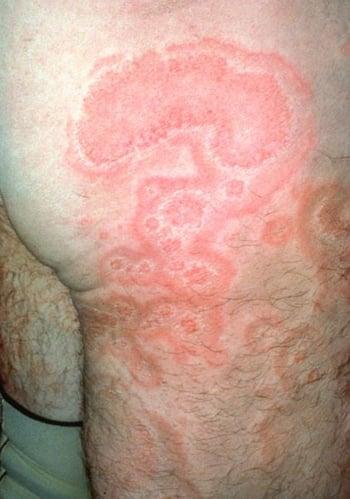
This photo shows annular and arcuate lesions of erythema annulare centrifugum.

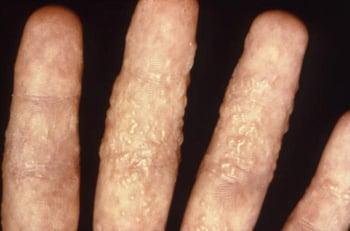
This dermatophytid (identity, or id) reaction manifests as copious vesicles on the fingers.
General reference
1. Ilkit M, Durdu M, Karakaş M. Cutaneous id reactions: a comprehensive review of clinical manifestations, epidemiology, etiology, and management. Crit Rev Microbiol. 2012;38(3):191-202. doi:10.3109/1040841X.2011.645520
Diagnosis of Dermatophytid Reaction
Potassium hydroxide (KOH) wet mount
Diagnosis of dermatophytid reaction is based on potassium hydroxide wet mounts; they are negative at the site of the id reaction and positive at the distant site of dermatophyte infection.
Treatment of Dermatophytid Reaction
Treatment of the primary dermatophytosis
Treatment of the primary infection cures dermatophytid; pending cure, topical glucocorticoids and/or antihistamines to help with sleep (eg, hydroxyzine 25 mg every night at bedtime) can be used to relieve symptoms (see table ).
Drug Information for the Topic