Nail disorders are commonly encountered in clinical practice and include mechanical disorders, trauma, infections of the nail, and inflammatory disorders. Nail changes may also occur in many systemic conditions and genetic syndromes.
Most nail infections are fungal (onychomycosis), but bacterial and viral infections can occur (eg, green-nail syndrome [Pseudomonas], herpetic whitlow [herpes simplex virus-1]). Acute paronychia describes bacterial infection of the nail unit, and chronic paronychia describes inflammation of the periungual tissues. Parasitic infestation such as crusted scabies can also lead to changes in the nail plate, but these infestations are exceedingly rare.
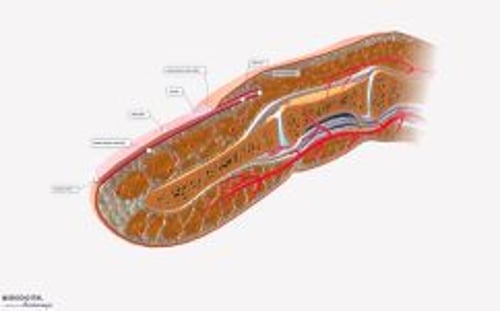


This image shows a detailed cross-sectional view of the fingernail including the nail border, nail bed, nail matrix, and surrounding skin folds.
Nail bed
Ungual root
Lunula
Ungual valley
Body of nail
Free border
Hyponychium
Striae of nail
Perionyx
Distal phalanx
Fingertip
Adipose tissue
Nail matrix
ASKLEPIOS MEDICAL ATLAS / SCIENCE PHOTO LIBRARY
Common warts (verrucae vulgaris) result from human papillomavirus infection and frequently infect the proximal nail fold and sometimes the subungual area. Onychophagia (nail biting), onychotillomania (nail picking), and finger sucking are risk factors. Warts involving these areas are especially difficult to treat.
Toenails require special attention in older adults and in patients with diabetes or peripheral vascular disease; a podiatrist can help avoid local breakdown and secondary infections by assisting in routine nail trimming.