Epididymitis is inflammation of the epididymis, occasionally accompanied by inflammation of the testis (epididymo-orchitis). Scrotal pain and swelling usually occur unilaterally. Diagnosis is based on physical examination. Treatment is with antibiotics, analgesics, and scrotal support.
Etiology of Epididymitis
Bacterial epididymitis
Most epididymitis (and epididymo-orchitis) is caused by bacteria. When inflammation involves the vas deferens, vasitis ensues. When all spermatic cord structures also are involved, the diagnosis is funiculitis. Rarely, epididymal abscess, scrotal extra-epididymal abscess, pyocele (accumulation of pus within a hydrocele), or testicular infarction occurs.

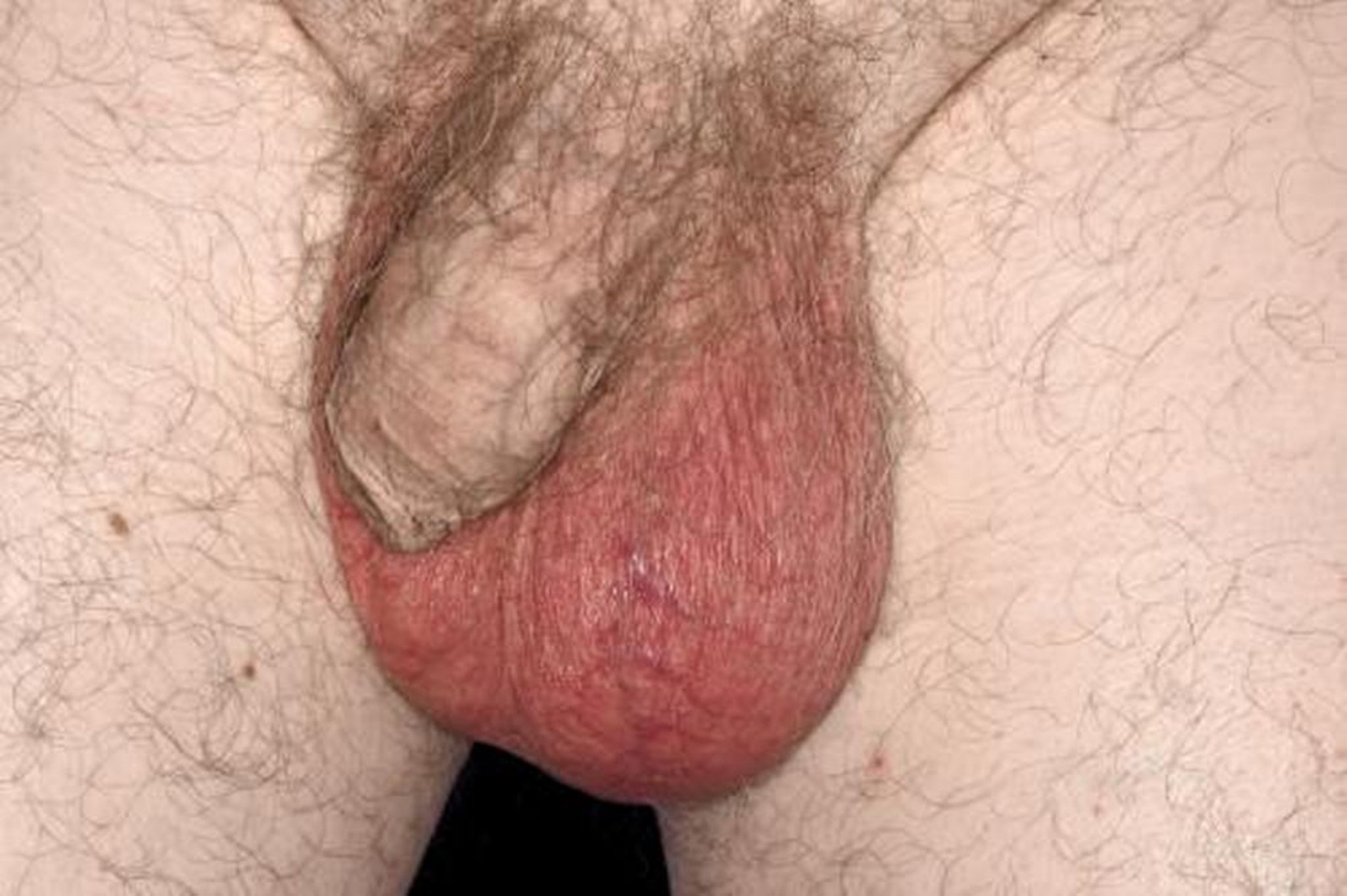
Epididymo-orchitis can result in painful, swollen, erythematous testes and epididymis, as shown in this photo.
DR P. MARAZZI/SCIENCE PHOTO LIBRARY
In males < 35 years, most cases are due to a sexually transmitted pathogen, especially Neisseria gonorrhoeae or Chlamydia trachomatis. Infection may begin as urethritis.
In males > 35 years, most cases are due to gram-negative coliform bacilli and typically occur in patients with urologic abnormalities, indwelling catheters, or recent urologic procedures.
Tuberculous epididymitis and syphilitic gummas are rare in the United States except in immunocompromised (eg, HIV-infected) patients.
Nonbacterial epididymitis
Viral causes (eg, cytomegalovirus infection) and mycotic causes (eg, actinomycosis, blastomycosis) of epididymitis are rare in the United States except in immunocompromised (eg, HIV-infected) patients. Epididymitis and epididymo-orchitis of noninfectious etiology may be due to chemical irritation secondary to a retrograde flow of urine into the epididymis, which may occur with the Valsalva maneuver (eg, with heavy lifting) or after local trauma.
Symptoms and Signs of Epididymitis
Scrotal pain occurs in both bacterial and nonbacterial epididymitis. Pain can be severe and is sometimes referred to the abdomen. In bacterial epididymitis, patients may also have fever, nausea, or urinary symptoms. Urethral discharge may be present if the cause is urethritis.
Physical examination reveals swelling, induration, marked tenderness, and sometimes erythema of a portion of or all of the affected epididymis and, sometimes, the adjacent testis. Sepsis is suggested by fever, tachycardia, hypotension, and a toxic appearance.
Diagnosis of Epididymitis
History and physical examination
Sometimes urethral swab and urine culture
Doppler ultrasound in patients < 30 years to evaluate for testicular torsion
Diagnosis of epididymitis is confirmed by finding swelling and tenderness of the epididymis. However, unless findings are clearly isolated to the epididymis, testicular torsion must also be considered, particularly in patients < 30 years; immediate color Doppler ultrasound is indicated. A urologic consultation is indicated if the cause is unclear or the disorder is recurrent.
Pearls & Pitfalls
|
Urethritis suggests that the cause of epididymitis is a sexually transmitted pathogen, and a urethral swab is sent for gonococcus and chlamydia nucleic acid amplification testing (NAAT) or culture. Otherwise, the infecting organism usually can be identified by urine culture. Urinalysis and culture are normal in nonbacterial causes.
Treatment of Epididymitis
Antibiotics
Supportive measures
Epididymitis treatment consists of scrotal elevation (eg, with a jockstrap when upright) to decrease repetitive, minor bumps, scrotal ice packs, anti-inflammatory analgesics, and a broad-spectrum antibiotic such as levofloxacin; doxycycline or sulfamethoxazole/trimethoprim double-strength are alternative options. Levofloxacin with a single dose of ceftriaxone is preferred for patients who practice anal intercourse or if epididymitis is likely caused by enteric organisms. Doxycycline is preferred for patients with suspected gonorrhea or chlamydial acute epididymitis. A single dose of ceftriaxone should be added to oral antibiotics in males who practice insertive anal intercourse or if chlamydia or gonorrhea is suspected (1). Ceftriaxone treatment also covers gram-negative bacteria (eg, E. coli).
If sepsis is suspected, an aminoglycoside such as tobramycin or a third-generation cephalosporin such as ceftriaxone may be useful until the infecting organism and its sensitivities are known.
Abscess and pyocele usually require surgical drainage.
Recurrent bacterial epididymitis secondary to chronic urethritis or prostatitis occasionally can be prevented by vasectomy. An epididymectomy, occasionally done for chronic epididymitis, may not relieve symptoms.
Patients who must continuously wear an indwelling urethral catheter are prone to develop recurrent epididymitis and epididymo-orchitis. In such cases, placement of a suprapubic cystostomy or institution of a self-catheterization regimen may be useful.
Treatment of nonbacterial epididymitis includes the above general measures, but antimicrobial therapy is not warranted. Nerve block of the spermatic cord with local anesthesia can relieve symptoms in severe, persistent cases.
Treatment reference
1. Workowski KA, Bachmann LH, Chan PA, et al. Sexually transmitted infections treatment guidelines, 2021. MMWR Recomm Rep. 2021;23;70(4):1-187. doi: 10.15585/mmwr.rr7004a1
Key Points
The most common causes of epididymitis are bacteria: Neisseria gonorrhoeae and Chlamydia trachomatis in younger males and adolescents, and gram-negative coliform bacilli in older males.
Tenderness affects the epididymis and often the testis.
Diagnose epididymitis clinically and exclude testicular torsion by clinical findings or, if necessary, by color Doppler ultrasonography.
For most cases, give antibiotics (eg, for outpatient treatment, a fluoroquinolone, doxycycline, or sulfamethoxazole/trimethoprim, ceftriaxone) and treat pain.
More Information
The following English-language resource may be useful. Please note that The Manual is not responsible for the content of this resource.
American Urological Association Curriculum on Acute Scrotum: This case-study offering from the association's medical school curriculum covers the differential diagnosis of acute scrotum with a concentration on 6 conditions: epididymitis, hernia, scrotal trauma, testicular torsion, testicular tumor, and torsion of testicular appendices.
Drug Information for the Topic