Orchitis is infection of the testes, typically with mumps virus. Symptoms are testicular pain and swelling. Diagnosis is based on history and physical examination. Treatment is symptomatic. Antibiotics are given only if bacterial infection is identified.
Isolated orchitis (ie, infection localized to the testes) is nearly always viral in origin, and most cases are due to mumps. Rare causes include congenital syphilis, tuberculosis, leprosy, echovirus infection, lymphocytic choriomeningitis, coxsackievirus infection, infectious mononucleosis, varicella, and infection with group B arborviruses. Most bacterial orchitis is the result of severe bacterial epididymitis extending to the testis (epididymo-orchitis).
Orchitis develops in 20 to 25% of males with mumps, and occurs predominantly in postpubertal males (1). Bilateral orchitis occurs in 10 to 30% of patients (2). Sixty percent of patients with mumps orchitis develop testicular atrophy in at least one testis. Atrophy is unrelated to fertility or to the severity of the orchitis. The incidence of tumor does not appear to be increased. Fertility is diminished in one-fourth of men after unilateral mumps orchitis and in two-thirds of men who have had bilateral disease (3).

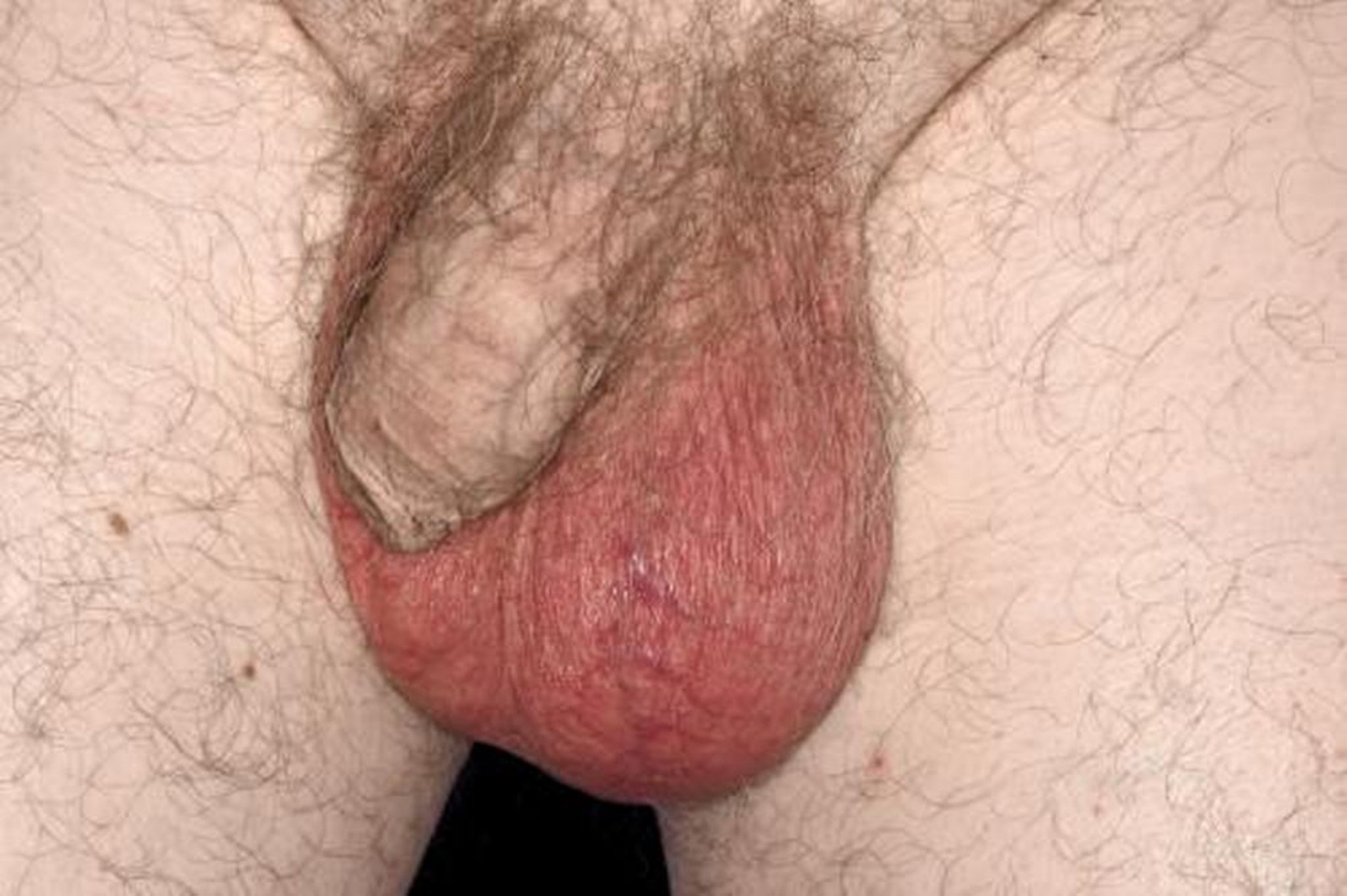
Epididymo-orchitis can result in painful, swollen, erythematous testes and epididymis, as shown in this photo.
DR P. MARAZZI/SCIENCE PHOTO LIBRARY
References
1. Hviid A, Rubin S, Mühlemann K. Mumps. Lancet. 2008;371(9616):932-944. doi:10.1016/S0140-6736(08)60419-5
2. Berhrman RE, Kliegman RM, Jenson HB, eds. Nelson Textbook of Pediatrics, 17th ed. Philadelphia, W. B. Saunders, 2004
3. Barták V. Sperm count, morphology and motility after unilateral mumps orchitis. J Reprod Fertil. 1973;32(3):491-494. doi:10.1530/jrf.0.0320491
Symptoms and Signs of Orchitis
Unilateral mumps orchitis develops acutely between 4 and 7 days after parotid swelling in mumps. In 30% of cases, orchitis develops in the other testis in 1 to 9 days. Orchitis can occur in the absence of parotitis. Pain may be of any degree of severity. In addition to pain and swelling of the testes, systemic symptoms may develop, such as malaise, fever, nausea, headache, and myalgias. Testicular examination reveals tenderness, enlargement, and induration of the testis and edema and erythema of the scrotal skin.
Other infectious agents causing orchitis present with similar testicular symptoms, with speed of onset and intensity related to their pathogenicity.
Diagnosis of Orchitis
History, physical examination, and selective testing
Color Doppler ultrasound to exclude other causes of acute scrotal pain and swelling
History and physical examination usually indicate the diagnosis of orchitis. Urgent differentiation of orchitis from testicular torsion and other causes of acute scrotal swelling and pain is accomplished with color Doppler ultrasound.
Mumps can be confirmed by serum immunofluorescence antibody testing. Other infectious agents may be identified by urine culture or serology.
Treatment of Orchitis
Analgesic measures
Antibiotics if bacterial infection
Supportive care with analgesics, rest, scrotal supports, and cold packs (wrapped in cloth to avoid direct contact with the skin) is sufficient if bacterial infection has been excluded. Bacterial infections (usually causing epididymo-orchitis) are treated with appropriate antibiotics.
Urologic follow-up is recommended.