Anaphylaxis is an acute, potentially life-threatening, IgE-mediated allergic reaction that occurs in previously sensitized people when they are reexposed to the sensitizing antigen. Symptoms can include stridor, dyspnea, wheezing, and hypotension. Diagnosis is clinical. Treatment is with epinephrine. Bronchospasm and upper airway edema may require inhaled or injected beta-agonists and sometimes endotracheal intubation. Persistent hypotension requires IV fluids and sometimes vasopressors.
Anaphylaxis is a serious, systemic hypersensitivity reaction that is usually rapid in onset and is characterized by potentially life-threatening respiration and/or circulatory compromise (1). (See also Overview of Allergic and Atopic Disorders.)
Anaphylactic shock is a hemodynamically severe subset of anaphylaxis in which there is circulatory failure (ie, clinically, hypotension and/or signs of end-organ hypoperfusion or collapse attributable to the reaction). Therefore, by definition, all anaphylactic shock involves anaphylaxis, but not all anaphylaxis involves shock.
The lifetime prevalence of anaphylaxis is estimated at 1.6 to 5.1% (1). Fatal anaphylaxis is rare.
General reference
1. Golden DBK, Wang J, Waserman S, et al. Anaphylaxis: A 2023 practice parameter update. Ann Allergy Asthma Immunol. 2024;132(2):124-176. doi: 10.1016/j.anai.2023.09.015
Etiology of Anaphylaxis
Anaphylaxis is typically triggered by:
Medications (eg, non-steroidal anti-inflammatory drugs [NSAIDs], beta-lactam antibiotics, insulin, streptokinase, allergen extracts)
Foods (eg, nuts, eggs, seafood)
Proteins (eg, tetanus antitoxin, blood transfusions)
Animal venoms (eg, venoms of stinging insects)
Latex
Chemicals (eg, radiocontrast media, chlorhexidine)
Physical factors (eg, exposure to cold, exercise)
Unknown (idiopathic)
Peanut, latex, shellfish, and other allergens can become airborne; inhalation (or ingestion) of such allergens in highly sensitized individuals can trigger anaphylaxis (1). Radiocontrast media can directly activate mast cells and cause 1 to 5% of anaphylaxis cases.
Other factors can also lead to anaphylaxis. Occasionally, cold exposure can trigger or contribute to an anaphylactic reaction. Exercise is recognized as both an independent (ie, exercise-induced anaphylaxis) and dependent (ie, food-dependent exercise-induced anaphylaxis) trigger of anaphylaxis.
A personal history of atopy does not increase risk of anaphylaxis but can increase the risk of death when anaphylaxis occurs. Uncontrolled, severe asthma is a recognized risk factor for fatal anaphylaxis.
Etiology reference
1. Pflipsen MC, Vega Colon KM. Anaphylaxis: Recognition and Management. Am Fam Physician. 2020;102(6):355-362.
Pathophysiology of Anaphylaxis
Interaction of antigen with IgE on basophils and mast cells triggers release of histamine, leukotrienes, and other mediators that cause diffuse smooth muscle contraction (eg, resulting in bronchoconstriction, vomiting, or diarrhea) and vasodilation with plasma leakage (eg, resulting in urticaria or angioedema).
Anaphylactoid reactions
Anaphylactoid reactions, also called non-IgE–mediated anaphylaxis, are clinically indistinguishable from anaphylaxis but do not involve IgE and do not require prior sensitization. They occur via direct stimulation of mast cells (sometimes via activation of the non-IgE binding receptor MRGPRX2) or via immune complexes that activate complement.
The most common triggers of anaphylactoid reactions are:
Iodinated radiopaque contrast agents
Aspirin and other nonsteroidal anti-inflammatory drugs (NSAIDs)
Opioids
Monoclonal antibodies
Exercise
Symptoms and Signs of Anaphylaxis
Symptoms of anaphylaxis typically begin within 15 minutes of exposure to a triggering factor and involve the skin, upper or lower airways, cardiovascular system, and/or gastrointestinal (GI) tract. One or more areas may be affected, and symptoms do not necessarily progress from mild (eg, urticaria) to severe (eg, airway obstruction, refractory shock), although each patient typically manifests similar reactions to subsequent exposures.
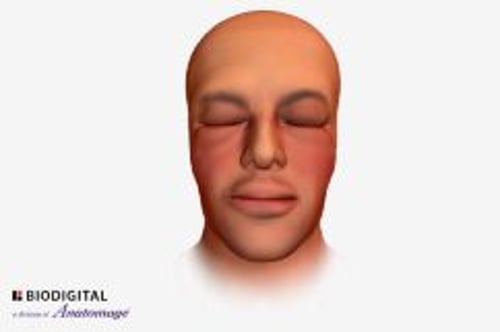
Symptoms range from mild to severe and include flushing, pruritus, urticaria, sneezing, rhinorrhea, nausea, abdominal cramps, diarrhea, a sense of choking or dyspnea, palpitations, and dizziness.
Signs of anaphylaxis include hypotension, tachycardia, urticaria, angioedema, wheezing, stridor, cyanosis, and syncope. Shock can develop within minutes, and patients may have seizures, become unresponsive, and die. Cardiovascular collapse can occur without respiratory or other symptoms.
Late-phase reactions may occur 4 to 8 hours after the exposure or later. Symptoms and signs are usually less severe than they were initially and may be limited to urticaria; however, in some patients, they may be more severe or fatal. Therefore, patients who have an anaphylactic reaction should be observed in an acute care setting for several hours after the initial reaction.
Diagnosis of Anaphylaxis
Primarily history and physical examination
Serum levels of tryptase
Sometimes serum cytokines (eg, interleukin [IL]-6)
The diagnosis of anaphylaxis is primarily clinical. The cause is usually easily recognized based on history. If health care professionals have unexplained anaphylactic symptoms, latex allergy should be considered.
The National Institute of Allergy and Infectious Diseases/Food Allergy and Anaphylaxis Network Criteria have provided a standardized diagnostic framework with a sensitivity of 96.7% and specificity of 82.4% for the diagnosis of anaphylaxis (1). Anaphylaxis is considered highly likely when any 1 of the following 3 criteria is fulfilled:
Acute onset of illness (minutes to several hours) involving skin, mucosal tissue, or both (eg, generalized hives, pruritus/flushing, swollen lips-tongue-uvula), as well as at least 1 of the following:
Respiratory compromise (eg, dyspnea, wheeze-bronchospasm, stridor, reduced peak expiratory flow, hypoxemia)
Reduced blood pressure or associated symptoms of end-organ dysfunction (eg, hypotonia/collapse, syncope, incontinence)
Two or more of the following occurring rapidly after exposure to a likely allergen (minutes to several hours):
Skin-mucosal tissue involvement (eg, generalized hives, pruritus/flushing, swollen lips-tongue-uvula)
Respiratory compromise (eg, dyspnea, wheeze-bronchospasm, stridor, reduced peak expiratory flow, hypoxemia)
Reduced blood pressure or associated symptoms (eg, hypotonia, syncope, incontinence)
Persistent gastrointestinal symptoms (eg, crampy abdominal pain, vomiting)
Reduced blood pressure (BP) after exposure to a known allergen (minutes to several hours):
Adults: Systolic BP < 90 mm Hg or > 30% decrease from baseline
Children: Age-specific low systolic BP or > 30% decrease in systolic BP
Anaphylaxis is a medical emergency, and treatment should not be delayed for diagnostic testing. However, anaphylaxis can be confirmed by measuring serum levels of tryptase (preferably within 2 hours of the reaction). During anaphylaxis, these levels are elevated, and measuring them can help confirm the diagnosis if it is unclear or if the symptoms recur (eg, after treatment with IV medications).
Several cytokines, including serum IL-6, are elevated during severe anaphylaxis and hypotension. In one study of 76 patients presenting with anaphylaxis, IL-6 levels were significantly higher in patients with severe reactions compared to those with moderate reactions or healthy controls (2). However, the role of serum IL-6 testing in this setting is not yet established for routine clinical use, but may be measured along with tryptase.
Pearls & Pitfalls
|
Diagnosis references
1. Campbell RL, Hagan JB, Manivannan V, et al. Evaluation of national institute of allergy and infectious diseases/food allergy and anaphylaxis network criteria for the diagnosis of anaphylaxis in emergency department patients. J Allergy Clin Immunol. 2012;129(3):748-752. doi:10.1016/j.jaci.2011.09.030
2. Stone SF, Cotterell C, Isbister GK, Holdgate A, Brown SG; Emergency Department Anaphylaxis Investigators. Elevated serum cytokines during human anaphylaxis: Identification of potential mediators of acute allergic reactions. J Allergy Clin Immunol. 2009;124(4):786-92.e4. doi:10.1016/j.jaci.2009.07.055
Treatment of Anaphylaxis
Epinephrine given immediately
Sometimes intubation
IV fluids and sometimes vasopressors for persistent hypotension
Antihistamines
Inhaled beta-agonists for bronchoconstriction
Anaphylactoid reactions are treated similarly to anaphylactic reactions.
Treatment and Management of Anaphylaxis
* Intranasal epinephrine may be an alternative in health care settings where it is available. † A biphasic reaction is recurrence of a reaction without known re-exposure to the offending trigger or triggers, typically occurring within 4 to 6 hours of the initial reaction. Data from Pflipsen MC, Vega Colon KM. Anaphylaxis: Recognition and Management. Am Fam Physician. 2020;102(6):355-362. |


Epinephrine
Epinephrine is the cornerstone of treatment for anaphylaxis; it may help relieve all symptoms and signs and should be given immediately (1) (see figure ).
Epinephrine can be given subcutaneously, IM, or intranasally. The usual dose of parenteral epinephrine is 0.3 to 0.5 mL of a 1:1000 [0.1%] solution in adults or 0.01 mL/kg in children, repeated every 5 to 15 minutes. Maximal absorption occurs when epinephrine is given IM in the anterolateral (mid-outer) aspect of the thigh. An intranasal epinephrine formulation is indicated for the emergency treatment of type I hypersensitivity reactions, including anaphylaxis, in patients aged ≥ 4 years who weigh ≥ 15 kg. It is dosed by weight; one spray of 2 mg is used for patients ≥ 30 kg, and one spray of 1 mg is used for those 15 to 30 kg (2). Repeated intranasal doses should be administered in the same (ie, ipsilateral) nostril starting 5 minutes after the initial dose.
Management of cardiac arrest is per standard protocols. Patients with hypotension or severe airway obstruction may be given epinephrine IV or intraosseously (IO). A continuous drip using an infusion pump is preferred, but if the delay to prepare the drip and pump is unacceptable, epinephrine can be given as a single slow IV bolus dose of 0.05 to 0.1 mg (0.5 to 1 mL of a 0.1 mg/mL[1:10,000] solution over 1 to 2 minutes). For a continuous drip, 1 mg epinephrine is mixed in 250 mL 5% dextrose in water or 0.9% normal saline for a concentration of 4 mcg/mL and is started at 0.1 mcg/kg/minute and titrated up by 0.05 mcg/kg/minute every 2 to 3 minutes as needed based on blood pressure, heart rate, and oxygenation. If the patient's weight cannot be estimated accurately, the recommended starting dose for adults is 1 to 2 mcg/minute, titrated upward by 2 to 4 mcg/minute every 2 to 3 minutes. If an initial bolus is desired but IV access is delayed, 0.2 to 0.25 mg epinephrine may instead be given through an endotracheal tube (2 to 2.5 mL of a 0.1 mg/mL solution diluted to 5 to 10 mL with sterile water or saline); alternatively, a second IM dose of epinephrine may be given.
Beta-blocker therapy has been shown to be a risk factor for severe anaphylaxis (3). Based on epinephrine's mechanism of action, its efficacy may be decreased when used for the treatment of anaphylaxis if a patient is taking a beta-blocker. Despite this, because epinephrine is the most effective therapy for anaphylaxis, it should be used regardless of beta-blocker therapy. Although some studies do not support the decreased efficacy of epinephrine, it is still highly advised to avoid beta-blockers in situations that are at high risk of causing anaphylaxis, such as allergy immunotherapy or omalizumab administration (4, 5, 6). For patients taking oral beta-blockers, glucagon 1 to 5 mg IV over 5 minutes (20 to 30 mcg/kg in children) followed by a 5 to 15 mcg/minute infusion has been recommended. Rapid administration of glucagon can cause vomiting.
Other treatments
Patients who have stridor and wheezing that are unresponsive to epinephrine should be given oxygen and be intubated. Early intubation is recommended because waiting for a response to epinephrine may allow upper airway edema to progress sufficiently to prevent endotracheal intubation and require cricothyrotomy.
Hypotension often resolves after epinephrine is given. Persistent hypotension can usually be treated with isotonic IV fluids (eg, 0.9% saline). Hypotension that is refractory to fluids and IV epinephrine may require vasopressors (eg, dopamine).
Antihistamines, primarily H1 blockers (eg, diphenhydramine) but sometimes H2 blockers (eg, cimetidine), should be given every 6 hours until symptoms resolve.
Inhaled short-acting beta-agonists (eg, albuterol) are useful for managing bronchoconstriction that persists after treatment with epinephrine.
Glucocorticoids have no proven role but may help prevent a late-phase reaction.
Treatment references
1. Golden DBK, Wang J, Waserman S, et al. Anaphylaxis: A 2023 practice parameter update. Ann Allergy Asthma Immunol. 2024;132(2):124-176. doi:10.1016/j.anai.2023.09.015
2. Wolf J, Fournier J. Intranasal Epinephrine (Neffy) for Emergency Treatment of Type I Allergic Reactions. Am Fam Physician. 2026;113(3):270-272.
3. NIAID-Sponsored Expert Panel, Boyce JA, Assa'ad A, et al. Guidelines for the diagnosis and management of food allergy in the United States: report of the NIAID-sponsored expert panel. J Allergy Clin Immunol. 2010;126(6 Suppl):S1-S58. doi:10.1016/j.jaci.2010.10.007
4. White JL, Greger KC, Lee S, et al. Patients taking β-blockers do not require increased doses of epinephrine for anaphylaxis. J Allergy Clin Immunol Pract. 2018;6(5):1553-1558.e1. doi: 10.1016/j.jaip.2017.12.020
5. Sturm GJ, Herzog SA, Aberer W, et al. β-blockers and ACE inhibitors are not a risk factor for severe systemic sting reactions and adverse events during venom immunotherapy. Allergy. 2021;76(7):2166-2176. doi:10.1111/all.14785
6. Tejedor-Alonso MA, Farias-Aquino E, Pérez-Fernández E, et al. Relationship between anaphylaxis and use of beta-blockers and angiotensin-converting enzyme inhibitors: A systematic review and meta-analysis of observational studies. J Allergy Clin Immunol Pract. 2019;7(3):879-897.e5. doi: 10.1016/j.jaip.2018.10.042
Prevention of Anaphylaxis
Primary prevention of anaphylaxis is avoidance of known triggers. Desensitization is used for allergen triggers that cannot reliably be avoided (eg, insect stings).
Patients with past anaphylactoid reactions to a radiopaque contrast agent should generally not be reexposed to the offending agent (1). When exposure is absolutely necessary, patients are given 3 doses of prednisone 50 mg orally every 6 hours, starting 18 hours before the procedure, and diphenhydramine 50 mg orally 1 hour before the procedure.
Omalizumab can be used for prevention of type 1 allergic reactions (including anaphylaxis) that may occur with accidental exposure to 1 or more foods in patients ≥ 1 year old with IgE-mediated food allergy.
Patients with an anaphylactic reaction to insect stings, foods, or other known substances should wear an alert identification and carry a prefilled, self-injecting epinephrine syringe (containing 0.3 mg for adults and 0.15 mg for children) and oral antihistamines for prompt self-treatment after exposure. If a severe reaction occurs, patients should be advised to use these treatments as quickly as possible and then go to the emergency department. There, they can be closely monitored and treatment can be repeated or adjusted as needed.
Prevention reference
1. American College of Radiology Committee on Drugs and Contrast Media of the ACR Commission on Quality and Safety: ACR Manual on Contrast Media. 2025. Accessed June 2, 2026.
Key Points
Common triggers of anaphylaxis include medications (eg, beta-lactam antibiotics, allergen extracts), foods (eg, nuts, seafood), proteins (eg, tetanus antitoxin, blood transfusions), animal venoms, and latex.
Non–IgE-mediated reactions that have anaphylactic-like manifestations (anaphylactoid reactions) can be caused by an iodinated radiopaque contrast agent, aspirin, other nonsteroidal anti-inflammatory drugs, opioids, monoclonal antibodies, and exercise.
Consider anaphylaxis if patients have unexplained hypotension, respiratory symptoms, or ≥ 2 anaphylactic manifestations (eg, angioedema, rhinorrhea, gastrointestinal symptoms).
Give epinephrine immediately because anaphylactic symptoms may rapidly progress to airway occlusion or shock; epinephrine can help relieve all symptoms.
Instruct patients to always wear an alert identification and carry a prefilled, self-injecting epinephrine syringe for prompt self-treatment after exposure.
Drug Information for the Topic