Type 1 Diabetes mellitus is the deficiency of insulin secretion caused by autoimmune destruction of pancreatic beta cells. Early symptoms are related to hyperglycemia and include polydipsia, polyphagia, polyuria, and unintended weight loss. Diagnosis is by measuring plasma glucose levels, and autoantibodies. Treatment is with insulin.
Type 1 diabetes is the most common type of diabetes mellitus in children, accounting for more than two-thirds of new cases in children of all racial and ethnic groups (1). It is one of the most common chronic childhood diseases, occurring in 1 in 450 people aged 19 years and younger.
Although type 1 diabetes can occur at any age, it is typically diagnosed between age 10 years and 14 years, with a smaller peak between 4 years and 6 years, especially in girls (1). The incidence has been increasing annually worldwide at a rate of 1.4 to 3.9% (2). The greatest rise in incidence is among adolescents aged 10 to 19 years (3, 4).
General references
1. Wagenknecht LE, Lawrence JM, Isom S, et al. Trends in incidence of youth-onset type 1 and type 2 diabetes in the USA, 2002-18: results from the population-based SEARCH for Diabetes in Youth study. Lancet Diabetes Endocrinol. 2023;11(4):242-250. doi:10.1016/S2213-8587(23)00025-6
2. Patterson CC, Dahlquist GG, Gyürüs E, et al. Incidence trends for childhood type 1 diabetes in Europe during 1989-2003 and predicted new cases 2005-20: a multicentre prospective registration study. Lancet. 2009;373(9680):2027-2033. doi: 10.1016/S0140-6736(09)60568-7
3. Lawrence JM, Divers J, Isom S, et al. Trends in Prevalence of Type 1 and Type 2 Diabetes in Children and Adolescents in the US, 2001-2017 [published correction appears in JAMA. 2021;326(13):1331]. JAMA. 2021;326(8):717-727. doi: 10.1001/jama.2021.11165
4. Divers J, Mayer-Davis EJ, Lawrence JM, et al. Trends in Incidence of Type 1 and Type 2 Diabetes Among Youths - Selected Counties and Indian Reservations, United States, 2002-2015. MMWR Morb Mortal Wkly Rep. 2020;69(6):161-165. doi: 10.15585/mmwr.mm6906a3
Etiology of Type 1 Diabetes in Children and Adolescents
In type 1 diabetes, the pancreas produces little to no insulin because of autoimmune destruction of pancreatic beta-cells, possibly triggered by an environmental exposure in genetically susceptible people. Inherited susceptibility to type 1 diabetes is determined by multiple genes (> 60 risk loci have been identified) (1). Susceptibility genes are more common among some populations and explain the higher prevalence of type 1 diabetes in people with ancestry from certain countries (eg, Nordic countries including Finland) (2).
More than 90% of people newly diagnosed with type 1 diabetes do not have a family history of type 1 diabetes. However, close relatives of people who have type 1 diabetes are at increased risk of diabetes (about 10 times the risk of the general population [3]), with overall incidence 6 to 7% in siblings (> 70% in monozygotic twins) (4, 5). The risk of diabetes for a child who has a parent with type 1 diabetes is approximately 6 to 9% if the father is affected and is approximately 1 to 4% if the mother is affected. Risk screening is available for relatives of people who have type 1 diabetes in an effort to identify the early stages of type 1 diabetes before symptoms occur.
Children with type 1 diabetes are at higher risk of other autoimmune disorders, particularly thyroid disease and celiac disease.
Etiology references
1. Bakay M, Pandey R, Grant SFA, Hakonarson H. The Genetic Contribution to Type 1 Diabetes. Curr Diab Rep. 2019;19(11):116. doi:10.1007/s11892-019-1235-1
2. Redondo MJ, Gignoux CR, Dabelea D, et al. Type 1 diabetes in diverse ancestries and the use of genetic risk scores. Lancet Diabetes Endocrinol. 2022;10(8):597-608. doi:10.1016/S2213-8587(22)00159-0
3. Hippich M, Beyerlein A, Hagopian WA, et al. Genetic Contribution to the Divergence in Type 1 Diabetes Risk Between Children From the General Population and Children From Affected Families. Diabetes. 2019;68(4):847-857. doi:10.2337/db18-0882
4. Harjutsalo V, Podar T, Tuomilehto J. Cumulative incidence of type 1 diabetes in 10,168 siblings of Finnish young-onset type 1 diabetic patients. Diabetes. 2005;54(2):563-569. doi:10.2337/diabetes.54.2.563
5. Redondo MJ, Jeffrey J, Fain PR, Eisenbarth GS, Orban T. Concordance for islet autoimmunity among monozygotic twins. N Engl J Med. 2008;359(26):2849-2850. doi:10.1056/NEJMc0805398
Pathophysiology of Type 1 Diabetes in Children and Adolescents
In type 1 diabetes, the autoimmune destruction of pancreatic beta cells causes insufficient insulin secretion, leading to hyperglycemia and impaired glucose utilization in skeletal muscle. Muscle and fat are then broken down to provide energy. Fat breakdown produces ketones, which cause acidemia and sometimes a significant, life-threatening acidosis (diabetic ketoacidosis [DKA]).
Symptoms and Signs of Type 1 Diabetes in Children and Adolescents
In type 1 diabetes, initial manifestations vary from asymptomatic hyperglycemia to life-threatening DKA. In children, the classic and most common symptoms at presentation are those of symptomatic hyperglycemia without acidosis: several days to weeks of urinary frequency, polydipsia, and polyuria (1). These symptoms are often accompanied by unintentional weight loss. Polyuria may manifest as nocturia, enuresis (bed-wetting), or diurnal incontinence; in children who are not toilet-trained, parents may note an increased frequency of wet or heavy diapers.
DKA is present at diagnosis in approximately 30% of children (2).
Fatigue, weakness, candidal rashes, blurry vision (due to the hyperosmolar state of the lens and vitreous humor), and/or nausea and vomiting (due to ketonemia) may also be present initially.
Symptoms and signs references
1. Chiang JL, Maahs DM, Garvey KC, et al. Type 1 Diabetes in Children and Adolescents: A Position Statement by the American Diabetes Association. Diabetes Care. 2018;41(9):2026-2044. doi:10.2337/dci18-0023
2. Cherubini V, Grimsmann JM, Åkesson K, et al. Temporal trends in diabetic ketoacidosis at diagnosis of paediatric type 1 diabetes between 2006 and 2016: results from 13 countries in three continents. Diabetologia. 2020;63(8):1530-1541. doi:10.1007/s00125-020-05152-1
Diagnosis of Type 1 Diabetes in Children and Adolescents
Measurement of abnormal glucose or glucose tolerance meeting diagnostic criteria
C-peptide, insulin, and pancreatic autoantibody testing
Determination of diabetes type (eg, type 1, type 2, monogenic)
Screening for other autoimmune diseases
Measurement of abnormal glucose
Diagnosis of diabetes and prediabetes is similar to that in adults, typically using fasting or random plasma glucose levels and/or HbA1C levels. For a detailed discussion of diagnostic criteria, see Diagnosis of Diabetes in Children and the table .
Determination of diabetes type
A comprehensive evaluation of clinical characteristics should be performed to help distinguish type 1 from type 2 diabetes (or other types).
Additional that should be performed include:
C-peptide and insulin (if not yet treated with insulin) levels
Autoantibody tests against pancreatic islet cell proteins
In the absence of autoantibody testing, children who are 10 years or younger (or prepubertal) at diagnosis, are not obese, and have no evidence of metabolic co-morbidities are generally treated as having type 1 diabetes (1, 2).
Testing for stage
Type 1 diabetes progresses in distinct stages that are characterized by the presence of ≥ 2 islet autoantibodies (see table ). Stage is associated with risk of disease progression. For example, risk of progression to stage 3 by stage at diagnosis includes stage 1 (44% 5-year risk and an 80 to 90% 15-year risk) and stage 2 (75% 5-year risk and a 100% lifetime risk) (3). By contrast, children with a single islet autoantibody have 15% risk of progression within 10 years.
Type 1 Diabetes Stages
Stages |
|---|
1 positive islet autoantibody*, normal glucose levels (formerly Stage 0) |
Stage 1: ≥ 2 islet autoantibodies*, presymptomatic, normal FPG levels (< 100 mg/dL [< 5.6 mmol/L]) and glucose tolerance (2-hour PG < 140 mg/dL [< 7.8 mmol/L]) |
Stage 2: ≥ 2 islet autoantibodies, usually presymptomatic, not meeting American Diabetes Association diagnostic criteria but with elevated FPG, HbA1C 5.7–6.4% (39–48 mmol/mol), or ≥ 10% change in HbA1C, or impaired glucose tolerance (2-hour PG 140–199 mg/dL [7.8–11.1 mmol/L] or 30-, 60-, or 90-minute PG > 200 mg/dL [11.1 mmol/L]) Stage 2a: FPG 100–115 mg/dL (5.6–6.4 mmol/L) Stage 2b: FPG 116–125 mg/dL (6.5-6.9 mmol/L) |
Stage 3 (clinical type 1 diabetes): Elevated glucose or abnormal glucose tolerance meeting American Diabetes Association criteria, ≥ 2 islet autoantibodies:
Stage 3a: Asymptomatic (requires confirmatory diagnostic testing) Stage 3b: Symptomatic |
Stage 4: Long-term type 1 diabetes |
* Measured in ≥ 2 samples. |
† An oral glucose tolerance test is not required and should not be performed if diabetes can be diagnosed by other criteria. When needed, the test should be done using 1.75 g/kg (maximum 75 g) glucose dissolved in water; a positive result is a 2-hour plasma glucose level ≥ 200 mg/dL (11.1 mmol/L). |
FPG = fasting plasma glucose; HbA1C = glycosylated hemoglobin; OGTT = oral glucose tolerence test; PG = postprandial glucose. |
Data from Haller MJ, Bell KJ, Besser REJ, et al. ISPAD Clinical Practice Consensus Guidelines 2024: Screening, Staging, and Strategies to Preserve Beta-Cell Function in Children and Adolescents with Type 1 Diabetes. Horm Res Paediatr. 2024;97(6):529-545. doi:10.1159/000543035 |
Testing for autoimmune diseases
Patients with type 1 diabetes should be tested at or near the time of diagnosis for other autoimmune diseases by measuring celiac disease antibodies and thyroid-stimulating hormone, free thyroxine, and thyroid antibodies (4).
Testing for thyroid disease (if thyroid antibodies are negative) should occur every 1 to 2 years thereafter (4). Testing for thyroid disease should be more frequent if symptoms develop or if thyroid antibodies are positive. Screening for celiac disease should occur again within 2 years and then at 5 years after diagnosis, or sooner if typical symptoms occur.
Other autoimmune disorders, such as primary adrenal insufficiency (Addison disease), rheumatologic disease (eg, juvenile idiopathic arthritis, systemic lupus erythematosus, psoriasis), other gastrointestinal disorders (inflammatory bowel disease, autoimmune hepatitis), and skin disease (eg, vitiligo), may also occur in children with type 1 diabetes but do not require routine screening in the absence of symptoms.
Screening for complications
Monitoring for acute complications is discussed below in Glycemic Control; management of complications is discussed in Complications of Diabetes in Children and Adolescents.
In patients with type 1 diabetes, long-term microvascular and macrovascular complications develop over many years; thus, screening for these chronic complications should begin within 5 years after diagnosis, and then continue annually or more frequently as needed. Screening includes evaluation of feet, eyes, kidney function and proteinuria, and blood pressure. See Complications of Diabetes in Children and Adolescents, Complications of Type 1 Diabetes Mellitus, and Long-Term Complications of Diabetes Mellitus for more detail.
Diagnosis references
1. American Diabetes Association Professional Practice Committee. 2. Diagnosis and Classification of Diabetes: Standards of Care in Diabetes-2025. Diabetes Care. 2025;48(1 Suppl 1):S27-S49. doi:10.2337/dc25-S002
2. Libman I, Haynes A, Lyons S, et al. ISPAD Clinical Practice Consensus Guidelines 2022: Definition, epidemiology, and classification of diabetes in children and adolescents. Pediatr Diabetes. 2022;23(8):1160-1174. doi:10.1111/pedi.13454
3. Haller MJ, Bell KJ, Besser REJ, et al. ISPAD Clinical Practice Consensus Guidelines 2024: Screening, Staging, and Strategies to Preserve Beta-Cell Function in Children and Adolescents with Type 1 Diabetes. Horm Res Paediatr. 2024;97(6):529-545. doi:10.1159/000543035
4. American Diabetes Association Professional Practice Committee. 14. Children and Adolescents: Standards of Care in Diabetes-2025. Diabetes Care. 2025;48(1 Suppl 1):S283-S305. doi:10.2337/dc25-S014
Treatment of Type 1 Diabetes in Children and Adolescents
Insulin
Diet
Glycemic control
Sometimes, disease-modifying agents
Children and adolescents with new-onset type 1 diabetes may benefit from hospitalization with intensive education and treatment. Glycemic control may worsen after hospital discharge because insulin regimens developed in a controlled inpatient setting can prove challenging in less structured outpatient settings. For patients with newly diagnosed diabetes, inpatient insulin doses are frequently higher than needed and, if not appropriately reduced at discharge, may lead to hypoglycemia.
Insulin regimens
Insulin is the cornerstone of management of type 1 diabetes. Available insulin formulations are similar to those used in adults (see table ). Insulin should be given before a meal, except in young children whose consumption at any given meal is difficult to predict.
Dosing requirements vary by age, activity level, pubertal status, and length of time from initial diagnosis. Within a few weeks of initial diagnosis, many patients have a temporary decrease in their insulin requirements because of residual beta-cell function (honeymoon phase). This honeymoon phase can last from a few months up to 2 years, after which insulin requirements typically range from 0.7 to 1 unit/kg/day. During puberty, patients require higher doses (up to 1.5 units/kg/day) to counteract insulin resistance caused by increased pubertal hormone levels.
Types of insulin regimens include:
Multiple daily injections (MDI) regimen using basal-bolus regimen
Insulin pump therapy
Fixed forms of MDI regimen or premixed insulin regimen (less common)
Most patients with type 1 diabetes should be treated with either insulin pump therapy or with basal-bolus MDI regimens (multiple injections per day of basal and prandial insulin), with the goal of improving metabolic control. In general, children should be offered the most advanced insulin delivery system available, with the final choice guided by the needs and preferences of the patient and family (1).


This photo shows a child with diabetes using an insulin pen to inject bolus insulin.
peopleimages.com/stock.adobe.com
Clinicians should use the most intensive management program children and their family can adhere to in order to maximize glycemic control and thus reduce the risk of long-term vascular complications.
For those using a MDI regimen, a basal-bolus regimen is typically preferred. In this regimen, children are given a daily baseline dose of long-acting insulin that is then supplemented by doses of short-acting insulin before each meal based on anticipated carbohydrate intake and on measured glucose levels. The basal dose can be given as a once-a-day injection (sometimes every 12 hours for younger children) of a long-acting insulin (glargine, detemir, or degludec), with supplemental boluses given as separate injections of rapid-acting insulin (usually aspart or lispro). Glargine, degludec, or detemir injections are typically given at dinner or bedtime and must not be mixed with short-acting insulin.
In insulin pump therapy, the basal insulin is delivered at a fixed or variable rate by a continuous subcutaneous infusion of rapid-acting insulin (CSII) through a catheter placed under the skin. Mealtime and correction boluses also are delivered via the insulin pump. The basal dose helps keep blood glucose levels in range between meals and at night. Using an insulin pump to deliver the basal dose allows for maximal flexibility; the pump can be programmed to give different rates at different times throughout the day and night.

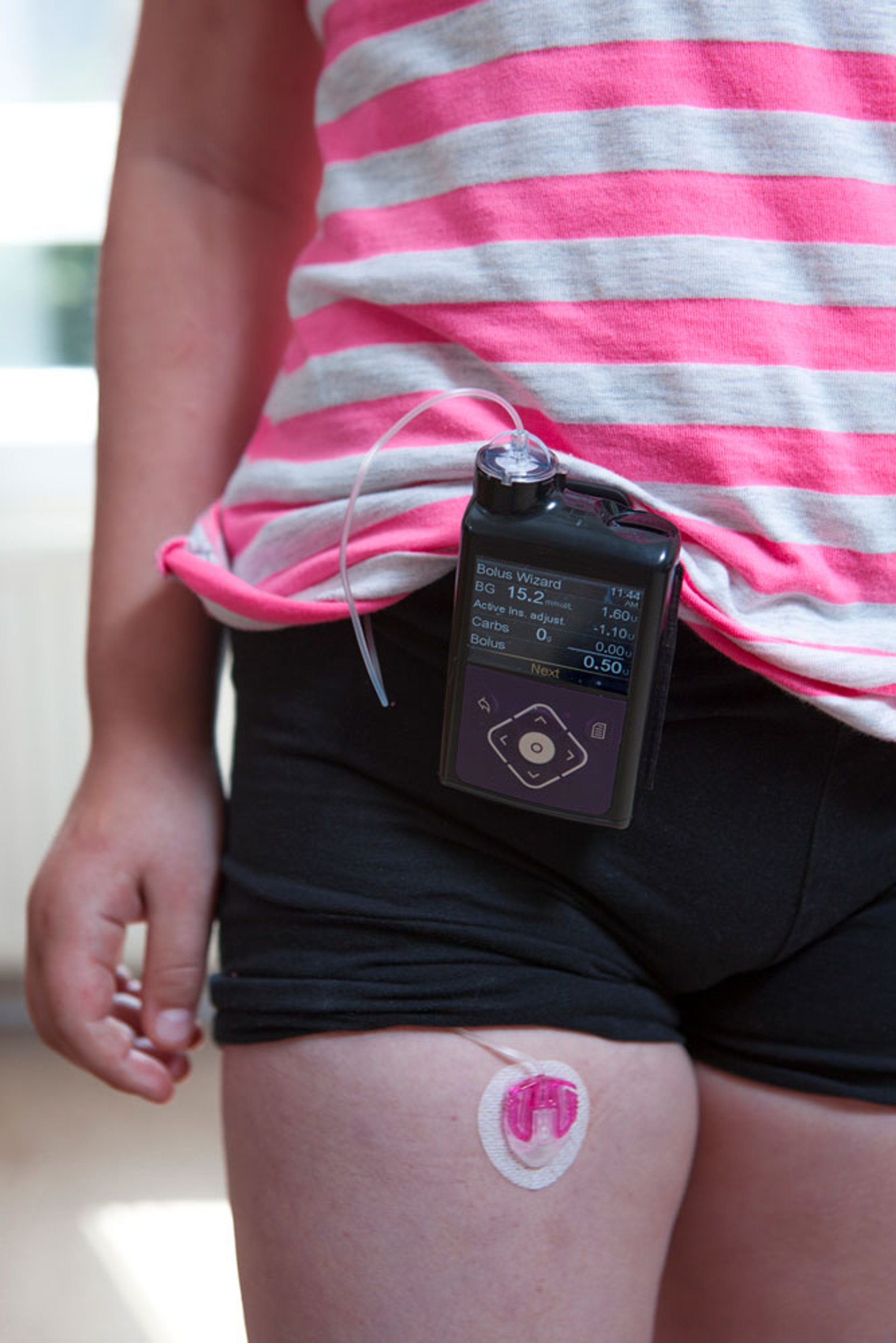
This photo shows a child with diabetes wearing an insulin pump connected to a subcutaneous infusion patch in the thigh.
LEWIS HOUGHTON/SCIENCE PHOTO LIBRARY
Insulin pump therapy is increasingly being used in children because of the potential benefits of glycemic control, safety, and patient satisfaction compared to MDI regimens (2, 3). This therapy is typically preferred for younger children (toddlers, preschoolers) due to the ability to provide precise and flexible insulin doses throughout the day (microbolus dosing) in response to both unpredictable food intake and variable insulin requirements, and overall offers an added degree of control to many children (4). Others find wearing the pump inconvenient or develop sores or infections at the catheter site. Individuals must rotate their injection and pump sites to avoid developing lipohypertrophy. Lipohypertrophy is an accumulation of lumps of fatty tissue under the skin. The lumps occur at insulin injection sites that have been overused and can cause variation in blood glucose levels because they can prevent insulin from being absorbed consistently.
Insulin pumps can be integrated with continuous glucose monitoring (CGM) systems to provide real-time adjustment of insulin doses based on blood glucose levels. Such systems, known as automated insulin delivery (AID) systems or hybrid closed-loop systems, are recommended for all patients who take multiple daily injections of insulin and have been shown to lower HbA1C levels and decrease hypoglycemia (5, 6, 7). They are commonly used, and some versions do not require daily fingerstick glucose testing to calibrate the glucose monitor. They are especially useful in patients with type 1 diabetes, particularly for patients with hypoglycemia unawareness or nocturnal hypoglycemia. Hybrid closed-loop systems require patients to input carbohydrate intake prior to meals, whereas fully closed-loop systems, not yet widely available, will not. AID systems are recommended for use in children with diabetes of all ages (1).
Fixed forms of MDI regimens are less commonly used. They can be considered if a basal-bolus regimen is not an option (eg, because the family needs a simpler regimen, the child or caregivers have a needle phobia, lunchtime injections cannot be given at school or daycare). In this regimen, children usually receive neutral protamine Hagedorn (NPH) insulin before eating breakfast and dinner and at bedtime and receive rapid-acting insulin before eating breakfast and dinner. Because NPH and rapid-acting insulin can be mixed, this regimen provides fewer injections than the basal-bolus regimen. However, this regimen provides less flexibility, requires a set daily schedule for meals and snack times, and has been largely supplanted by the analog insulins glargine and detemir because of the lower risk of hypoglycemia and greater flexibility.
Premixed insulin regimens use preparations of 70/30 (70% insulin aspart protamine/30% regular insulin) or 75/25 (75% insulin lispro protamine/25% insulin lispro). Premixed regimens are not a good choice but are simpler and may improve adherence because they require fewer injections. Children are given set doses twice daily, with two-thirds of the total daily dose given at breakfast and one-third at dinner. However, premixed regimens provide much less flexibility with respect to timing and amount of meals and are less precise than other regimens because of the fixed ratios. They are commonly used in children who require gastric tube feeding.
Diet
Medical nutrition therapy tailored to the individual patient is recommended for children with type 1 diabetes (8).
In type 1 diabetes, the use of basal–bolus regimens and insulin pumps with carbohydrate counting (patients or caregivers estimate the amount of carbohydrate in an upcoming meal and use that amount to calculate the preprandial insulin dose) allows for a flexible approach, in which food intake is not rigidly specified. Instead, meal plans are based on the child's usual eating patterns rather than on a theoretically optimal diet to which the child is unlikely to adhere, and insulin dose is matched to actual carbohydrate intake. The insulin:carbohydrate ratio is individualized but varies with age, activity level, pubertal status, and length of time from initial diagnosis. Technologic advances have allowed for greater precision and customization of insulin doses. The "500 rule" (500 divided by the total daily dose of insulin) can be used to calculate the initial insulin:carbohydrate ratio dose.
Glycemic control and HbA1C target levels
The purpose of glycemic control and glucose monitoring is to reduce the risk of both short-term and long-term complications (9). Lower HbA1C levels during adolescence and young adulthood are associated with a lower risk of vascular complications (10).
In type 1 diabetes, blood glucose levels should be monitored by self-monitoring using fingersticks and a glucose meter or by using a continuous glucose monitoring (CGM) system to optimize control (11). HbA1C should be monitored periodically as well.
Glycemic control may deteriorate as children with diabetes enter adolescence. Management often involves intensive medical supervision combined with psychosocial interventions (eg, mentoring or support groups), individual or family therapy, and psychopharmacology when indicated.
Plasma glucose targets are established to balance the need to normalize glucose levels with the risk of hypoglycemia. In patients not using a CGM, intermittent self-monitoring should be performed 6 to 10 times daily (8, 9). Typical targets for blood glucose levels are 70 to 180 mg/dL (4 to 10 mmol/L), which are in alignment with continuous glucose monitoring (CGM) targets (9). Treatment goals should be individualized based on patient age, diabetes duration, access to diabetes technology (eg, insulin pumps, CGMs), comorbid conditions, and psychosocial circumstances.
HbA1Clevels should be measured every 3 months in all children with type 1 diabetes. An HbA1C target level of < 7% (< 53 mmol/mol) is appropriate for most children, but many children and adolescents do not meet this target (1). A more stringent target level (< 6.5% [< 48 mmol/mol]) may be considered for selected patients in whom the target can be achieved without significant hypoglycemia and without negative impacts on well-being, particularly with the use of CGM and AID systems (9).
The risk of hypoglycemia in children who have hypoglycemia unawareness or lack the maturity to recognize the symptoms of hypoglycemia can limit aggressive attempts to achieve treatment goals. A less stringent HbA1C target level (< 7.5% [< 58 mmol/mol]) should be considered for such patients.
Use of a continuous glucose monitoring (CGM) system can improve HbA1C levels because patients are better able to adjust insulin for meals, have an improved ability to correct hyperglycemic values, and are potentially able to detect hypoglycemia earlier, which prevents overcorrection (ie, excessive carbohydrate intake as treatment for hypoglycemia, resulting in hyperglycemia). CGM systems should be offered, when available, to children of all ages (12).
CGM metrics, derived from use over the most recent 14 days and reported in a standardized format, are recommended to be used in conjunction with HbA1C level. The ambulatory glucose profile (AGP) is a standardized report of the mean glucose, time-in-range, and time-below-range. Time-in-tight range refers to the percentage of time glucose levels remain within a narrower, more stringent target range. When using the AGP to monitor glycemia, a goal of time-in-range of > 70% with a time-below-range of < 4% may be used as a glycemic control goal, along with the goal of an HbA1C target of < 7% (< 53 mmol/mol). Metrics recorded over a 14-day period should include (9, 13, 14):
Time-in-tight-range: > 70% between 70 and 140 mg/dL (4 and 7.8 mmol/L)
Time-in-range: > 70% between 70 and 180 mg/dL (4 and 10 mmol/L)
Time-below-range: < 4% < 70 mg/dL (< 4 mmol/L) and < 1% < 54 mg/dL (< 3 mmol/L)
Time-above-range: < 25% > 180 mg/dL (> 10 mmol/L) and < 5% > 250 mg/dL (> 13.9 mmol/L)
HbA1C levels correlate well to the percentage of time that blood glucose levels remain in the normal range (70 to 180 mg/dL [4 to 10 mmol/L]), termed the percentage time-in-range. Time-in-range is commonly used as a therapeutic goal to assess the efficacy of the insulin regimen in combination with HbA1C level. A 10% change in time-in-range corresponds to approximately a 0.8 percentage point change in HbA1C. For example, a time-in-range of 80% corresponds to an HbA1C level of 5.9% (41 mmol/mol), 70% corresponds to 6.7% (50 mmol/mol), 60% corresponds to 7.5% (58 mmol/mol), and 40% corresponds to 9% (75 mmol/mol) (15).
In addition to time-in-range, CGM provides information related to average sensor glucose, time-above-range (> 180 mg/dL [> 10 mmol/L]) and time-below-range (< 70 mg/dL [< 4 mmol/L]), glycemic variability, glucose management indicator, and information related to adherence (eg, active CGM time, days worn).
Another type of CGM report is the glucose management indicator, which provides an estimated HbA1C from mean CGM glucose levels, preferably from ≥ 14 days of data.
Modifying disease progression in type 1 diabetes
Disease-modifying therapies have been studied in an effort to prevent or delay the onset of clinical type 1 diabetes (stage 3) because the preclinical period before progression to symptomatic disease can last for years (1).
Teplizumab is an anti-CD3 monoclonal antibody, given as a single 14-day course of daily IV infusions, that has been shown to delay the onset of type 1 diabetes in individuals ≥ 8 years of age with preclinical (stage 2) disease. In a trial including patients who had first-degree relatives with type 1 diabetes and at least 2 islet cell autoantibodies, patients who were randomized to receive teplizumab had a median time to diagnosis of stage 3 type 1 diabetes of approximately 48 months compared to 24 months in patients receiving placebo (2). In an extended follow-up of the aforementioned trial, the median time to diagnosis of stage 3 diabetes was 60 months for the teplizumab-treated group and 27 months for the placebo group (3). Additionally, 50% of the patients who received teplizumab compared to 22% of those who received placebo did not develop clinical (Stage 3) type 1 diabetes after median follow-up time of approximately 2.5 years. Another trial including children and adolescents with newly diagnosed type 1 diabetes showed evidence for preserved beta cell function but not improved glycemic control with teplizumab compared with placebo (4).
Antithymocyte globulin (ATG), tumor necrosis factor- alpha (TNF-alpha) inhibitors, and abatacept (CTLA-4-Ig) have also shown promise in preserving beta-cell function in patients with recent-onset type 1 diabetes (5). Verapamil may also preserve beta-cell function in patients with newly diagnosed diabetes (6).
Modifying disease progression references
1. Haller MJ, Bell KJ, Besser REJ, et al. ISPAD Clinical Practice Consensus Guidelines 2024: Screening, Staging, and Strategies to Preserve Beta-Cell Function in Children and Adolescents with Type 1 Diabetes. Horm Res Paediatr. 2024;97(6):529-545. doi:10.1159/000543035
2. Herold KC, Bundy BN, Long SA, et al. An Anti-CD3 Antibody, Teplizumab, in Relatives at Risk for Type 1 Diabetes [published correction appears in N Engl J Med. 2020;382(6):586]. N Engl J Med. 2019;381(7):603-613. doi:10.1056/NEJMoa1902226
3. Sims EK, Bundy BN, Stier K, et al. Teplizumab improves and stabilizes beta cell function in antibody-positive high-risk individuals. Sci Transl Med. 2021;13(583):eabc8980. doi:10.1126/scitranslmed.abc8980
4. Ramos EL, Dayan CM, Chatenoud L, et al. Teplizumab and β-Cell Function in Newly Diagnosed Type 1 Diabetes. N Engl J Med. 2023;389(23):2151-2161. doi:10.1056/NEJMoa2308743
5. Nagy G, Szekely TE, Somogyi A, Herold M, Herold Z. New therapeutic approaches for type 1 diabetes: Disease-modifying therapies. World J Diabetes. 2022;13(10):835-850. doi:10.4239/wjd.v13.i10.835
6. Forlenza GP, McVean J, Beck RW, et al. Effect of Verapamil on Pancreatic Beta Cell Function in Newly Diagnosed Pediatric Type 1 Diabetes: A Randomized Clinical Trial. JAMA. 2023;329(12):990-999. doi:10.1001/jama.2023.2064
Key Points
Type 1 diabetes is caused by an autoimmune attack on pancreatic beta-cells, causing complete lack of insulin; it accounts for approximately two-thirds of new cases in children and can occur at any age.
Most children have symptomatic hyperglycemia without acidosis, with several days to weeks of urinary frequency, polydipsia, and polyuria; children with type 1 diabetes may present with diabetic ketoacidosis.
All children with type 1 diabetes require insulin treatment; intensive glycemic control helps prevent long-term complications but increases risk of hypoglycemic episodes.
Advances in diabetes technology, such as continuous glucose monitoring and closed loop (automated insulin delivery) systems, are aimed at improving glycemic control while reducing hypoglycemic episodes.
Insulin doses are adjusted based on frequent glucose monitoring and anticipated carbohydrate intake and activity levels.
Children are at risk of microvascular and macrovascular complications of diabetes, which must be evaluated by regular screening tests.
More Information
The following English-language resources may be useful. Please note that The Manual is not responsible for the content of these resources.
American Diabetes Association Professional Practice Committee. 14. Children and Adolescents: Standards of Care in Diabetes-2025. Diabetes Care. 2025;48(1 Suppl 1):S283-S305. doi:10.2337/dc25-S014
International Society for Pediatric and Adolescent Diabetes (ISPAD): Clinical practice consensus guidelines for diabetes in children and adolescents (2024)
Type 1 Diabetes TrialNet: Pathway to Prevention: Study Details
Drug Information for the Topic