Spider veins are small, enlarged veins that are visible under the skin.
(See also Overview of the Venous System.)

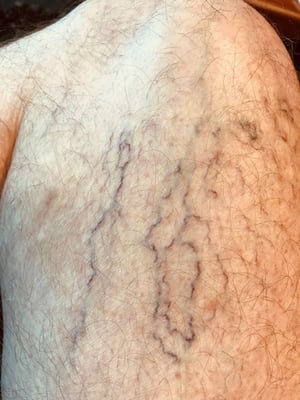
Spider veins (also called telangiectasia) are small veins that become enlarged and are visible under the skin.
Spider veins (also called telangiectasia) are small veins that become enlarged and are visible under the skin.
Photo courtesy of Robert S. Porter, MD.

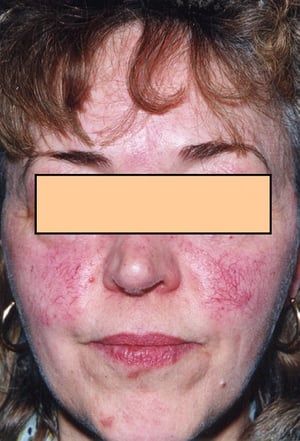
Spider veins (also called telangiectasia) are small veins that become enlarged and are visible under the skin.
Spider veins (also called telangiectasia) are small veins that become enlarged and are visible under the skin.
© Springer Science+Business Media
Spider veins (also called telangiectasia) are small veins that become enlarged and are visible under the skin.
Spider veins (also called telangiectasia) are small veins that become enlarged and are visible under the skin.
Photo courtesy of Robert S. Porter, MD.
Spider veins (also called telangiectasia) are small veins that become enlarged and are visible under the skin.
Spider veins (also called telangiectasia) are small veins that become enlarged and are visible under the skin.
© Springer Science+Business Media
Many people have spider veins, which are enlarged capillaries. Capillaries are tiny, extremely thin-walled vessels that act as a bridge between arteries (which carry blood away from the heart) and veins (which carry blood back to the heart).


Spider veins usually do not cause symptoms, but some people may have pain or burning. Doctors recognize spider veins by their appearance. Tests are not needed.
The presence of many spider veins can also be a feature of hereditary hemorrhagic telangiectasia, a genetic disorder that also involves blood vessel malformations in the brain and digestive tract.
Treatment of Spider Veins
Injection therapy (sclerotherapy)
Laser treatment
Spider veins can usually be eliminated by injection therapy (sclerotherapy) similar to that done for varicose veins. In sclerotherapy, a solution, such as sodium tetradecyl sulfate, is injected into each of the spider veins. The solution irritates the spider veins and produces a blood clot that blocks them. Large areas of spider veins (multiple telangiectasias) may require several treatments because the injections are painful. The skin may darken, but this discoloration usually subsides, often completely. . In sclerotherapy, a solution, such as sodium tetradecyl sulfate, is injected into each of the spider veins. The solution irritates the spider veins and produces a blood clot that blocks them. Large areas of spider veins (multiple telangiectasias) may require several treatments because the injections are painful. The skin may darken, but this discoloration usually subsides, often completely.
Laser treatment is also effective, but large areas require several treatments. This therapy uses a laser beam to destroy the small veins.
Small spider veins may persist or recur after initial treatment.
Drugs Mentioned In This Article