Healthy newborns (age birth to about 1 month) and infants (age 1 month to 1 year) need many different types of care to ensure their normal development and good health.
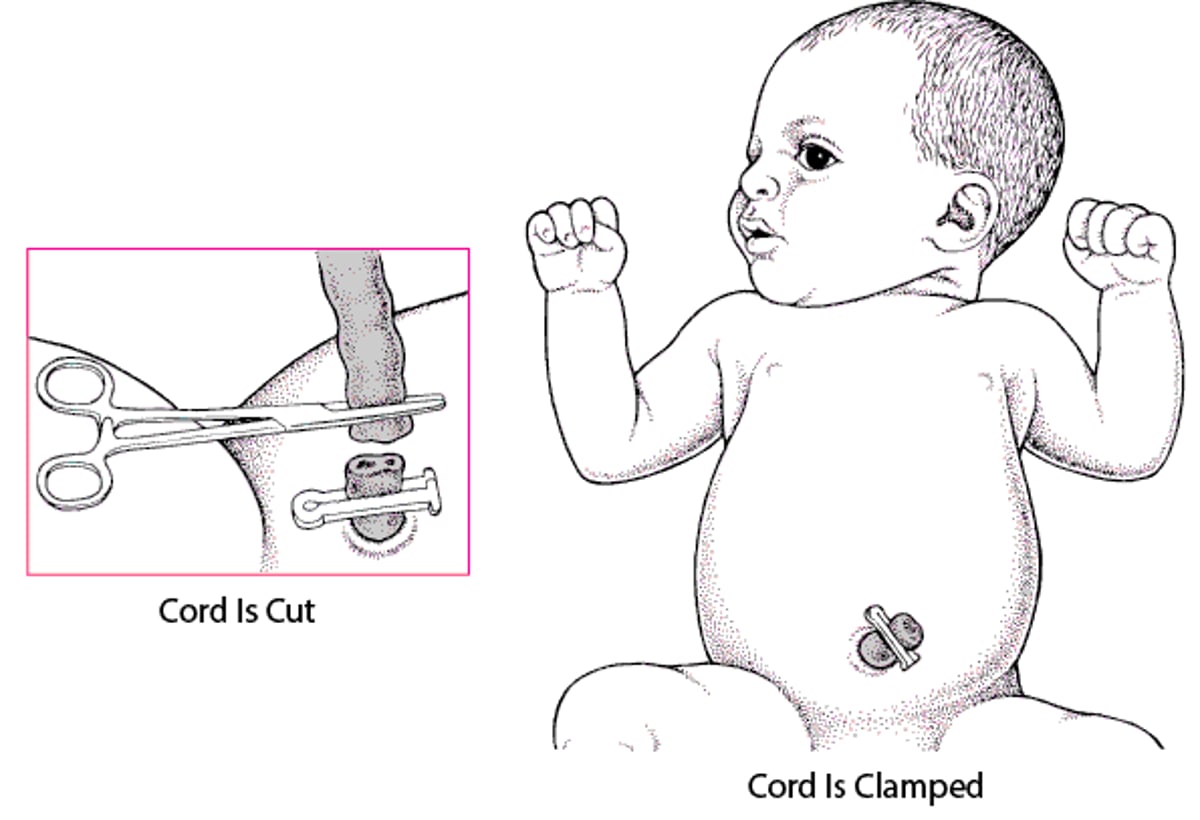
During childbirth, the fetus, which is immersed in amniotic fluid and totally dependent on being connected to the placenta by the umbilical cord for nutrition and oxygen, makes a major transition to a newborn baby that breathes air and takes in nutrition by mouth. Immediately after a baby is born, the doctor, midwife, or nurse gently clears mucus and other material from the mouth, nose, and throat with a suction bulb. The newborn is then able to take a breath and no longer needs to receive oxygen through the umbilical cord. Two clamps are placed on the umbilical cord, and the umbilical cord is then cut between the clamps.
After delivery, the newborn should usually be laid carefully on the parent's abdomen or chest for skin-to-skin contact or wrapped in a blanket for them (or a support person) to hold. Breastfeeding (chestfeeding) may be initiated at that time.
Sometimes, the newborn requires some special attention by a doctor or nurse after birth. Sometimes, the mother may also have complications of labor and delivery that require additional treatment or evaluation.
Cutting the Umbilical Cord
Soon after a baby is born, 2 clamps are placed on the umbilical cord, and the cord is cut between the clamps. The clamp on the cord's stump may be removed when the cord is completely dry. The stump should be kept clean and dry. The stump falls off on its own in 1 or 2 weeks. |

The doctor or midwife examines the newborn for any obvious abnormalities or signs of distress. A full physical examination comes later (typically within 24 hours of birth). The newborn's condition immediately after birth is recorded at 1 minute and at 5 minutes after birth using the . The Apgar score is used to assign points for heart rate, effort to breathe, muscle tone, reflexes, and color. A score of 7 to 10 is considered normal, 4 to 6 is intermediate, and 0 to 3 is low. A low Apgar score is a sign that the newborn is having difficulty and may need extra evaluation or extra assistance with breathing or blood circulation.
Apgar Score
Characteristic | Acronym* | Score† | ||
|---|---|---|---|---|
0 | 1 | 2 | ||
Color of skin‡ | Appearance | All blue, pale | Pink body, blue hands and feet | All pink |
Heart rate | Pulse | No pulse | Less than 100 beats per minute | More than 100 beats per minute |
Reflex response to stimulation of the nose (by touching it with a finger or a catheter) | Grimace | No response to stimulation | Grimace | Sneeze, cough |
Muscle tone | Activity | Limp, no movement | Some bending of arms and legs | Active movement |
Breathing | Respiration | No breathing | Irregular, slow | Good cry |
* The word "Apgar" is also an acronym. The letters A, P, G, A, and R correspond to the bold letters in this column. | ||||
† The baby is given a score from 0 to 2 for each of 5 characteristics. A total score of 7 to 10 at 5 minutes is considered normal, 4 to 6 is intermediate, and 0 to 3 is low. ‡ In infants who have dark skin, a pink skin color may not apply, and doctors will look for pink or blue color on the lips, mouth, and tongue. | ||||
Once the newborn is stable, the nurses obtain the weight, length, and head circumference (see also Physical Growth of Infants and Children).
Keeping a newborn warm is crucial. As soon as possible, the newborn is wrapped in lightweight clothing (swaddled), and the head is covered to reduce the loss of body heat.
Immediately after birth, parents are encouraged to hold their newborn. Some experts believe that early physical contact with the newborn helps establish bonding. Skin-to-skin contact also helps with temperature regulation and blood sugar control. However, sometimes a newborn needs medical care or there is another reason that contact with parents is delayed. Parents can bond well with their newborn even when the first hours are not spent together.
The mother and newborn usually recover together in the delivery room. Mothers who are breastfeeding put their newborn to their breast as soon as possible after delivery. Breastfeeding stimulates oxytocin, a hormone that helps the mother's womb heal, reduces bleeding, and promotes development of the milk supply. If a newborn is cared for in a nursery, it is placed on its back in a small crib and kept warm.
After birth, the doctor or nurse does a few tests and gives the newborn a few treatments to check for and prevent certain diseases, including the following:
Routine newborn screening tests are done.
A small amount of an antibiotic, such as erythromycin, tetracycline, silver nitrate, or, in some countries, povidone iodine, is placed into the eyes to prevent infection from any harmful organisms that the newborn may have had contact with during birth.
Hepatitis B vaccine is one of the routine vaccinations recommended for all children. All newborns, whether or not infected with hepatitis B, should be given the first dose of hepatitis B vaccine before they are discharged from the hospital.
Because all babies are born with low levels of vitamin K, an injection of vitamin K is given to prevent bleeding (hemorrhagic disease of the newborn).
About 6 hours or more after birth, newborns are bathed. The nurse tries not to wash off the whitish greasy material (vernix caseosa) that covers most of the newborn's skin because this material helps protect against infection.
Drug Information for the Topic