Neurofibromatosis is a group of related genetic disorders in which many soft, fleshy growths of nerve tissue (neurofibromas) form under the skin and in other parts of the body, and flat spots that are the color of coffee with milk (café-au-lait spots) often develop on the skin.
Neurofibromatosis is caused by mutations in certain genes.
In addition to growths under the skin and café-au-lait spots on the skin, people may have abnormalities in bones, incoordination, weakness, abnormal sensation, or hearing or vision problems.
Doctors do a physical examination, consult established criteria, and sometimes do an imaging test of the brain or head to check for growths.
Growths can be removed surgically or treated with medications, or, if cancerous, may be treated with chemotherapy.
Neurofibromatosis is a neurocutaneous syndrome. A neurocutaneous syndrome causes problems that affect the brain, spine, and nerves (neuro) and the skin (cutaneous).
Neurofibromas are flesh-colored, noncancerous (benign) growths of Schwann cells (which form a wrapping around peripheral nerve fibers) and other cells that support the peripheral nerves (the nerves outside the brain and spinal cord).
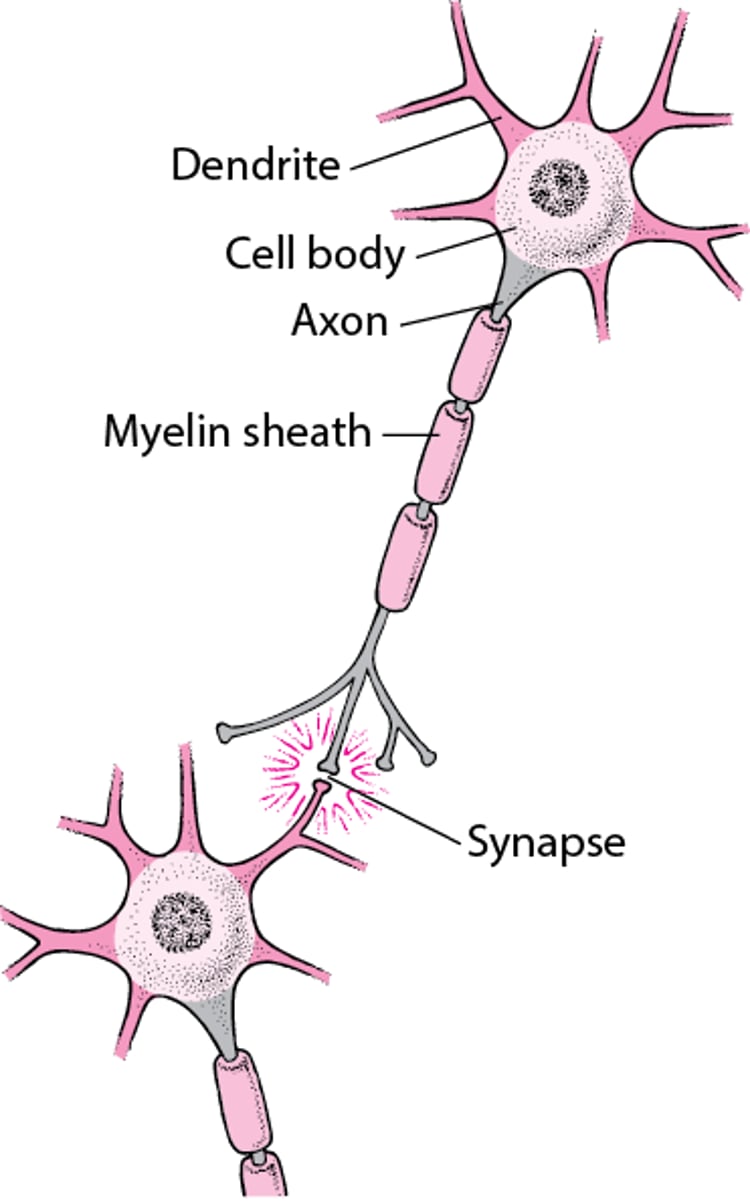
Typical Structure of a Nerve Cell
A nerve cell (neuron) consists of a large cell body and nerve fibers—one elongated extension (axon) for sending impulses and usually multiple branches (dendrites) for receiving impulses. Impulses from the axon of 1 nerve cell cross a synapse (the junction between 2 nerve cells) to the dendrite of another cell. Each large axon is surrounded by oligodendrocytes in the brain and spinal cord and by Schwann cells in the peripheral nervous system. The membranes of these cells consist of a fat (lipoprotein) called myelin. The membranes are wrapped tightly around the axon, forming a multilayered sheath. This myelin sheath resembles insulation, such as that around an electrical wire. Nerve impulses travel much faster in nerves with a myelin sheath than in those without one. |

Neurofibromas, which can be felt under the skin as small lumps, usually start appearing after puberty.
Types of Neurofibromatosis
There are 3 types of neurofibromatosis.
Neurofibromatosis type 1 (NF1)
NF1 (also known as von Recklinghausen disease) is the most common type. It affects about 1 of 2,600 people.
In NF1, neurofibromas develop along peripheral nerves, for example, under or within the skin and just outside the spinal cord. Sometimes tumors develop in the nerves that connect the brain to the eyes (optic nerves). Bone and soft tissues (such as muscle) may also be affected.
NF2-related schwannomatosis (NF2)
NF2 affects about 1 of 28,000 people. It causes tumors of the auditory nerve (which connects the inner ear and the brain), called vestibular schwannomas (acoustic neuromas), and sometimes tumors in the brain or in the tissues that cover the brain or spinal cord (meninges). Tumors in the meninges are called meningiomas. They are not cancerous.
Non-NF2 schwannomatosis (schwannomatosis)
Schwannomatosis is rare. It affects about 1 in 70,000 people.
Schwannomas are growths composed mainly of Schwann cells. They develop around spinal, cranial, and peripheral nerves, but vestibular schwannomas do not develop.
Causes of Neurofibromatosis
About half the people with NF1 and NF2 inherit it. Only 1 mutated gene for neurofibromatosis from 1 parent is needed for the disorder to develop (dominant inheritance). Most of the genes involved in neurofibromatosis have been identified.
In some people, neurofibromatosis results from a new, spontaneous (not inherited) gene mutation, which means these people have no family history of the disorder.
The severity of the disorder depends on the type of mutation.
Symptoms of Neurofibromatosis
All 3 types of neurofibromatosis are primarily characterized by the gradual progression of tumors, which can lead to several symptoms including pain, neurologic deficits, and functional impairments, such as hearing or vision loss. As the number of neurofibromas increases, more problems may develop.
Neurofibromatosis type 1 (NF1)
NF1 usually causes no symptoms, but many people with NF1 develop the characteristic café-au-lait spots or lumps under the skin. People may not notice these spots or lumps. However, if neurofibromas put pressure on the nerve they surround, people may notice tingling or weakness in areas near the lumps.
Café-au-lait spots develop in many affected children. They are the medium-brown color of coffee with milk (café-au-lait) and develop on the skin of the chest, back, pelvis, and creases of the elbows and knees. These flat spots may exist at birth or appear during infancy. Children who have NF1 have 6 or more of these spots.

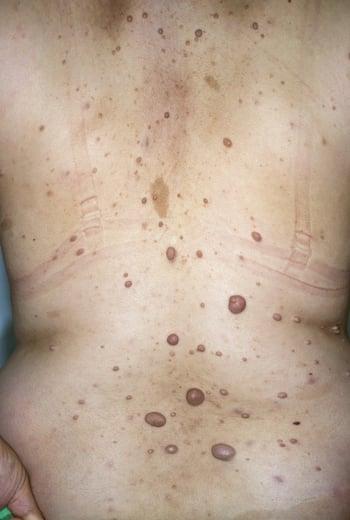
This photo shows multiple neurofibromas (raised pink or tan bumps) and café-au-lait spots (flat brownish spots) on the back of a person who has neurofibromatosis.

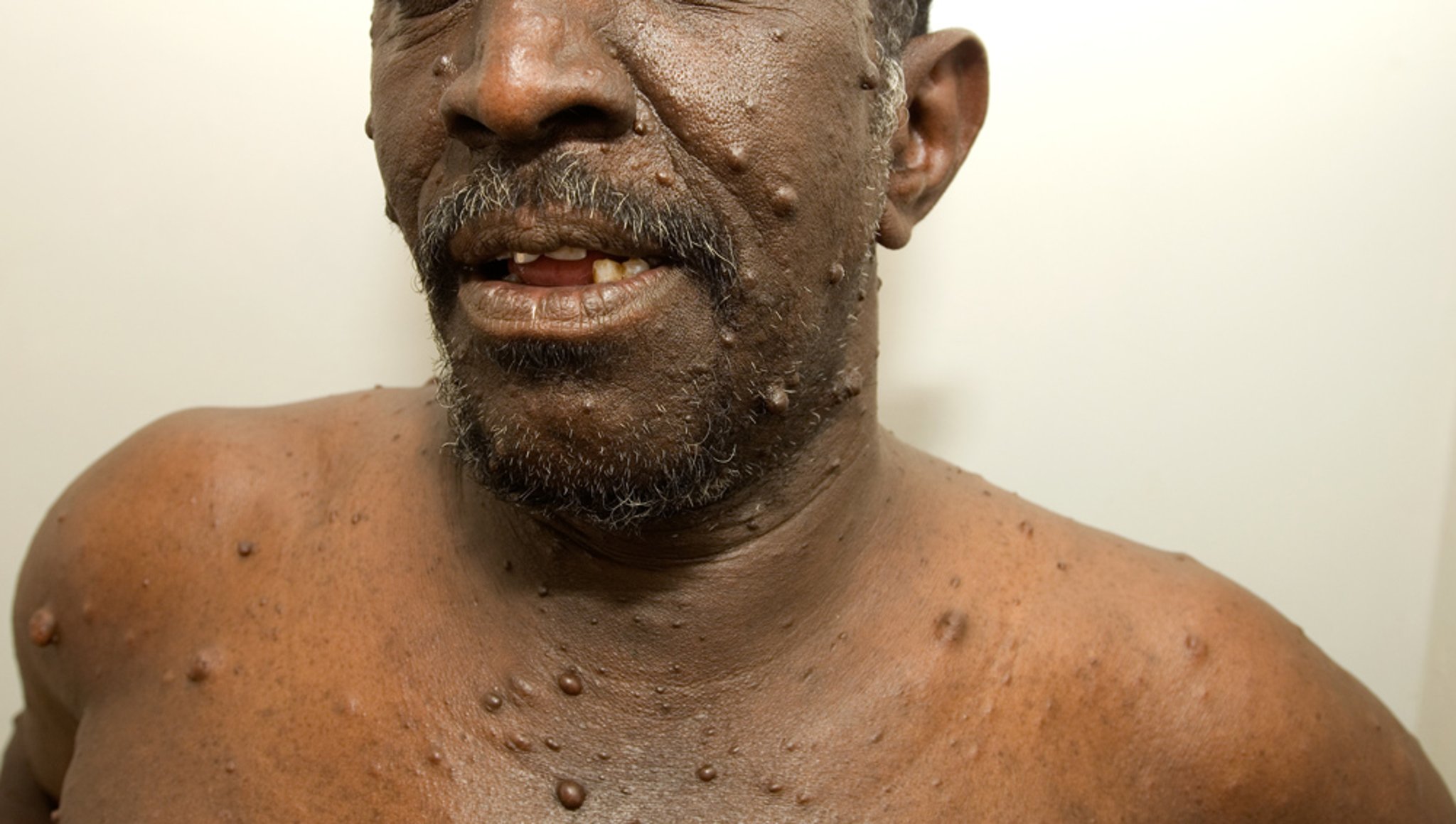
This photo shows multiple neurofibromas (tan bumps) on a person who has neurofibromatosis.
MEDICIMAGE / SCIENCE PHOTO LIBRARY
Neurofibromas that develop in the skin are common. Between ages 10 and 15, neurofibromas of varying sizes and shapes may begin to appear. There may be fewer than 10 of these growths or up to thousands of them. They may be the color of skin or have a pink or tan discoloration and usually do not cause other symptoms.
Neurofibromas that develop under the skin can grow to large sizes and cause structural abnormalities, such as an abnormally curved spine (scoliosis), rib deformities, enlarged long bones in the arms and legs, and bone defects of the leg bones or skull. If the bone surrounding an eyeball is affected, the eye bulges. Neurofibromas that develop under the skin can also affect the nerves that lead from the brain to various parts of the head, neck, and trunk (cranial nerves).
Neurofibromas that develop in the nerves may affect any nerve in the body. They frequently grow on spinal nerve roots (the parts of the spinal nerve that emerge from the spinal cord through the spine). However, if they put pressure on (compress) the spinal cord, they can cause weakness or disturbances in sensation in different parts of the body, depending on which part of the spinal cord is compressed. If neurofibromas compress peripheral nerves, the nerves may not function normally, and pain, tingling, numbness, or weakness may result. Tumors that affect nerves in the head can cause blindness, dizziness, difficulties with coordination and balance, or weakness.
Other problems may develop:
A tumor on the optic nerve (called an optic glioma)
Lisch nodules (benign growths on the iris, the colored part of the eye)
Bulges in the walls of arteries (aneurysms) or blockages in arteries
A large head (macrocephaly)
Tumors in the adrenal glands (pheochromocytomas)
Cancerous (malignant) tumors, sometimes in the brain or along the peripheral nerves
Optic gliomas may not cause any symptoms, or they may enlarge enough to put pressure on the optic nerve and impair vision or even cause blindness. These tumors can usually be identified by the time children are 5 years old and rarely develop after age 10.


This photo shows Lisch nodules (arrows), the brownish growths on the iris (the colored part of the eye).
NF2-related schwannomatosis (NF2)
In NF2, vestibular schwannomas develop on 1 or both auditory nerves. The tumors compress the nerves and may cause hearing loss, ringing in the ears (tinnitus), unsteadiness, dizziness, and sometimes headache or weakness in parts of the face. Symptoms may start during childhood or early adulthood.
People may also have other types of tumors, including gliomas, schwannomas, and meningiomas, and some develop cataracts prematurely.
Non-NF2 schwannomatosis (schwannomatosis)
In schwannomatosis, benign tumors called schwannomas develop on almost any nerve in the body, except the auditory nerves, so people with non-NF2 schwannomatosis do not have vestibular schwannomas. Some people have many schwannomas, but others have only a few.
The first symptom of schwannomatosis is usually pain, which can occur anywhere in the body and which may become chronic and severe. Some people have numbness, tingling, or weakness in the fingers and toes. Other symptoms may develop, depending on the location of the schwannomas. Symptoms develop when schwannomas compress nerves in the head, spine, or trunk.
Diagnosis of Neurofibromatosis
A doctor's evaluation
Magnetic resonance imaging (MRI) or computed tomography (CT)
Sometimes genetic testing
In most people, neurofibromatosis is suspected when people have a routine examination, see the doctor because they do not like how the spots and growths look, or need to be evaluated because they have a family history of neurofibromatosis.
Doctors base the diagnosis of all 3 types of neurofibromatosis on findings noted during a detailed physical examination, such as café-au-lait spots or lumps under the skin along nerves. Doctors use established criteria to help them determine which type a person may have.
Doctors usually do an MRI scan of the brain or CT scan of the head to check for growths in people who have symptoms such as dizziness, tingling, numbness, or weakness.
Doctors do genetic testing in people who they think might have neurofibromatosis but who do not meet all the necessary criteria.
Treatment of Neurofibromatosis
For neurofibromas that cause symptoms, surgical removal or medications
For cancerous tumors, chemotherapy
For vestibular schwannomas, surgical removal and sometimes bevacizumab
For non-NF2 schwannomatosis, pain management
People who have neurofibromatosis need a care team to help manage their treatment. A care team typically includes health care professionals who specialize in treating cancers, disorders of the eyes, disorders of the bones and muscles, and disorders of the brain, spinal cord, and nerves. The care team determines the best course of treatment depending on the type of neurofibromatosis and the symptoms.
Individual neurofibromas that cause severe symptoms can usually be removed surgically or, if small, by laser or an electrical current (electrocautery). Sometimes surgical removal of the neurofibroma requires removing the nerve as well.
Neurofibromas that cause symptoms but that cannot be removed surgically can be treated with medication that works by blocking a protein that causes neurofibroma cells to grow and multiply. These medications include selumetinib (given to people 1 year of age and older) and mirdametinib (given to people 2 years of age and older). These medications can also help reduce pain and can improve quality of life.Neurofibromas that cause symptoms but that cannot be removed surgically can be treated with medication that works by blocking a protein that causes neurofibroma cells to grow and multiply. These medications include selumetinib (given to people 1 year of age and older) and mirdametinib (given to people 2 years of age and older). These medications can also help reduce pain and can improve quality of life.
If tumors become cancerous, chemotherapy is done.
Treatment of vestibular schwannomas is primarily surgical removal. Slow-growing tumors may not require immediate surgery. Because vestibular schwannomas can cause hearing loss, all people who have NF2-related schwannomatosis should be evaluated by an audiologist (a health care professional who identifies, assesses, and manages disorders of hearing and balance). Fast-growing tumors may be treated with injections of a medication called bevacizumab that works by blocking a protein that causes tumor cells to grow and multiply, which may slow the growth of the tumors and prevent hearing loss.Treatment of vestibular schwannomas is primarily surgical removal. Slow-growing tumors may not require immediate surgery. Because vestibular schwannomas can cause hearing loss, all people who have NF2-related schwannomatosis should be evaluated by an audiologist (a health care professional who identifies, assesses, and manages disorders of hearing and balance). Fast-growing tumors may be treated with injections of a medication called bevacizumab that works by blocking a protein that causes tumor cells to grow and multiply, which may slow the growth of the tumors and prevent hearing loss.
Treatment of schwannomas in non-NF2 schwannomatosis is often with long-term pain management including pain relievers, physical therapy, and other procedures such as nerve blocks. Schwannomas are surgically removed only if a person has uncontrolled pain or if the schwannomas cause neurologic problems such as weakness or tingling.
Because neurofibromatosis can be inherited, genetic counseling is recommended when people with this disorder are considering having children. The child of a person with neurofibromatosis has a 50% chance of developing the disorder. For people who have a child with the disorder but who do not have the disorder themselves, the risk of having another child with the disorder is not clear because new mutations are common.
Drug Information for the Topic