A continuous ambulatory electrocardiography (ECG) is a painless medical test that records the heart's electrical activity continuously for 24 hours to 14 days while the person engages in normal daily activities.
A standard ECG records the heart's electrical activity for only a few seconds. This can detect abnormalities that are constant; however, sometimes abnormal heart rhythms (arrhythmia) and inadequate blood flow to the heart muscle occur only briefly or unpredictably. To detect such problems, doctors may use ambulatory electrocardiography (ECG).


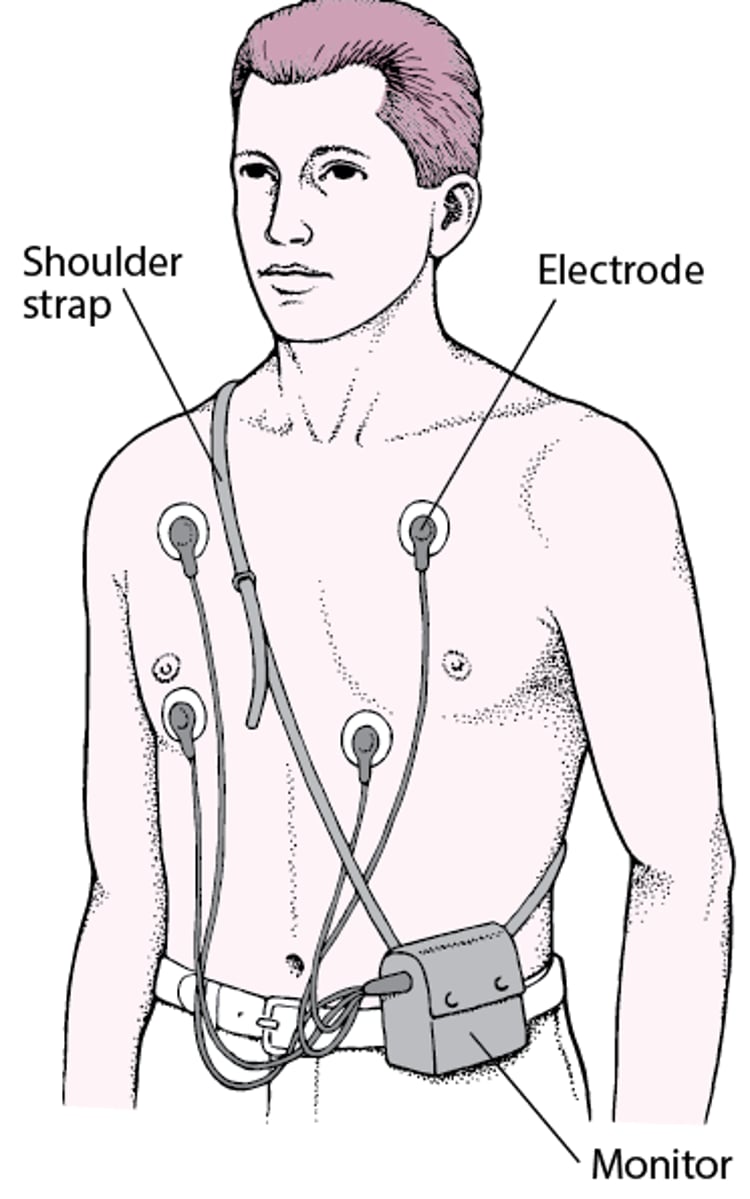
In some ambulatory ECGs, the ECG is recorded continuously for a period of time up to a month, while the person engages in normal daily activities. A Holter monitor, a type of continuous ambulatory ECG, is a small monitor that is attached directly to the chest and records the electrical activity of the heart for 24 to 48 hours. Some types of Holter monitors have electrodes attached to the person's chest with wires connected to a monitor worn at the waist or on a strap. Other types are fully contained in small, water-resistant patches or devices without separate wires. This type of monitor is worn for 24 hours to 14 days.
With an event monitor, the ECG is continuously monitored for up to a month but only recorded for a pre-determined time-frame (usually a few seconds to minutes) just before and after the person triggers the monitor or the device detects an abnormal heart rhythm. The monitor detects the heart's electrical activity through electrodes attached to the chest and records the ECG. While wearing the monitor, the person notes in a diary the time and type of any symptoms. Symptoms recorded in the diary can then be checked against any changes in the ECG to determine whether an abnormal heart rhythm is the cause of the symptoms. If necessary, the ECG can be transmitted to the hospital or doctor's office for an immediate reading as soon as symptoms occur.
A longer-term type of monitor, called an implantable loop recorder, is implanted under the skin for several years. This type of monitor can be used for very infrequent arrhythmias, especially those that could have serious consequences if not diagnosed.
Many monitors have features of both Holter and event monitors. In addition, some devices are monitored by computers and human technicians at remote monitoring stations (mobile cardiac telemetry).
Ambulatory ECG monitors are interpreted through a combination of computer analysis, technician review, and physician interpretation.
Holter Monitor: Continuous ECG Readings
The small monitor is attached to a strap worn over one shoulder. Through electrodes attached to the chest, the monitor continuously records the electrical activity of the heart. |

An event monitor is used when a person must be monitored for a longer period of time, up to 1 month. It is similar to a Holter monitor, but it records only when the user activates it—that is, when symptoms occur—by pressing a button on the device or when the device detects an abnormal heart rhythm.
Another option for continuous monitoring is a small disposable wireless adhesive patch that is worn on the chest for up to 2 weeks. Because it is much smaller than a regular Holter monitor and does not require multiple wire leads to be placed on the chest, people may find it easier to wear for longer periods of time.
If symptoms occur so rarely that they cannot be captured during the initial monitoring period, an event monitor may be placed under the skin. A small magnet is used to activate this monitor. These types of implantable event monitors are called implantable loop recorders and can last several years before the battery needs to be replaced.