Erysipelas is a skin infection that is typically caused by Streptococcus bacteria. It affects the outermost layer of the skin (epidermis).
(See also Overview of Bacterial Skin Infections.)
Erysipelas is a type of cellulitis, which is another bacterial skin infection.
Erysipelas is most commonly caused by Streptococcus bacteria. However, it can also be caused by other bacteria such as Staphylococcus aureus, Klebsiella pneumoniae, Haemophilus influenzae, and Escherichia coli (E. coli).
Bacteria that can cause erysipelas can enter the skin through a cut or sore (ulcer), an insect or animal bite, skin and underlying tissues that have been damaged by being submerged in water (immersion injury), or a surgical wound.
This infection can affect children and adults. It is more common among people who have a weakened immune system.
Symptoms of Erysipelas
Erysipelas causes a shiny, painful, red, raised patch on the skin. The edges have distinct borders and do not blend into the nearby normal skin. The patch feels warm and firm to the touch. Some people with erysipelas also develop blisters on their skin (called bullous erysipelas).


This photo shows the form of erysipelas that causes blisters (bullous erysipelas). There is considerable associated redness, swelling, and overall inflammation of the skin surrounding the blisters.
Image courtesy of Karen McKoy, MD.
People often have a high fever, chills, and a general feeling of illness (malaise).
Erysipelas occurs most frequently on the legs and face.
Erysipelas may return and may cause people to retain a fluid called lymph that can build up in tissues (lymphedema), which causes swelling.

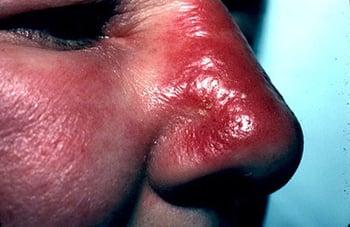
In erysipelas, the skin is red and raised and the edges have a distinct border.
Diagnosis of Erysipelas
A doctor's evaluation
Sometimes culture
Doctors diagnose erysipelas based on the characteristic appearance of the painful, red patch.
Sometimes doctors send samples of blood or material taken from the skin to a laboratory to identify the bacteria (called a culture) if the person is very sick.


Treatment of Erysipelas
Antibiotics
Doctors give people antibiotics given by mouth (orally), such as penicillin or amoxicillin, to cure the infection.
When people have a severe infection, doctors give antibiotics by vein (intravenously), such as penicillin or ceftriaxone.
If doctors suspect people also have a dangerous infection called MRSA (methicillin-resistant Staphylococcus aureus), they give people an additional oral antibiotic, such as sulfamethoxazole/trimethoprim, clindamycin, or doxycycline, or, if the MRSA infection is severe, doctors give intravenous vancomycin or linezolid.
People should rest in bed and elevate their leg if they have leg erysipelas. Compression stockings may be worn on the legs to lessen swelling caused by erysipelas. People can apply cold packs and take medications for pain to help relieve discomfort.
Drug Information for the Topic