Erythrasma is a skin infection caused by Corynebacterium minutissimum bacteria. It affects skin folds.
(See also Overview of Bacterial Skin Infections.)
Erythrasma can occur in healthy adults, but it most commonly affects adults with diabetes, obesity, old age, or a weakened immune system. It is also common among people who live in hot and humid climates. People who have inflammation of the hair follicles in their armpits, groin, or around their nipples and anus (hidradenitis suppurativa) or who sweat excessively (hyperhidrosis) are also at increased risk of developing this infection.
Erythrasma affects skin folds, which are areas where the skin naturally creases, folds over, or touches or rubs together. This infection is most common in the foot, where it causes scaling, cracking, and breakdown of the skin usually between the last two toes. This infection is also common in the groin, where it causes irregularly shaped pink or brown patches and scaly skin especially where the thighs touch. The armpits, skin folds under the breasts or on the abdomen, and the area just next to the anus (perineum) are other areas where erythrasma occurs.
In some people, the infection spreads to the torso and anal area.

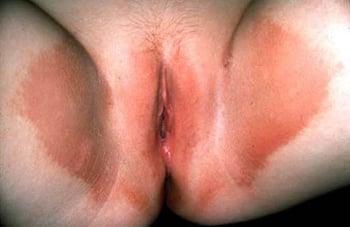
This photo shows characteristic pink-brown patches of erythrasma in and surrounding the skin folds of the groin.
Diagnosis of Erythrasma
A doctor's evaluation
Erythrasma can sometimes look like a fungal infection or a different kind of skin disease. To determine that a person has erythrasma and not something else, doctors examine the person and shine an ultraviolet light (also known as a black light) on the person's infected skin. Skin that is infected with Corynebacterium minutissimum bacteria glows a coral-red color under the light, which confirms the diagnosis.
Treatment of Erythrasma
Antibiotics
Doctors give people medications they can apply directly to the affected area (topically) that contain an antibiotic such as erythromycin, clindamycin, mupirocin, or benzoyl peroxide. Sometimes doctors also give creams that contain an antifungal medication such as imidazole or miconazole.
Sometimes people also need an antibiotic given by mouth (orally), so doctors give clarithromycin or erythromycin.
Erythrasma often returns.
Drug Information for the Topic