Paracoccidioidomycosis is an infection caused by the fungus Paracoccidioides brasiliensis.
The infection usually develops after spores produced by the fungus are inhaled.
Most people have no symptoms, but symptoms, if they occur, usually occur years after people inhale the fungus.
Paracoccidioidomycosis usually causes a cough, fever, shortness of breath, and difficulty breathing, but it can cause skin and mouth sores, swollen lymph nodes, and sometimes abdominal pain.
Doctors diagnose the infection by identifying the fungus in tissue samples.
Doctors usually treat paracoccidioidomycosis with the antifungal medication itraconazole and sometimes with other medications.
(See also Overview of Fungal Infections.)
Paracoccidioidomycosis is caused by inhaling spores of the fungus. Spores have been found in soil only in parts of South and Central America. Paracoccidioidomycosis occurs more often in men aged 40 to 50, particularly agricultural workers in rural areas of Brazil.
Paracoccidioidomycosis usually affects the lungs, skin, mouth, throat, and lymph nodes, and sometimes it affects the liver or spleen.
Paracoccidioidomycosis typically infects people who have a healthy immune system. However, it sometimes occurs in people who have a weakened immune system because of another disorder or because they take medications that suppress the immune system, such as steroids (also sometimes called glucocorticoids or corticosteroids).
Symptoms of Paracoccidioidomycosis
Most people who inhale the spores develop an infection that causes no symptoms.
Symptoms, if they occur, usually develop months to years after the initial exposure. Sometimes symptoms last a long time, but the infection is rarely fatal.
Symptoms are similar to those of pneumonia. People have a cough, fever, shortness of breath, and difficulty breathing. These symptoms may go away on their own.
The infection may spread from the lungs to other parts of the body.
Painful sores (ulcers) may develop in the mouth and on the skin, most often the face, especially around the nose and mouth, including the tongue, throat, and gums.

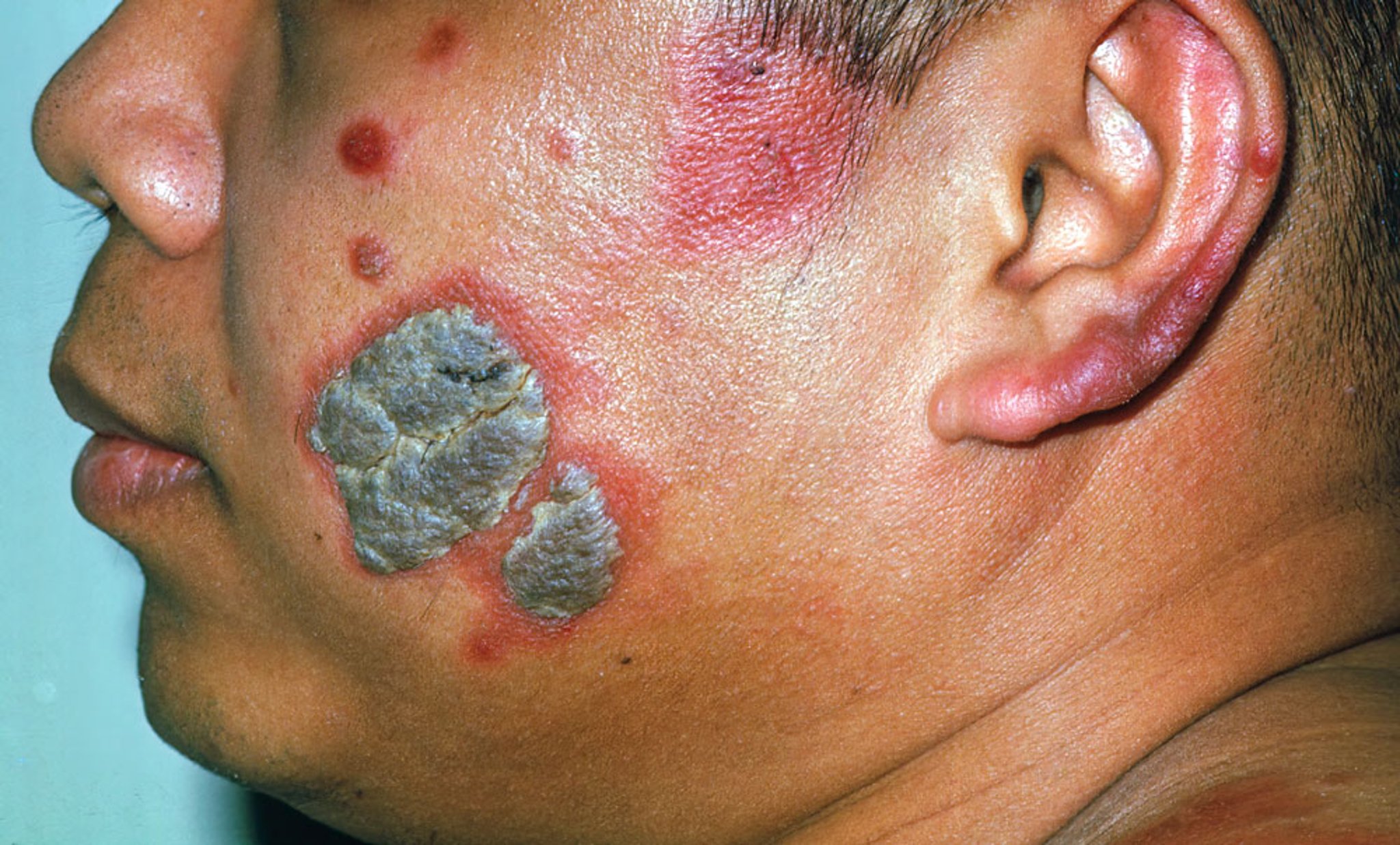
In this photo, paracoccidioidomycosis has caused 2 rough, gray plaques and other areas of inflammation (including redness and swelling).
Image courtesy of Karen McKoy, MD.
Infected lymph nodes become swollen, and pus may drain from them, breaking through the skin but causing little pain. The lymph nodes most commonly infected are those in the neck and under the arms.

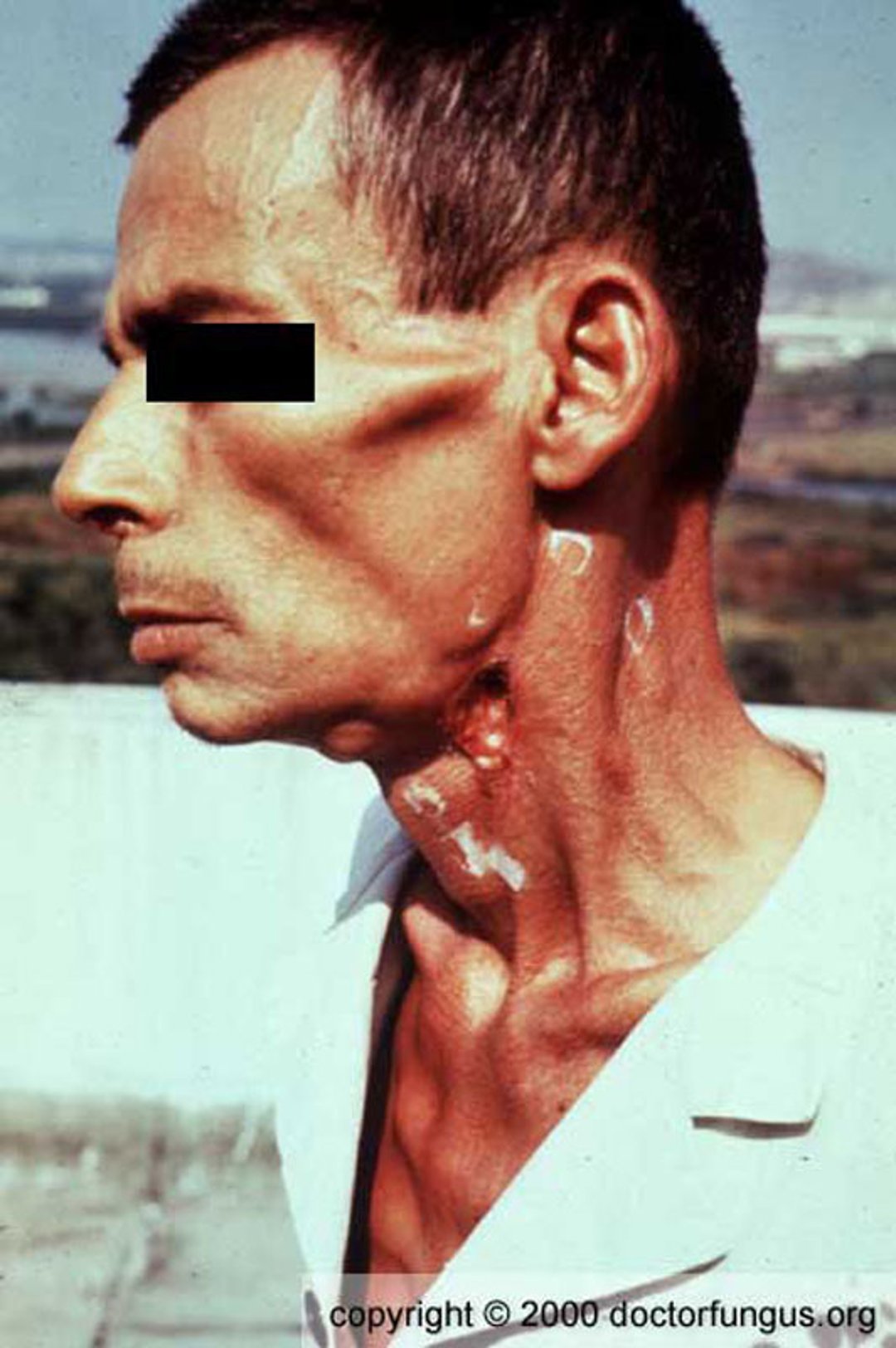
In paracoccidioidomycosis, infected lymph nodes in the neck become swollen, and pus may drain from them, breaking through the skin.
Image courtesy of www.doctorfungus.org © 2005.
The liver and spleen may enlarge, and lymph nodes in the abdomen may enlarge and sometimes cause abdominal pain.
Some people with paracoccidioidomycosis develop a chronic lung disorder, which causes scarring (fibrosis), blisters, and widespread damage in the lungs (emphysema).
When paracoccidioidomycosis occurs in people under age 30 years or in people with HIV infection or advanced HIV infection (also called AIDS), it is more aggressive. It spreads widely, including to the bone marrow and other organs. People have a fever and lose weight. The lymph nodes, liver, and spleen enlarge.
Diagnosis of Paracoccidioidomycosis
Examination and culture of samples of infected tissue
Blood tests
Doctors suspect paracoccidioidomycosis based on a person's symptoms and on the results of the physical examination.


To diagnose paracoccidioidomycosis, a doctor takes tissue samples for examination under a microscope and for culture.
Doctors may also do blood tests to help diagnose paracoccidioidomycosis.
Treatment of Paracoccidioidomycosis
Itraconazole
The antifungal medication itraconazole, given by mouth, is the treatment of choice for paracoccidioidomycosis.
Amphotericin B, another antifungal medication, is also effective and is often used for very severe cases.
Sulfamethoxazole/trimethoprim is an antibiotic. It can stop Paracoccidioides from growing and help heal some sores. This medication may need to be taken for long periods of time.
Drug Information for the Topic