Chagas disease is an infection caused by the protozoa Trypanosoma cruzi.
Chagas disease is transmitted to people by kissing bugs (also called an assassin or Triatominae bugs).
The area around the point of entry (a bite wound or an eye) may swell, and people may have a fever.
Then, after a long period of no symptoms, serious complications, mainly heart or digestive problems, may develop in some people.
Doctors confirm the diagnosis by identifying the protozoa in a sample of blood or fluid taken from an infected organ or by doing blood tests.
A medication is used to kill the protozoa but does not reverse heart or digestive tract damage.
Protozoa are a type of parasite. They make up a diverse group of microscopic, one-celled organisms. Some protozoa need a human or animal host to live. There are many different kinds of protozoa.
Trypanosoma cruzi is an extraintestinal protozoan, which means it causes infections only in areas outside of a person's intestines such as the brain, skin, and heart.
Chagas disease affects people in North America, Central America, and South America, mainly in rural areas where poverty is widespread. These areas provide a favorable environment for kissing bugs (also called reduviids or assassin bugs). Kissing bugs are vectors, which means they carry and transmit parasites that cause diseases in people. In Chagas disease, kissing bugs transmit Trypanosoma cruzi. Kissing bugs thrive in cracks and crevices in mud walls, in thatched roofs of houses and farm buildings, and in rock or wood piles, chicken coops, and dog kennels.

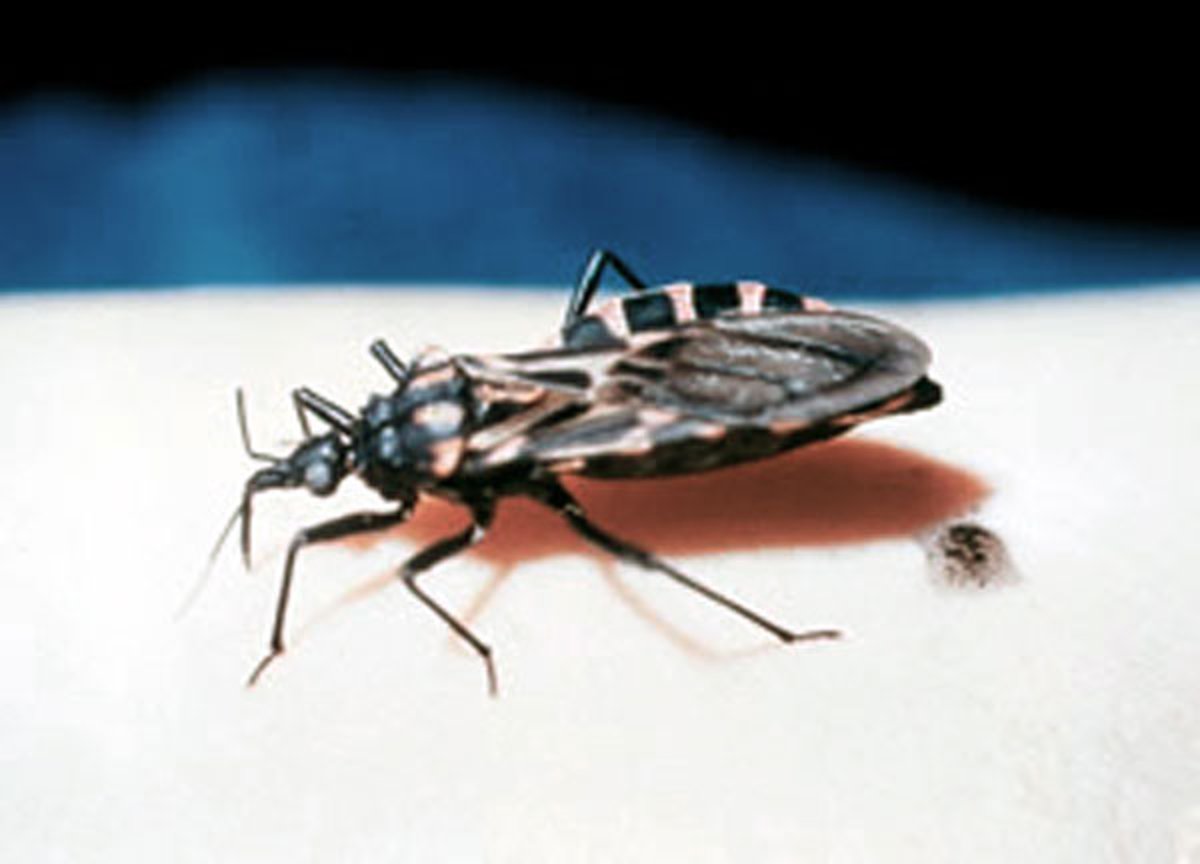
This photo shows a kissing bug (or assassin bug). It spreads to people the parasites that cause Chagas disease.
CDC/DPDx
Worldwide, about 6 to 8 million people are infected with Trypanosoma cruzi, most of whom live in Latin America. In 2010, an estimated 1.13 women of child-bearing age in Latin America were infected with Trypanosoma cruzi. It is estimated that 1 to 5% of their children were born with Chagas disease. Each year, about 15,000 babies in Latin America are born with Chagas disease. Fortunately, measures to control the spread of infection are reducing the number of Chagas cases in Latin America.
Although the disease is rare in the United States, infections have occurred in several states.
(See also Overview of Parasitic Infections.)
Transmission of Chagas Disease
Chagas disease is most commonly spread when a kissing bug bites an infected person or animal (such as dogs, cats, opossums, rats, and many other animals) and then bites another person. When infected bugs bite, they deposit feces that contain the Trypanosoma cruzi protozoa. The protozoa then enter the body through the bite wound.
The protozoa may also enter the body through the clear membrane that covers the eye (conjunctiva) or through other mucous membranes such as the mouth. The protozoa then get into cells at the point of entry and eventually reach the bloodstream. Trypanosoma cruzi infect many types of cells throughout the body including cells of the immune system, heart, muscles, and nervous system.
People can also become infected through blood transfusions or an organ transplant from an infected donor. People can be infected by eating food or drinking liquids (such as sugar cane juice) contaminated by infected kissing bugs or their feces.
The protozoa can also cross the placenta in a pregnant person and infect the fetus, resulting in miscarriage, stillbirth, or serious, sometimes fatal problems in the newborn.

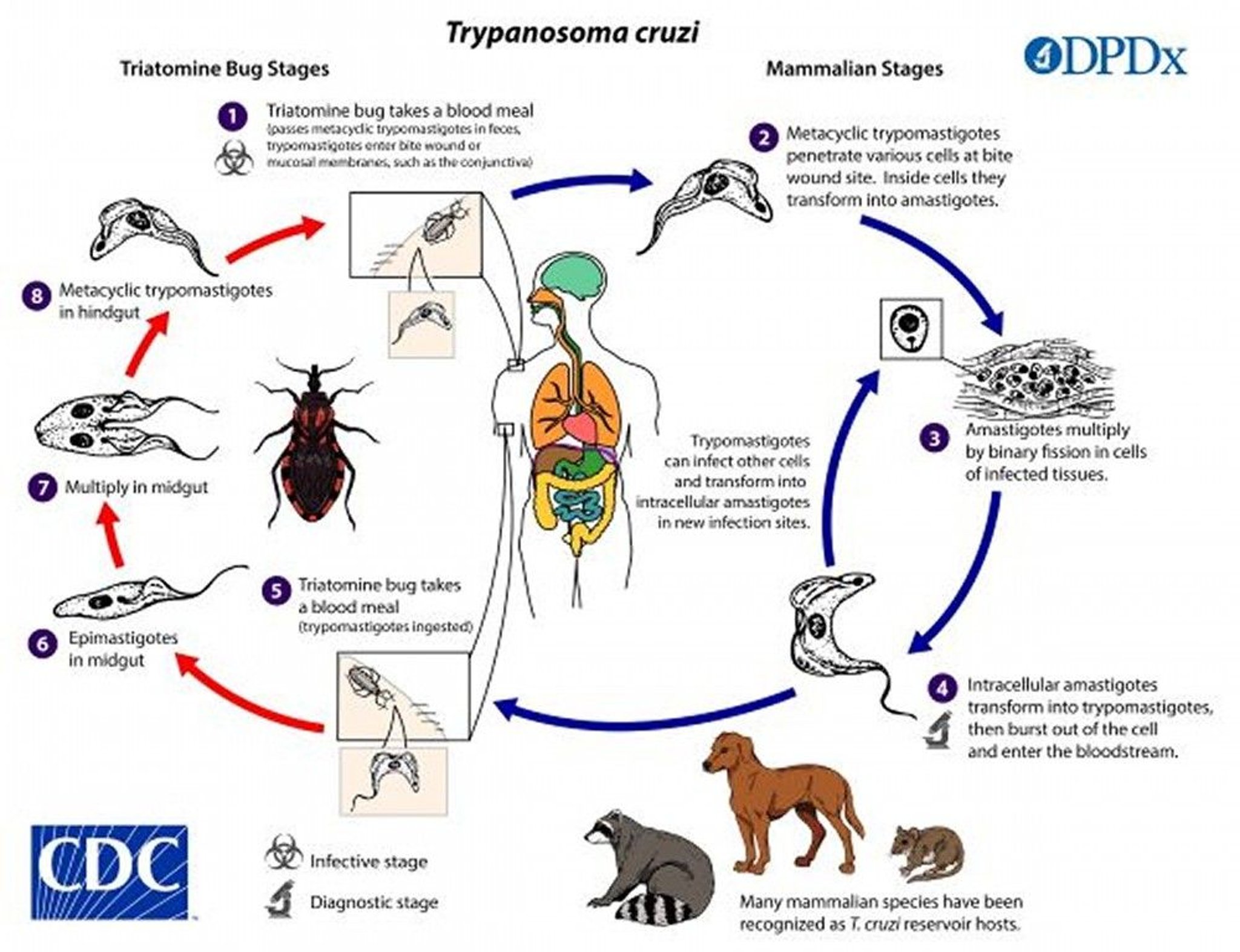
1. When an infected kissing (Triatominae) bug bites a person, it deposits feces that contain the protozoa.
2. The protozoa enter through the bite wound or through mucosal membranes, such as the clear membrane that covers the eye (conjunctiva).
3. The protozoa then change forms and multiply.
4. They change forms again, enter the bloodstream, and travel to other tissues. There, they change into a form that causes symptoms.
5. When another kissing bug bites an infected person (or animal), it becomes infected.
6–7. Inside the bug, the protozoa change forms and multiply.
8. In the lower part of the bug's gut (hindgut), they change to a form that can infect people and animals. They are then excreted in the bug's feces.
Image from the Centers for Disease Control and Prevention, Global Health, Division of Parasitic Diseases and Malaria.
Symptoms of Chagas Disease
Chagas disease occurs in 3 stages. Symptoms can occur in the first and third stages.
First stage (acute stage)
Chagas disease symptoms usually start 1 to 2 weeks after the protozoa enter the body. A swollen, red bump may appear at the bite wound. If the protozoa entered through tissues around the eye, the area around the eye may swell (called Romaña sign). A fever may develop. Some people have no symptoms, but the protozoa can be identified in their blood.

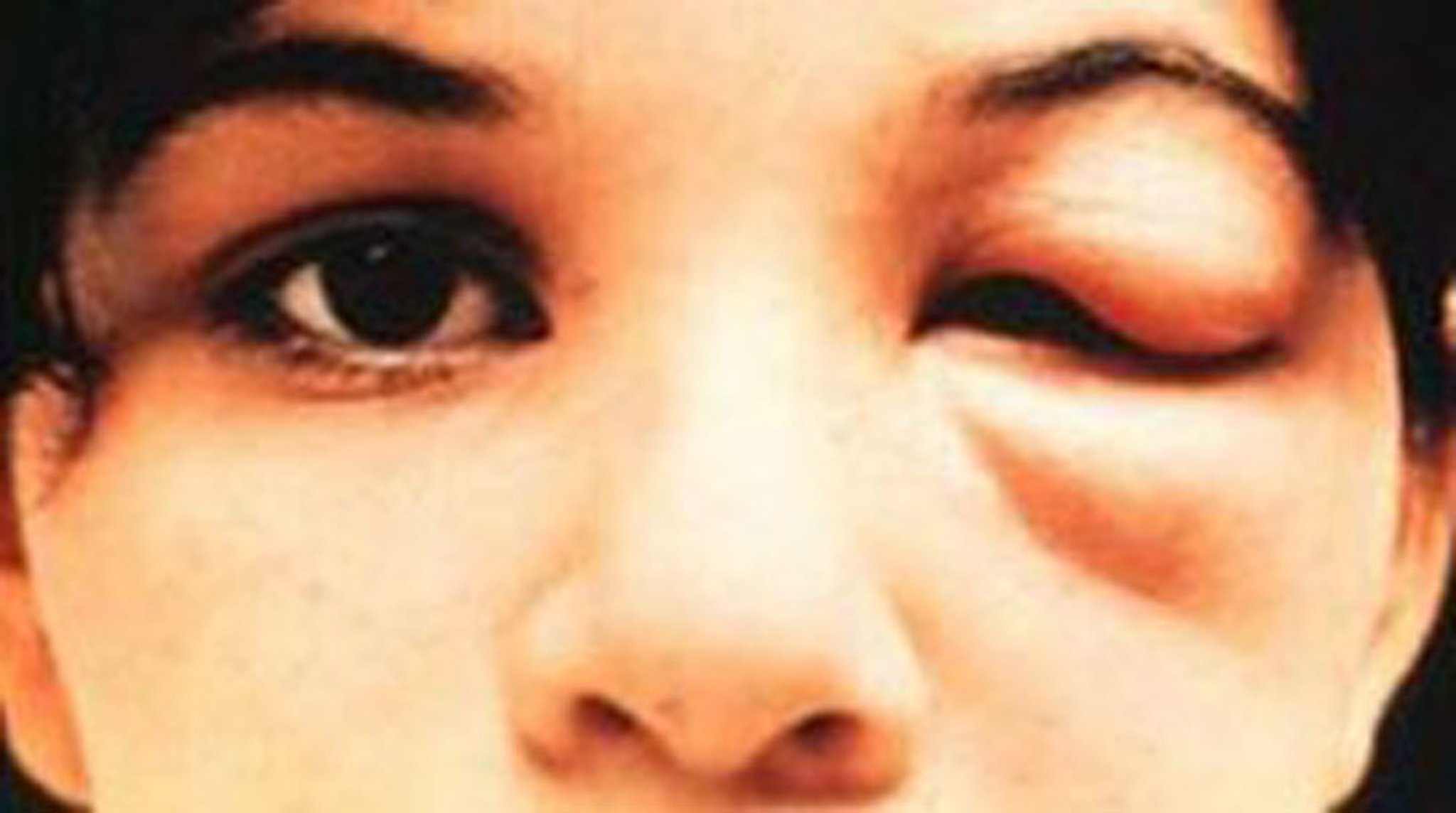
This image shows Romaña sign in a child who has Chagas disease.
CDC image courtesy of the WHO/TDR Image Library.
In most people, symptoms that occur during this stage of Chagas disease disappear without treatment. However, for a few people, usually children, Chagas disease is fatal during this stage. Death may result from a severe infection of the heart, which causes heart failure, or from an infection of the brain and tissues covering the brain and spinal cord (meningoencephalitis).
If people have a weakened immune system caused by, for example, advanced HIV infection (also called AIDS), the first stage may be severe, and people may have a rash or rarely brain lesions.
Most babies infected before they are born do not have symptoms, but some are born prematurely or have low birth weight, fever, enlargement of the liver and spleen, low numbers of red blood cells (anemia), and low numbers of platelets (thrombocytopenia). In most infected babies, symptoms eventually disappear without treatment. Rarely, this stage is fatal for a few babies.
Second stage (chronic indeterminate stage)
During the second stage, people have no symptoms of Chagas disease and the results of electrocardiograms (ECG) and imaging tests of the heart and digestive system are normal. However, protozoa are present in their body and sometimes blood.
Many people remain in this stage, without any symptoms, for the rest of their life.
Third stage (chronic stage)
Years later, chronic Chagas disease develops in 20 to 30% of people.
The main areas affected are the heart and the digestive system.
The heart may become enlarged and weak, so people tire easily and are short of breath. The heart's electrical system may be affected, causing fainting, irregular heart rhythms, or sudden cardiac arrest.
The muscles of the digestive tract (such as those of the esophagus) may malfunction, causing difficulty swallowing. If swallowing is affected, people may breathe in (aspirate) food, liquids, or saliva, causing lung infections, or become severely undernourished. The large intestine (colon) may enlarge, and severe constipation may develop.
Diagnosis of Chagas Disease
During the first stage, examination of a blood or tissue sample or blood tests
During the second stage, blood tests
During the third stage, blood tests, electrocardiography, and imaging tests of the heart or digestive system
Doctors can usually diagnose Chagas disease during the first stage by seeing the protozoa in a sample of blood examined with a microscope. A blood sample may also be tested for the protozoa's genetic material (DNA). Doctors may also examine tissue from lymph nodes or the heart.
During the second and third stages, the protozoa are seldom seen in a sample of blood examined with a microscope, so doctors do 2 or more different blood tests to check for antibodies to the protozoa. (Antibodies are proteins produced by the immune system to help defend the body against a particular attack, including that by parasites.) Antibody tests for Chagas disease may be positive in people who are not infected (false positive). So if the initial test is positive, a different antibody test is then done to confirm the diagnosis.
If the infection is diagnosed, doctors do other tests to check for damage to the heart or gastrointestinal tract. For example, electrocardiography and echocardiography are done, and a chest x-ray may be taken to check for problems with the heart.
If people have difficulty swallowing or constipation, a CT scan or x-rays of the gastrointestinal tract may be done.
In areas where Chagas disease is common, doctors use a method called xenodiagnosis to diagnose infections. In this method, a laboratory-raised kissing bug that is not infected is fed blood from a person who is being assessed for Chagas disease. After the bug is fed, researchers inspect the contents of its stomach to look for the parasite that causes Chagas disease. If the bug has the parasite, the person has Chagas disease.
Treatment of Chagas Disease
Antiparasitic medications
Treatment of problems caused by chronic infection of the heart or digestive tract if present
Only 2 antiparasitic medications, benznidazole and nifurtimox, are effective against Chagas disease. Neither of these medications reverses heart or digestive tract disease that has already developed.
During the first stage of the disease, all people are treated with benznidazole or nifurtimox. These medications do the following:
Quickly reduce the number of protozoa in the blood
Shorten the duration of symptoms
Make developing chronic infection less likely
May reduce the risk of dying
During the second stage, children and adults up to age 50 who do not have evidence of severe heart or digestive tract problems are treated with benznidazole or nifurtimox. The younger the person and the earlier treatment is started, the more likely that treatment will eliminate the protozoa. Children usually tolerate treatment better than adults. For adults over 50 years old, doctors weigh the benefits with the risks of treatment.
Both benznidazole and nifurtimox can cause serious side effects, which most often involve the digestive tract, skin, and nervous system. They include loss of appetite, weight loss, nausea, vomiting, rash, nerve damage, insomnia, and dizziness.
Neither medication is given to people with severe liver or kidney disease.
When pregnant people are diagnosed with Chagas, treatment is usually delayed until after delivery, and the infant is then treated if infected. Benznidazole and nifurtimox are not given to people who are pregnant or breastfeeding (chestfeeding).
During the third stage, once chronic infection causes severe heart damage or digestive tract problems, antiparasitic medications are not helpful. Problems are treated as needed:
Heart failure: Medications to reduce the heart's workload or heart transplantation
Irregular heart rhythms: Medications to correct the heart's rhythm (antiarrhythmic medications) or a pacemaker
Problems with the esophagus: Botulinum toxin (to relax the lower esophageal muscle) or a surgical procedure to widen (dilate) the lower esophagus
A greatly enlarged colon: Surgery
Prevention of Chagas Disease
Plastering walls, replacing thatched roofs, and/or repeatedly spraying houses with insecticides that have long-lasting effects can help reduce the number of kissing bugs and thus help control spread of Chagas disease.
Rarely, travelers to areas where the infection occurs become infected. Not sleeping in adobe houses or, if sleeping in such houses, using bed nets can help travelers avoid infection.
Locals and travelers in areas where infection occurs should avoid consuming fresh sugar cane juice and other foods that might be contaminated.
Blood and organ donors are screened in many countries, including the United States, to prevent the infection from being spread through infected blood transfusions or organ transplants.
Screening at-risk people of child bearing-age before pregnancy, and treating those who are infected, decreases the likelihood of congenital infection.
More Information
The following English-language resource may be useful. Please note that The Manual is not responsible for the content of this resource.
Centers for Disease Control and Prevention (CDC): About Chagas disease
Drug Information for the Topic