Posttraumatic stress disorder (PTSD) involves intense, unpleasant, and dysfunctional reactions after an overwhelming traumatic event.
Events that threaten death or serious injury can cause intense, long-lasting distress.
Affected people may relive the event, have nightmares, and avoid anything that reminds them of the event.
Treatment may include psychotherapy (supportive and exposure therapy) and antidepressants.
When terrible things happen, many people are affected in a lasting way. In some, the effects are so persistent and severe that they are debilitating and constitute a disorder. Generally, events likely to cause PTSD are those that invoke feelings of fear, helplessness, or horror. Combat, sexual assault, and natural or man-made disasters are common causes of PTSD. However, it can result from any experience that feels overwhelming and life threatening, such as physical violence or an automobile crash.
The events may be experienced directly (such as having a serious injury or being threatened with death) or indirectly (witnessing others being seriously injured, killed, or threatened with death; learning of traumatic events that occurred to close family members or friends; or participating in the aftermath of someone else's trauma, as is the case with first responders). People may have experienced a single trauma or, as is common, multiple traumas.
It is not known why the same traumatic event may cause no symptoms in one person and lifelong PTSD in another. Nor is it known why some people witness or experience the same trauma many times over years without developing PTSD, but then develop it following an apparently similar episode.
In the United States, PTSD affects almost 6 to 7% of people sometime during their life, including childhood (see Posttraumatic Stress Disorder in Children and Adolescents). About 5% have it yearly. Estimates for other countries vary widely and range from 1 to 12% over the course of a lifetime.
PTSD lasts for more than 1 month. It may be a continuation of acute stress disorder or develop separately up to 6 months after the event.
Chronic PTSD may not disappear but often becomes less intense over time even without treatment. Nevertheless, some people remain severely handicapped by the disorder in social settings, at work, and in their personal relationships.
Symptoms of PTSD
When people with PTSD have symptoms, they typically fall into the following 4 categories:

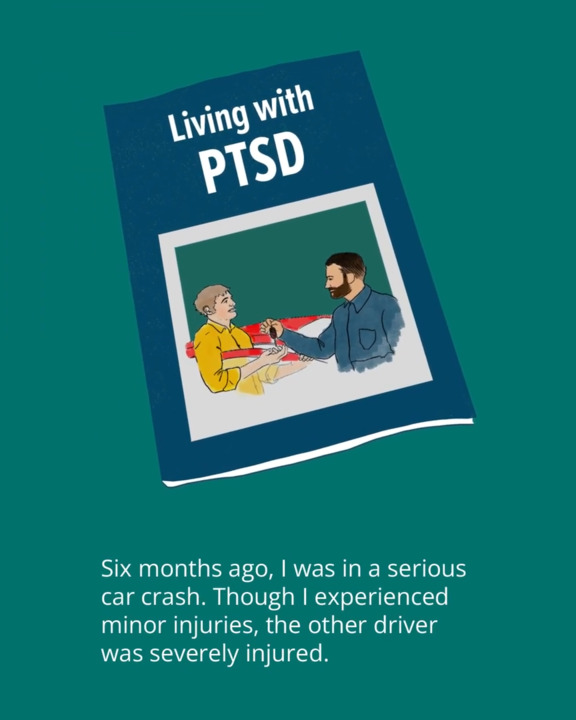
Intrusion symptoms (the event repeatedly and uncontrollably invades their thoughts)
Avoidance of anything that reminds them of the event
Negative effects on thinking and mood
Changes in alertness and reactions
Intrusion symptoms
The traumatic event may repeatedly reappear in the form of involuntary, unwanted memories or recurrent nightmares. Some people have flashbacks, in which they relive events as if they were actually happening rather than simply being remembered.
People may also experience intense reactions to reminders of the event. A combat veteran's symptoms might be triggered by fireworks, for example, whereas those of a robbery victim may be triggered by seeing a gun in a movie.
Avoidance symptoms
People persistently avoid things—activities, situations, or people—that are reminders of the trauma. For example, they may avoid entering a park or an office building where they were assaulted or avoid speaking to people of the same race as their assailant. They may even attempt to avoid thoughts, feelings, or conversations about the traumatic event.
Negative effects on thinking and mood
People may be unable to remember significant parts of the traumatic event (called dissociative amnesia).
People may feel emotionally numb or disconnected from other people. Depression is common, and people show less interest in previously enjoyed activities.
How people think about the event may become distorted, leading them to blame themselves or others for what happened. Feelings of guilt are also common. For example, they may feel guilty that they survived when other people did not. They may feel only negative emotions, such as fear, horror, anger, or shame, and may be unable to feel happy or satisfied or to love.
Changes in alertness and reactions
People may have difficulty falling asleep or concentrating.
They may become excessively vigilant for warning signs of risk. They may be easily startled.
People may become less able to control their reactions, resulting in reckless behavior or angry outbursts.
Other symptoms
Some people develop ritual activities to help reduce their anxiety. For example, people who were sexually assaulted may bathe repeatedly to try to remove the sense of being unclean.
Many people with PTSD try to relieve their symptoms with alcohol or illicit drugs and develop a substance use disorder.
Diagnosis of PTSD
A doctor's evaluation, based on standard psychiatric diagnostic criteria
Doctors diagnose posttraumatic stress disorder (PTSD) when
People have been exposed directly or indirectly to a traumatic event.
Symptoms have been present for 1 month or longer.
Symptoms cause significant distress or significantly impair functioning.
People have some symptoms from each of the categories of symptoms associated with PTSD (intrusion symptoms, avoidance symptoms, negative effects on thinking and mood, and changes in alertness and reactions).
Doctors also check to see whether symptoms could result from use of a drug or another disorder.
Doctors diagnose PTSD with dissociative symptoms when, in addition to all of the symptoms mentioned above, the person has evidence of depersonalization (feeling detached from one's self or body) and/or derealization (experiencing the world as unreal or dreamlike). Several other disorders can involve the overlap of depersonalization and derealization with the response to trauma, including acute stress disorder with dissociative symptoms, dissociative amnesia, dissociative identity disorder, and complex PTSD.
PTSD can be difficult to diagnose because it causes such varied and complex symptoms. Sometimes the trauma may not be obvious to the doctor, and people are not always willing to discuss their trauma. Also, the presence of a substance use disorder or other mental health disorders (for example, depression, anxiety) can distract attention from the PTSD. When diagnosis and treatment are delayed, PTSD can become chronically debilitating.
Treatment of PTSD
Self-care
Psychotherapy
Sometimes medications
Treatment of other disorders, such as substance use or major depression
Self-care
Self-care is crucial during and after a crisis or trauma. Self-care can be divided into 3 components:
Personal safety
Physical health
Mindfulness
Personal safety is fundamental. After a single traumatic episode, people are better able to process the experience when they know that they and their loved ones are safe. It can be difficult, however, to gain complete safety during ongoing crises such as domestic abuse, war, or an infectious pandemic. During such ongoing difficulties, people should seek safety for themselves and their loved ones as much as possible.
Physical health can be put at risk during and after traumatic experiences. Everyone should try to maintain a healthy schedule of eating, sleeping, and exercise. Drugs or medications that sedate and intoxicate (for example, alcohol, or benzodiazepine medications such as diazepam) should be used sparingly, if at all.
A mindful approach to self-care aims to reduce the feelings of stress, boredom, anger, sadness, and isolation that traumatized people normally experience. Stretching and exercise are beneficial, but it can be equally helpful to sit still and count one's own breaths or listen carefully for surrounding sounds.
If circumstances allow, at-risk individuals should make and follow a normal daily schedule, for example, get up, shower, get dressed, go outside and take a walk, and prepare and eat regular meals.
It is useful to practice familiar hobbies as well as activities that sound fun and distracting: draw a picture, watch a movie, or cook. People can become preoccupied with the trauma or crisis, so it is useful to choose to think of other things: read a novel or get engaged with a puzzle. Unpleasant emotions may typically feel "frozen" during and after a trauma, and it can be a relief to find activities that shift the feeling state: laugh, watch a fun movie, do something silly, or draw with crayons. People should avoid any counterproductive activities, such as watching news reports that might cause them to reexperience the original trauma.
Community involvement can be crucial, even if it is difficult to maintain human connection during a crisis.
Under stress, people can become short-tempered, even with people they care about. Spontaneous kindness can be a win/win solution for everyone: sending a nice note, making someone cookies, and offering up a smile may not only be a nice surprise for the recipient, but they may reduce the hopelessness and passivity that tends to be part of the sender's experience of trauma.
Psychotherapy
It is important to find a mental health professional who expresses warmth, reassurance, and empathy to help people with PTSD, who often suffer from shame, avoidance, hypervigilance, and detachment. Such a professional can help set up a productive therapeutic relationship with the person.
Trauma-focused cognitive-behavioral therapy is the most effective treatment for PTSD. This form of therapy, which is also effective for acute stress disorder, includes the following components:
Education about the nature of stress and the body/mind's response to it
Cognitive restructuring, the process of modifying the person's thinking about the traumatic event and responses to it (or putting things into perspective)
Undergoing carefully guided therapeutic exposure to memories of the traumatic experience
Education about PTSD can be an important early step in therapy. The symptoms of PTSD can feel overwhelmingly confusing, and it is often very useful for people and loved ones to understand how PTSD can include seemingly unrelated symptoms.
Cognitive processing therapy is a type of cognitive-behavioral therapy that involves talking through the implications of traumatic experiences and putting negative thoughts about oneself and the traumatic experiences into perspective, seeing them as different from the actual trauma.
A type of called exposure therapy helps to extinguish the fear left over from the traumatic event. In exposure therapy, the therapist has people imagine being in situations associated with prior trauma. For example, they may be asked to imagine visiting a park where they were assaulted. The therapist may help people reimagine the traumatic event itself. Because of the often intense anxiety associated with traumatic memories, it is important for people in therapy to feel supported and for the exposure to proceed at the right pace. People who have been traumatized may be especially sensitive and vulnerable to the threat of being traumatized again, so treatment can get stalled if it goes too quickly. Often, treatment may shift from exposure to a more supportive, open-ended treatment, to help people be more comfortable with exposure therapy.
Relaxation and stress management techniques, including breathing, yoga, and meditation, can relieve symptoms and also prepare people for treatment that involves stress-inducing exposure to memories of the trauma.
Broader and more exploratory psychotherapy may also ease return to a happier life, such as by focusing on relationships that may have been fractured by PTSD. Other types of supportive and psychodynamic psychotherapy can also be useful as long as they do not shift the focus of treatment away from exposure therapy.
Eye movement desensitization and reprocessing (EMDR) is treatment in which people are asked to follow the therapist's moving finger while they imagine being exposed to the trauma. Some experts think that the eye movements themselves help with desensitization, but EMDR probably works mainly because of the exposure, not the eye movements.
Medications
Medications are most commonly used when a co-occurring condition is identified along with the PTSD. For example, an antidepressant medication is often prescribed when the patient also appears to have a major depression. Similarly, antipsychotic medications (such as aripiprazole) are used when psychotic symptoms are found along with the PTSD.
Antidepressants may also be an effective treatment for PTSD itself, even in people who do not also have major depression. Selective serotonin reuptake inhibitors are most often recommended.
A variety of other medications are used in people with PTSD. Often, they are used to target specific moods, thoughts, and behaviors that are part of an episode of PTSD or are part of a co-occurring disorder. For example, to treat insomnia, doctors sometimes give sedating medications such as olanzapine and quetiapine (also used as antipsychotic drugs); these same medications are sometimes used for mood instability and impulsivity, as are mood stabilizers, such as valproic acid. For nightmares, an often-effective medication is prazosin, a drug more often used for high blood pressure. Other medications that may also be used include mood stabilizers (eg, valproic acid) and atypical antipsychotics (eg, aripiprazole), and psychedelics (such as MDMA, ketamine, and psilocybin).
More Information
The following English-language resource may be useful. Please note that The Manual is not responsible for the content of this resource.
Drug Information for the Topic