
Eating and feeding disorders involve a disturbance of eating or of behavior related to eating, typically including
Changes in what or how much people eat
Measures people take to prevent food from being absorbed (for example, making themselves vomit or taking a laxative)
For unusual eating behavior to be considered a disorder, the behavior must continue for a specified period of time and cause significant harm to the person's physical health and/or ability to function at school or work or negatively affect the person's interactions with other people.
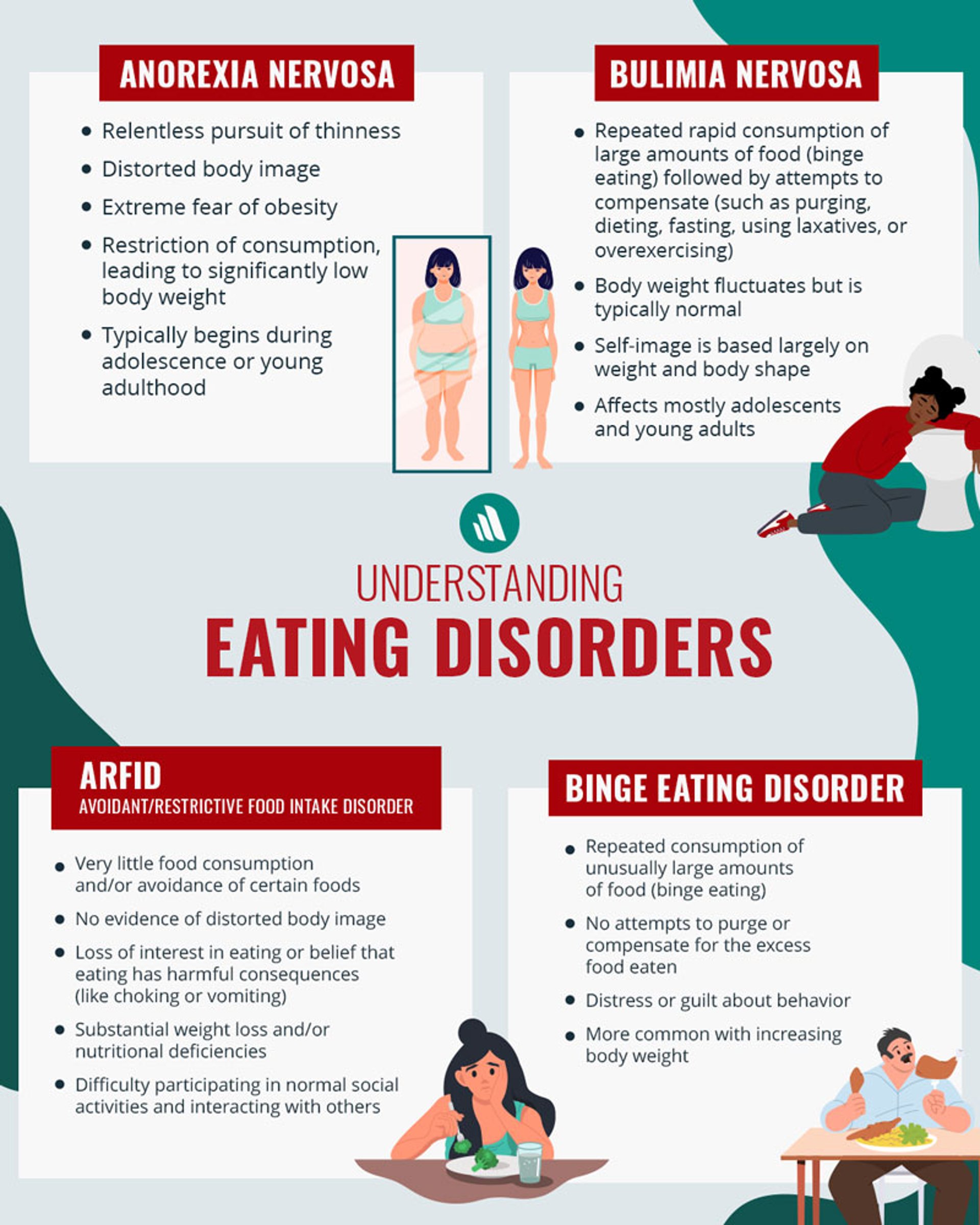
Feeding and eating disorders include the following:

Copyright © 2025 Merck & Co., Inc., Rahway, NJ, USA and its affiliates. All rights reserved.
Pica is regularly eating substances or items that are not food.
Rumination disorder is characterized by regurgitation of food after eating.
Avoidant/restrictive food intake disorder is characterized by eating very little food and/or avoiding eating certain foods without the concern about body shape or weight that is typical in people with anorexia nervosa or bulimia nervosa. Usually, people with this disorder may lack interest in eating, may be extremely picky about food, and may avoid certain types of food. For example, they may avoid foods that are a certain color, consistency, or odor. Some people are afraid of possible adverse consequences of eating such as choking or vomiting.
Anorexia nervosa is characterized by a relentless pursuit of thinness, a distorted body image, an extreme fear of obesity, and restriction of food consumption, leading to a significantly low body weight. People with anorexia nervosa restrict their intake of food, but they may also binge eat, then compensate by purging (for example, by making themselves vomit or using laxatives). People who have the disorder may restrict their food intake to the point where their health is harmed. Although anorexia means loss of appetite, many people with anorexia nervosa do not lose their appetite until they are significantly undernourished.
Bulimia nervosa is characterized by repeated episodes of rapidly eating large amounts of food, followed by attempting to compensate for the excess food consumed. For example, people may make themselves vomit or take laxatives.
Binge-eating disorder is characterized by eating unusually large amounts of food—much more than most people would eat in a similar time under similar circumstances. People feel a loss of control during and after binge eating, and are distressed by these episodes. Binge eating is not followed by purging or other attempts to compensate for the excess food eaten.
Feeding and eating disorders are more common among women, especially younger women, than among men.
Causes of Feeding and Eating Disorders
Little is known about the causes of feeding and eating disorders. Most of these disorders are more common in females. Some family factors or societal body image norms may play a role and research has found that there is a genetic predisposition to anorexia nervosa.
More Information
The following are some English-language resources that may be useful. Please note that The Manual is not responsible for the content of these resources.