What is a knee sprain?
A knee sprain is a tear in or painful stretch of one or more of the ligaments that hold your knee in place. Ligaments are short, tough bands of tissue that hold your bones together at a joint.
Knee sprains:
Usually happen when you twist your leg
Can be mild, moderate, or severe depending on whether the ligament is stretched, partly, or fully torn
Often involve more than one ligament
Cause pain and swelling
Don't show up on x-rays, but doctors may do an MRI
Are treated by Protecting the area, Rest, Ice, Compression, and Elevation ("PRICE")
Often require a knee brace
Sometimes require surgery
The cartilage "shock absorber pads" inside your knee may also be injured.
See a doctor if you're unable to stand or walk.
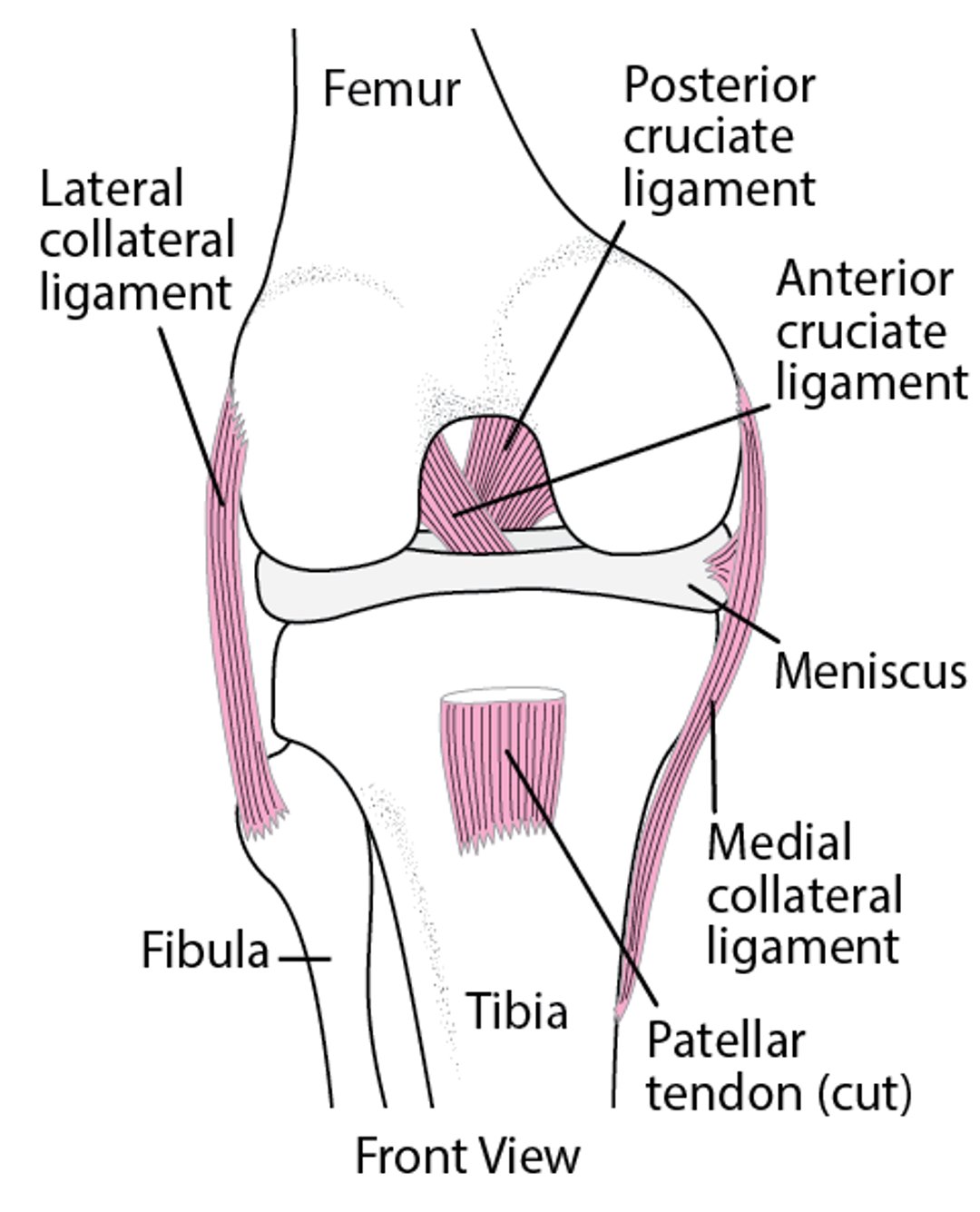
Holding the Knee Together
The collateral ligaments, one on either side of the knee, prevent the knee from moving from side to side too much. The cruciate ligaments inside the joint prevent the knee from moving forward or backward too much. The menisci are cartilage "shock absorber pads" between the thighbone (femur) and larger lower leg bone (tibia), which form part of the knee joint. |

What causes a knee sprain?
Knee sprains usually happen when your knee is twisted or bent too far the wrong way. Common causes of sprained knees include:
A forceful hit to the side of the knee
Twisting the knee while making a sudden change in direction
What are the symptoms of a sprained knee?
Symptoms include:
You hear or feel a pop in your knee when the injury happens
Your knee is painful and swollen
Your knee feels unstable, as if it will buckle
Your knee won’t bend or can bend only a little
How do doctors tell if I have a sprained knee?
How do doctors treat a knee sprain?
Treatment depends on how bad the sprain is.
Mild or moderate knee sprains don’t need special treatment. In the first 24 hours after a sprain, doctors have you do a treatment called PRICE, which stands for:
Protect your knee with a brace
Rest your knee by not walking on it and using a crutch
Ice your knee with an ice pack wrapped in a towel
Compress (wrap) your knee with an elastic bandage to keep it from swelling
Elevate your leg to keep it from swelling
You may need to wear a splint or a device that supports the knee and keeps it from bending (knee immobilizer). Doctors may have you do exercises to strengthen your knee.
For severe knee sprains, doctors may:
Have you wear a knee brace that will keep your knee bent for 4 to 6 weeks or more
Do surgery
With a severe sprain, don't exercise your knee until your doctor tells you to.
If a lot of fluid builds up in your knee, doctors sometimes use a needle to drain the fluid and lessen the pain.