Bartholin gland cysts are mucus-filled sacs that can form when the glands located near the opening to the vagina are blocked. Bartholin gland cysts may become infected and form painful abscesses.
Cysts are usually painless, but if large, they can cause pressure or pain and interfere with sitting, walking, and sexual activity.
Cysts may become infected, forming a painful abscess.
Doctors can usually see or feel the cyst during a pelvic examination.
Doctors may create a permanent opening so that the cyst can drain fluid to the outside, or they may surgically remove the cyst.
Bartholin glands are very small, round glands that are located in the vulva (which consists of the labia and other tissues around the opening to the vagina). They may develop on either side of the vulva. Because they are located deep under the skin, they cannot normally be felt. These glands may help provide fluids for lubrication during sexual activity.
External Female Genital (Vulvar) Anatomy
This image shows the external parts of the female genital area, including the vagina (composed of muscle tissue), the urethral opening (where urine is released), and surrounding structures like the labia and clitoris. It also highlights glands that help with lubrication and areas involved in sexual sensation, such as the Bartholin glands, Skene glands, and erectile tissues like the vestibular bulb and crura of the clitoris. BO VEISLAND/SCIENCE PHOTO LIBRARY |


If the duct to a Bartholin gland is blocked, the gland becomes filled with mucus and enlarges. The result is a cyst. These cysts develop in about 3% of women, usually those in their 20s. Cysts may become infected, forming an abscess (a closed-off area filled with pus). As women age, they are less likely to have cysts and abscesses.
Typically, the cause of the blockage is unknown. Rarely, cysts can become infected with a sexually transmitted infection, such as gonorrhea.
Very rarely, cancer can form in Bartholin glands.
What Is Bartholin Gland Cyst?
The small glands on either side of the vaginal opening, called Bartholin glands, may become blocked. Fluids then accumulate, and the gland swells, forming a cyst. Cysts range from the size of a pea to that of a golf ball or larger. Most often, they occur only on one side. They may become infected, forming an abscess. |

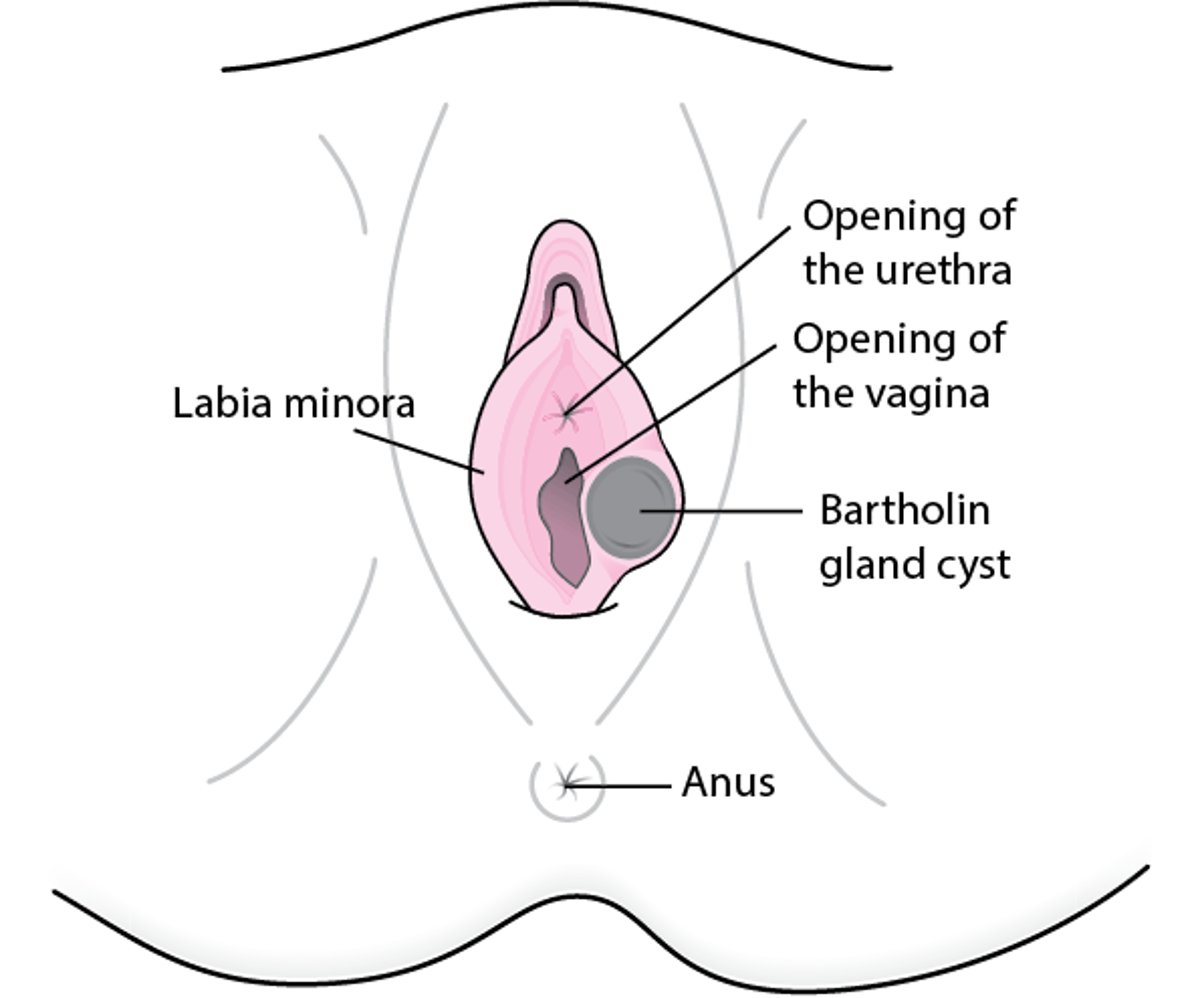

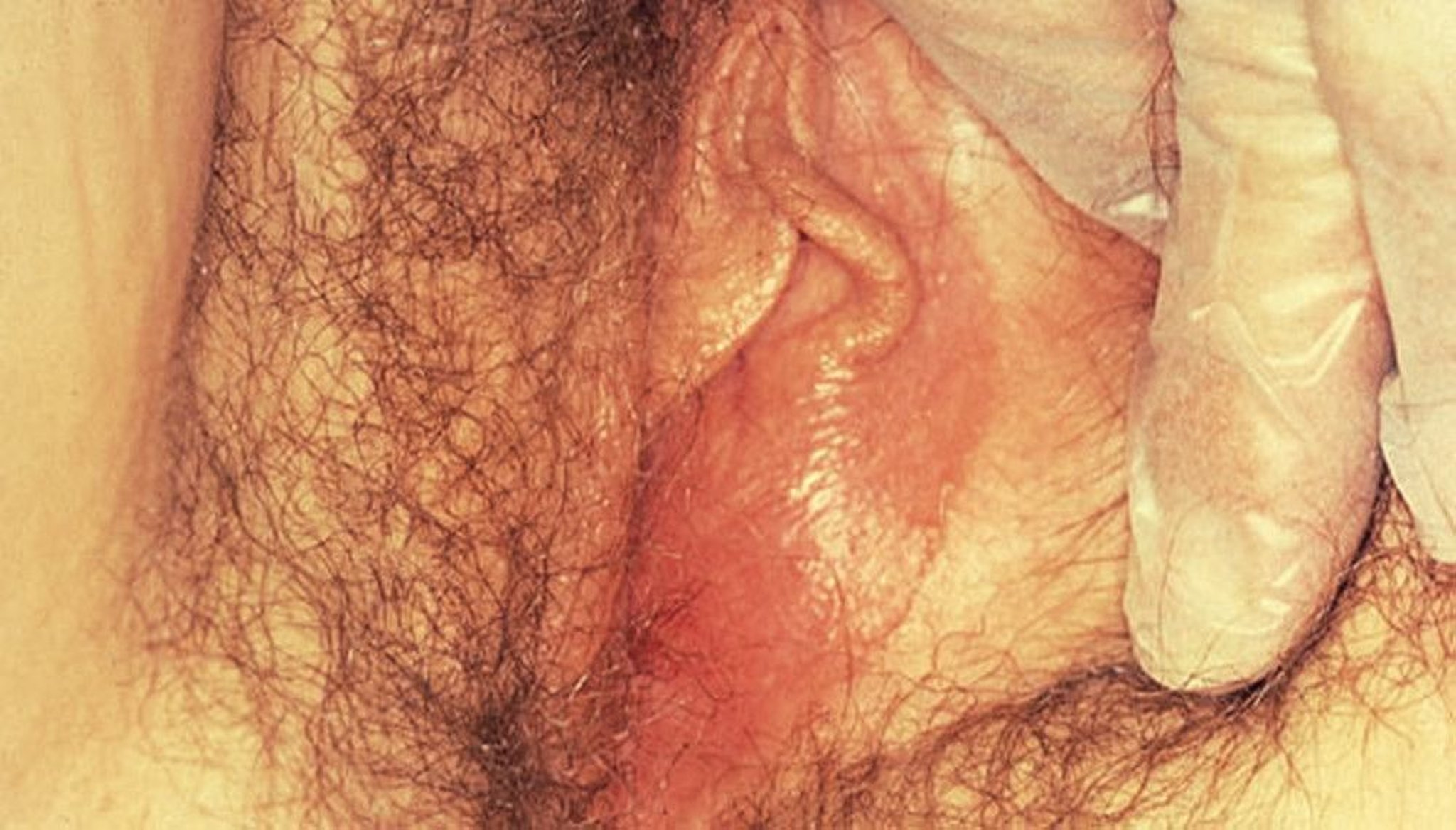
Bartholin cysts form near the opening of the vagina when their duct becomes blocked and can distend the labia.
By permission of the publisher. From Kaufman R, Brown D. In Atlas of Clinical Gynecology: Gynecologic Pathology. Edited by M Stenchever (series editor) and B Goff. Philadelphia, Current Medicine, 1998.
Symptoms of Bartholin Gland Cysts or Abscesses
Most Bartholin cysts do not cause any symptoms. Women may notice a painless lump near the opening of the vagina, making the vulva look lopsided.
If cysts become large, they can cause pressure and/or pain. They may interfere with sitting, walking, or sexual activity.
If the cyst becomes infected (forming an abscess), it causes severe pain and sometimes fever. Abscesses are tender to the touch. The skin over them appears red.
The skin and the tissues under the skin over the abscess may become infected—an infection called cellulitis. If cellulitis develops, the affected area appears red and is tender, Women may have a vaginal discharge.
Diagnosis of Bartholin Gland Cysts or Abscesses
Examination of the vulva
Sometimes a biopsy
A woman should see a doctor in the following circumstances:
The cyst continues to enlarge or persists after several days of immersing the area in hot water (in a tub or sitz bath).
The cyst is painful (often indicating an abscess).
A fever develops.
The cyst interferes with walking or sitting.
The woman is older (such as in her 40s or postmenopausal) than the usual age range for the cysts.
A doctor examines the vulva to diagnose a Bartholin gland cyst. If a cyst is large enough for a woman to notice it or for symptoms to develop, a doctor is able to see or feel the cyst during a pelvic examination. Doctors can usually tell whether it is infected by its appearance. If a discharge is present, doctors may send a sample to be tested for other infections, including sexually transmitted infections. If an abscess has developed, doctors also culture fluid from the abscess.
Although cancer very rarely develops in Bartholin glands, a doctor may remove a sample of the cyst to examine under a microscope (biopsy), especially if the gland has a solid mass or is stuck to the surrounding tissue or if having the cyst seems unusual (eg, it occurs in a woman at an older age than average).
Treatment of Bartholin Gland Cysts or Abscesses
Soaking the area in warm water
For abscesses, a procedure to drain them
If a Bartholin gland cyst or abscess recurs or the doctor suspects a cancer, surgical excision of the gland is considered
If a Bartholin gland cyst causes little or no pain, women may be able to treat it themselves. They can use a sitz bath or soak in a few inches of warm water in a tub. Soaks should last 10 to 15 minutes and be done 2 times a day. Sometimes cysts disappear after a few days of such treatment.
If the cyst does not disappear after soaking in warm water for a few days, women should see a doctor. The doctor may do a procedure to allow the fluid in the cyst to drain out. After a local anesthetic is injected to numb the site, one of the following procedures can be done:
Placement of a catheter: A small incision is made in the cyst so that a small balloon-tipped tube (catheter) can be inserted into the cyst. Once in place, the balloon is inflated, and the catheter is left there for 4 to 6 weeks, so that a permanent opening can form. The catheter is inserted and removed in the doctor’s office, although often the catheter falls out on its own. A woman can do her normal activities while the catheter is in place, although sexual activity may be uncomfortable.
Marsupialization: Doctors make a small cut in the cyst and stitch the inside edges of the cyst to the surface of the vulva. Marsupialization creates a permanent opening in the cyst so that the cyst can drain as needed. This procedure is done in an operating room. Sometimes general anesthesia is needed.
After these procedures, women may have a discharge from the Bartholin gland for a few weeks. Taking sitz baths several times a day may help relieve any discomfort and help speed healing.
If a cyst recurs or a doctor suspects it may be cancerous, it may be surgically removed. This procedure is done in an operating room.
Regardless of treatment, cysts sometimes recur. If they do, the entire Bartholin gland may be removed.
Treatment of abscesses
For an abscess, initial treatment involves making a small incision into the abscess and placing a catheter in it to drain it. If the abscess refills after being drained, marsupialization, which creates a permanent opening, may be done to prevent the abscess from refilling.
Sometimes abscesses are also treated with antibiotics. The decision to treat with antibiotics depends on whether there are signs of a more serious infection developing (such as fever, cellulitis of the skin around the abscess) or is at increased risk of infection (such as a weakened immune system).
If antibiotics are given, they are usually taken by mouth for 1 week in addition to draining the abscess. A woman may need to be hospitalized and be treated with antibiotics by vein, depending on how ill she is.