Skene gland cysts develop near the opening of the urethra when the ducts to the Skene glands are blocked.
Skene gland cysts are very rare.
Many people with Skene gland cysts have no symptoms or only minor irritation.
Large cysts may cause pain during sexual activity or sometimes during urination.
Doctors can usually diagnose these cysts during a pelvic examination, but sometimes ultrasound or cystoscopy is done to confirm the diagnosis.
Cysts that cause symptoms can be removed.
Very rarely, abscesses develop and are treated with antibiotics, then removal of the cyst or creation of a permanent opening in the cyst.
Skene glands, also called periurethral or paraurethral glands, are located around the opening of the urethra.
External Female Genital (Vulvar) Anatomy
This image shows the external parts of the female genital area, including the vagina (composed of muscle tissue), the urethral opening (where urine is released), and surrounding structures like the labia and clitoris. It also highlights glands that help with lubrication and areas involved in sexual sensation, such as the Bartholin glands, Skene glands, and erectile tissues like the vestibular bulb and crura of the clitoris. BO VEISLAND/SCIENCE PHOTO LIBRARY |


Skene gland cysts are rare and occur mainly in adults. They form if the duct to the gland is blocked. If these cysts become infected, urinary tract infections may develop.
Symptoms of Skene Gland Cyst
Most Skene gland cysts are less than 1/2 inch (about 1 centimeter) in diameter and do not cause any symptoms. Some cysts are larger and cause pain during sexual activity. Sometimes cysts cause pain during urination. If large enough, a cyst may block the flow of urine through the urethra. In such cases, the first symptoms may be a hesitant start when urinating, dribbling at the end of urination, and retention of urine. If a urinary tract infection develops, women may have a frequent, urgent need to urinate, and urination may be painful.
Very rarely, Skene gland cysts become infected and form an abscess. Abscesses are tender, painful, and swollen. The skin over the ducts appears red. Most women do not have a fever.

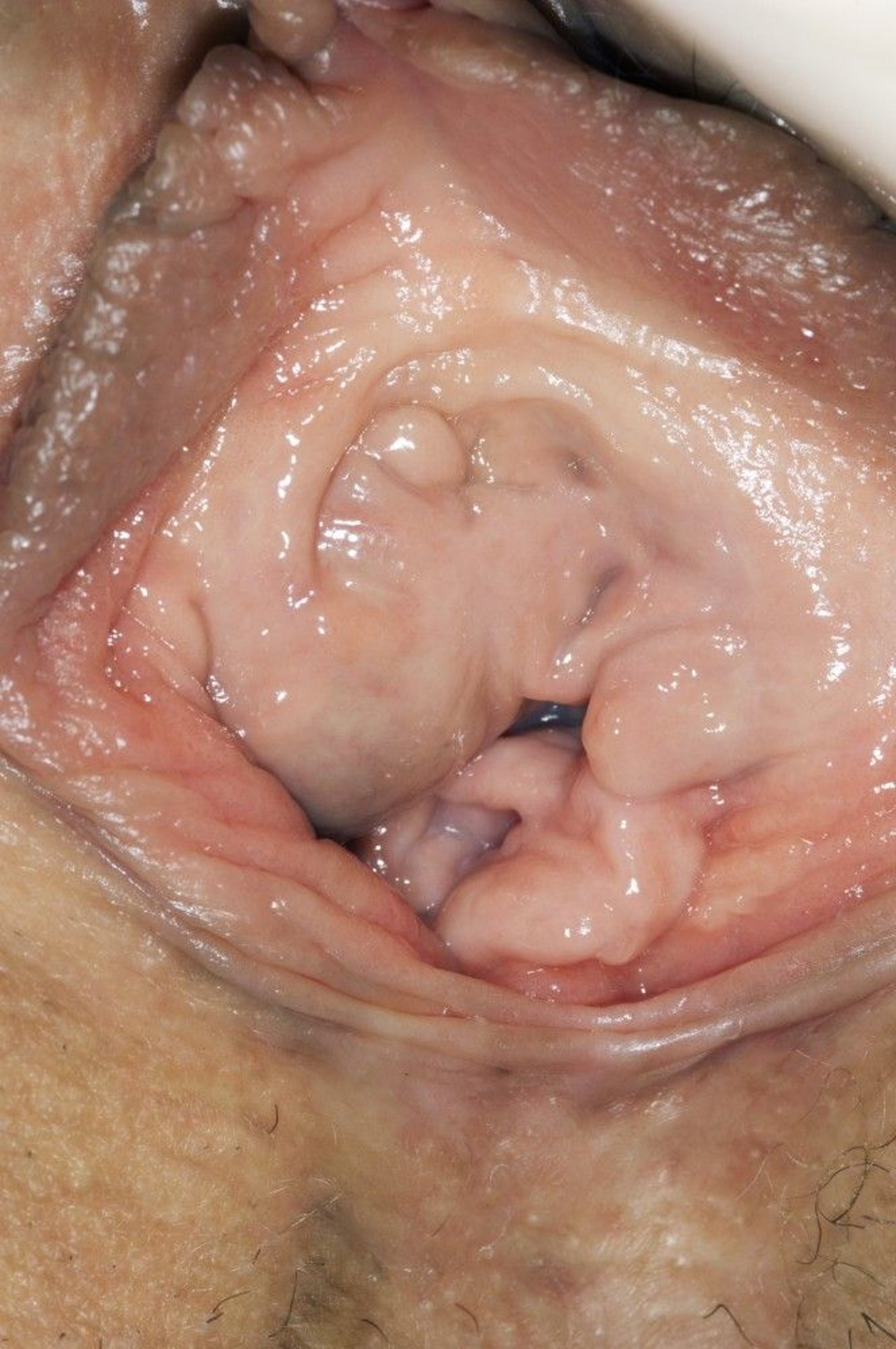
This photo shows a Skene gland cyst (swelling at center left) in the vagina.
DR P. MARAZZI/SCIENCE PHOTO LIBRARY
Diagnosis of Skene Gland Cyst
Pelvic examination
Sometimes ultrasound or cystoscopy
During a pelvic examination, doctors can usually feel Skene gland cysts or abscesses if they are large enough to cause symptoms. However, ultrasound or a flexible viewing tube to view the bladder (cystoscopy) may be used to confirm the diagnosis.
Treatment of Skene Gland Cyst
Removal or marsupialization of the cyst
For abscesses, antibiotics, then removal of the cyst or creation of a permanent opening in it
If Skene gland cysts cause symptoms, they are removed, usually in a doctor’s office or in an operating room. In the office, a local anesthetic is usually used. Or marsupialization may be done. For this procedure, doctors make a small cut in the cyst and stitch the inside edges of the cyst to the surface of the vulva. Marsupialization creates a permanent opening in the cyst so that the cyst can drain as needed. This procedure is done in an outpatient operating room. Sometimes general anesthesia is needed.
For abscesses, antibiotics are given by mouth for 7 to 10 days. Then, the cyst is removed. Or marsupialization is done.