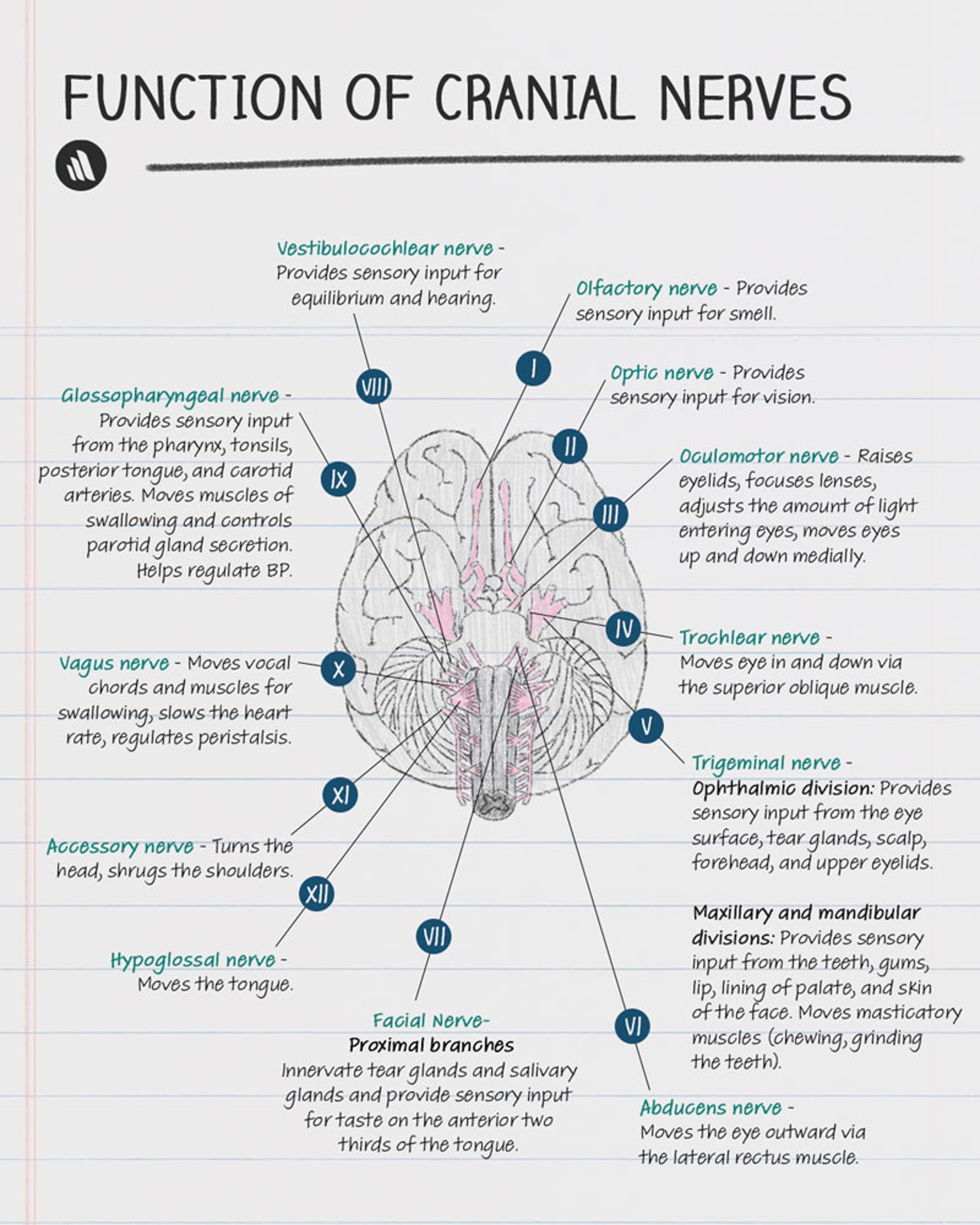
Vestibular neuronitis causes a self-limited episode of vertigo, presumably due to inflammation of the vestibular division of the eighth cranial nerve; some vestibular dysfunction may persist.
Vestibular neuronitis is an acute inflammatory condition affecting the vestibular division of the eighth cranial nerve and causing dysequilibrium due to disordered impulses transmitted from the inner ear to the brain. Sometimes vestibular neuronitis is used synonymously with viral labyrinthitis. However, vestibular neuronitis manifests only with vertigo, whereas in viral labyrinthitis, tinnitus, hearing loss, or both are also present.

Copyright © 2023 Merck & Co., Inc., Rahway, NJ, USA and its affiliates. All rights reserved.
In one study, the annual incidence ranged between 11.7 and 15.5 cases per 100,000 people, with a mean age of onset of 52.3 years (1). Vestibular neuronitis is usually caused by a viral infection or postviral inflammation. It is usually unilateral.
Reference
1. Adamec I, Krbot Skorić M, Handžić J, Habek M. Incidence, seasonality and comorbidity in vestibular neuritis. Neurol Sci. 2015;36(1):91-95. doi:10.1007/s10072-014-1912-4
Symptoms and Signs of Vestibular Neuronitis
Symptoms of vestibular neuronitis include a single attack of severe vertigo, with nausea and vomiting and persistent nystagmus toward the unaffected side, which lasts 7 to 10 days. The nystagmus is unidirectional, horizontal, and spontaneous, with fast-beat oscillations in the direction of the unaffected ear.
The absence of concomitant tinnitus or hearing loss is a hallmark of vestibular neuronitis and helps distinguish it from Meniere disease as well as labyrinthitis.
Gait instability with preserved ambulation may occur due to dysequilibrium.
The condition slowly subsides over days to weeks after the initial episode. Some patients have residual dysequilibrium, especially with rapid head movements, probably due to permanent vestibular injury.
Diagnosis of Vestibular Neuronitis
Primarily history and physical examination
Audiologic assessment, electronystagmography, and MRI
If clinicians suspect vestibular neuronitis, the diagnosis can often be made based on the history and physical examination. The head impulse, nystagmus, test of skew (HINTS) can be performed in emergency settings to differentiate vestibular neuritis from central causes (eg, stroke) (1). When administered by skilled examiners, this can be more accurate than imaging (2); it also has high sensitivity and specificity (3).
HINTS testing consists of the following 3 components:
Head impulse testing: The examiner has the patient visually fixate on a target straight ahead (eg, the examiner's nose). Then, while observing the patient's eyes, the examiner rapidly rotates the patient's head 15 to 30° to one side. When the head is rotated to one side, vestibular function on that side is normal if the patient's eyes remain fixated on the target. When vestibular function is impaired, the vestibulo-ocular reflex (a reflex that coordinates eye movements with head movements, ensuring stable vision during head motion) is absent and the patient's eyes do not remain fixated on the target but instead transiently follow the head rotation and then quickly and voluntarily return back to the target (called delayed catch-up saccades).
Nystagmus: Patient's eyes are observed in forward and lateral gaze, looking for direction of nystagmus and changes in different positions.
Vertical test of skew: Patient is asked to focus on the examiner's nose with one eye covered and then rapidly uncovered; in a positive test, there will be vertical realignment of the eyes.
If any 1 of these 3 tests are concerning for a central cause or if there are any associated neurological symptoms, further emergent workup is needed.
Head Impulse, Nystagmus, Test of Skew Testing
Exam* | Peripheral Vertigo | Central Vertigo |
|---|---|---|
Head impulse testing | Abnormal (corrective saccade with head toward affected side) | Normal |
Nystagmus | Unidirectional, horizontal | Horizontal and direction changing, vertical, torsional |
Vertical test of skew | No skew deviation | Skew deviation present |
*If any 1 of these 3 tests are concerning for a central cause or if there are any associated neurological symptoms, further emergent workup is needed. | ||
Outside of emergency settings, testing should include an audiologic assessment, electronystagmography with caloric testing, and gadolinium-enhanced MRI of the head, with attention to the internal auditory canals to exclude other diagnoses (eg, cerebellopontine angle tumor). MRI may show enhancement of the vestibular nerves, consistent with inflammatory neuritis.
Diagnosis references
1. Edlow JA, Carpenter C, Akhter M, et al. Guidelines for reasonable and appropriate care in the emergency department 3 (GRACE-3): Acute dizziness and vertigo in the emergency department. Acad Emerg Med. 2023;30(5):442-486. doi:10.1111/acem.14728
2. Tarnutzer AA, Gold D, Wang Z, et al. Impact of Clinician Training Background and Stroke Location on Bedside Diagnostic Test Accuracy in the Acute Vestibular Syndrome - A Meta-Analysis. Ann Neurol. 2023;94(2):295-308. doi:10.1002/ana.26661
3. Gottlieb M, Peksa GD, Carlson JN. Head impulse, nystagmus, and test of skew examination for diagnosing central causes of acute vestibular syndrome. Cochrane Database Syst Rev. 2023;11(11):CD015089. Published 2023 Nov 2. doi:10.1002/14651858.CD015089.pub2
Treatment of Vestibular Neuronitis
Symptom relief with antiemetics, antihistamines, or benzodiazepines
Vestibular rehabilitation
Acute symptoms of vestibular neuronitis are symptomatically managed over the short term as in Meniere disease—ie, with anticholinergic antiemetics (eg, prochlorperazine or promethazine rectally or orally every 6 to 8 hours), antihistamines, or benzodiazepines; optional treatment is with glucocorticoid burst followed by taper (1). If vomiting is prolonged, IV fluids and electrolytes may be required. Long-term use (ie, for more than several weeks) of vestibular suppressants is highly discouraged because these medications delay vestibular compensation and increase the risk of falls, particularly in older patients.
Vestibular rehabilitation (usually given by a physical therapist) helps with central compensation for any residual vestibular deficit (2).
Treatment references
1. Sjögren J, Magnusson M, Tjernström F, Karlberg M. Steroids for Acute Vestibular Neuronitis-the Earlier the Treatment, the Better the Outcome?. Otol Neurotol. 2019;40(3):372-374. doi:10.1097/MAO.0000000000002106
2. Huang HH, Chen CC, Lee HH, et al. Efficacy of Vestibular Rehabilitation in Vestibular Neuritis: A Systematic Review and Meta-analysis. Am J Phys Med Rehabil. 2024;103(1):38-46. doi:10.1097/PHM.0000000000002301
Key Points
Patients with vestibular neuronitis have severe, constant vertigo with nausea and vomiting and nystagmus toward the unaffected side; it lasts days to weeks.
Vestibular neuronitis does not cause hearing loss or tinnitus.
Perform tests to exclude other disorders.
Treatment is directed at symptoms and includes antiemetics and antihistamines or benzodiazepines.
Vestibular rehabilitation helps with central compensation for any vestibular deficits.
Drug Information for the Topic