Acromioclavicular joint sprains are common, usually resulting from a fall on the shoulder or, less often, an outstretched arm.
(See also Overview of Sprains and Other Soft-Tissue Injuries.)
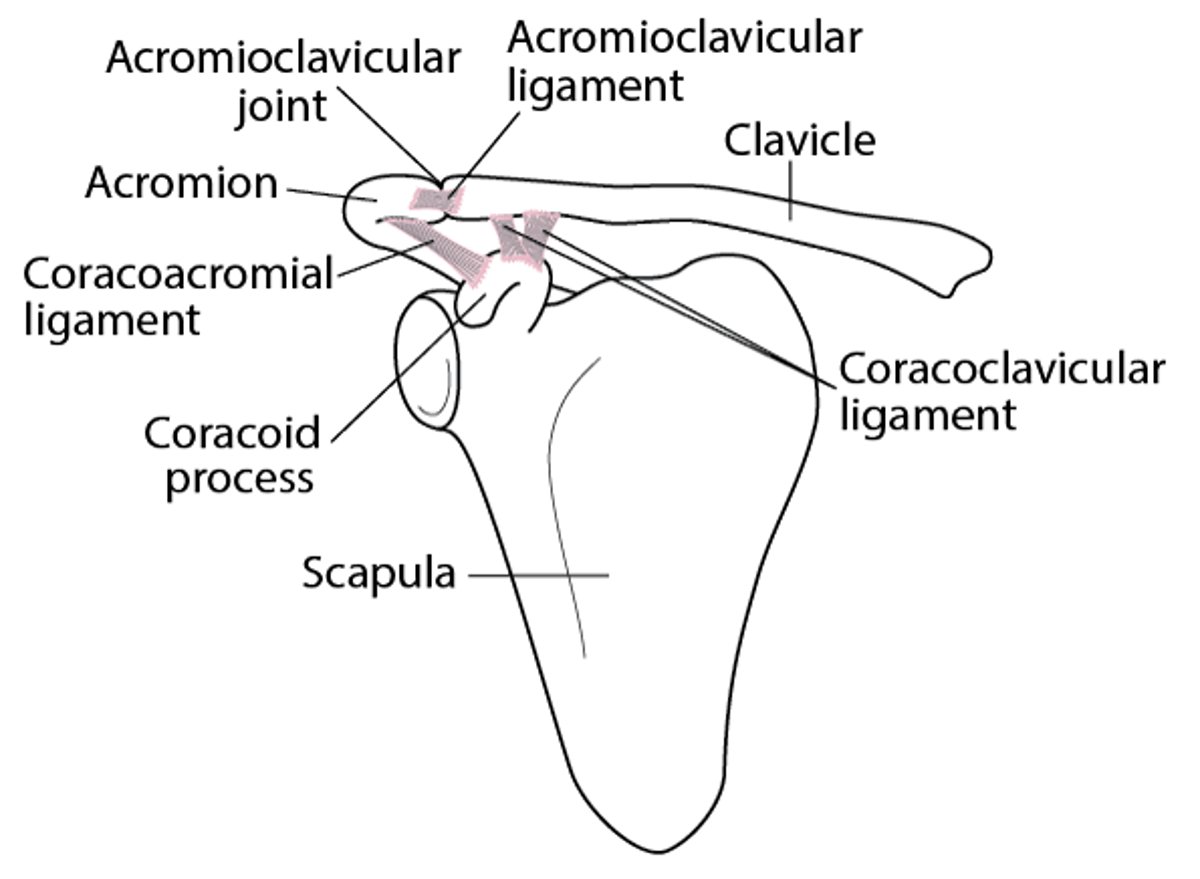
Several ligaments surround this joint and, depending on the severity of the injury, one or all of the ligaments may be torn. Severe sprains tear the acromioclavicular and coracoclavicular ligaments.
The acromioclavicular joint is commonly injured when the clavicle is fractured.
Patients have pain and tenderness at the acromioclavicular joint.
Ligaments of the shoulder joint

Diagnosis of Acromioclavicular Joint Sprains
Radiographs
Anteroposterior radiographs of both sides of the clavicle are taken.

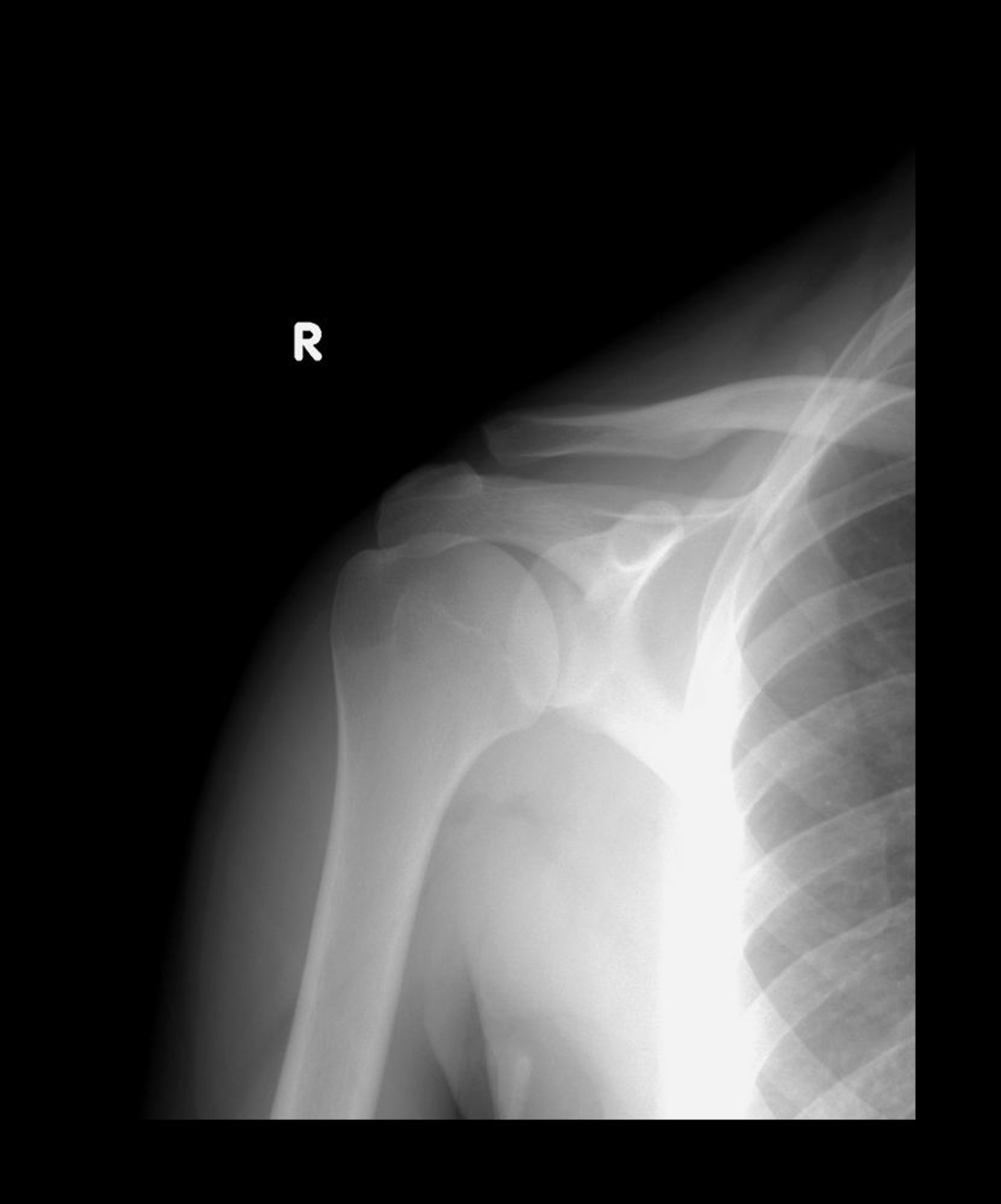
Normally, the lower ends of the acromion and clavicle align. In this radiograph, the clavicle is displaced upward but the 2 bones still overlap, suggesting a type II subluxation.
LIVING ART ENTERPRISES, LLC/SCIENCE PHOTO LIBRARY
Acromioclavicular joint sprains are classified based on radiograph findings (1):
Type I: No joint disruption
Type II: Subluxation with some overlap of the clavicle and acromion
Type III: Complete joint dislocation, usually because the coracoclavicular ligament is torn
Type IV: Posterior displacement of the distal clavicle
Type V: Superior displacement of the distal clavicle
Type VI: Inferior displacement of the distal clavicle
Types IV, V, and VI are variants of type III.
Diagnosis reference
1. Li X, Ma R, Bedi A, et al. Management of acromioclavicular joint injuries. J Bone Joint Surg Am. 2014;96(1):73-84. doi:10.2106/JBJS.L.00734
Treatment of Acromioclavicular Joint Sprains
Immobilization with a sling
Early range-of-motion exercises
For some severe sprains, surgery
Treatment of acromioclavicular joint sprains is usually immobilization (eg, with a sling) and early range-of-motion exercises (1).
Some severe sprains (usually type III) are surgically repaired and require outpatient orthopedic referral.
Treatment reference
1. Li X, Ma R, Bedi A, et al. Management of acromioclavicular joint injuries. J Bone Joint Surg Am. 2014;96(1):73-84. doi:10.2106/JBJS.L.00734