Allergic bronchopulmonary aspergillosis (ABPA) is a mixed hypersensitivity reaction to Aspergillus species (generally A. fumigatus) that occurs commonly in patients with asthma or, less commonly, cystic fibrosis. Immune responses to Aspergillus antigens cause airway obstruction and, if untreated, bronchiectasis and pulmonary fibrosis. Symptoms and signs are those of asthma with the addition of productive cough and, occasionally, fever and anorexia. Diagnosis is suspected based on history and imaging tests and confirmed by Aspergillus skin testing and measurement of IgE levels, circulating precipitins, and A. fumigatus–specific antibodies. Treatment is with glucocorticoids and, in patients with refractory disease, itraconazole.
Allergic bronchopulmonary aspergillosis develops when airways of patients with asthma or cystic fibrosis become colonized with species of Aspergillus (ubiquitous fungi in the soil). Based on systematic reviews of global data, the pooled global prevalence of ABPA was estimated to be approximately 11% in adults with asthma and 10% in adults with cystic fibrosis (1, 2). Most estimates are derived from patient populations with asthma or cystic fibrosis, and ABPA in the general population is rare.
General references
1. Agarwal R, Muthu V, Sehgal IS, et al. Prevalence of Aspergillus Sensitization and Allergic Bronchopulmonary Aspergillosis in Adults With Bronchial Asthma: A Systematic Review of Global Data. J Allergy Clin Immunol Pract. 2023;11(6):1734-1751.e3. doi:10.1016/j.jaip.2023.04.009
2. Maturu VN, Agarwal R. Prevalence of Aspergillus sensitization and allergic bronchopulmonary aspergillosis in cystic fibrosis: systematic review and meta-analysis. Clin Exp Allergy. 2015;45(12):1765-1778. doi:10.1111/cea.12595
Pathophysiology of ABPA
Aspergillus colonization in patients with ABPA prompts vigorous antibody (IgE and IgG) and cell-mediated immune responses (type I, III, and IV hypersensitivity reactions) to Aspergillus antigens, leading to frequent, recurrent asthma exacerbations. Over time, the immune reactions, combined with direct toxic effects of the fungus, lead to airway damage with dilation and, ultimately, bronchiectasis and fibrosis. The disorder is characterized histologically by mucoid impaction of airways, eosinophilic pneumonia, infiltration of alveolar septa with plasma and mononuclear cells, and an increase in the number of bronchiolar mucous glands and goblet cells.
Rarely, other fungi, such as Penicillium, Candida, Curvularia, Helminthosporium, and Drechslera, cause an identical syndrome called allergic bronchopulmonary mycosis in the absence of underlying asthma or cystic fibrosis.
Aspergillus is present intraluminally but is not invasive. Thus, ABPA must be distinguished from the following:
Invasive aspergillosis, which occurs in immunocompromised patients
Aspergillomas, which are collections of Aspergillus in patients with established cavitary lesions or cystic airspaces
Aspergillus pneumonia, which is rare and occurs in patients who take low doses of prednisone long term (eg, patients with chronic obstructive pulmonary disease)
Overlap syndromes with ABPA and the other conditions have also been reported (1).
Pathophysiology reference
1. Li L, Jiang Z, Shao C. Pulmonary Aspergillus Overlap Syndromes. Mycopathologia. 2018;183(2):431-438. doi:10.1007/s11046-017-0212-y
Symptoms and Signs of ABPA
Symptoms are those of asthma or pulmonary cystic fibrosis exacerbations (ie, dyspnea, wheezing, and chest tightness), with the addition of cough productive of dirty-green or brown plugs of mucus and, occasionally, hemoptysis. Fever, headache, and anorexia are common systemic symptoms in severe disease. Signs are those of airway obstruction, specifically, wheezing and prolonged expiration on examination, which are indistinguishable from asthma exacerbations.
Diagnosis of ABPA
History of asthma or cystic fibrosis
Chest radiography or high-resolution CT
Skin prick test with Aspergillus antigen
Aspergillus precipitins in blood
Positive sputum culture for Aspergillus species (or, rarely, other fungi)
Serum IgE levels
Blood eosinophil counts
The diagnosis is suspected in patients with asthma or cystic fibrosis with recurrent exacerbations, migratory (also called fleeting) or nonresolving infiltrates on chest radiographs (often due to atelectasis resulting from mucoid plugging and bronchial obstruction), evidence of bronchiectasis on imaging studies, sputum cultures positive for A. fumigatus, or notable peripheral eosinophilia.

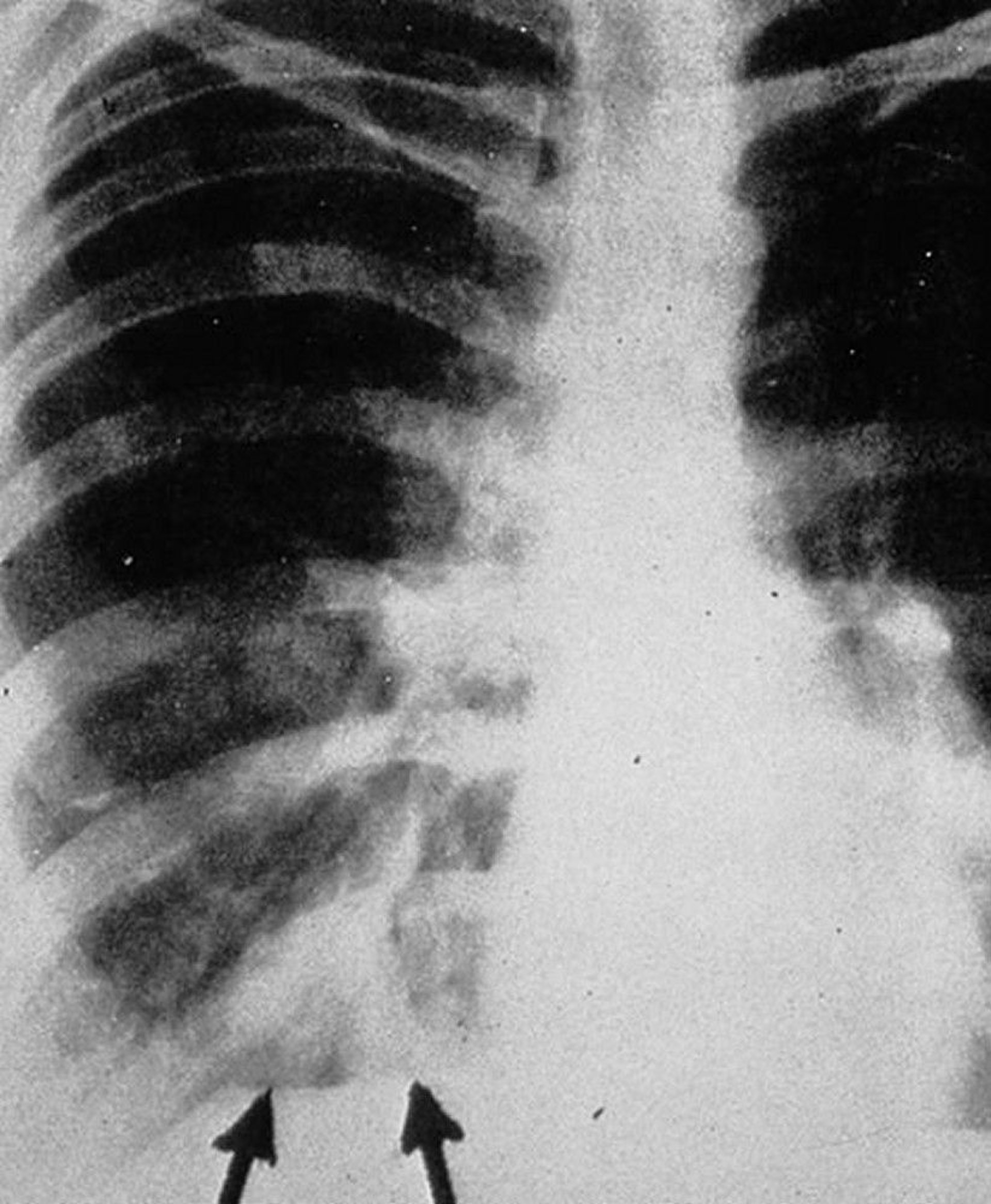
Posteroanterior chest radiograph shows "gloved finger" shadows (arrows), appearing as branched tubular densities that represent intrabronchial exudates with bronchial wall thickening.
By permission of the publisher. From Groll A, Walsh T. In Atlas of Infectious Diseases: Fungal Infections. Edited by GL Mandell and RD Diamond. Philadelphia, Current Medicine, 2000.

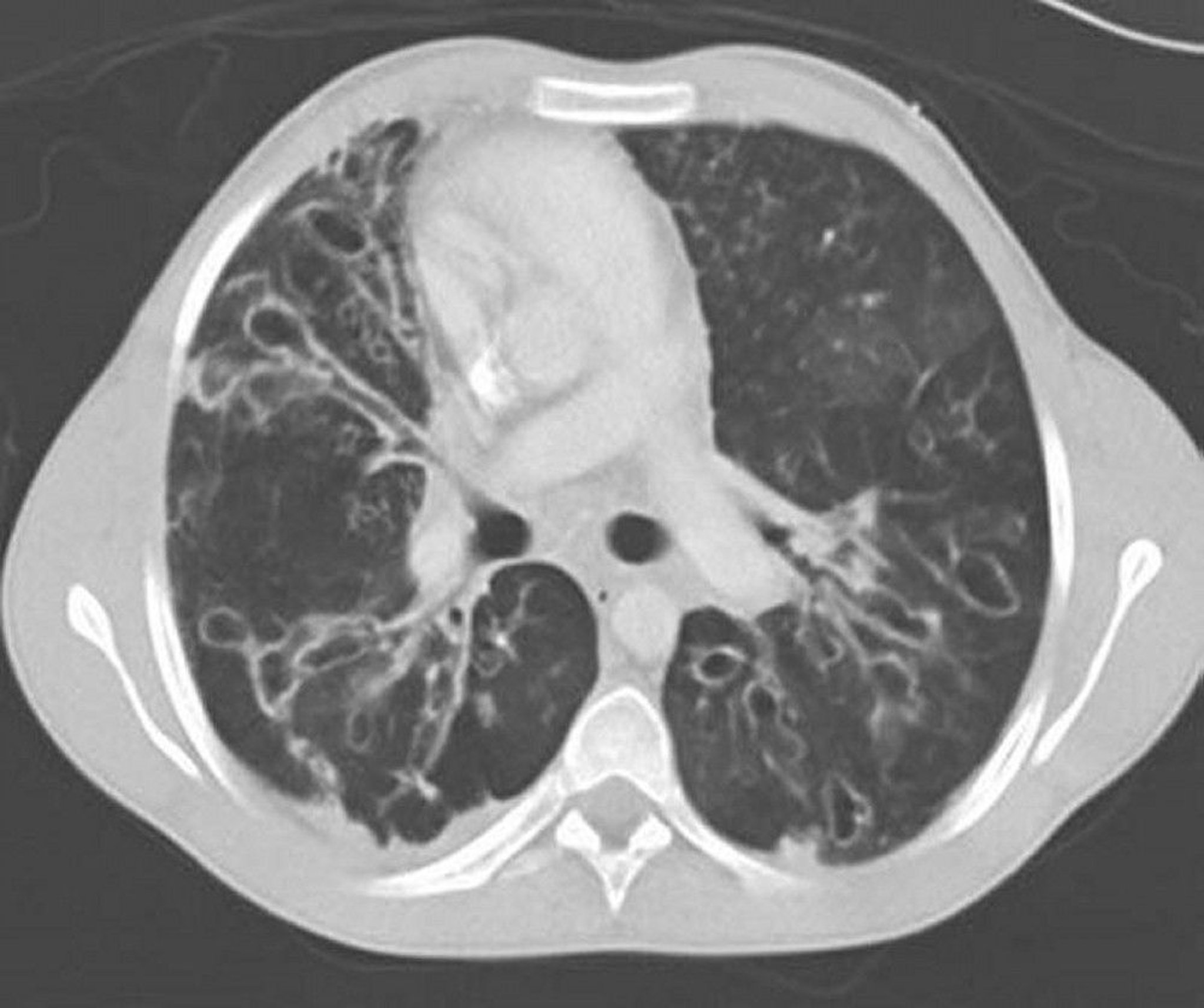
A contrast-enhanced CT of the chest shows severe bronchiectasis in the midlung zones with grossly dilated and ectatic airways and cystic changes. Airway ectasia is characterized by a ratio of airway to adjacent blood vessel > 1.
By permission of the publisher. From Coakley R, Boucher R, Fiel S, et al. In Bone's Atlas of Pulmonary and Critical Care Medicine. Edited by J Crapo. Philadelphia, Current Medicine, 2005.
Several criteria have been proposed for the diagnosis of ABPA (see table ), but in practice not all criteria are assessed in every case.
In general, when clinical suspicion for ABPA is high, a skin prick test with Aspergillus antigen is recommended. An immediate wheal-and-flare reaction on skin prick testing (or if skin prick testing is unavailable) should prompt further testing of serum total IgE, A. fumigatus–specific IgE, and A. fumigatus–specific IgG antibodies done via enzyme-linked immunosorbent assay (ELISA) (or Aspergillus precipitins via immunodiffusion technique or similar). An elevated total IgE level > 1000 ng/mL (or 417 IU/mL) along with positive precipitins supports the diagnosis (1). The diagnosis can be established by detecting elevated A. fumigatus–specific IgE (> 0.35 kU/L) along with the presence of A. fumigatus–specific IgG antibodies. A. fumigatus–specific IgE is highly sensitive and A. fumigatus–specific IgG is highly specific for ABPA (2). Direct A. fumigatus–specific IgG measurement is preferred to Aspergillus precipitins (3).
Sputum and bronchoscopic cultures for Aspergillus have a low sensitivity and specificity for the diagnosis of ABPA and are not included as diagnostic criteria.
Peripheral eosinophilia is common in untreated patients and ranges from about 10% to 25% of the differential count in patients who have not received oral glucocorticoids (4). Whenever test results diverge, such as when serum IgE is elevated but no A. fumigatus–specific immunoglobulins are found, testing should be repeated and the patient should be monitored over time to definitively establish or exclude the diagnosis.
Diagnostic Criteria for Allergic Bronchopulmonary Aspergillosis
Essential criteria |
|
Other criteria |
|
* May be lower if patient meets all other criteria for diagnosis |
Adapted from Agarwal R, Chakrabarti A, Shah A, et al: Allergic bronchopulmonary aspergillosis: review of literature and proposal of new diagnostic and classification criteria. Clin Exp Allergy 43:850, 2013. |
Diagnosis references
1. Giavina-Bianchi P, Kalil J. Diagnosis of Allergic Bronchopulmonary Aspergillosis Exacerbations. J Allergy Clin Immunol Pract. 2017;5(6):1599-1600. doi:10.1016/j.jaip.2017.06.024
2. Agarwal R, Maskey D, Aggarwal AN, et al. Diagnostic performance of various tests and criteria employed in allergic bronchopulmonary aspergillosis: a latent class analysis. PLoS One. 2013;8(4):e61105. Published 2013 Apr 12. doi:10.1371/journal.pone.0061105
3. Sehgal IS, Dhooria S, Prasad KT, Muthu V, Aggarwal AN, Agarwal R. Comparative diagnostic accuracy of immunoprecipitation versus immunoassay methods for detecting Aspergillus fumigatus-specific IgG in allergic bronchopulmonary aspergillosis: A systematic review and meta-analysis. Mycoses. 2022;65(9):866-876. doi:10.1111/myc.13488
4.Greenberger PA. Allergic Bronchopulmonary Aspergillosis. In Grammer LC, Greenberger PA (eds). Patterson's Allergic Diseases, 7th edition. Philadelphia, Wolters Kluwer, 2010.
Treatment of ABPA
Systemic glucocorticoids
Sometimes antifungal medications
Treatment is based on disease stage (see table ). The mainstay of therapy is systemic (oral) glucocorticoids and protracted use of antifungal agents (azoles) which are glucocorticoid-sparing agents (1).
Stage I is treated with prednisone orally once a day for 2 to 4 weeks, then tapered over 4 to 6 months. Chest radiographs, blood eosinophil counts, and IgE levels should be checked quarterly for improvement, defined as resolution of infiltrates, ≥ 50% decline in eosinophils, and 33% decline in IgE. Patients who achieve stage II disease require annual monitoring only.
Patients with stage II ABPA who relapse (stage III) are given another trial of prednisone. Patients with stage I or stage III disease who do not improve with prednisone (stage IV) are candidates for antifungal treatment. Itraconazole orally twice a day for 16 weeks is recommended as a substitute for prednisone and as a glucocorticoid-sparing medication. Alternative antifungals (voriconazole, posaconazole, or inhaled amphotericin B) may be considered if itraconazole is ineffective or not tolerated. In patients with stage V disease, symptoms and complications are usually treated supportively.
Itraconazole therapy requires checking drug levels and monitoring liver enzymes, triglyceride, and potassium levels.
Emerging data indicate the clinical benefit of biologic therapies such as omalizumab, dupilumab, and mepolizumab in allergic bronchopulmonary aspergillosis (2).
Stages of Allergic Bronchopulmonary Aspergillosis*
Stage | Description | Criteria |
|---|---|---|
I | Acute | All diagnostic criteria present |
II | Remission | Symptoms resolved for > 6 months |
III | Relapse | Recurrence of ≥ 1 of the diagnostic criteria |
IV | Refractory | Glucocorticoid-dependent or refractory to treatment |
V | Fibrosis | Diffuse fibrosis and bronchiectasis |
* Stages do not progress sequentially. | ||
Data from Greenberger PA. Allergic Bronchopulmonary Aspergillosis. In Grammer LC, Greenberger PA (eds). Patterson's Allergic Diseases, 7th edition. Philadelphia, Wolters Kluwer, 2010. | ||
All patients should be optimally treated for their underlying asthma or cystic fibrosis. In addition, patients taking long-term glucocorticoids should be monitored for complications, such as cataracts, diabetes mellitus, and osteoporosis, and possibly prescribed treatments to prevent bone demineralization and Pneumocystis jirovecii lung infection.
Treatment references
1. Patterson TF, Thompson GR 3rd, Denning DW, et al. Practice Guidelines for the Diagnosis and Management of Aspergillosis: 2016 Update by the Infectious Diseases Society of America. Clin Infect Dis. 2016;63(4):e1-e60. doi:10.1093/cid/ciw326
2. Chen X, Zhi H, Wang X, et al. Efficacy of Biologics in Patients with Allergic Bronchopulmonary Aspergillosis: A Systematic Review and Meta-Analysis. Lung. 2024;202(4):367-383. doi:10.1007/s00408-024-00717-y
Key Points
Consider allergic bronchopulmonary aspergillosis (ABPA) if a patient with asthma or cystic fibrosis develops frequent exacerbations for unclear reasons, has migratory or nonresolving infiltrates on chest radiographs, has evidence of bronchiectasis on imaging studies, has persistent blood eosinophilia, or if a sputum culture reveals Aspergillus.
Begin testing with a skin prick using Aspergillus antigen, followed usually by serologic testing.
Treat initially with systemic glucocorticoids.
If ABPA persists despite systemic glucocorticoids, treat with an antifungal such as itraconazole.
Drug Information for the Topic