Hepatitis E is caused by an enterically transmitted RNA virus and causes typical symptoms of viral hepatitis, including anorexia, malaise, and jaundice. Acute liver failure and death are rare, except during pregnancy. Diagnosis is by antibody testing. Treatment is supportive unless chronic infection develops.
(See also Causes of Hepatitis and Overview of Acute Viral Hepatitis.)
Hepatitis E is a common cause of acute viral hepatitis worldwide, with an estimated 3 million symptomatic cases annually in Africa and Asia (1, 2).
There are 4 genotypes of hepatitis E virus (HEV). All can cause acute viral hepatitis.
Genotypes 1 and 2 usually cause waterborne outbreaks that are linked to fecal contamination of the water supply and rarely fecal-oral person-to-person transmission. Outbreaks have occurred primarily in Asia, Africa, Mexico, and the Middle East (3). These outbreaks have epidemiologic characteristics similar to those associated with hepatitis A virus epidemics. Sporadic cases and vertical transmission also occur.
Genotypes 3 and 4 typically cause sporadic cases rather than outbreaks, transmitted zoonotically through contact with infected animals or consumption of undercooked meat. Multiple animal reservoirs have been identified with the pig being the primary reservoir (3).


Most known cases of HEV in the United States or in Western Europe occur in travelers returning from an area without such sanitation facilities, but sporadic cases not associated with travel have been reported (4).
Most HEV infections are thought to be subclinical; when symptomatic, it usually manifests as self-limited acute viral hepatitis (3). HEV was not originally thought to cause chronic hepatitis, cirrhosis, or chronic carrier state; however, reports document chronic genotype 3 hepatitis E in immunocompromised patients (including organ-transplant recipients, patients receiving cancer chemotherapy, and HIV-infected patients) (5, 6).
General references
1. Rein DB, Stevens GA, Theaker J, Wittenborn JS, Wiersma ST. The global burden of hepatitis E virus genotypes 1 and 2 in 2005. Hepatology. 2012;55(4):988-997. doi:10.1002/hep.25505
2. Kamar N, Izopet J, Pavio N, et al. Hepatitis E virus infection. Nat Rev Dis Primers. 2017;3:17086. Published 2017 Nov 16. doi:10.1038/nrdp.2017.86
3. Aslan AT, Balaban HY. Hepatitis E virus: Epidemiology, diagnosis, clinical manifestations, and treatment. World J Gastroenterol. 2020;26(37):5543-5560. doi:10.3748/wjg.v26.i37.5543
4. Dalton HR, Bendall R, Ijaz S, et al. Hepatitis E: an emerging infection in developed countries. Lancet Infect Dis. 2008;8(11):698-709. doi:10.1016/S1473-3099(08)70255-X
5. World Health Organization (WHO): Hepatitis E. Published April 10, 2025. Accessed April 30, 2026.
6. Narayanan S, Abutaleb A, Sherman KE, et al. Clinical features and determinants of chronicity in hepatitis E virus infection. J Viral Hepat. 2019;26(4):414-421. doi:10.1111/jvh.13059
Symptoms and Signs of Hepatitis E
Typical manifestations of viral hepatitis occur in 5 to 30% of infected patients with hepatitis E: anorexia, malaise, nausea and vomiting, and fever, followed by jaundice (1). Hepatitis E may be severe, especially in pregnant patients; in these patients, risk of acute liver failure and death is increased.

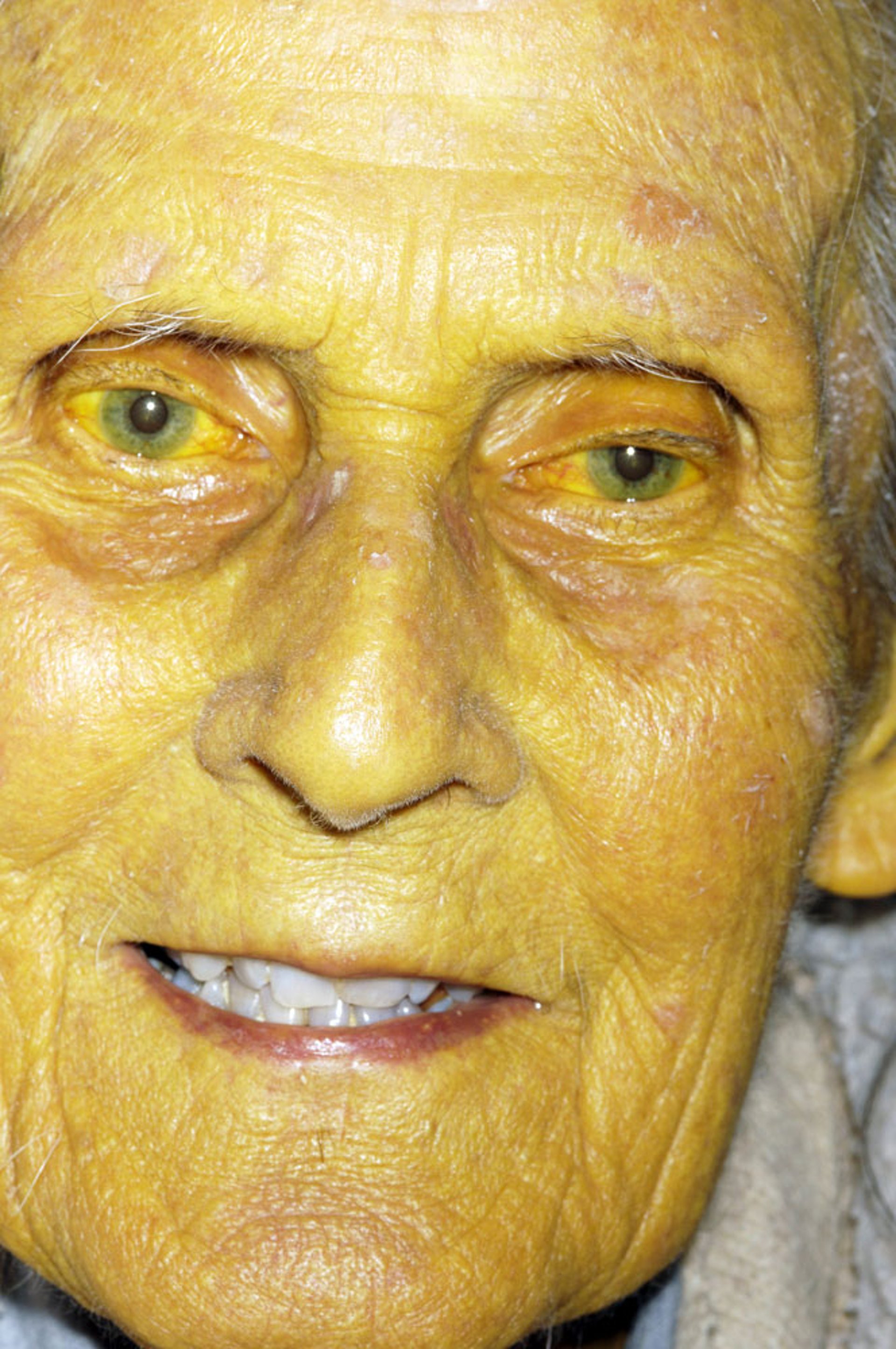
This photo shows yellowing of the sclera of the eyes and the skin on the face.
DR P. MARAZZI/SCIENCE PHOTO LIBRARY


This photo shows icterus, or jaundice, of the conjunctivae and facial skin, caused by the hepatitis A virus.
CDC
The most common extrahepatic manifestations are Guillain-Barre syndrome and neuralgic amyotrophy (2).
Symptoms and signs references
1. Aslan AT, Balaban HY. Hepatitis E virus: Epidemiology, diagnosis, clinical manifestations, and treatment. World J Gastroenterol. 2020;26(37):5543-5560. doi:10.3748/wjg.v26.i37.5543
2. Fousekis FS, Mitselos IV, Christodoulou DK. Extrahepatic manifestations of hepatitis E virus: An overview. Clin Mol Hepatol. 2020;26(1):16-23. doi:10.3350/cmh.2019.0082
Diagnosis of Hepatitis E
IgM antibody to hepatitis E virus (IgM anti-HEV) and HEV RNA polymerase chain reaction (PCR)
If tests for hepatitis A, B, and C (see Diagnosis of Acute Viral Hepatitis) are negative in a patient with typical manifestations of viral hepatitis who has recently traveled to an endemic area, IgM anti-HEV and HEV RNA (in blood or stool) should be measured, where available (1). A capsid antigen (ORF2) ELISA test is also available but has lower sensitivity than PCR (2).
Some experts recommend that HEV testing be included in the initial investigation of any patient with acute hepatitis (3).
Diagnosis references
1. Aslan AT, Balaban HY. Hepatitis E virus: Epidemiology, diagnosis, clinical manifestations, and treatment. World J Gastroenterol. 2020;26(37):5543-5560. doi:10.3748/wjg.v26.i37.5543
2. Kamar N, Izopet J, Pavio N, et al. Hepatitis E virus infection. Nat Rev Dis Primers. 2017;3:17086. Published 2017 Nov 16. doi:10.1038/nrdp.2017.86
3. European Association for the Study of the Liver. EASL Clinical Practice Guidelines on hepatitis E virus infection. J Hepatol. 2018;68(6):1256-1271. doi:10.1016/j.jhep.2018.03.005
Treatment of Hepatitis E
Supportive care
For chronic hepatitis E, possibly ribavirin
When appropriate, reduction of immunosupression
There is no specific treatment for hepatitis E; treatment is supportive in most cases. However, ribavirin may be considered for severe acute infection, particularly in immunocompromised patients or those at risk of liver failure (1). Preliminary studies suggest ribavirin has antiviral efficacy in the treatment of chronic hepatitis E (2).
Alcohol and hepatotoxic medications should be avoided because they can increase liver damage. Restrictions on diet or activity, including commonly prescribed bed rest, have no scientific basis.
For solid organ transplant recipients with chronic HEV infection, reduction of immunosuppression is the recommended first line intervention (1). Pegylated interferon-alfa may be considered in liver transplant recipients who do not respond to ribavirin, though it carries a risk of acute graft rejection.
Viral hepatitis should be reported to the local or state health department.
Treatment references
1. European Association for the Study of the Liver. EASL Clinical Practice Guidelines on hepatitis E virus infection. J Hepatol. 2018;68(6):1256-1271. doi:10.1016/j.jhep.2018.03.005
2. Khuroo MS, Khuroo MS, Hepatitis E: an emerging global disease - From discovery towards control and cure. J Viral Hepat. 2016;23(2):68-79. doi: 10.1111/jvh.12445
Prevention of Hepatitis E
Good personal hygiene and standard universal precautions help prevent fecal-oral transmission of hepatitis E. Boiling water appears to reduce risk of infection. Because person-to-person transmission is rare, isolation of infected patients is not indicated.
A vaccine for hepatitis E is available in China and Pakistan; it is not available in the United States (1). The vaccine appears to have approximately 85% efficacy over 10 years.
Prevention reference
1. Huang S, Zhang X, Su Y, et al. Long-term efficacy of a recombinant hepatitis E vaccine in adults: 10-year results from a randomised, double-blind, placebo-controlled, phase 3 trial. Lancet. 2024;403(10429):813-823. doi:10.1016/S0140-6736(23)02234-1
Key Points
Transmission of hepatitis E is usually by the fecal-oral route.
Most patients recover spontaneously, but pregnant patients have an increased risk of acute liver failure and death.
Genotype 3 may cause chronic hepatitis in immunocompromised patients.
Suspect hepatitis E in travelers to endemic regions; perform serologic and nucleic acid-based testing.
Treat patients supportively; consider using ribavirin for severe acute and chronic hepatitis E.
A vaccine is available in China and Pakistan.
Drug Information for the Topic