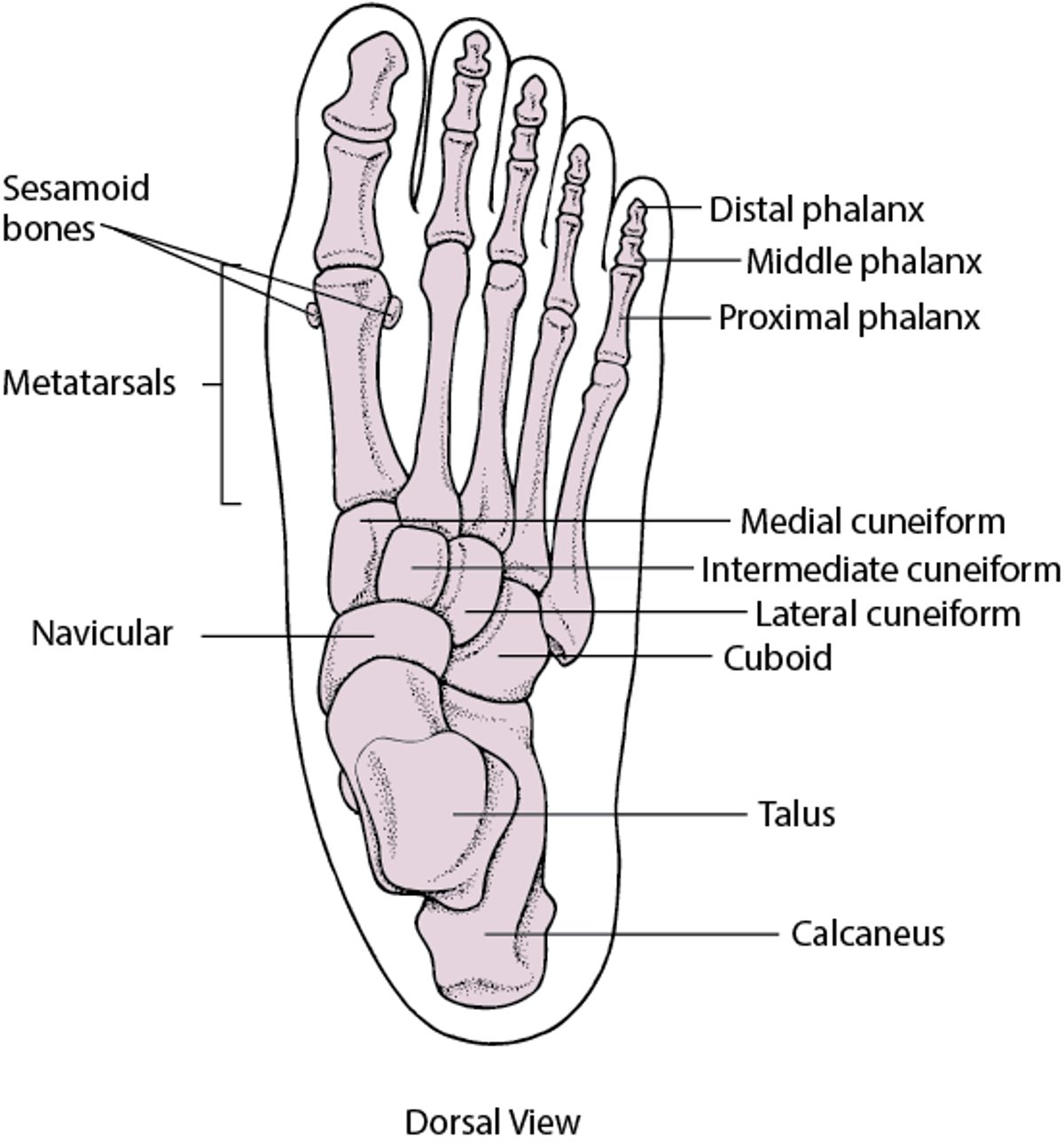
Most foot problems result from anatomic disorders or abnormal function of articular or extra-articular structures (see figure ). Less commonly, foot problems reflect a systemic disorder (see table ).
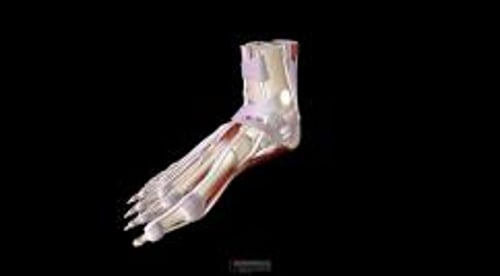
In patients with diabetes and/or peripheral artery disease, careful examination of the feet, with evaluation of vascular sufficiency and neurologic integrity, should be done at least twice a year. Patients with these diseases should examine their own feet at least once a day.
The feet are also common sites for musculoskeletal pain, pressure and friction injuries, and infections by fungi, bacteria, and viruses.
See also table and table .
Bones of the Foot



Considerations for Using Glucocorticoid Injections
Glucocorticoid injections should be used judiciously to avoid adverse effects. Injectable glucocorticoids should be reserved for inflammatory conditions such as gout and rheumatoid arthritis). Because the tarsus, ankle, retrocalcaneal space, and dorsum of the toes have little connective tissue between the skin and underlying bone, injection of insoluble glucocorticoids into these structures may cause depigmentation, atrophy, or ulceration, especially in older patients with peripheral artery disease.
Insoluble glucocorticoids can be given deeply rather than superficially with greater safety (eg, in the heel pad, tarsal canal, or metatarsal interspaces). The foot should be immobilized for a few days after tendon sheaths are injected. Unusual resistance to injection suggests injection into a tendon, which should be avoided by repositioning the needle. The use of ultrasound guidance can improve the accuracy of the injection and, depending on the location, may also improve efficacy (1). Repeated injection into a tendon sheath should be avoided because the tendon may weaken (partially tear), predisposing to subsequent rupture.
Reference
1. Daniels EW, Cole D, Jacobs B, Phillips SF: Existing evidence on ultrasound-guided injections in sports medicine. Orthop J Sports Med 6(2):2325967118756576, 2018. Published 2018 Feb 22. doi:10.1177/2325967118756576