Burkitt lymphoma is a very fast-growing non-Hodgkin lymphoma, a cancer of white blood cells that originates from B cells (B lymphocytes).
Lymphomas (see also Overview of Lymphoma) are cancers of a specific type of white blood cells known as lymphocytes. These cells help fight infections. Lymphomas can develop from either of the 2 main types of lymphocytes:
B lymphocytes
T lymphocytes
B lymphocytes produce antibodies, which are essential in fighting off some infections. T lymphocytes are important in regulating the immune system and in fighting viral infections.
Burkitt lymphoma can develop at any age, but it is most common in children and young adults, particularly males. Unlike other lymphomas, classic Burkitt lymphoma has a specific geographic distribution: It is most common in central Africa. Infection with Epstein-Barr virus is associated with Burkitt lymphoma. Another type of Burkitt lymphoma is more common in people who have HIV infection and less commonly occurs in people who are bone marrow or solid organ transplant recipients or have other causes of immunodeficiency.
Burkitt lymphoma grows and spreads quickly, often to the bone marrow, blood, and central nervous system. When it spreads, weakness and fatigue often develop. Large numbers of lymphoma cells may accumulate in the lymph nodes and organs of the abdomen, causing swelling. Lymphoma cells may invade the small intestine, resulting in blockage or bleeding. The neck and jaw may swell, sometimes painfully. To make the diagnosis, doctors do a biopsy of the abnormal tissue and order other procedures to stage the disease.

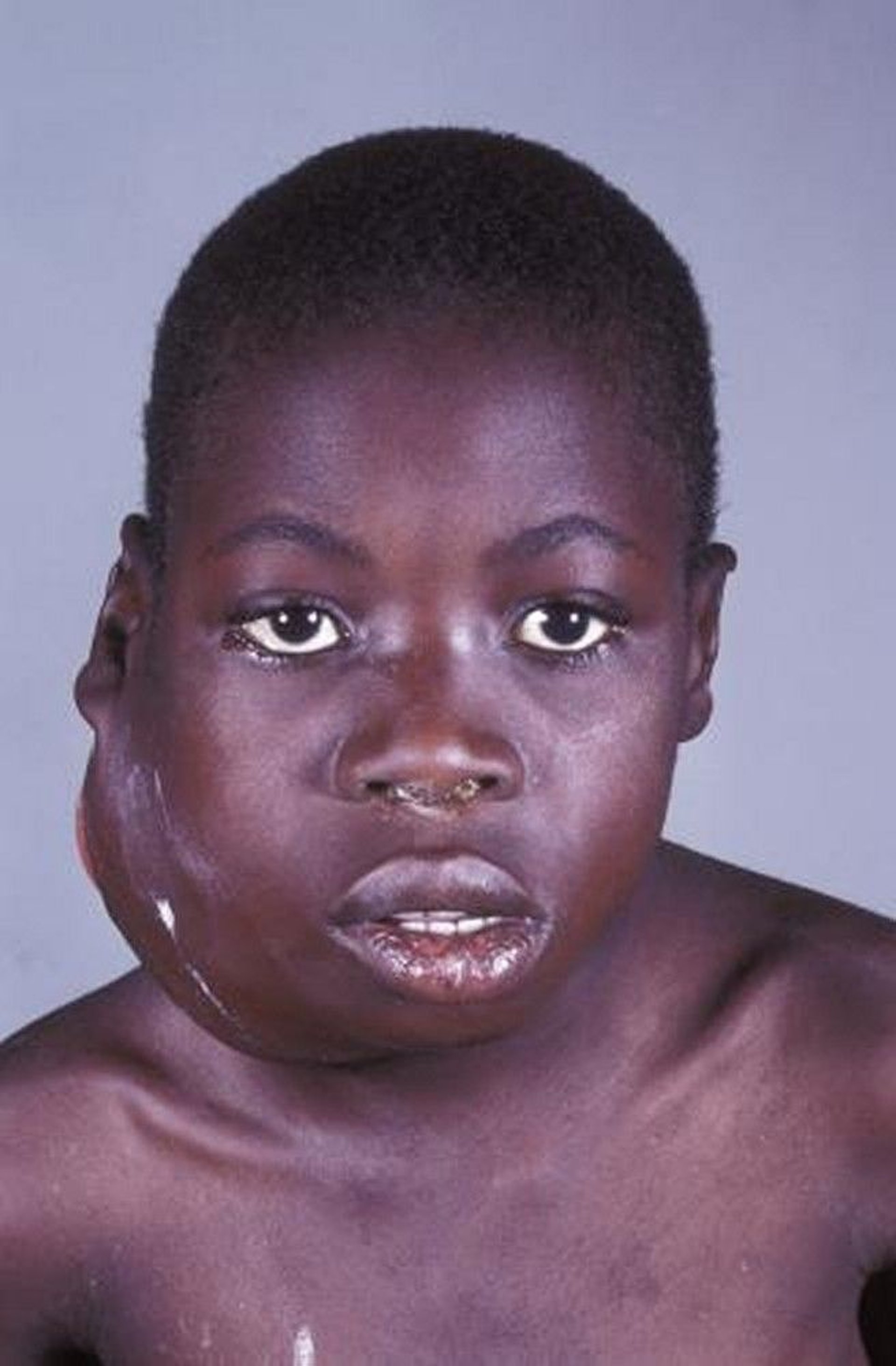
This photo shows a large tumor of the jaw in a person who has Burkitt lymphoma. This is the classical presentation in Africa. This type of presentation is uncommon in the Western world.
M.A. ANSARY/SCIENCE PHOTO LIBRARY
Without treatment, Burkitt lymphoma is rapidly fatal.
Rarely, surgery may be needed to remove parts of the intestine that are blocked or bleeding or have ruptured. Intensive chemotherapy, which includes chemotherapy to the fluid surrounding the brain and spinal cord to prevent spread to these areas, can cure more than 80% of people.