Lung cancer is the leading cause of cancer death in both men and women. About 85% of cases are related to cigarette smoking.
One common symptom is a persistent cough or a change in the character of a chronic cough.
Chest x-rays can detect lung cancer, but other additional imaging tests(such as CT and PET-CT) and biopsies are needed to confirm the diagnosis.
Surgery, chemotherapy, targeted agents, immunotherapy, and radiation therapy may all be used to treat lung cancer.
Lung cancer is the leading cause of cancer death worldwide. Lung cancer accounts for about 12% of all new cancer diagnoses and nearly 19% of cancer deaths globally. There is significant variation in the occurrence of lung cancer worldwide, with some areas having higher incidence rates (such as Australia and New Zealand) and some lower (such as West Africa). There is a male predominance. These variations by sex and region may in part be explained by differing prevalences of smoking and levels of economic development. In the United States, an estimated 226,650 new cases of lung cancer are expected to be diagnosed in 2025 (about 110,680 in men and 115,970 in women), and 124,730 people are expected to die from the disease.
Primary lung cancer is cancer that originates from lung cells. Primary lung cancer can start in the airways that branch off the trachea to supply the lungs (the bronchi) or in the small air sacs of the lung (the alveoli).
Metastatic cancer of the lung is cancer that has started in another part of the body spreads to the lung (most commonly from the breasts, colon, prostate, kidneys, thyroid gland, stomach, cervix, rectum, testes, bones, or skin).
Inside the Lungs and Airways

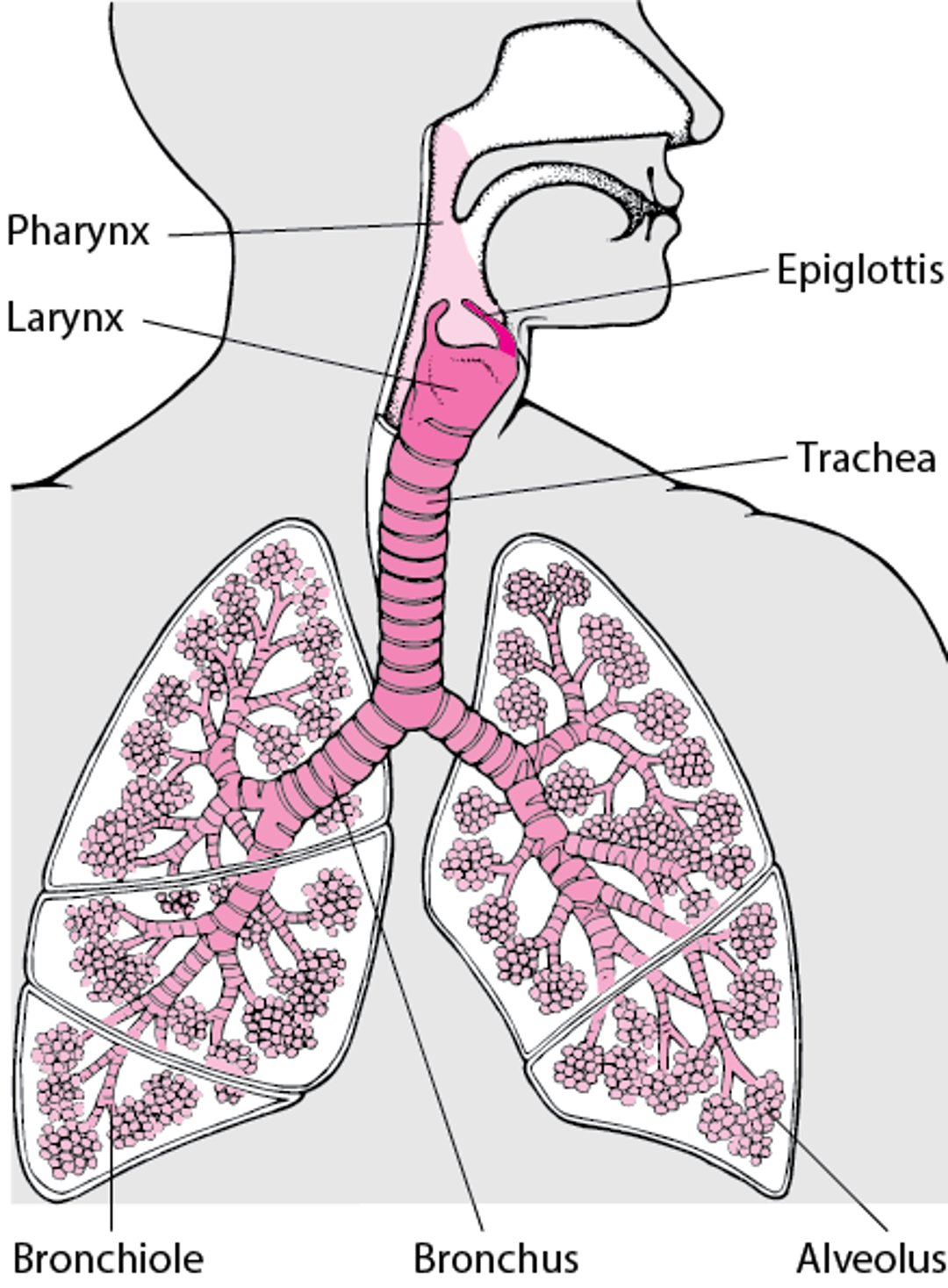
There are 2 main categories of primary lung cancer:
Non–small cell lung cancer: About 85% of lung cancers are in this category. This cancer grows more slowly than small cell lung cancer. Nevertheless, by the time about 40% of people are diagnosed, the cancer has spread to other parts of the body outside of the chest. The most common types of non–small cell lung cancer are squamous cell carcinoma, which begins in the cells that line the airways, adenocarcinoma, which starts in the cells that line the small air sacs of the lungs (alveoli), and large cell carcinoma, which contains large, poorly defined (differentiated) cell types, and sarcomatoid carcinoma, which is a mixed-tissue cancer containing more than 1 poorly differentiated cell types.
Small cell lung cancer: Sometimes called oat cell carcinoma, this cancer accounts for about 15% of all lung cancers. It is very aggressive and spreads quickly. By the time that most people are diagnosed, the cancer has spread to other parts of the body.
Rare lung cancers include:
Neuroendocrine tumors of the lungs (which may be cancerous or noncancerous)
Bronchial gland carcinomas
Lymphomas (cancers of the blood system)
Mesothelioma (due to asbestos exposure)
Causes of Lung Cancer
Cigarette smoking is the leading cause of lung cancer, accounting for about 85% of all lung cancer cases. The risk of developing lung cancer varies by both the number of cigarettes smoked and the number of years of smoking. Still, some heavy smokers do not develop lung cancer. In people who quit smoking, the risk of developing lung cancer decreases, but former smokers continue to have a higher risk of developing lung cancer than people who never smoked.
About 15 to 20% of people who develop lung cancer have never smoked or have smoked only minimally. In these people, the reason why they develop lung cancer is unknown, but certain genetic mutations may be responsible.
Other possible risk factors include:
Air pollution
Exposure to cigar smoke
Exposure to secondhand cigarette smoke
Exposure to carcinogens such as asbestos, radiation, radon, arsenic, chromates, nickel, chloromethyl ethers, polycyclic aromatic hydrocarbons, mustard gas, or coke-oven emissions that are encountered or breathed in at work
Exclusively using open fires for cooking and heating
The risk of contracting lung cancer is greater in people who are exposed to these substances and who also smoke cigarettes.
The risk of lung cancer related to electronic nicotine delivery systems such as e-cigarettes remains to be determined, although doctors think that the substances created by burning tobacco are more likely to be the cause of cancer than nicotine itself.
It is unknown whether marijuana smoking increases the risk of lung cancer.
Exposure to household radon is a risk factor for lung cancer.
In rare incidences, lung cancers, especially adenocarcinoma and bronchioloalveolar cell carcinoma (a type of adenocarcinoma also known as adenocarcinoma in situ), develop in people whose lungs have been scarred by other lung disorders, such as tuberculosis. Also, people who smoke and take beta-carotene supplements may have an increased risk of developing lung cancer.
Did You Know...
|
Genetic changes
Doctors have identified several genes that are associated with lung cancer. Changes in these genes are called mutations. The mutations occurring in lung cancer often occur repeatedly in certain genes over time. Some specific gene mutations are associated with non-small cell lung cancer (for example, EGFR, ALK, KRAS, ROS, NTRK1, NTRK2, NTRK3, and CDKN2A) and small-cell lung cancer (for example, MYC, NOTCH1, and NOTCH2). But several other genes have also been identified (for example, TP53). Doctors test for these gene changes (biomarkers) in people with lung cancer to help determine which targeted therapies of gene mutations will be effective.
Symptoms of Lung Cancer
The symptoms of lung cancer depend on its type, its location, and the way it spreads within the lungs, to areas near the lungs, or elsewhere in the body. Some people have no symptoms at the time of diagnosis.
One of the more common symptoms is a persistent cough or, in people who have a chronic cough, a change in the character of the cough. Some people cough up blood or sputum streaked with blood (hemoptysis). Rarely, lung cancer grows into an underlying blood vessel and causes severe bleeding.
Additional nonspecific symptoms of lung cancer include loss of appetite, weight loss, fatigue, chest pain, and weakness.
Complications of lung cancer
Lung cancer may narrow the airway, causing wheezing. If a tumor blocks an airway, part of the lung that the airway supplies may collapse, a condition called atelectasis. Other consequences of a blocked airway are shortness of breath and pneumonia, which may result in coughing, fever, and chest pain.
If the tumor grows into the chest wall, it may cause persistent, unrelenting chest pain. Fluid containing cancerous cells can accumulate in the space between the lung and the chest wall (a condition referred to as malignant pleural effusion). Large amounts of fluid can lead to shortness of breath and chest pain. If the cancer spreads throughout the lungs, the levels of oxygen in the blood become low, causing shortness of breath and eventually enlargement of the right side of the heart and possible heart failure (a disorder called cor pulmonale).
Lung cancer may grow into certain nerves in the neck, causing a droopy eyelid, small pupil, and reduced perspiration on one side of the face—together these symptoms are called Horner syndrome.
Cancers at the top of the lung may grow into the nerves that supply the arm, making the arm or shoulder painful, numb, and weak. Tumors in this location are often called Pancoast tumors. When the tumor grows into nerves in the center of the chest, the nerve to the voice box may become damaged, making the voice hoarse, and the nerve to the diaphragm may become damaged, causing shortness of breath and low blood oxygen levels.
Lung cancer may grow into or near the esophagus, leading to difficulty swallowing or pain with swallowing.
Lung cancer may grow into the heart or in the midchest (mediastinal) region, causing abnormal heart rhythms, blockage of blood flow into the heart, or fluid in the sac surrounding the heart (pericardial sac).
The cancer may grow into or compress one of the large veins in the chest (the superior vena cava). This condition is called superior vena cava syndrome. Blockage of the superior vena cava causes blood to back up in other veins of the upper body. The veins in the chest wall enlarge. The face, neck, and upper chest wall—including the breasts—can swell, causing pain, and become flushed. The condition can also cause shortness of breath, headache, distorted vision, dizziness, and drowsiness. These symptoms usually worsen when the person bends forward or lies down.
Lung cancer may also spread through the bloodstream to other parts of the body, most commonly the liver, brain, adrenal glands, spinal cord, or bones. The spread of lung cancer may occur early in the course of disease, especially with small cell lung cancer. Symptoms—such as headache, confusion, seizures, and bone pain—may develop before any lung problems become evident, making an early diagnosis more complicated.
Paraneoplastic syndromes consist of effects that are caused by the cancer but occur far from the cancer itself, such as in nerves and muscles. These syndromes are not related to the size or location of the lung cancer and do not indicate that the cancer has spread outside the chest. These syndromes are caused by substances secreted by the cancer (such as hormones, cytokines, and various other proteins). Common paraneoplastic effects of lung cancer include:
Hypercalcemia (high blood levels of calcium) in people with squamous cell carcinoma or in people in whom cancer has spread to their bones
Syndrome of inappropriate antidiuretic hormone (SIADH) secretion
Finger clubbing with or without hypertrophic pulmonary osteoarthropathy (inflammation of bones and joints)
Hypercoagulability with migratory superficial venous thrombosis (Trousseau syndrome), often causing blood clots in the legs
Symptoms similar to those of myasthenia gravis (Lambert-Eaton syndrome)
Various other types of nervous system dysfunction
Diagnosis of Lung Cancer
Imaging
Microscopic examination of tumor cells
Genetic testing of the tumor
Staging
Doctors explore the possibility of lung cancer when a person, especially a person who smokes or has quit smoking, has a persistent or worsening cough, other lung symptoms (such as shortness of breath or coughed-up sputum tinged with blood), or weight loss. Lung cancer also is a concern if people appear to have had pneumonia but their x-ray does not clear up after a course of antibiotics.
Imaging
Chest x-ray is usually the first test. Chest x-ray can detect most lung tumors, although it may miss small ones. Sometimes an abnormality detected on a chest x-ray done for other reasons (such as before surgery) provides doctors with the first clue, although an abnormality is not proof of cancer.
Computed tomography (CT) may be done next. CT can show characteristic patterns that help doctors make the diagnosis. They also can show small tumors that are not visible on chest x-rays and reveal whether the lymph nodes inside the chest are enlarged.
Positron emission tomography (PET) and PET-CT scanning, which combine the PET and CT technology in one machine, are also used to evaluate people with suspected cancer and can help detect disease that has spread outside the chest. Magnetic resonance imaging (MRI) can also be used if the CT or PET-CT scans do not give doctors sufficient information.
Microscopic examination
A microscopic examination of lung tissue from the area that may be cancerous is usually needed to confirm the diagnosis. If the cancer has caused a malignant pleural effusion, removing and testing the pleural fluid may be enough. Usually, however, doctors need to obtain a sample of tissue (biopsy) directly from the tumor.
One common way to obtain the tissue sample is with bronchoscopy. The person’s airway is directly observed using a flexible scope and samples of the tumor can be obtained. Bronchoscopes that incorporate ultrasonographic devices can find and biopsy tissue that cannot be seen with a regular bronchoscope, including lymph nodes in the middle of the chest (mediastinum). This helps to stage the disease and will guide treatment.
If the cancer is too far away from the major airways to be reached with a bronchoscope, doctors can usually obtain a specimen by inserting an instrument through the skin. This procedure is called a percutaneous biopsy. Sometimes, a specimen can only be obtained by a surgical procedure called a thoracotomy. Doctors may also do a mediastinoscopy, in which they take and examine samples of enlarged lymph nodes (a biopsy) from the center of the chest to determine if inflammation or cancer is responsible for the enlargement.
Genetic testing
Doctors do genetic tests on the tissue sample to see whether the person's cancer is caused by a mutation that can be treated with medications that target the mutation's effects.
Staging
Once cancer has been identified under the microscope, doctors usually do tests to determine whether it has spread. A PET-CT scan and head imaging (brain CT or MRI) may be done to determine if lung cancer has spread, especially to the liver, adrenal glands, or brain. If a PET-CT is not available, CT scans of the chest, abdomen, and pelvis and a bone scan are done. A bone scan may show that cancer has spread to the bones.
Lung cancer is staged using the International Staging System (TNM system). Cancers are categorized based on:
How large the tumor is (T)
Whether it has spread to nearby lymph nodes (N)
Whether it has spread (metastasized) to distant organs (M)
The different categories are used to determine the stage of the cancer. Each of these stages are further subdivided into numbers, typically 1-4 (for example, T1N1M1) and sometimes additionally with letters a-c (for example, T4N2aM0).
Lung cancer has 4 stages, I, II, III, and IV (using the TNM system). Small cell lung cancer is additionally categorized into limited-stage disease (when the cancer is confined to one side of the chest) and extensive-stage disease (when the cancer has spread further throughout the body).The stage of a cancer suggests the most appropriate treatment and enables doctors to estimate the person’s prognosis. In extensive cases, the main goal of treatment is to relieve symptoms and improve quality of life (palliative care) rather than to cure the disease.
Screening for lung cancer
Screening tests are tests done in high risk people without symptoms to look for evidence of a disease when it is at an early stage. For lung cancer, screening tests include low dose CT scans.
Screening of all people (that is, whether or not they have risk factors) has not been shown to decrease risk of death from lung cancer and thus is not recommended. Tests can be expensive and cause people undue worry if they produce false-positive results that incorrectly imply that a cancer is present. The opposite is also true. A screening test can give a negative result when a cancer really does exist.
Screening of high-risk people, however, is recommended. Doctors try to accurately determine a person’s risk for a particular cancer before screening tests are done. People who may benefit from screening for lung cancer include middle-aged and older adults who smoke heavily or have smoked for many years. Guidelines recommend screening for people age 50 to 80 years who have a cigarette smoking history of over 20 pack-years (calculated by multiplying years smoked by number of packs per day) who still smoke or have quit within the last 15 years. Yearly CT with a technique that uses lower-than-normal amounts of radiation seems to find enough cancers that can be cured to save lives. However, screening chest x-rays and sputum examinations in these high-risk people are not recommended.
Treatment of Lung Cancer
Surgery
Radiation therapy
Chemotherapy
Targeted therapies
Immunotherapy
Doctors use various treatments for both small cell and non–small cell lung cancer. Surgery, chemotherapy, immunotherapy, targeted therapy (therapies that target relevant cancer-producing gene mutations), and radiation therapy can be used individually or in combination. The precise combination of treatments depends on the:
Type of cancer
Location of the cancer
Severity of the cancer
Degree to which the cancer has spread
Person's overall health
For example, in some people with advanced non–small cell lung cancer, treatment includes chemotherapy and radiation therapy before, after, or instead of surgical removal.
Surgery for lung cancer
Surgery is the treatment of choice for non–small cell lung cancer that has not spread beyond the lung (early-stage disease). In general, surgery is not used for early-stage small cell lung cancer, because this aggressive cancer that has often spread beyond the lungs at the time of diagnosis and therefore is treated with chemotherapy and radiation therapy. Surgery for non-small cell lung cancer may not be possible if the cancer has spread beyond the lungs, if the cancer is too close to the windpipe, or if the person has other serious conditions (such as severe heart or lung disease).
Before surgery, doctors do pulmonary function tests to determine whether the amount of lung remaining after surgery will be able to provide enough oxygen and breathing function. If the test results indicate that removing the cancerous part of the lung will result in inadequate lung function, surgery is not possible. The amount of lung to be removed is decided by the surgeon, with the amount varying from a small part of a lung segment to an entire lung.
Although non–small cell lung cancers can be removed surgically, removal does not always result in a cure. Supplemental (adjuvant) chemotherapy after surgery can help increase the survival rate and is done for all but the smallest cancers. Sometimes chemotherapy is given before surgery (called neoadjuvant therapy) to help shrink the tumor before surgery is done.
Occasionally, cancer that begins elsewhere (for example, in the colon) and spreads to the lungs is removed from the lungs after being removed at the source. This procedure is recommended rarely, and tests must show that the cancer has not spread to any site outside of the lungs.
Radiation therapy for lung cancer
Radiation therapy is used in both non–small cell and small cell lung cancers. It may be given to people who do not want to undergo surgery, who cannot undergo surgery because they have another condition (such as severe coronary artery disease), or whose cancer has spread to nearby structures, such as the lymph nodes. Although radiation therapy is used to treat the cancer, in some people, it may only partially shrink the cancer or slow its growth. Combining chemotherapy with radiation therapy improves survival in these people.
Some people with small cell lung cancer who have been responding well to chemotherapy may benefit from radiation therapy to the head to prevent spread of cancer to the brain. If the cancer has already spread to the brain, radiation therapy of the brain is commonly used to reduce symptoms such as headache, confusion, and seizures.
Radiation therapy is also useful for controlling the complications of lung cancer, such as coughing up of blood, bone pain, superior vena cava syndrome, and spinal cord compression.
Chemotherapy for lung cancer
Chemotherapy is used in both non–small cell and small cell lung cancers. In small cell lung cancer, chemotherapy, sometimes coupled with radiation therapy, is the main treatment. This approach is preferred because small cell lung cancer is aggressive and has often spread to distant parts of the body by the time of diagnosis. Chemotherapy can prolong survival in people who have advanced disease.
In non–small cell lung cancer, chemotherapy usually also prolongs survival and treats symptoms. In people with non–small cell lung cancer that has spread to other parts of the body, the median survival increases to 9 months with treatment. Targeted therapies may also improve cancer patient survival.
Targeted therapies for lung cancer
Some people with non–small cell lung cancer survive significantly longer when treated with chemotherapy, radiation therapy, or some of the targeted therapies. Targeted therapies include medications, such as biologic agents that specifically target genetic mutations that cause lung tumors. Studies have identified proteins within cancer cells and the blood vessels that nourish the cancer cells. These proteins may be involved in regulating and promoting cancer growth and metastasis. Medications have been designed to specifically affect the abnormal protein's effects and potentially kill the cancer cells or inhibit their growth. Important lung cancer targeted therapies include EGFR inhibitors (for example, osimertinib), ALK inhibitors (for example, alectinib and lorlatinib), ROS inhibitors (for example, crizotinib), BRAF inhibitors (for example, dabrafenib), MET inhibitors (for example, tepotinib), and NTRK1, NTRK2, or NTRK3 gene fusion inhibitors (for example, entrectinib).
Immunotherapy medications, which include nivolumab, pembrolizumab, durvalumab, ipilimumab, and atezolizumab, enable a person's own immune system to fight the cancer. These medications may be used instead of the usual chemotherapy agents, in combination with them, or after the conventional chemotherapy agents have been tried and have not worked.
Laser and ablation therapy for lung cancer
Laser therapy, in which a laser is used to remove or reduce the size of lung tumors, is sometimes used. A high-energy current (radiofrequency ablation) or cold (cryoablation) can sometimes be used to destroy tumor cells in people who have small tumors or are unable to undergo surgery.
Other treatments
Other treatments are often needed for people who have lung cancer. Many such treatments, called palliative treatments, aim to relieve symptoms and improve quality of life rather than cure cancer.
Because many people who have lung cancer have a substantial decrease in lung function whether or not they undergo treatment, oxygen therapy and bronchodilators (medications that widen the airways) may aid breathing.
Pain often requires treatment. Opioids can often be used to relieve pain but can cause side effects, such as constipation, that also require treatment.
Prognosis for Lung Cancer
Lung cancer has a poor prognosis. People with extensive small cell lung cancer or advanced non–small cell lung cancer do especially poorly. Early diagnosis improves survival.
For NSCLC, the 5-year survival rate varies by stage, from 65 to 80% for patients with stage I, 30 to 60% for stage II, 13 to 36 % for patients with stage III and 5 to 62% for stage IV disease.
For limited-stage SCLC, the typical survival time is between 25 and 56 months, with 16 to 28% of patients living for at least 5 years. For extensive-stage SCLC, the outlook is worse, with typical survival time being around 1 year, and with 12% of patients living for at least 5 years.
Survivors must have regular checkups, including periodic chest x-rays and CT scans to ensure that the cancer has not returned. Usually, if the cancer returns, it occurs within the first 2 years. However, frequent monitoring is recommended for 5 years after lung cancer treatment, and then people are monitored yearly for the rest of their lives.
Because many people die of lung cancer, planning for terminal care is usually necessary. Although anxiety and pain are common in people with incurable lung cancer, these symptoms can be relieved by appropriate medications.
Prevention of Lung Cancer
Prevention of lung cancer includes quitting smoking and avoiding exposure to potentially cancer-causing substances. Patients at high-risk for lung cancer should also be screened. People should also monitor radon levels in their homes to limit exposure. Reducing exposure to asbestos and diesel exhaust emissions is also important.
More Information
The following English language resources may be useful. Please note The Manual is not responsible for the content of these resources.
Cancer Nation (formerly National Coalition for Cancer Survivorship)
Drug Information for the Topic