Listeriosis is infection caused by the gram-positive bacteriaListeria monocytogenes, usually when contaminated food is eaten.
People may consume the bacteria in contaminated dairy products or in raw milk, vegetables, meats, or refrigerated foods that require no cooking before they are eaten.
People have a fever, chills, and muscle aches plus nausea, vomiting, and diarrhea.
Listeriosis may cause pregnancy loss or preterm labor in pregnant women and severe illness or death in newborns.
Identifying the bacteria in a sample of blood or cerebrospinal fluid confirms the diagnosis.
Antibiotics can cure the infection.
Prevention involves not eating foods that are likely to be contaminated, particularly if people are at risk of developing invasive listeriosis.
(See also Overview of Bacteria and Listeriosis in Newborns.)
Listeria monocytogenes resides in the intestine of people and many animals worldwide.
Most cases of listeriosis result from eating contaminated food.

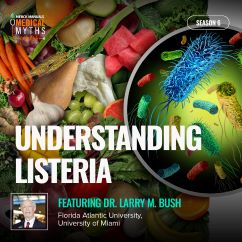
Listeriosis is usually acquired when contaminated food is eaten. In such cases, Listeria bacteria can enter the bloodstream and spread to other organs. Rarely, Listeria bacteria infect the skin of veterinarians, farmers, and other people who have direct contact with infected animals (particularly during slaughter and handling of carcasses).
The bacteria grow in food at refrigerator temperatures and survive in the freezer. Pasteurization of dairy products destroys the bacteria. Adequate cooking or reheating of food kills the bacteria. However, they can reside in food-filled cracks and inaccessible areas in commercial food preparation facilities and recontaminate food. If the food requires no further cooking once purchased, the bacteria that remain are consumed with the food. They can grow in refrigerated, packaged, ready-to-eat products (that require no cooking before they are eaten) without changing the food’s taste or smell.
Foods involved in previous outbreaks of listeriosis include soft cheeses (such as Latin American white cheeses, feta, Brie, and Camembert), delicatessen salads (such as coleslaw), unpasteurized milk, cold cuts, turkey franks, other hot dogs, shrimp, smoked salmon, and undercooked chicken.


Invasive listeriosis
The bacteria sometimes enter the bloodstream from the intestine and invade certain organs (called invasive listeriosis). Bacteria may spread to the following:
The tissues covering the brain and spinal cord (causing meningitis)
The eyes
Heart valves (causing endocarditis)
Joints
In pregnant women, the uterus and fetus
Rarely, collections of pus (abscesses) form in the brain and spinal cord.
Risk factors
In the United States, invasive listeriosis develops in only about 1,600 people each year, and about 1 in 6 infected adults die of it. It is more common among the following:
Pregnant women
Fetuses and newborns
People aged 65 or older
People with a weakened immune system, such as those with human immunodeficiency (HIV) infection
Pregnant women are more likely to get listeriosis than the general population, and pregnant Hispanic women are particularly likely to be infected.
Listeriosis can cause miscarriage, stillbirth, and premature birth, but pregnant women rarely become seriously ill or die. However, rarely, pregnant women with listeriosis pass the infection to the fetus or newborn, who may then become seriously ill (see Listeriosis in Newborns).
Did You Know...
|
Symptoms of Listeriosis
People with listeriosis typically have chills, fever, and muscle aches (resembling the flu), with nausea, vomiting, and diarrhea. Usually, symptoms resolve in 1 to 3 days.
If invasive listeriosis develops, symptoms vary depending on the area infected.
If meningitis develops, people have a headache and a stiff neck. They may become confused and lose their balance.
If the uterus or placenta is infected in a pregnant woman, a miscarriage or stillbirth may result. Surviving infants may develop listeriosis and present with blood stream infections (sepsis) or meningitis, and many newborns who acquired infection near or at the end of pregnancy die.
Diagnosis of Listeriosis
Culture of blood or cerebrospinal fluid
To diagnose listeriosis, doctors withdraw a sample of blood or do a spinal tap (lumbar puncture) to obtain a sample of the fluid that surrounds the brain and spinal cord (cerebrospinal fluid). The samples are sent to a laboratory to grow (culture) the bacteria. Identifying the bacteria in the sample confirms the diagnosis.
Treatment of Listeriosis
Antibiotics
In people who have no immune system problems and have only a mild fever or digestive upset, listeriosis usually resolves on its own and typically does not require antibiotic treatment.
Antibiotics can cure listeriosis and are required in people with immune system problems, pregnant women, newborns, and people with more severe symptoms.
For most infections caused by Listeria, including endocarditis and meningitis, the antibiotics ampicillin and gentamicin are given by vein (intravenously). If people are allergic to penicillins, sulfamethoxazole/trimethoprim is used instead of ampicillin.
Eye infections can be treated with erythromycin, given by mouth, or trimethoprim/sulfamethoxazole, given intravenously.
Prevention of Listeriosis
Food is often contaminated with Listeria bacteria. These bacteria can reproduce at refrigerator temperatures. Thus, food that is lightly contaminated can become heavily contaminated while it is in the refrigerator.
Certain precautions are needed, particularly for people who are at risk of having serious consequences if they are infected. These people include those with a weakened immune system, pregnant women, and people aged 65 and over. For example, at-risk people should not eat certain foods such as the following:
Soft cheeses made from unpasteurized milk (such as feta, Brie, queso fresco, queso blanco, and Camembert)
Raw (unpasteurized) milk and cheeses made from it (although Listeria contamination can occur after pasteurization)
Refrigerated ready-to-eat foods (such as hot dogs, deli meats, pȃtés, and meat spreads), unless they are heated to an internal temperature of 165° F (73.9° C ) or until steaming hot just before serving
Refrigerated smoked seafood (such as foods labeled nova-style, lox, kippered, smoked, or jerky), unless it has been cooked
The following can help reduce the risk of infection:
Refrigerating leftovers within 2 hours in shallow, covered containers and using them within 3 to 4 days
Setting the refrigerator temperature at 40° F (4.4° C) or lower
Setting the freezer at 0° F (-17.8° C) or lower
More Information
The following English-language resource may be useful. Please note that The Manual is not responsible for the content of this resource.
Centers for Disease Control and Prevention: Listeriosis: Information about listeriosis, including links to outbreaks, people at high risk of infection, and prevention
Drug Information for the Topic