Folliculitis is inflammation of a hair follicle, and skin abscesses are pus-filled pockets in the skin. Both are usually caused by an infection. They may be superficial or deep, affecting only hair follicles or deeper structures within the skin.
(See also Overview of Bacterial Skin Infections.)
Folliculitis is a type of small skin abscess that involves a hair follicle. Other types of abscesses may appear both on the skin surface and within the deeper structures of the skin without always involving a hair follicle.
Most skin abscesses are caused by Staphylococcus aureus bacteria and appear as pus-filled pockets in the skin surface. A strain of Staphylococcus that is resistant to previously effective antibiotics has become a more common cause. This strain is called methicillin-resistant Staphylococcus aureus (MRSA). Clusters of MRSA infections may occur among people living in crowded conditions who have poor hygiene or among people who hare infected with a very harmful strain of the bacterium.
Sometimes the bacteria enter the skin through a hair follicle, small scrape, or puncture, although often there is no obvious point of entry. People whose nasal passages contain Staphylococcus bacteria or who live in a hot and humid climate are more likely to have repeat episodes of folliculitis or skin abscesses. A weakened immune system, obesity, cancer, and diabetes are also common risk factors.
Some people may have recurring episodes of Staphylococcus infection for unknown reasons. Doctors try to reduce the likelihood of repeat infections by instructing people to wash their entire body with antibacterial soap, apply antibiotic ointment inside their nose where the bacteria can hide, and take antibiotics by mouth.
Folliculitis
Folliculitis is inflammation of a hair follicle. It can be caused by bacteria, fungi, viruses, or parasites.
Bacterial folliculitis is usually caused by Staphylococcus aureus bacteria. Some people develop folliculitis after exposure to a poorly chlorinated hot tub. This condition, sometimes called “hot tub folliculitis” or “hot tub dermatitis,” is caused by the bacterium Pseudomonas aeruginosa. It begins anytime from 6 hours to 5 days after the exposure. Areas of skin covered by a bathing suit, such as the torso and buttocks, are the most common sites.
Fungal folliculitis is caused by dermatophytes (also called ringworm, or tinea), Malassezia furfur (risk factors include diabetes and use of steroids [sometimes called glucocorticoids or corticosteroids]), or Candida (yeast) (seen in infants and in people who have taken antibiotics or steroids for a long time) infections.
Viral folliculitis is most commonly caused by herpesviruses.
Parasitic folliculitis is caused by Demodex mites, which live inside human hair follicles.
Some people develop mild folliculitis in areas subjected to moisture, including sweating, and friction, such as areas under sports equipment or on the buttocks. Injury to the skin can also cause increase the likelihood of developing folliculitis.
Sometimes stiff hairs in the beard area (or in any area that is shaved) curl and reenter the skin (ingrown hair) after shaving, causing mild irritation and inflammation. However, there is no actual infection. This is called pseudofolliculitis barbae, but it is not true folliculitis. Acne is a form of folliculitis that is treated differently than infections.
Folliculitis looks like tiny red or white pustules (fluid-filled spots that contain pus) at the base of a hair (follicle). There may be only one infected follicle or many. Each infected follicle is itchy, irritated, or slightly painful, but the person otherwise does not feel sick. Infected hairs fall out easily or may be plucked out, but new pustules tend to develop.

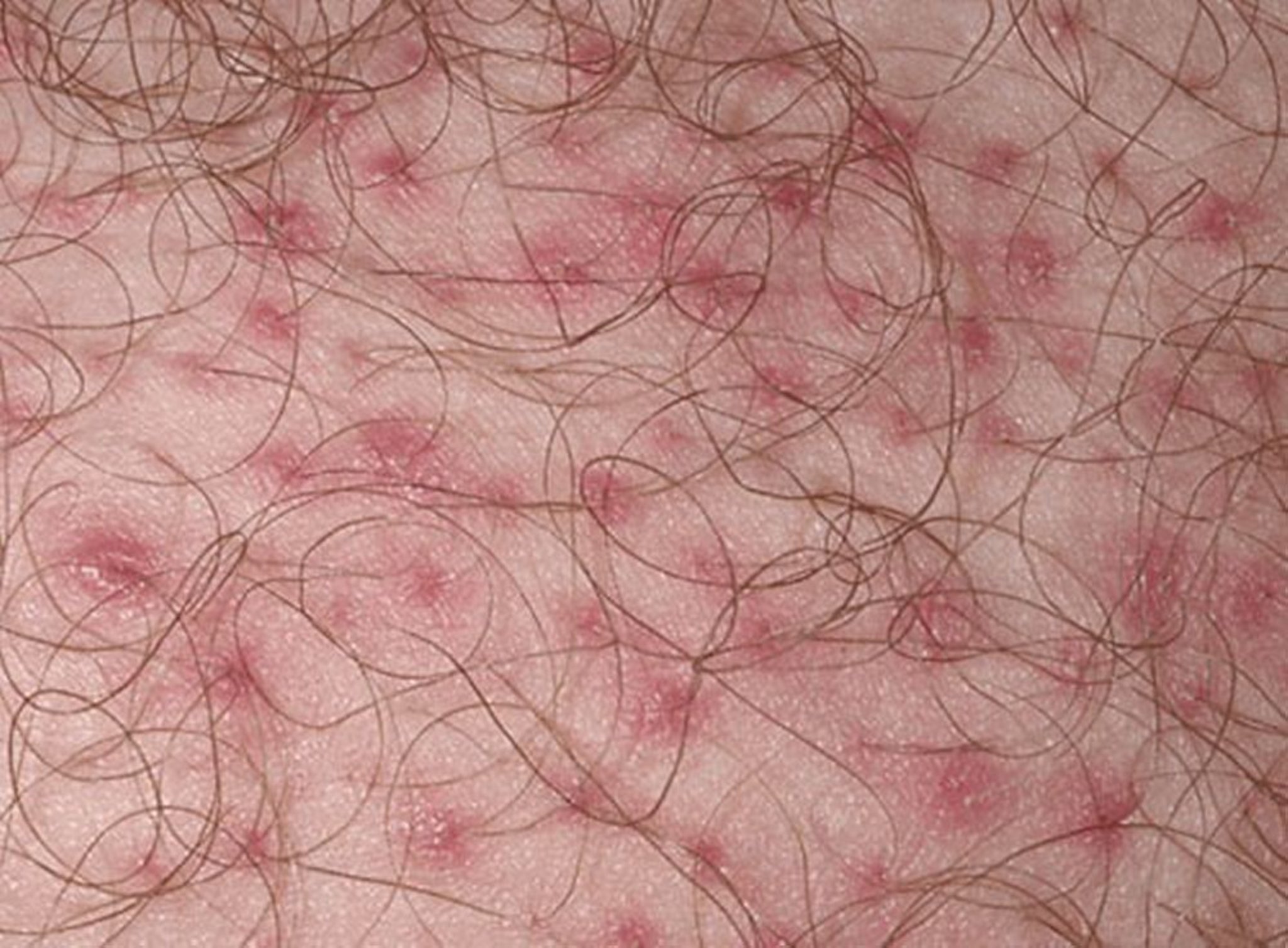
This photo shows inflamed hair follicles caused by a bacterial infection.
Image provided by Thomas Habif, MD.
Doctors diagnose folliculitis based on the appearance of the skin. They typically do not do any testing, but may take a sample of pus and a swab from inside the nose and send them a laboratory where they are placed in a culture medium that allows microorganisms to grow (culture) in people whose infection keeps coming back. If doctors suspect the infection is caused by fungus, they remove a plucked hair for culture. The results of the cultures help doctors best determine treatment.
Doctors prescribe antibacterial cleansers or antibiotics that are applied directly to the skin (topically) to treat bacterial folliculitis. People who have a large area of infected skin may need antibiotics taken by mouth. Doctors also treat people with folliculitis caused by fungi, viruses, or parasites once they determine what organism is causing the infection.
Hot tub folliculitis usually goes away without any treatment. However, adequate chlorination of the hot tub is necessary to prevent reinfection and to protect others from infection.


Skin Abscesses
Skin abscesses are warm, painful, pus-filled pockets in the skin. They can occur on any part of the skin. They are usually red and raised. Abscesses may be one to several inches in diameter.
Furuncles and carbuncles are types of skin abscesses.
Furuncles and carbuncles are usually caused by Staphylococcus aureus bacteria. MRSA is a common cause in the United States.
Furuncles (boils) are tender, smaller, more superficial abscesses that involve a hair follicle and the surrounding tissue. Furuncles are common on the neck, breasts, face, and buttocks. They are uncomfortable and may be particularly painful in sensitive areas (for example, on the nose, ear, or fingers). They usually look like solid, raised bumps or fluid-filled spots that discharge red-tinged pus and dead tissue.

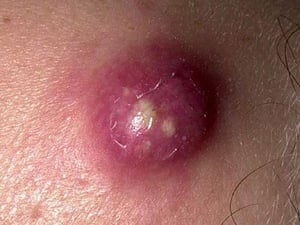
The furuncle (boil) in this photo is a tender, swollen, pus-filled abscess.
The furuncle (boil) in this photo is a tender, swollen, pus-filled abscess.
Photo provided by Thomas Habif, MD.

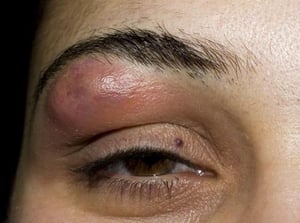
This woman has a red, inflamed furuncle under her eyebrow.
This woman has a red, inflamed furuncle under her eyebrow.
DermPics/SCIENCE PHOTO LIBRARY

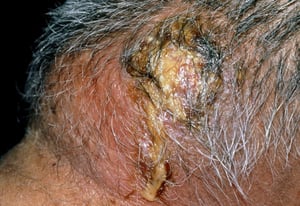
This photo shows a carbuncle on the back of the neck. It is formed by a cluster of interconnected furuncles, which are painful, pus-filled, inflamed hair follicles that are deeper than furuncles.
This photo shows a carbuncle on the back of the neck. It is formed by a cluster of interconnected furuncles, which are
SCIENCE PHOTO LIBRARY
The furuncle (boil) in this photo is a tender, swollen, pus-filled abscess.
The furuncle (boil) in this photo is a tender, swollen, pus-filled abscess.
Photo provided by Thomas Habif, MD.
This woman has a red, inflamed furuncle under her eyebrow.
This woman has a red, inflamed furuncle under her eyebrow.
DermPics/SCIENCE PHOTO LIBRARY
This photo shows a carbuncle on the back of the neck. It is formed by a cluster of interconnected furuncles, which are painful, pus-filled, inflamed hair follicles that are deeper than furuncles.
This photo shows a carbuncle on the back of the neck. It is formed by a cluster of interconnected furuncles, which are
SCIENCE PHOTO LIBRARY
Carbuncles are clusters of furuncles that are connected to one another below the skin surface. They are common on hairy areas and on areas that are prone to friction such as the back of the neck, shoulders, hips, and buttocks. Carbuncles are larger in size and go deeper into the skin than furuncles. The infected clusters are filled with fluid, pus, and dead tissue. Fluid may rarely drain out of the carbuncle, but sometimes the mass is so deep that it cannot drain on its own. People who have a larger carbuncle may have a fever.
If not treated, abscesses often come to a head and rupture, discharging a creamy white or pink fluid. Bacteria may spread from the abscess to infect the surrounding tissue and lymph nodes. The person may have a fever and feel generally sick.
Doctors diagnose skin abscesses based on their appearance. Sometimes, they send pus samples to a laboratory to identify the bacteria (called a culture).
A skin abscess may drain on its own, and warm compresses may speed up the process. Otherwise, a doctor treats an abscess by cutting it open (incising) and draining the pus. After draining the abscess, a doctor makes sure all of the pus has been removed and sometimes washes out the pocket with a saline solution. Some abscesses need to be temporarily packed with gauze.
Doctors do not always prescribe antibiotics for abscesses. However, antibiotics are prescribed for people who have a fever or who have other symptoms of a serious infection.
People who have recurring furuncles can wash their skin with liquid soap that contains special antiseptics and are given 2 antibiotics.