Histoplasmosis is an infection caused by the fungus Histoplasma capsulatum. It occurs mainly in the lungs but can sometimes spread throughout the body.
The infection is usually caused by inhaling spores of the fungus.
Most people do not have symptoms, but some feel sick and have a fever and cough, sometimes with difficulty breathing.
Sometimes the infection spreads, causing the liver, spleen, and lymph nodes to enlarge and damaging other organs.
The diagnosis is based on culture and examination of tissue and fluid samples, blood tests, and imaging tests of the lungs.
Whether treatment with antifungal medications is needed depends on the severity of the infection.
(See also Overview of Fungal Infections.)
Histoplasmosis usually occurs when people inhale the spores of the fungus. Histoplasma capsulatum grows best in soil and dust that are contaminated with bird or bat droppings. Chicken farmers, construction workers, cavers (people who like to explore caves), and others who work with soil are most likely to inhale the spores produced by the fungus. The risk of infection is greatest when activity generates airborne spores (for example, tree or building removal at construction sites in areas where birds or bats live) or when exploring caves.
Histoplasmosis is more common in the eastern and midwestern United States, particularly along the Ohio and Mississippi River Valleys. It may occur in the southern and southeastern states. Histoplasmosis also occurs in parts of Central and South America, Africa, Asia, and Australia. Outbreaks associated with bat caves have occurred worldwide, including in Latin America, Africa, and parts of Asia, and in the United States have been reported in Florida, Texas, and Puerto Rico.
Histoplasmosis usually affects the lungs. The infection typically stays in the lungs, but it may spread to other parts of the body. Severe illness can result when large numbers of spores are inhaled.
Certain people are at increased risk of a severe histoplasmosis infection. Severe infections that occur mainly in people with a weakened immune system are called opportunistic infections. Histoplasmosis that spreads to other parts of the body is an opportunistic infection for people with advanced HIV infection (also called AIDS).
Other risk factors for a severe histoplasmosis infection include the following:
Heavy, long-term exposure to the spores
Age 55 years or older
Age 1 year or younger
Organ transplant
Use of medications that suppress the immune system, such as steroids (also sometimes called glucocorticoids or corticosteroids) or tumor necrosis factor inhibitors (used to treat rheumatoid arthritis and related disorders)
Forms of Histoplasmosis
There are 3 main forms of histoplasmosis:
Acute pulmonary histoplasmosis: This form is the initial form of the infection. It occurs in the lungs and usually remains there.
Progressive disseminated histoplasmosis: If the immune system is weakened or is immature, the infection may spread (disseminate) from the lungs through the bloodstream to other parts of the body, such as the brain, spinal cord, liver, spleen, lymph nodes, adrenal glands, digestive system, or bone marrow. This form rarely occurs in healthy adults. It usually occurs in malnourished infants or very young children or in people with a weakened immune system, such as those who have advanced HIV infection, an organ transplant, or who are taking medications that suppress the immune system, including steroids.
Chronic cavitary histoplasmosis: In this form, one or more spaces (cavities) gradually form in the lungs over several weeks. The infection does not spread from the lungs to other parts of the body.
Symptoms of Histoplasmosis
Most people infected with Histoplasma do not develop any symptoms or they develop only very mild symptoms, especially people who have a healthy immune system.
When symptoms do develop, they vary depending on the form of histoplasmosis.
Acute pulmonary histoplasmosis
Symptoms usually appear 3 to 17 days after people inhale the spores. People may feel sick, have a fever and a cough, and feel as though they have the flu. Symptoms usually disappear without treatment in 2 weeks and rarely last longer than 6 weeks.
People who inhale many spores may develop pneumonia. They may become very short of breath and be ill for months.
Acute pulmonary histoplasmosis is very rarely fatal but can become serious in people with a weakened immune system (such as those with advanced HIV infection).
Progressive disseminated histoplasmosis
Symptoms are vague at first. People may lose weight and feel tired, weak, and generally ill. Symptoms may worsen very slowly or very rapidly.
Pneumonia may develop but is rarely severe, except in people with advanced HIV infection. Rarely, meningitis (inflammation of the tissues covering the brain and spinal cord) may develop, causing a headache and a stiff neck. The liver, spleen, and lymph nodes may enlarge. Less commonly, the infection causes (sores) ulcers to form in the mouth and intestines. Rarely, the adrenal glands are damaged, causing Addison disease.
Even with treatment, histoplasmosis may be rapidly fatal in people with advanced HIV infection.

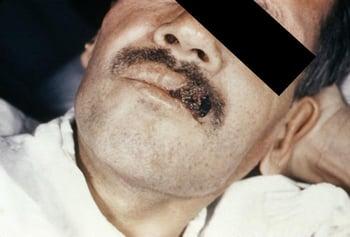
In people with a weakened immune system, histoplasmosis can cause sores (ulcers) to form on the mouth.
Chronic cavitary histoplasmosis
This form develops gradually over several weeks, causing a cough and difficulty breathing that become increasingly worse. Symptoms include weight loss, night sweats, a mild fever, and a general feeling of illness (malaise).
Most people recover without treatment. However, breathing difficulties may continue to worsen, and some people cough up blood, sometimes in large amounts.
Other forms of histoplasmosis
In some chronic cases, lung tissue is destroyed, and scar tissue forms. Lung damage or bacterial invasion of the lungs may eventually be fatal.
Other forms of histoplasmosis can affect the eyes and skin. Ocular histoplasmosis is an eye infection that is caused by an earlier infection with Histoplasma. It can result in blind spots and distorted vision due to scarring and leaking blood vessels in the back of the eye. In people with a weakened immune system, histoplasmosis can also cause a variety of skin bumps (including nodules), patches, or ulcers, all of which can vary in appearance from person to person. The infection can sometimes also damage the soft tissues underneath the skin.
Diagnosis of Histoplasmosis
Culture and examination of samples of tissues or fluids
Sometimes blood and urine tests
X-ray or computed tomography (CT) scan of the chest
Other testing
To diagnose histoplasmosis, doctors obtain samples of the sputum, urine, and blood. Doctors may use a viewing tube (bronchoscope) to take samples from the lungs. Or they may do a biopsy to take samples from the liver, bone marrow, or lymph nodes. These samples are sent to a laboratory for culture and examination.
Urine and blood may be tested for proteins (antigens) released by the fungus. A test to identify the fungus' genetic material (its DNA) may be done.


Doctors also take an x-ray or do a CT scan of the chest to look for evidence of lung infection.
Treatment of Histoplasmosis
Antifungal medications
Acute pulmonary histoplasmosis or otherwise healthy people (that is, people who do not have symptoms) rarely require medications. However, if people do not improve after 1 month or if they have a weakened immune system, itraconazole, given by mouth, is often prescribed. Doctors may also prescribe posaconazole or isavuconazonium.
If severe pneumonia develops, people are given amphotericin B intravenously.
Severe disseminated histoplasmosis is treated with amphotericin B given intravenously, followed by itraconazole, given by mouth.
People with advanced HIV infection are given itraconazole until their CD4 count (the number of one type of white blood cell that decrease when advanced HIV infection is uncontrolled) increases to 150 or more cells per microliter of blood and they are also receiving antiretroviral therapy (ART).
In chronic cavitary histoplasmosis, itraconazole or, for more serious infections, amphotericin B may eliminate the fungus. However, treatment cannot reverse the destruction in the lungs caused by the infection. Thus, most people continue to have breathing problems, similar to those caused by chronic obstructive pulmonary disease. Therefore, treatment should begin as soon as possible to limit lung damage.
Prognosis for Histoplasmosis
Acute primary histoplasmosis almost always goes away without treatment. However, very rarely, this form is fatal in people who have a severe, widespread infection.
Chronic cavitary histoplasmosis can be fatal in people who have progressively worsening breathing difficulty.
Untreated progressive disseminated histoplasmosis is fatal in many people.
Drug Information for the Topic