
Influenza (flu) is a viral infection of the lungs and airways with one of the influenza viruses. It causes a fever, runny nose, sore throat, cough, headache, muscle aches (myalgias), and a general feeling of illness (malaise).
The virus is spread by inhaling droplets coughed or sneezed out by an infected person or by having direct contact with an infected person or contaminated items.
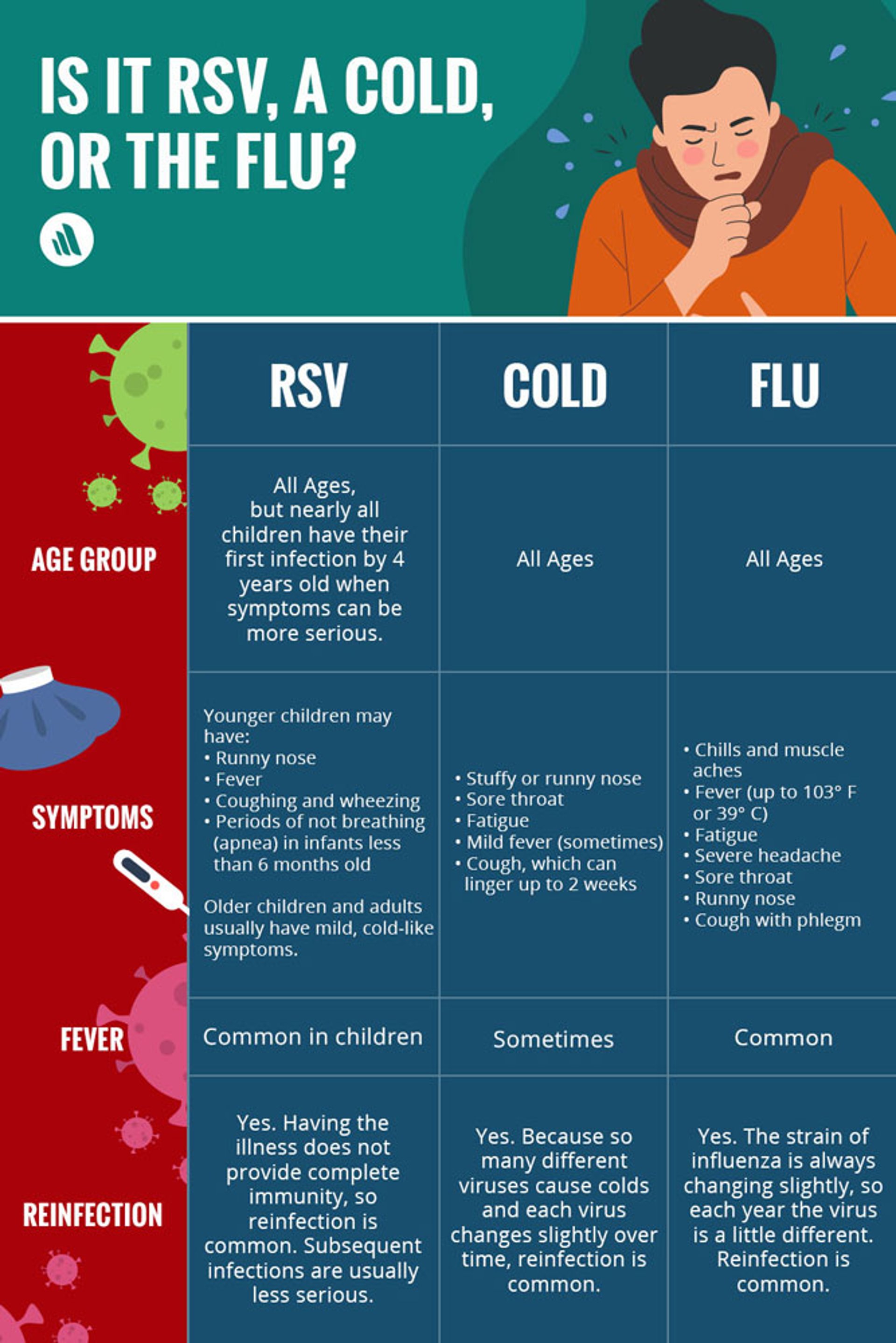
Influenza often starts with chills, followed by a fever, muscle aches, headache, a sore throat, a cough, a runny nose, and a general feeling of illness.
Influenza is often diagnosed based on symptoms.
Resting, drinking plenty of fluids, and avoiding exertion can help people recover, as can taking pain relievers, decongestants, and sometimes antiviral medications.
An annual influenza vaccination is the best way to prevent influenza.
Influenza is distinctly different from the common cold. It is caused by a different virus and causes symptoms that are more severe. Influenza can also affect cells that are much deeper down in the respiratory tract such as the lungs.
Influenza types and strains
There are 4 types of influenza virus: A, B, C, and D. The 2 types that mainly cause infection in people are:
Type A
Type B
There are many different strains within types A and B influenza viruses, but all cause similar symptoms. Different strains of A and B cause the regular seasonal outbreaks of flu.
Type A causes most cases of influenza in people (usually more than 70% in a typical season), and most of the others are caused by type B.
Type C influenza occurs less frequently, mainly in children, and causes mild symptoms. It does not cause the seasonal flu outbreak that occurs each year.
All recognized influenza virus strains are named. For example, strains of influenza type A are named based on the specific versions of 2 proteins that are present on the surface of the virus. The proteins are hemagglutinin (H) and neuraminidase (N). There are 18 subtypes of H and 11 subtypes of N. Subtypes are numbered, so, for example, a virus with subtype 1 of H and subtype 1 of N is named H1N1. The H1N1 strain caused the swine (pig) flu pandemic in 2009–2010. (A pandemic is a sudden, unexpected outbreak of a disease that spreads rapidly and globally.) The H3N2 strain causes most seasonal outbreaks of flu in the United States.
In addition to the type of influenza, the name of a strain may also include the location where it first appeared (for example, Hong Kong), the host animal (for example, swine) if there is one, the strain number, the year it was detected, and the subtype: A (influenza type)/Hong Kong (location)/1 (strain number)/68 (year, 1968) (H3N2) (subtype). No host is given if the virus infects only humans.


This illustration shows a generic influenza A virus. Covering the surface of the virus are the proteins hemagglutinin (H; light blue) and neuraminidase (NA; red), which determine the strain of virus.
CDC/Illustrator: Dan Higgins
Influenza D virus infection primarily affects cattle and is not known to cause illness in humans.
Influenza viruses infect many other animals, including ducks, chickens, pigs, dogs, horses, whales, and seals. For information on influenza virus infections in some animals, see Avian Influenza (Bird Flu), Equine Influenza, and Canine Influenza (Flu).
Transmission of influenza
The influenza virus is spread by:
Inhaling droplets that have been coughed or sneezed out by an infected person
Having direct contact with an infected person
Handling items that have been contaminated with an infected person's secretions
About 1 billion people are infected by the flu virus every year.
Influenza epidemics
An epidemic is an outbreak of a disease that spreads quickly to many people within a specific population or geographic area.
Every year, throughout the world, widespread outbreaks of influenza occur during fall and winter in temperate climates. These outbreaks are called seasonal epidemics. In other areas of the world, particularly the tropics, influenza can occur throughout the year and causes irregular outbreaks.
Each year, about 389,000 people die of severe respiratory illness associated with influenza. The risk of death is higher among people in high-risk groups (particularly adults over 65 years of age).
In each epidemic, usually only one strain of influenza virus causes the disease.
Influenza pandemics
A pandemic is a sudden, unexpected outbreak of a disease that spreads rapidly across a large region, typically across continents and sometimes even worldwide. There have been 6 major influenza pandemics since 1889. They were named after the presumed location of origin:
1889: Russian influenza (H2N2 strain)
1900: Old Hong Kong influenza (H3N8 strain)
1918: Spanish influenza (H1N1 strain)
1957: Asian influenza (H2N2 strain)
1968: Hong Kong influenza (H3N2 strain)
2009: Swine influenza (influenza A[H1N1] strain)
An influenza pandemic is concerning because it usually occurs only when there has been a larger than usual change in the strain of influenza virus. When such a large change occurs, that strain of influenza may affect many more people and cause more severe illness. The risk of death is higher.
Symptoms of Influenza

Copyright © 2025 Merck & Co., Inc., Rahway, NJ, USA and its affiliates. All rights reserved.
Symptoms of influenza start 1 to 4 days after a person is infected and can begin suddenly. Chills or a chilly sensation is often the first symptom. Fever is common during the first few days, sometimes reaching 102 to 103° F (about 38.9 to 39.4° C). The skin may be warm and flushed, especially on the face. The mouth and throat may redden, the eyes may water, and the whites of the eyes may become bloodshot. Many people feel so ill, weak, and tired that they may remain in bed for days.
In adults, symptoms of influenza also include aches and pains throughout the body, particularly in the back and legs. Headache is often severe, with aching around and behind the eyes. Bright light may make the headache worse. At first, respiratory symptoms may be relatively mild. They may include a scratchy sore throat, a burning sensation in the chest, a dry cough, and a runny nose. Later, the cough can become severe and bring up phlegm (sputum).
People, especially children, may have nausea and vomiting or abdominal pain. Infants may have fever, irritability, lethargy, a rapid heart rate, and cold, clammy skin, and they may also have decreased blood pressure and develop shock. A few people lose their sense of smell for a few days or weeks. Rarely, the loss can be permanent.
After 3 to 7 days, symptoms rapidly subside in people who do not have any complications. Cough and a general ill feeling may persist for several days or occasionally for more than 2 weeks. Mild airway irritation, which can result in a decrease in how long or hard a person can exercise, or slight wheezing may take several weeks to completely resolve.
Complications
The most common complication of influenza is:
In viral pneumonia, the influenza virus itself spreads into the lungs. Some people with viral pneumonia also become infected with bacteria and develop bacterial pneumonia, which can happen when bacteria (such as pneumococci or staphylococci) attack the person's weakened defenses. With bacterial or viral pneumonia, people may have persistent or recurring fever and cough and sometimes blood or pus in the phlegm.
Some people develop heart or kidney problems after an influenza infection.
In children, influenza can cause febrile seizures. Febrile seizures are seizures triggered by a fever of at least 100.4° F (about 38° C). Reye syndrome is a rare but life-threatening disorder in children that causes inflammation and swelling of the brain and impairment and loss of function of the liver. This syndrome may develop in children who have been given aspirin to treat influenza.
People at high risk of complications and death from influenza include:
Children under age 5 years; children under age 2 years are at particularly high risk
Adults over age 65 years
People with chronic medical disorders (particularly diabetes mellitus and disorders that affect the heart, lungs, kidneys, liver, or immune system)
People with severe obesity
People in the second or third trimester of pregnancy and up to 2 weeks after delivery
People with disorders that increase their risk of choking on oral secretions, such as stroke or other neurologic disorders that cause weakness, and seizure disorders
People 18 years of age and under who take aspirin (because of the risk of Reye syndrome)
Diagnosis of Influenza
A doctor's evaluation
Sometimes tests on samples of blood or secretions from the nose or throat
Sometimes a chest x-ray and measurement of oxygen levels in the blood
Doctors may diagnose people based only on their symptoms, especially if an outbreak is occurring. However, testing is the only definite way of confirming the diagnosis.


Tests on samples of secretions taken from the nose or throat can be used to identify the influenza virus. Blood tests may help determine how sick a person is with the infection. Such tests are done mainly when people appear very ill and have been admitted to the hospital or when a doctor suspects another cause for the symptoms. Some tests can be done in the doctor's office.


This photo shows a pulse oximeter. A pulse oximeter is a sensor that measures the level of oxygen in the blood.
Rawpixel.com/stock.adobe.com
If doctors suspect a person has pneumonia, they take a chest x-ray and measure oxygen levels in the blood with a sensor placed on a finger (pulse oximetry). The oxygen level tells doctors that the person may need further treatment, such as oxygen therapy.
Treatment of Influenza
Rest and plenty of fluids
Sometimes antiviral medications
The main treatment for influenza is to rest, drink plenty of fluids, and avoid exertion. Normal activities may resume 24 to 48 hours after the body temperature returns to normal, but most people take several more days to recover.
People may treat fever and aches with acetaminophen or nonsteroidal anti-inflammatory drugs (NSAIDs), such as aspirin or ibuprofen. Because of the risk of Reye syndrome, people age 18 years and under should not be given aspirin. Acetaminophen and ibuprofen can be used in children if needed. Other measures used to relieve symptoms of the common cold, such as nasal decongestants, may help relieve symptoms of the flu. Decongestants should not be given to children under 4 years old. (See also table .)
The antiviral medications oseltamivir, zanamivir, baloxavir marboxil, and peramivir are helpful in treating people who have influenza. However, these medications work only if taken within the first day or two after symptoms begin. Antiviral medications reduce the severity of symptoms and shorten the duration of fever and the time it takes a person to return to their normal activities.
Doctors give antiviral medications to the following:
People who are hospitalized
People whose illness is severe, complicated, or worsening
People at high risk of complications
Oseltamivir, zanamivir, baloxavir marboxil, and peramivir can relieve symptoms caused by influenza type A and type B viruses.
Oseltamivir is taken as a pill or a liquid. It can be taken by people 2 weeks old and older.
Zanamivir is a powder that is inhaled with an inhaler. It can be taken by people age 7 years old and older.
Baloxavir marboxil is taken as a pill. It can be taken by people age 5 years old and older.
Peramivir is given as a single injection into a vein (intravenously). It can be given to people 6 months old and older who cannot tolerate medications taken by mouth or by inhaler.
If a bacterial infection develops, doctors prescribe antibiotics.
Prevention of Influenza
Influenza infections can be prevented by:
A yearly flu vaccine for everyone 6 months of age or older (with rare exceptions)
Sometimes antiviral medications
Prevention is important for all people, but particularly for health care professionals and those who are at high risk of complications of influenza.
Did You Know...
|
Vaccines for influenza
Annual vaccination is the best way to avoid getting influenza.
For a detailed discussion of influenza vaccines, see Influenza Vaccine. Vaccination is indicated for most people but is especially important for high-risk people and health care professionals.
Influenza vaccines usually protect against 3 to 4 different strains of influenza virus. The strains of virus that cause influenza outbreaks change each year. Thus, different vaccines are developed each year to keep up with changes in the virus. Experts try to predict the strain of virus that will be the most common in the coming flu season based on the strain of virus that was most common during the previous flu season and the strain that is actively causing infection in other parts of the world.
In older adults who live in long-term care facilities, the vaccine is less likely to prevent influenza, but it reduces the chances of developing pneumonia and of dying. Because the immune system becomes weaker as people age, a high-dose influenza vaccine has been designed specifically for people 65 years old and older. This high-dose vaccine can stimulate a stronger immune response in older adults.
Influenza vaccine can be given at the same time as COVID-19 vaccine.
Antiviral medications
Antiviral medications are not substitutes for the flu vaccine, but sometimes doctors give antiviral medications to certain people who have not yet been exposed to the flu virus or to people who may have been exposed to the flu virus to prevent infection.
During an influenza epidemic, doctors may give antiviral medications to:
People who have been vaccinated within the previous 2 weeks (because it takes 2 weeks for the vaccine to become effective)
People who cannot receive the vaccine (for example, people who are allergic to it)
People who have a condition that weakens their immune system and makes the vaccine ineffective
When clusters of influenza infections occur in places such as nursing homes and hospital units, doctors may give antiviral medications to people in these places who may have been exposed to the flu virus. These medications may also be given to household members, close contacts, or other exposed people at high risk of developing complications of influenza.
Drug Information for the Topic