Sexually transmitted infections of the urethra, cervix, rectum, and throat are often caused by the bacteria Chlamydia trachomatis.
Chlamydia is spread through sexual contact.
Symptoms may include a discharge from the penis or vagina and painful or more frequent urination.
Special tests of a urine or vaginal sample can detect chlamydia.
Antibiotics can cure the infections, and sex partners should be treated at the same time.
Using condoms during sex can help prevent passing these infections from one person to another.
If unnoticed or untreated in women, chlamydia can result in infertility and an increased risk of a mislocated (ectopic) pregnancy.
Several organisms can cause sexually transmitted infections (STIs) in the genital tract and reproductive organs. (See also Mycoplasma Infections and Trichomoniasis.)
The disease caused by infection with the bacteria Chlamydia trachomatis is also called chlamydia.
When spread through sexual contact, Chlamydia trachomatis can cause the following infections:
In women: Cervicitis, urethritis, and pelvic inflammatory disease
In men: Urethritis and, less commonly, epididymitis
In both: Infection of the throat (pharyngitis), rectum (proctitis), lymphogranuloma venereum, and reactive arthritis
Chlamydia is the most commonly reported STI in the United States. In 2023, over 1.6 million cases were reported. Worldwide, 128 million new cases of chlamydia in 15- to 49-year-olds were reported in 2020. Because the infection frequently causes no symptoms, twice as many people may actually be infected than are reported to have chlamydia.
People can have more than one STI. For example, sometimes people have chlamydia and gonorrhea at the same time.
Chlamydiae also cause infections that are not sexually transmitted, including the eye infection trachoma, conjunctivitis in newborns, and the lung infection pneumonia.
(See also Overview of Sexually Transmitted Infections.)
Symptoms of Chlamydia
In men, symptoms of urethritis caused by Chlamydia trachomatis (chlamydial urethritis) start 7 to 28 days after the infection is acquired during intercourse. Typically, men feel a mild burning sensation in their urethra (the tube that runs through the penis and drains urine from the bladder out of the body) during urination and may have a clear or cloudy discharge from the penis. There may be only a small amount of discharge, and symptoms may be mild. However, early in the morning, the opening of the penis is often red and blocked by dried secretions. Occasionally, symptoms are more severe, and men may have a frequent urge to urinate, pain when urinating, and a discharge of pus from the penis.
Women with infection of the cervix (the lower part of the uterus that protrudes into the upper part of the vagina) caused by Chlamydia trachomatis (chlamydial cervicitis) usually have few or no symptoms. But some have frequent urges to urinate, pelvic pain, pain when urinating, and a discharge of yellow pus from the vagina or the urethra. Sexual intercourse may be painful for women.
In both sexes, people with infection of the rectum caused by Chlamydia trachomatis (chlamydial proctitis) may have rectal pain or tenderness and a yellow discharge of pus and mucus from the rectum.
Chlamydia can also be spread during oral sex, causing infection of the throat (chlamydial pharyngitis). Pharyngitis usually causes no symptoms.
The strains of Chlamydia bacteria that are sexually transmitted can be spread to the eye during sexual activity, causing infection of the membrane that covers the white of the eye (conjunctivitis), trachoma, and possibly blindness.
Did You Know...
|
Complications of chlamydia
Chlamydia can have serious long-term consequences for women, even when they have no or only mild symptoms.
In women, complications of chlamydia include:
Scarring of the fallopian tubes
Infection of the fallopian tubes (salpingitis)
Infection of the membrane that lines the pelvis and abdominal cavity (peritonitis)
Infection in the area around the liver
The infection may spread up the reproductive tract and infect the uterus, the tubes that connect the ovaries to the uterus (fallopian tubes), and sometimes the area around the ovaries (see figure ). In some women, the infection spreads to the lining of the pelvis and abdominal cavity (peritoneum), causing peritonitis. These complications together are called pelvic inflammatory disease (PID) and cause severe lower abdominal pain and sometimes fever. Sometimes infection is concentrated in the area around the liver, in the upper right part of the abdomen, causing pain, fever, and vomiting (called Fitz-Hugh-Curtis syndrome).
Potential complications of PID include severe infection throughout the body (sepsis), chronic abdominal pain, and scarring of the fallopian tubes. The scarring can cause infertility and can increase the risk of mislocated (ectopic) pregnancies.
Pathway From the Vagina to the Ovaries
In women, some organisms can enter the vagina and infect other reproductive organs. From the vagina, these organisms can enter the cervix and uterus and may reach the fallopian tubes and sometimes the ovaries. |


In men, complications of chlamydia include:
Infection of the epididymis (epididymitis)
Narrowing (stricture) of the urethra
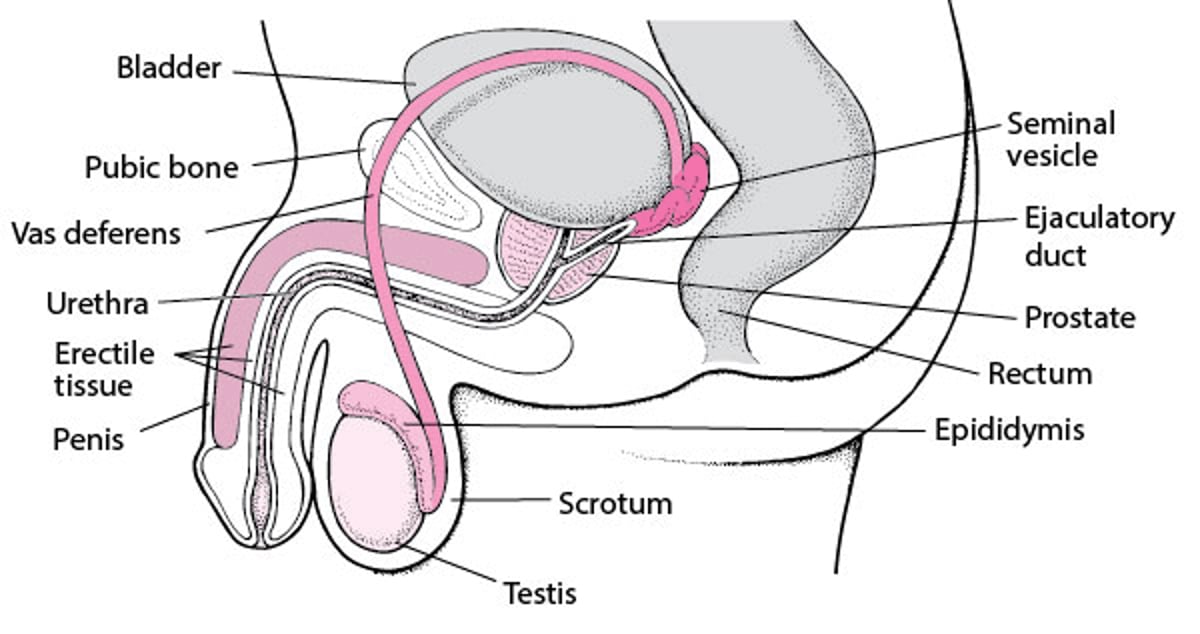
Chlamydia may cause epididymitis. The epididymis is the coiled tube on top of each testis (see figure ). This infection causes painful swelling of the scrotum on one or both sides. Epididymitis may lead to infertility.
If untreated, urethritis can lead to scarring and narrowing of the urethra.
Pathway From the Penis to the Epididymis
Occasionally in men, organisms spread up the urethra and travel through the tube that carries sperm from the testis (vas deferens) to infect the epididymis at the top of a testis. |

In all people, complications of chlamydia may include:
Infection of the membrane that covers the white of the eye (conjunctivitis)
Reactive arthritis
Chlamydial genital infections occasionally cause a joint disorder called reactive arthritis (formerly known as Reiter syndrome). In reactive arthritis, several joints, such as the knees and toe joints, become painful and inflamed at once. Symptoms of urethritis typically begin 1 to 2 weeks after chlamydia is acquired. Reactive arthritis sometimes is accompanied by other problems, such as a hard, thickened rash on the palms and soles (keratoderma blennorrhagicum), problems with the eyes, and ulcers on the penis.


In a few people, chlamydia causes reactive arthritis, sometimes accompanied by changes in the skin of the feet (called keratoderma blennorrhagicum).
Image courtesy of Susan Lindsley via the Public Health Image Library of the Centers for Disease Control and Prevention.
In newborns, complications of chlamydia include:
Conjunctivitis
Pneumonia
Pregnant people who have a chlamydial infection of the cervix may pass on the infection to their newborn during delivery. In newborns, the infection may result in pneumonia or conjunctivitis.
Diagnosis of Chlamydia
Usually, nucleic acid amplification testing (NAAT) of a sample of discharge from the urethra, cervix, vagina, penis, throat, or rectum or of a sample of urine
Doctors suspect chlamydia and other nongonococcal infections based on a person's symptoms, such as a discharge from the penis or vagina, or risk factors, such as age or high-risk sexual activity.
In most cases, doctors diagnose chlamydia by doing NAAT to detect the bacteria’s unique genetic material, its DNA or RNA (which are nucleic acids). NAAT uses a process that increases the amount of the bacteria's DNA or RNA so that it can be more easily identified. Usually, a swab or sample of the discharge from the penis, cervix, or vagina or a urine sample is used. A vaginal swab or urine sample can often be collected by people themselves. If a urine sample can be used, people can avoid the discomfort of having a swab inserted into the penis or of a pelvic examination to obtain a sample from the cervix.
If doctors suspect infection of the throat or rectum, samples from those sites are tested.
People who have urethritis that causes symptoms also may be tested for gonorrhea. People who are diagnosed with gonorrhea or chlamydia should have blood tests to check for human immunodeficiency virus (HIV) infection and syphilis.
Screening for Chlamydia
Because chlamydia is so common and because many infected women have no symptoms, tests to screen for chlamydia are recommended for certain sexually active people.
If screening is recommended, it is done even if a person uses condoms consistently. NAAT is done using urine or vaginal samples.
Women are screened annually if they are sexually active and under age 25 or if they are 25 years or older, sexually active, and have one or more of the following risk factors:
A previous STI
Sexual activity with increased risk of exposure (such as having a new sex partner or more than 1 sex partner, using condoms inconsistently when not in a mutually monogamous relationship, or participating in sex work)
A partner who has an STI or has other sex partners
Pregnant people who are under age 25 or who are 25 years or older with one or more risk factors are screened during their first prenatal visit and again during their third trimester if they are still at high risk.
Men who have sex with men are screened as follows:
If they are sexually active: At least once a year
If they are at increased risk (for example, those with HIV infection, multiple sex partners, or a partner who has multiple partners): Every 3 to 6 months
People who are transgender and gender diverse are screened if they are sexually active and on the basis of their sexual practices and anatomy. For example, all people with a cervix who are under age 25 are screened annually. If they are 25 years or older, people with a cervix should be screened annually if at increased risk. NAAT is done using a sample from the rectum in transgender and gender diverse people based on reported sexual behaviors and exposure.
Men not included in the categories above are not routinely screened, but screening is available if a person requests it and is often offered to all men who are in or have been to a place where the spread of chlamydia is high (such as adolescent clinics, STI clinics, and correctional facilities).
Treatment of Chlamydia
Antibiotics
Simultaneous treatment of sex partners
Without treatment, symptoms of chlamydia lessen within 4 weeks in about two-thirds of people. However, chlamydia can have serious long-term consequences for women, so detecting and treating the infection are important.
Chlamydia is treated with the antibiotic doxycycline. Azithromycin or levofloxacin is an alternative antibiotic. Pregnant people may be given azithromycin or amoxicillin.
If doctors think people also have chlamydia and gonorrhea, gonorrhea is treated at the same time, usually with the antibiotic ceftriaxone. Such treatment is needed because the symptoms of the two infections are similar and it is common to have both infections at the same time.
Symptoms may not go away or may return for one of the following reasons:
People may have another infection that cannot be treated with antibiotics used to treat chlamydia.
People may have become infected again.
The chlamydiae bacteria may be resistant to antibiotics.
In such cases, tests for chlamydia and gonorrhea are repeated, and sometimes tests for other infections are done.
Infected people and their sex partners should abstain from sexual intercourse until at least 1 week after the infected person has completed treatment.
Sex partners
All of a person's sex partners within the past 60 days and prior to the person's development of symptoms (or the most recent sex partner if the last sexual contact was more than 60 days ago) should be evaluated, tested, and treated. People should abstain from sexual activity until they and their sex partners have been treated for at least 1 week.
Expedited partner therapy is an option doctors sometimes use to make it easier for sex partners to be treated. This approach involves giving a person with an STI a prescription or medications to give to their sex partners. Thus, the sex partners are treated, even if they have not yet seen a doctor. Seeing a doctor is better because then the doctor can check for allergies to medications and for other STIs. However, if the sex partners are unlikely to see a doctor, expedited partner therapy is useful.
Prevention of Chlamydia
People can do the following to help reduce their risk of chlamydia and other STIs:
Practice safer sex, including using a condom every time for oral, anal, or genital sex.
Reduce the number of sex partners and not have high-risk sex partners (people with many sex partners or who do not practice safer sex).
Practice mutual monogamy or abstinence.
Vaccinate (available for some STIs).
Seek prompt diagnosis and treatment to prevent spread to other people.
Identify sexual contacts if infected with an STI for the purposes of counseling and treatment.
More Information
The following English-language resource may be useful. Please note that The Manual is not responsible for the content of this resource.
Centers for Disease Control and Prevention (CDC): About Chlamydia
Drug Information for the Topic