A panic attack is a brief period of extreme distress, anxiety, or fear that begins suddenly and is accompanied by physical and/or emotional symptoms. Panic disorder involves recurrent panic attacks that lead to excessive worry about future attacks and/or behavior changes intended to avoid situations that might trigger an attack.
Panic attacks can cause such symptoms as chest pain, a sensation of choking, dizziness, nausea, and shortness of breath.
Doctors base the diagnosis on the person's description of attacks and fears of future attacks.
Treatment may include antidepressants, antianxiety medications, exposure therapy, and psychotherapy.
Panic attacks are common, occurring in between 8 and 23% of adults each over the course of a lifetime. Most people recover from panic attacks without treatment, but a few develop panic disorder.
Panic attacks may occur as part of any anxiety disorder. Panic attacks may also occur in people with other mental health disorders (such as depression). Some panic attacks occur in response to a specific situation. For example, a person with a phobia of snakes may panic when encountering a snake. Other attacks occur without any apparent trigger.
Panic disorder is when people worry that they will have more panic attacks and/or change their behavior to try to avoid attacks. Panic disorder is present in 2 to 3% of the population yearly. Women are about 2 times more likely than men to have panic disorder. Panic disorder usually begins in late adolescence or early adulthood (see Panic Disorders in Children and Adolescents).

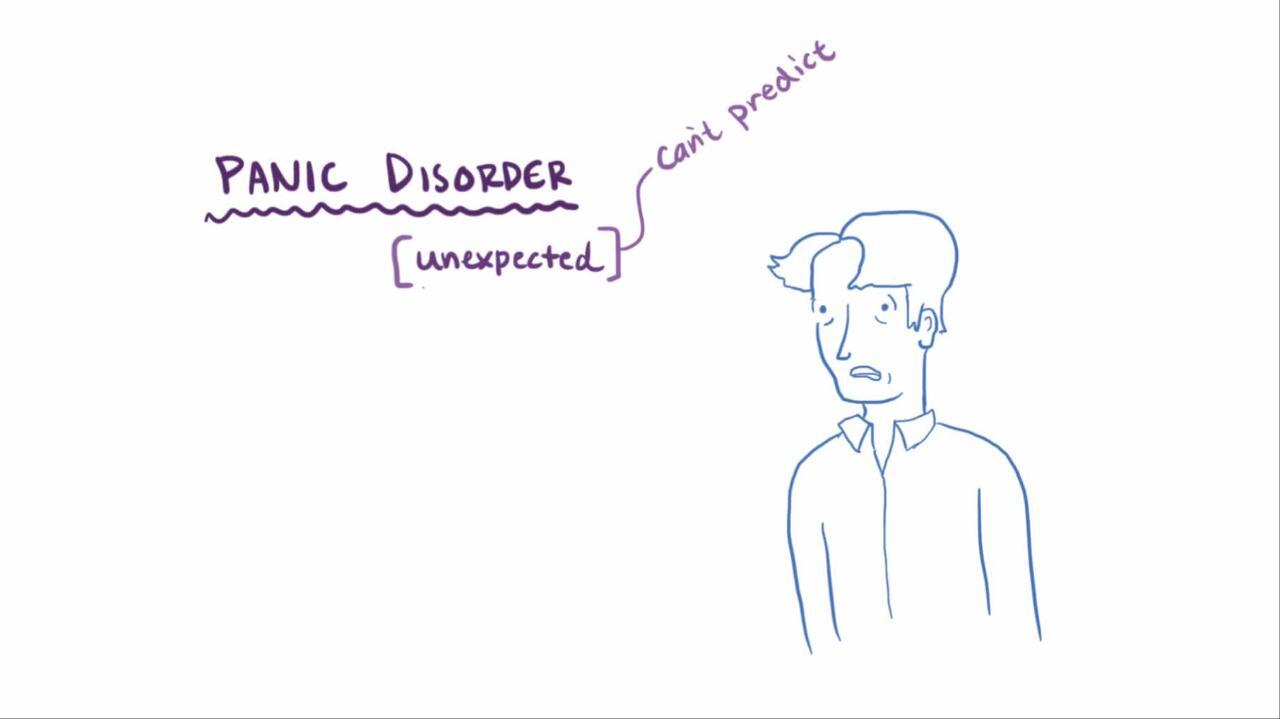
Symptoms of Panic Attacks and Panic Disorder
A panic attack involves the sudden appearance of intense fear or discomfort plus at least 4 of the following emotional and physical symptoms:
Fear of dying
Fear of going crazy or of losing control
Feelings of unreality, strangeness, or detachment from the environment
Chest pain or discomfort
Dizziness, unsteadiness, or faintness
A sensation of choking
Flushes or chills
Nausea, stomachache, or diarrhea
Numbness or tingling sensations
Palpitations or an accelerated heart rate
Shortness of breath or a sense of being smothered
Sweating
Trembling or shaking
Did You Know...
|
Symptoms of panic attacks include many types of physical symptoms, which often cause people to worry that they have a dangerous medical problem involving the heart, lungs, or brain. For example, chest pain may occur during a panic attack, and people may worry they are having a heart attack. Symptoms that are severe or persistent should be evaluated by a doctor. A person may see a doctor or visit a hospital emergency department multiple times for the same symptoms before the diagnosis of panic attack is made.
Although panic attacks are uncomfortable—at times extremely so—they are not dangerous. Symptoms usually peak within 10 minutes and disappear within minutes, so a doctor may not be able to directly observe the symptoms.
Because the reason for a panic attack is often not clear, people who have them frequently anticipate and worry about another attack—a condition called anticipatory anxiety—and try to avoid situations that they associate with previous panic attacks.
The frequency of attacks can vary greatly. Some people have weekly or even daily attacks that occur for months, whereas others have several daily attacks followed by weeks or months without attacks.
Panic disorder is often accompanied by at least 1 other condition. Other anxiety disorders, major depression, bipolar disorder, and mild alcohol use disorder are the most common coexisting mental health disorders. Common coexisting medical conditions include abnormal heart rhythms, hyperthyroidism, asthma, and chronic obstructive pulmonary disease (COPD).
Diagnosis of Panic Attacks and Panic Disorder
A doctor's evaluation, based on standard psychiatric diagnostic criteria
An evaluation for other medical conditions or substance use that might cause panic attacks
Because serious physical disorders often cause some of the same physical and emotional symptoms as panic attacks, doctors first make sure people do not have a physical disorder. A doctor gathers information about the person's experience of the attacks and may do tests for other problems.
Panic disorder is diagnosed when people have repeated unprovoked and unexpected panic attacks, including at least 4 of the symptoms listed above, plus at least 1 of the following for at least 1 month:
Persistent worry that they will have more panic attacks or worry about the consequences of the attack (for example, that they will lose control or go crazy)
Changes in behavior due to the panic attacks (for example, avoiding situations that may cause an attack)
Doctors must also evaluate for other medical conditions, other mental health disorders, and substance use or withdrawal before making the diagnosis of panic disorder
Once doctors are confident that a person's symptoms are caused by a panic disorder, they try to avoid doing extensive tests when future panic attacks occur unless the person's symptoms or physical examination results suggest a new problem.
Treatment of Panic Attacks and Panic Disorder
Antidepressants and/or antianxiety medications
Psychotherapy (cognitive-behavioral therapy, including exposure therapy and interpersonal psychotherapy)
Without formal treatment, some people recover, particularly if they continue to confront situations in which attacks have occurred. For others, symptoms wax and wane for years.
However, if people have had frequent attacks and have changed their behavior to avoid future attacks, treatment with medications and/or psychotherapy is usually necessary. People with panic disorder are more receptive to treatment if they understand that the disorder involves both physical and psychological processes and that treatment can usually control the symptoms.
Medications
Medications that are used to treat panic disorder include
Antidepressants
Antianxiety medications such as benzodiazepines
Most types of antidepressants—tricyclic antidepressants (TCAs), monoamine oxidase inhibitors (MAOIs), selective serotonin reuptake inhibitors (SSRIs), serotonin modulators, and serotonin-norepinephrine reuptake inhibitors (SNRIs)—are effective (see table ). SSRIs and SNRIs tend to have fewer side effects than other types of antidepressants.
Benzodiazepines work faster than antidepressants but can cause drug dependence and are probably more likely to cause sleepiness, impaired coordination, memory problems, and slowed reaction time.
SSRIs or SNRIs are the preferred medications because they are as effective as the other medications but usually have fewer side effects. For example, they are much less likely to cause sleepiness, and they do not cause drug dependence, although if stopped abruptly most SSRIs and SNRIs can cause uncomfortable withdrawal symptoms (eg, dizziness, fatigue, headache, nausea).
Initially, people may be given a benzodiazepine and an antidepressant. When the antidepressant starts working, the dose of benzodiazepine is typically decreased, then stopped. However, for some people, a benzodiazepine is the only effective long-term treatment.
Panic attacks often return once a medication is stopped.
Psychotherapy
Most psychotherapies that target anxiety disorders—including panic disorder—teach techniques that promote relaxation. Relaxation strategies include mindfulness, meditation, hypnosis, exercise, and slow, steady breathing. These strategies are an important component of therapy since they both reduce the anxiety and also allow for the continuation of a psychotherapy that may be anxiety provoking.
Cognitive-behavioral therapy (CBT) has been shown to be effective for panic disorder. CBT is a term used to describe various talk therapies that focus on dysfunctional thinking and/or dysfunctional behavior. Exposure therapy gradually exposes the person to the panic-inducing stimulus until he or she becomes desensitized to it. Interoceptive exposure therapy is a type of exposure therapy in which people are exposed (and desensitized) to the physical symptoms of panic attacks, such as shortness of breath or a racing heart.
People may have their own distinct but dysfunctional cycle of thinking that can cause anxiety and/or panic. For example, a person might have worry about having a heart attack and spend an inordinate amount of time scanning their bodies for signs of a heart attack. If they feel a twinge in their chest, they might then begin a cycle that quickly leads to a panicky, mistaken belief that they are about to die. CBT involves clarifying these cycles and then teaching people to recognize and control their distorted thinking and false beliefs. They are then better able to modify their behavior so that it is more adaptive. In addition, the treatment encourages them to gradually expose themselves to situations that might be likely to induce the panic, thereby desensitizing their assumed association between the setting and the symptoms.
People may be taught the following:
Not to avoid situations that cause panic attacks
To recognize when their fears are not likely to result in bad consequences
To respond instead with slow, controlled breathing or other techniques that promote relaxation
More Information
The following English-language resource may be useful. Please note that The Manual is not responsible for the content of this resource.